
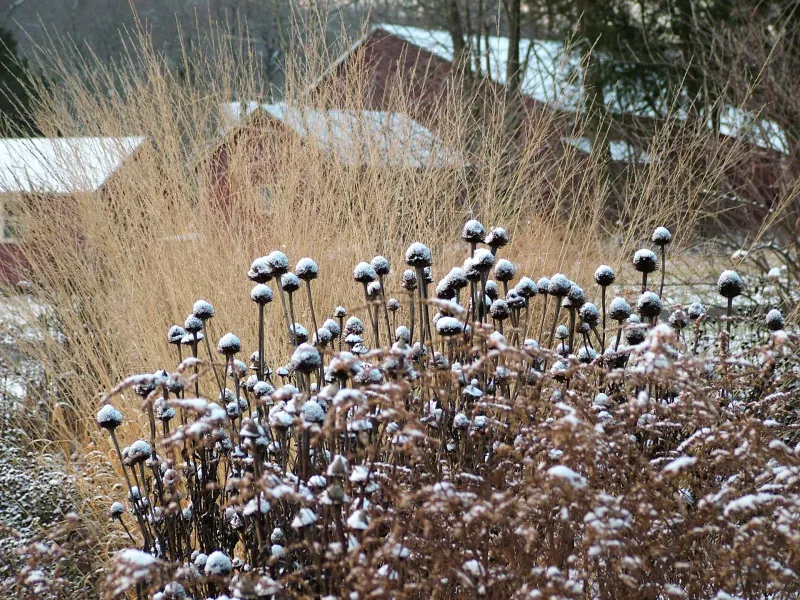
Purple coneflowers can look pretty rough by late summer, with faded blooms, dry stems, and browning leaves that make even experienced gardeners reach for the pruners. Before you cut everything down, though, it pays to know what your plant actually needs versus what just looks messy.
The right fall move depends on whether your coneflower is healthy, diseased, or overcrowded, and getting that call right can protect both your plants and the wildlife that depends on them.
A tired-looking coneflower does not automatically need a hard cut
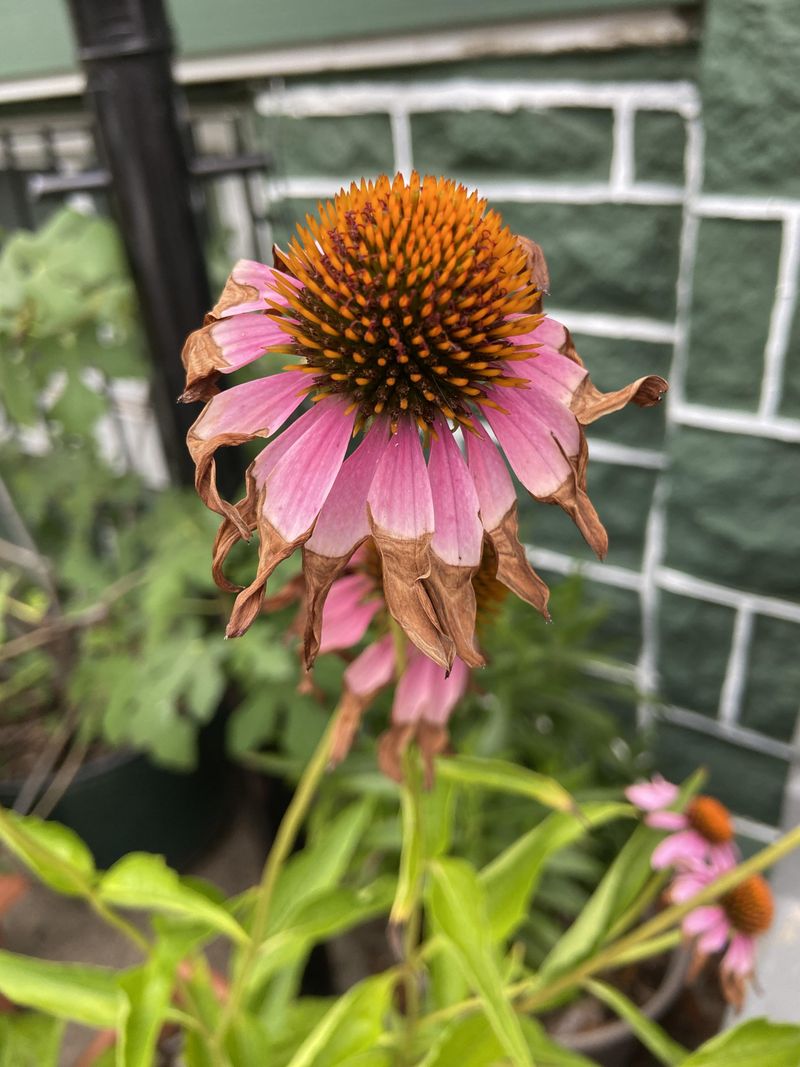
Faded petals and drying stems are a normal part of late-season life for purple coneflower, or Echinacea, and that weathered look does not mean the plant is failing or that you need to prune it immediately. University of New Hampshire Extension guidance on cutting back perennials makes clear that gardeners can reasonably choose to leave healthy perennial stems standing through winter or remove them after dormancy, but neither option is proven to produce stronger return growth than the other.
One thing worth separating right away is deadheading from end-of-season cutback. Deadheading means removing individual spent flowers during the growing season, and Missouri Botanical Garden’s Echinacea profile notes that purple coneflowers can rebloom without it, though removing spent flowers may improve appearance and extend the current season’s flowering.
End-of-season cutback is a different task entirely: it removes dormant stems after the plant has finished growing for the year, and it functions as cleanup rather than a treatment that guarantees bigger blooms or stronger growth.
Before picking up pruners at all, check the basics. Look for signs of disease on the leaves and stems, assess whether the clump is crowded, and confirm the plant is getting full sun with good drainage.
Penn State Extension’s herbaceous pruning guidance reinforces that timing and purpose matter more than reflexive cutting. Also keep in mind that purple coneflower is Echinacea, not the same plant as black-eyed Susan or other Rudbeckia species, so care advice does not transfer identically between them.
Leaving healthy stems supports birds and winter habitat
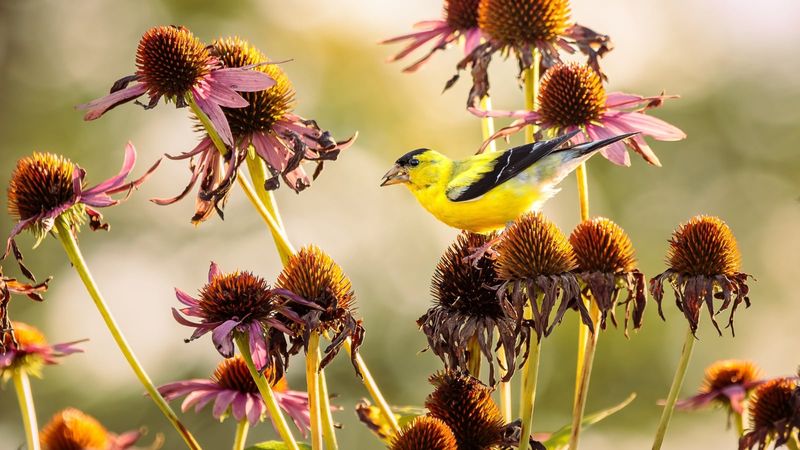
Healthy coneflower stems left standing through winter do real work in the garden. The dried, cone-shaped seedheads are a reliable food source for goldfinches and other seed-eating birds, and University of Vermont Extension’s purple coneflower profile specifically notes that the seeds attract goldfinches.
Choosing to leave those stems up is not a sign of a neglected bed; it is a deliberate decision that benefits wildlife through the colder months.
Standing stems also provide winter habitat and overwintering shelter for insects. NC State Extension’s pollinator garden cleanup guide and Penn State Extension’s fall pollinator care resource both support leaving perennial stems standing to benefit overwintering insects.
The practical takeaway is that cutting everything to the ground right after flowering eliminates that shelter before insects have finished using it.
Gardeners who prefer a tidier look do not have to choose between aesthetics and wildlife. NC Cooperative Extension’s fall landscape tips suggest postponing cleanup on healthy plants until late winter or early spring, when birds have had time to work through the seedheads and temperatures begin to shift.
That window gives you a neat bed heading into the growing season without sacrificing the winter value those stems provide.
Cut healthy growth only after dormancy
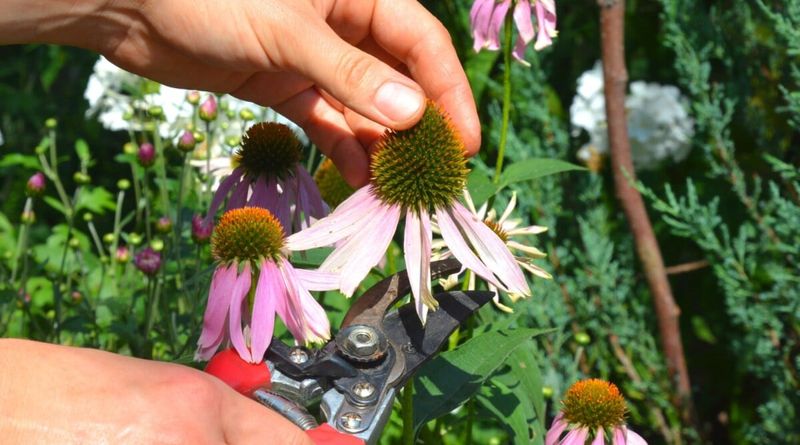
Waiting for genuine dormancy before cutting healthy coneflower stems is the cleaner approach. Once the plant has stopped growing and stems are fully dry, you can cut them close to the ground, clearing the way for new growth without removing anything the plant or local wildlife still needs.
RHS guidance on cutting back perennials treats late-winter or early-spring cleanup as an accepted maintenance option rather than a required treatment, and that framing holds here too.
Southern gardeners, and especially those in Florida, need to read their plants rather than a calendar. Warm temperatures can keep coneflowers active or even flowering well past the point when northern gardeners have already put their beds to rest.
UF/IFAS Extension’s Echinacea purpurea publication notes that purple coneflower blooms in spring and summer in central Florida, which means the seasonal rhythm differs meaningfully from what gardeners in cooler regions experience. A universal first-frost rule simply does not apply in these climates.
Instead, watch for actual dormancy signals: stems that are fully brown and dry, no new basal foliage pushing up, and soil temperatures that reflect genuine seasonal cooling in your specific location. When you do see the first flush of new green shoots emerging at the base in late winter or early spring, that is your cue to clear away remaining old growth before it interferes with the new season.
Cutting at that point is cleanup with a clear purpose, not a growth booster, and keeping that distinction honest helps set realistic expectations for what the plant will do next.
Diseased plants need sanitation, not a blanket leave-it-standing rule
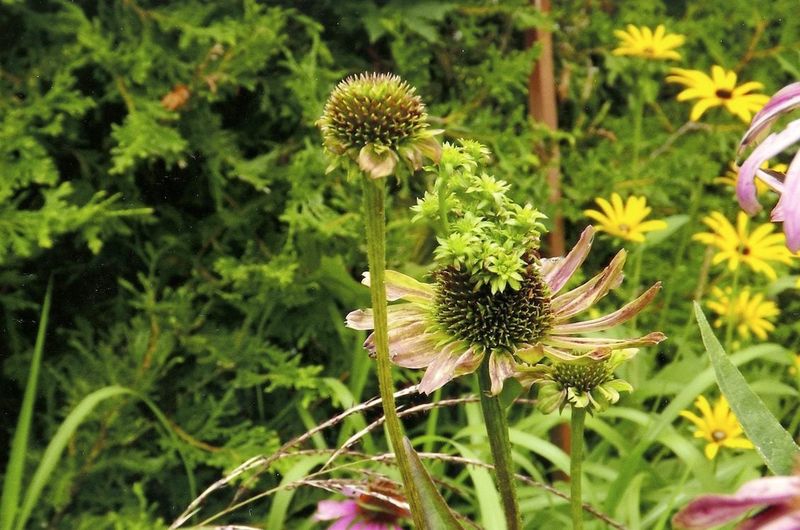
Disease changes the fall-care calculation completely. When coneflower leaves and stems show signs of leaf spots, powdery mildew, bacterial spotting, or gray mold, those materials should come out of the garden rather than stay put through winter.
NC State Extension’s Echinacea plant profile identifies these as real disease threats for coneflowers, and leaving infected debris in the bed can allow pathogens to carry over into the next growing season. Heavily diseased stems and foliage should not go into ordinary home compost, where conditions may not be hot enough to break down pathogens reliably.
Aster yellows is a separate and more serious problem that requires a different response entirely. Unlike localized leaf spots or mildew, aster yellows is a systemic disease spread by leafhoppers, and selective pruning will not contain it.
NC Cooperative Extension’s coneflower pest alert makes clear that when aster yellows is suspected, the entire affected plant should be removed and discarded, not just trimmed back. Symptoms can include distorted or stunted growth, yellowing foliage, and misshapen flower centers that look unlike normal aging.
Prevention is worth building into your site setup. Penn State Extension’s cut flower disease update supports the value of full sun, adequate plant spacing, good airflow, and well-drained soil in reducing disease pressure on Echinacea.
None of those measures guarantee a disease-free planting, but they lower the conditions that allow fungal and bacterial problems to take hold. Good site management paired with prompt removal of symptomatic material is a more reliable strategy than any single fall pruning decision.
An overcrowded clump may need division instead of routine pruning
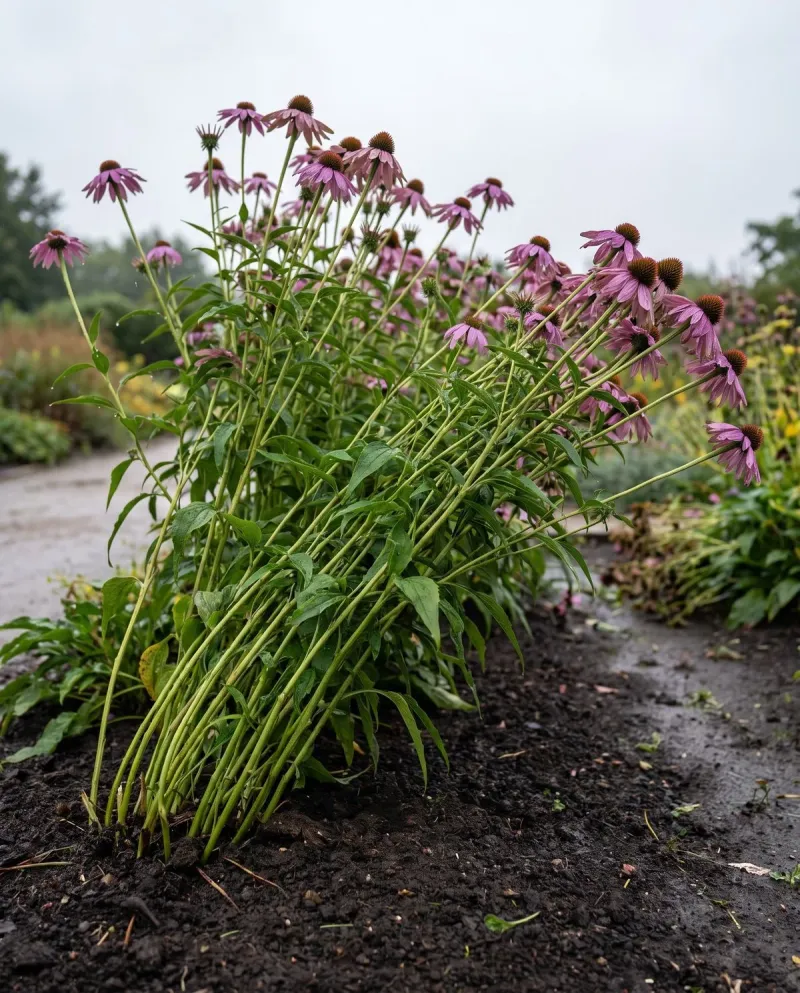
A coneflower that returns each year with fewer blooms, a hollow or dying center, or noticeably weaker stems may be telling you it needs more room rather than a different pruning schedule. University of Minnesota Extension’s guide to dividing perennials describes reduced flowering, overcrowding, and a declining center as the signals that actually call for division, and that list is a useful checklist before you dig anything up.
Fall division can work in Southern gardens, but timing depends on local conditions rather than a fixed date. The goal is to give divided roots enough time to settle in before the soil gets too cold or too dry.
UGA Cooperative Extension’s year-round garden chores guide identifies fall as a reasonable period for dividing established perennials in the Southeast, but spring division is equally appropriate in many parts of the region, particularly where fall stays warm and dry longer than expected. Watch soil moisture and temperature rather than the calendar.
Before assuming division will fix a weak-performing plant, consider other explanations. Missouri Botanical Garden’s Echinacea profile and UVM Extension’s coneflower overview both acknowledge that some newer cultivars are relatively short-lived by nature, and that poor performance can reflect cultivar traits, disease pressure, inadequate sun, or site stress rather than a missed division date.
Dividing a plant that is struggling because of poor drainage or shade will not solve the underlying problem.
Site conditions matter more than a fertilizer push

Purple coneflowers are not heavy feeders, and pushing fertilizer after a fall cutback can cause more harm than good. Excess nitrogen tends to produce tall, soft, floppy stems that flop over rather than stand up, which is the opposite of the sturdier plant most gardeners are hoping for.
University of Illinois Extension’s purple coneflower resource and NC Cooperative Extension’s Echinacea plant-of-the-month sheet both support keeping fertility moderate, with the consistent message that these plants perform well without routine supplemental feeding.
If you suspect a nutrient deficiency, a soil test is the appropriate starting point rather than a general fertilizer application. Fertilizing based on test results or a documented deficiency targets an actual problem; fertilizing out of habit after pruning does not.
Coneflowers in good soil with adequate drainage and full sun generally return reliably without any added fertility.
The conditions that matter most are sun, drainage, and moderate soil fertility. UVM Extension’s purple coneflower profile emphasizes that Echinacea thrives in full sun and well-drained soil, and that these basics drive long-term performance more directly than any single seasonal task.
Correcting a shady or waterlogged site addresses future flowering in a way that a dramatic fall cut simply cannot. When the growing conditions are right, healthy coneflowers tend to come back on their own terms.
Use a condition-based fall decision
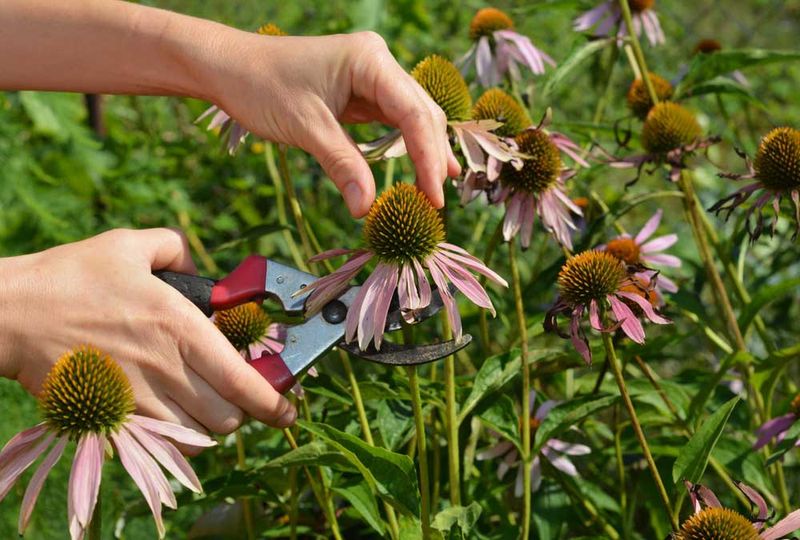
Fall care for purple coneflowers comes down to what you actually see in your bed. Remove localized diseased leaves and stems promptly, and keep that material out of home compost.
If aster yellows is suspected, NC Cooperative Extension’s coneflower pest alert is clear: pull and discard the entire plant, because selective pruning will not contain a systemic disease.
For healthy plants, you have two reasonable paths. Leave stems and seedheads standing through winter to support birds and provide overwintering shelter for insects, then clear remaining dead growth before new shoots push up in late winter or spring.
Or wait for genuine dormancy and cut old stems close to the ground for a tidier bed. UNH Extension’s perennial cutback guide and UVM Extension’s coneflower profile both treat these as equally valid options.
Reserve division for clumps that are genuinely overcrowded or declining, and let University of Minnesota Extension’s division guidance inform your timing.
No routine fall cut guarantees stronger growth. Thoughtful sanitation, sound site conditions, and an honest read of what your plant actually needs will do more for next season than any single pruning decision ever could.