
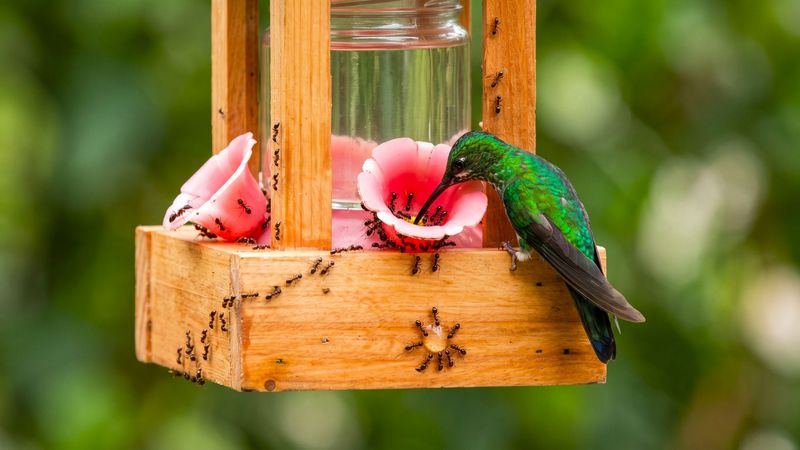
Ants at a hummingbird feeder can chase birds away and turn a fun backyard feature into a constant headache. Most of the time, the problem starts with something simple: a sugary residue or slow drip that creates a trail ants cannot resist.
But the fix is not always as obvious as tightening one cap, because ants can also reach the feeder by crawling along a string, branch, wall, or any other surface that touches it. Understanding both the attractant and the access route is what makes the solution stick.
Check for a nectar trail before blaming the ants
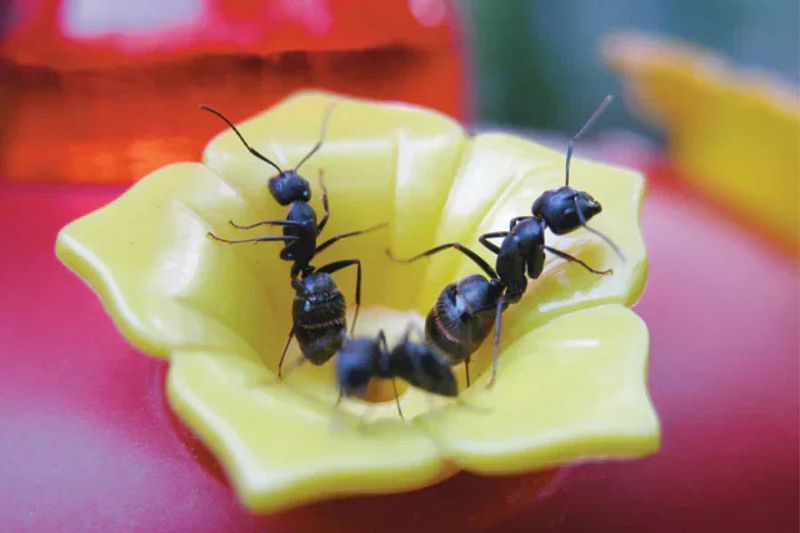
Nectar residue is the most common reason ants show up at a hummingbird feeder, but calling it the only reason would be an overstatement. Audubon’s guidance on feeder pest prevention points to leaking and dripping nectar as a primary attractant, explaining that sticky residue around ports, seams, or the reservoir opening gives insects a direct invitation.
Even when no active drip is visible, a thin film of dried sugar on the outside of the feeder can be enough to start an ant highway.
Before assuming the worst, take a slow look at the whole feeder. Run your finger along the seams, around each feeding port, under the reservoir cap, and along the hanger wire above it.
Check the surface or railing directly below the feeder too, since drips often fall and pool somewhere readers never think to inspect.
If you find residue, that is your first clue. If you do not, the ants may be arriving by a completely different route.
Cornell Lab’s ant-feeder FAQ notes that ants can travel down a hanging wire, string, plant stem, wall surface, or any other object that contacts the feeder. A Cornell Cooperative Extension resource on feeder pests recommends treating the leak and the access route as two separate problems, because fixing one without the other often leaves ants still finding their way in.
Wash away the trail and repair the feeder
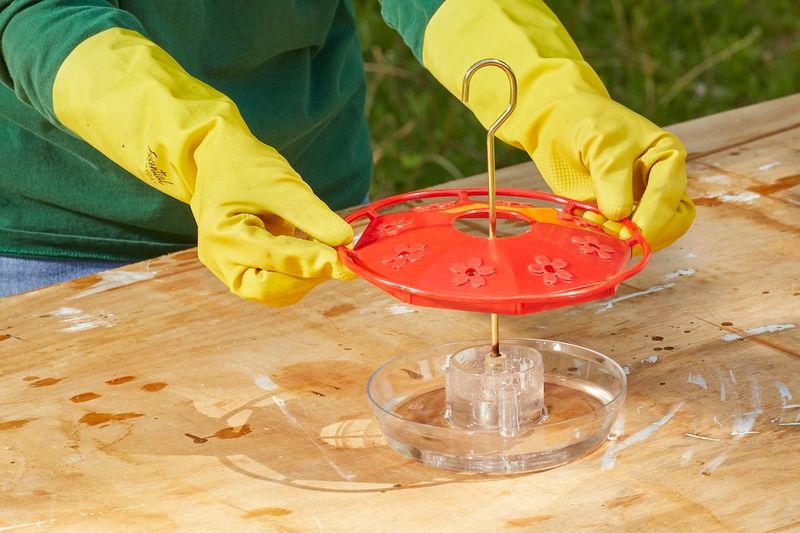
Once you spot sticky residue or suspect a drip, the first practical move is to take the feeder down entirely. Leaving it in place while you troubleshoot just gives ants more time to recruit others and reinforce their trail.
Disassemble the feeder as far as the manufacturer’s design allows. Inspect every port, seam, gasket, and the reservoir opening for cracks, worn seals, or parts that are not seated correctly.
Audubon’s feeder pest guide recommends washing away all sticky residue with hot water before refilling, and that applies to the exterior just as much as the inside. Use a bottle brush to scrub the reservoir and ports thoroughly, rinse everything well, and then lay the parts out to dry before reassembly.
While the pieces are apart, tighten any loose caps or connections and check that gaskets sit flush. A port that is slightly off-center or a cap that does not seal evenly can weep nectar slowly, especially when the feeder sways in a breeze.
UF/IFAS guidance on bird feeder selection and care advises following the manufacturer’s cleaning instructions, since feeder materials vary and some components can warp or crack if handled incorrectly. Cleaning and reassembling correctly is the immediate reset, but it is not a substitute for checking whether ants also have a separate crawling bridge to the feeder.
Reduce the heat, wind, and dripping that restart the problem
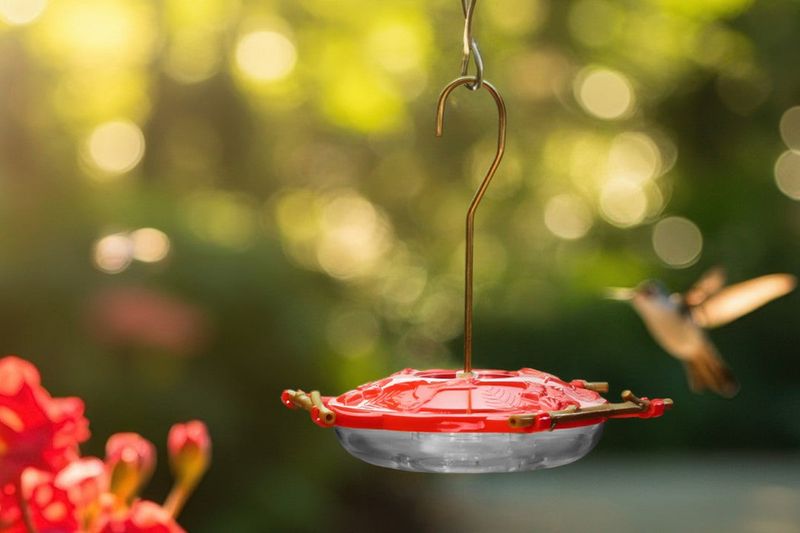
Cleaning a feeder solves the residue that is already there, but heat and wind can create new residue fast, especially in Southern yards where summer temperatures push well past 90 degrees for weeks at a time.
Bottle-style feeders, the kind with an upside-down jar and a tube or tray, are particularly susceptible. Cornell Lab’s hummingbird feeding guide identifies direct sun and heat as contributors to leakage in this style of feeder, because expanding air inside the warm reservoir can push nectar out through the ports.
Moving the feeder to a mostly shaded, sheltered spot, such as under an eave, a large tree canopy, or a covered porch, reduces that pressure and slows spoilage at the same time.
Wind is a secondary factor worth addressing. A feeder that swings freely on a long string can slosh nectar out through the ports with every gust, leaving fresh residue even after a thorough cleaning.
A shorter, more rigid hanger or a hook mounted to a stable bracket reduces that motion significantly. UF/IFAS’s overview of Florida hummingbirds notes that upside-down jar-and-tube feeders tend to leak, while the Cornell Cooperative Extension feeder pest guide identifies saucer-style feeders as generally less prone to dripping because their ports face upward.
Neither design eliminates every possible leak, but saucer feeders give ants fewer easy entry points by default.
Add a water moat to block the crawling route
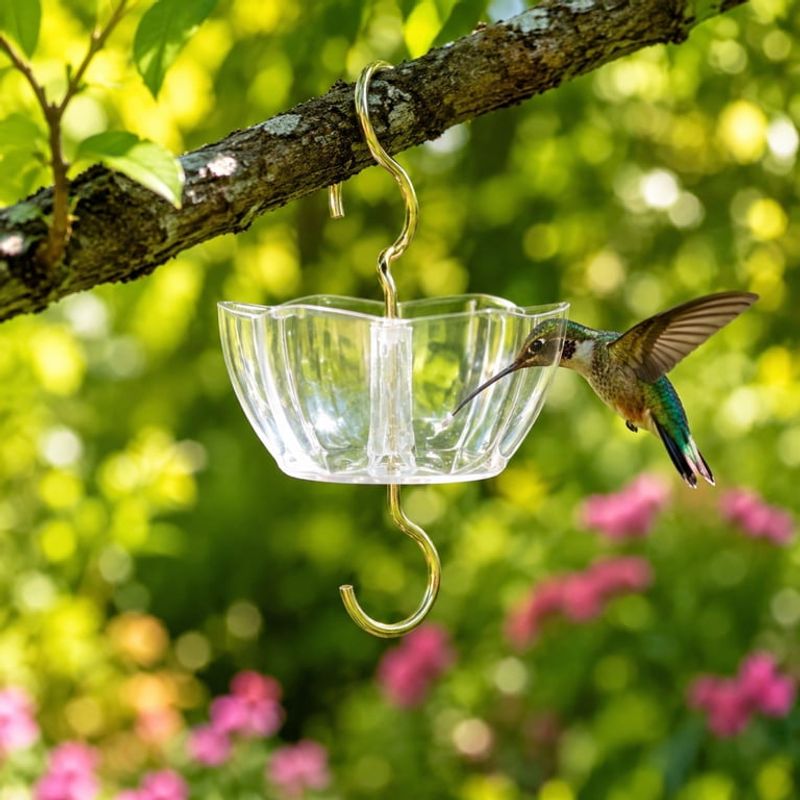
After you have cleaned the feeder, tightened its parts, and moved it to a shaded spot, an ant moat gives you a second layer of protection against ants that still try to crawl down the hanger. A moat is a small water-filled cup that sits on the hanging wire or rod between the hook and the feeder.
Ants traveling downward hit the water and cannot cross it, so they turn back.
Cornell Lab’s ant-feeder FAQ recommends a water-filled moat as one of the clearest physical barriers available, and Texas Parks and Wildlife guidance on feeder pests lists it as a practical first option for keeping ants and other crawling insects off the feeder. Many saucer-style feeders come with a built-in moat at the top; if yours does not, external ant guards are sold separately and attach easily to most hangers.
Keep a few maintenance habits in mind. The moat must stay filled with plain water, and it must remain completely separate from the nectar reservoir.
In hot Southern summers, water evaporates quickly, so check the moat every day or two. A moat that runs dry stops working immediately.
One more important limit: a moat only blocks ants traveling along the hanger itself. If a branch, vine, porch railing, wall, or any other surface touches the feeder or its wire at any point, ants can bypass the moat entirely by using that contact as a bridge.
Trace every physical bridge if ants keep returning
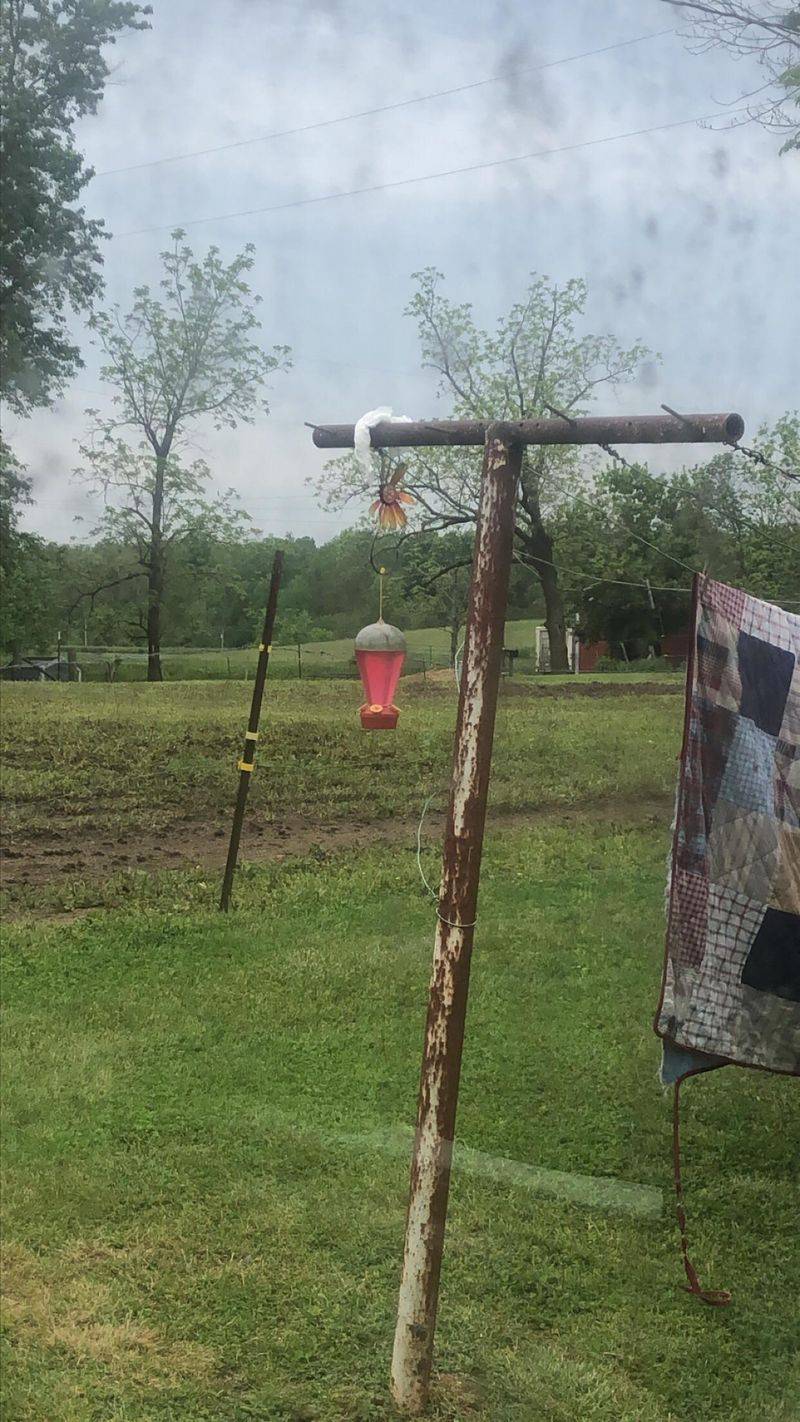
Persistent ants after a cleaning and a moat installation are almost always a route problem, not a reason to reach for chemicals. The moat blocks the hanger, but it does nothing about any other surface that makes contact with the feeder or the wire above it.
Walk around the feeder and look at every possible contact point. A single branch resting against the hanging wire, a vine that has grown close enough to brush the feeder, a porch railing the feeder bumps in the wind, or even a string used to extend the hanger can all serve as a bypass route.
Cornell Lab’s ant FAQ specifically advises keeping the feeder from touching alternate crawling routes, including branches, vines, walls, and railings, and recommends a simple rod or rigid hanger over a dangling string where practical.
When the source of the bridge is not obvious, temporarily move the feeder to a different location entirely. If ants find the new spot quickly, look for a structural contact you missed.
If they do not, the original placement was almost certainly supplying the route. Cornell Lab’s general hummingbird feeding guide and the Cornell Cooperative Extension feeder pest resource both note that relocating a feeder is a reasonable diagnostic step when insect pressure persists.
Ordinary ants crawl; they do not routinely fly over a properly maintained moat, so a persistent infestation almost always points to a physical bridge somewhere.
Maintain nectar that is safe for hummingbirds
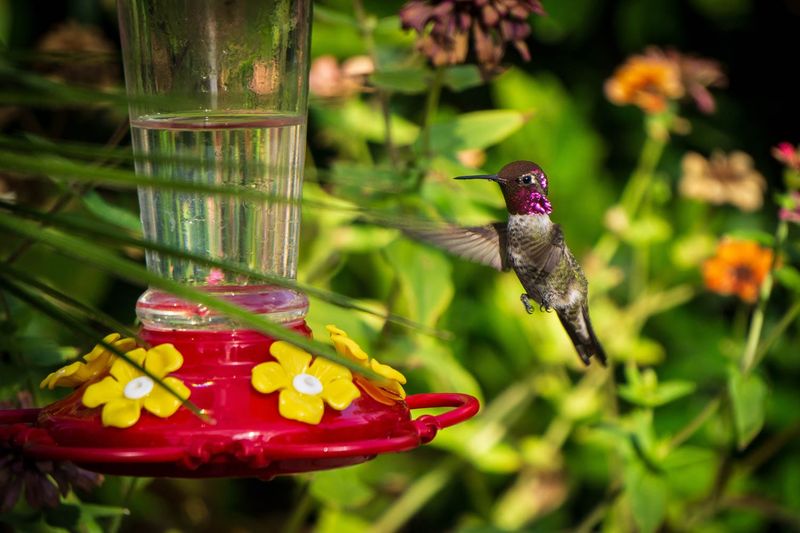
Solving the ant problem is only half the job if the nectar inside the feeder is not safe for the birds you are trying to attract. Getting the recipe and the maintenance schedule right protects hummingbirds and also reduces the conditions that make a feeder attractive to pests in the first place.
The recipe is straightforward: one part plain white granulated sugar dissolved in four parts water. UF/IFAS’s Florida hummingbird guide and Cornell Lab’s species account both confirm this ratio and advise against honey, artificial sweeteners, and extra-sweet mixtures.
Honey ferments quickly and can cause a dangerous fungal infection in hummingbirds. Red dye is also unnecessary; the feeder’s own red parts and nearby red flowers provide plenty of visual cues.
How often you change the nectar matters as much as what goes in it. UF/IFAS guidance on bird feeder care recommends changing sugar water every three to five days, with more frequent changes during hot weather or when the feeder sits in direct sun.
Replace the nectar immediately if it turns cloudy or you see floating particles, both signs of microbial growth. In Florida and Texas summers, that threshold can arrive in two days or less.
Cornell Lab’s feeding overview recommends thorough cleaning each time you refill: disassemble the feeder, scrub the reservoir and ports with hot water and a bottle brush, and rinse completely before adding fresh nectar. UF/IFAS cautions specifically against leaving soap, bleach, or detergent residue inside the feeder, so plain hot water and a good brush are the safest routine for most homeowners.
Always check the manufacturer’s instructions, since some feeder materials have specific care requirements.
Protect birds while improving the surrounding habitat
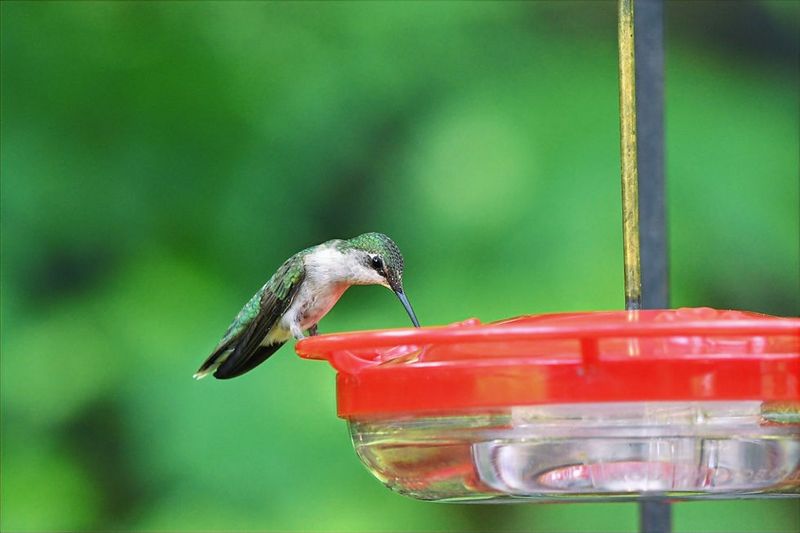
Putting together a complete, bird-safe setup means combining everything covered so far: a clean, drip-free feeder, moved to a shaded and sheltered spot, kept physically separate from branches, vines, walls, and railings, and protected by a water-filled moat that you check and refill regularly.
Two categories of products have no place in that setup. Audubon’s feeder pest guidance warns that insecticides applied near a feeder can injure or kill birds, bees, and other wildlife, so keep any yard pest management well away from nectar and feeder surfaces.
The Cornell Cooperative Extension feeder pest guide is equally clear that petroleum jelly, grease, cooking oil, and sticky substances applied to bird-accessible surfaces can mat feathers and damage their insulating ability, which is harmful even in small amounts.
Beyond the feeder itself, the yard around it makes a real difference. Audubon’s hummingbird habitat guide explains that native flowering plants provide natural nectar and attract the small insects hummingbirds need for protein.
UF/IFAS is direct on this point: sugar water supplements rather than replaces the flowers, insects, shelter, and resting spots that make up a hummingbird’s complete diet. The practical sequence is clean, repair, shade, separate, moat, and monitor.
A feeder maintained that way stops being an ant problem and starts being the reliable wildlife feature it was always meant to be.