
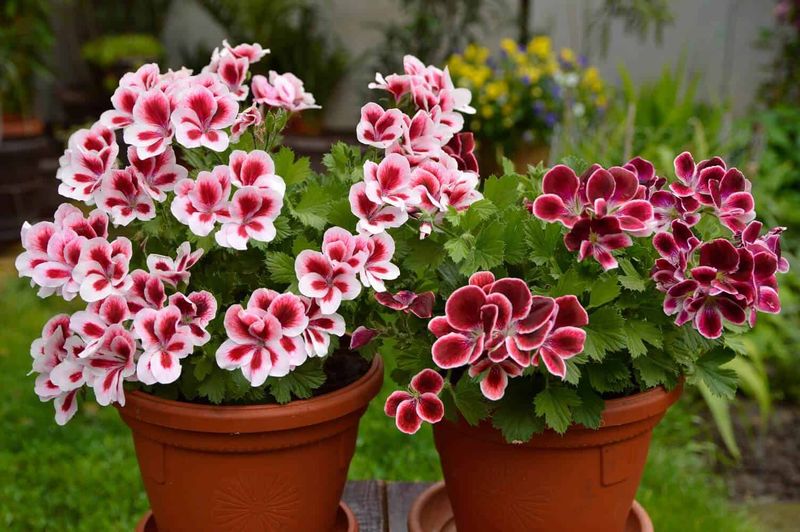
Geraniums are one of the most popular porch and patio plants across the South, but even well-loved containers can start looking sparse mid-season. When flowering slows, it is easy to wonder what went wrong.
The plants commonly sold as geraniums are actually Pelargonium, and their bloom cycles respond to a mix of care routines, summer heat, and seasonal conditions that are worth understanding before you reach for a quick fix.
Geranium flowering can slow for several different reasons
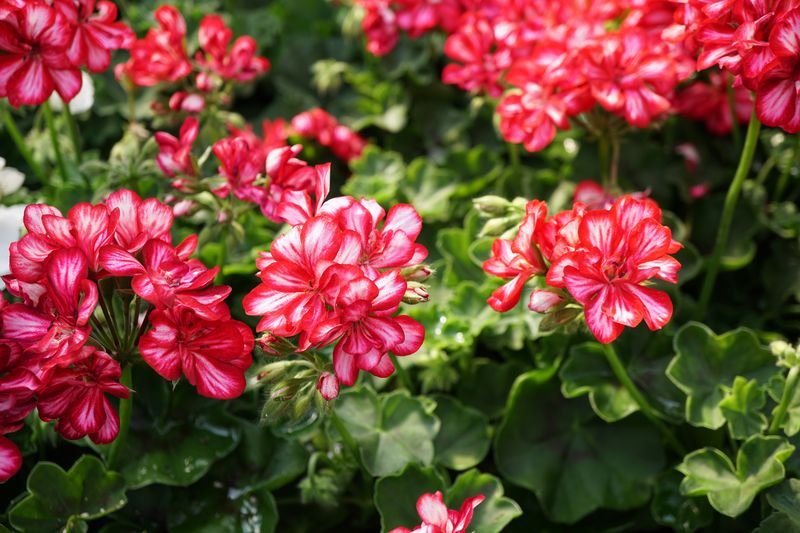
Common geraniums sold at garden centers across Florida and Texas are almost always PelargoniumGeranium species, most often zonal or ivy-leaved types, rather than the hardy perennial geraniums in the genus . That distinction matters because the care advice, heat tolerance, and bloom expectations for these two groups differ considerably.
Keeping the right name in mind helps when reading plant tags or extension guides.
Flowering in these plants can slow when repeated care problems affect how the plant grows. Inadequate direct light, drought stress, poor drainage, depleted nutrients in containers, and leaving spent flower clusters on the plant are all factors that can reduce continued bloom.
UGA Cooperative Extension guidance on geraniums notes that growth and flowering also slow considerably during hot weather, especially when nighttime temperatures stay high, which is a regular condition across much of the South by midsummer.
Heat, warm nights, the specific cultivar, and seasonal patterns can produce the same result as a care lapse. UF/IFAS geranium guidance reports that flowering commonly fades by mid- to late summer under Florida conditions, even with attentive care.
This article is meant as a diagnostic guide, not a promise that one missed routine caused the problem or that continuous flowers are achievable through peak Southern heat.
Remove spent flower clusters to support repeat bloom
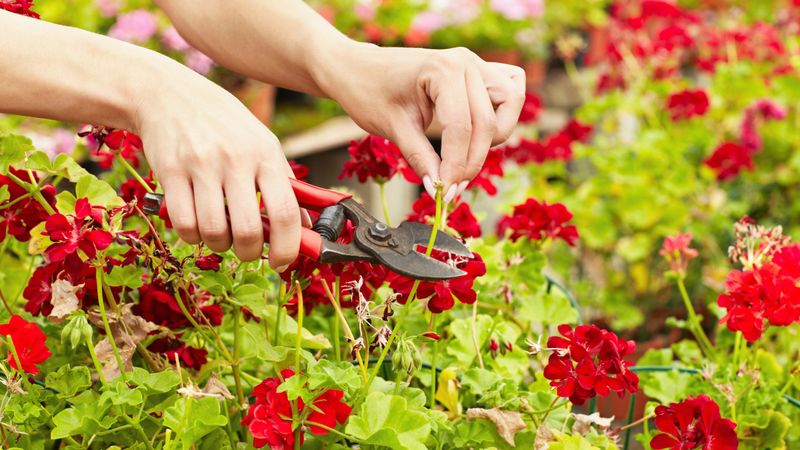
Deadheading is the first practical step to take when geranium flowering starts to slow. The key is removing the entire faded flower stalk where it meets the main stem, not just pulling off wilted petals one by one.
Leaving the stalk behind allows the plant to continue investing energy in seed development rather than producing new flower buds.
Iowa State University Extension guidance on annual geraniums identifies deadheading as a way to reduce seed production, improve the plant’s appearance, and encourage continued flowering. Removing aging flower stalks also eliminates tissue that can harbor moisture and contribute to fungal problems later in the season, which is a real concern in the humid conditions common to Florida and Gulf Coast gardens.
Deadheading regularly throughout the growing season keeps the plant looking tidy and gives it the best opportunity to push out new flower clusters. That said, heat, light, nutrition, and the specific cultivar still determine how much flowering actually follows.
Deadheading may encourage another flush, but it does not guarantee one, especially during peak summer heat when the plant’s growth naturally slows regardless of how well it is maintained.
Provide direct light while moderating extreme Southern heat
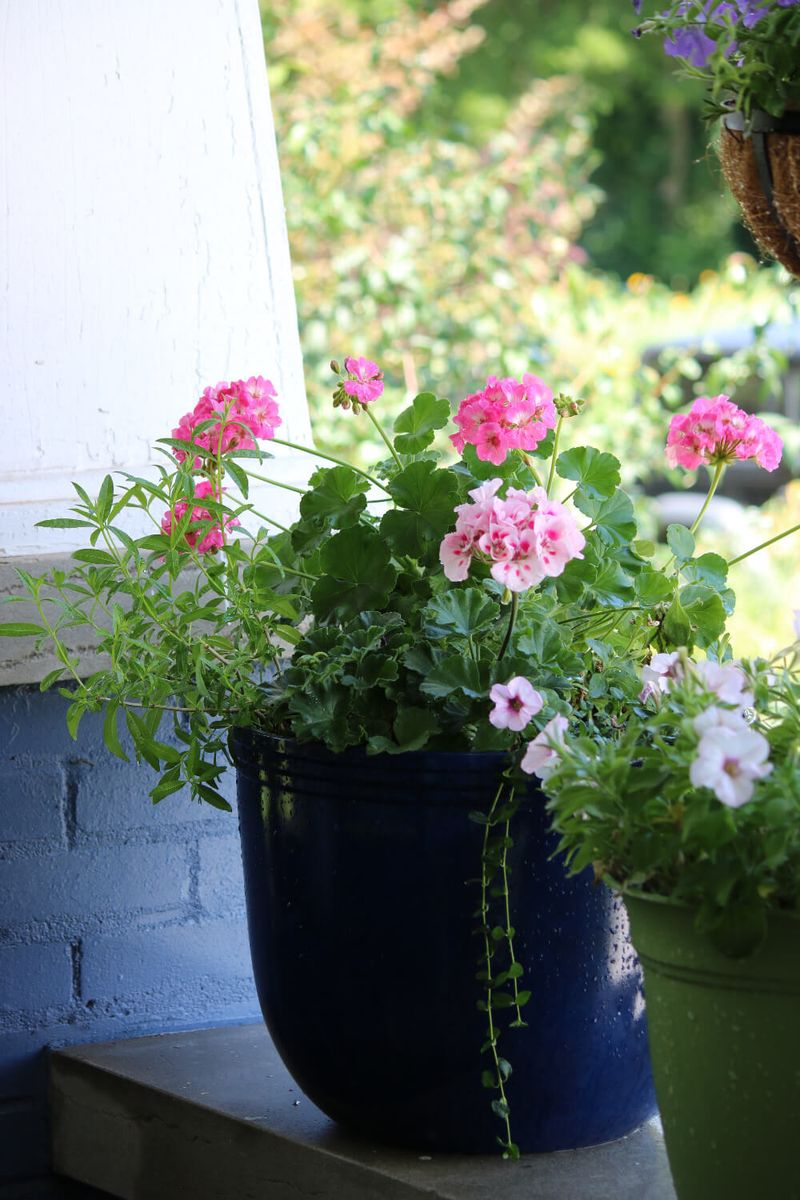
Light is one of the most direct influences on how freely geraniums bloom. Texas A&M AgriLife Extension states that geraniums require at least four hours of direct sunlight per day to flower well.
Before assuming a care routine is the problem, check whether a wall, roof overhang, fence, or neighboring plant is blocking the light your containers actually receive, especially as the sun angle shifts through the season.
The Southern qualification is important here. UGA Extension recommends that zonal and ivy-leaved geraniums may benefit from light shade during midsummer, because extreme afternoon heat can suppress growth and flowering just as readily as too little light.
The goal is bright, direct morning sun with protection from the harshest afternoon exposure when temperatures are at their peak.
Filtered midday light is not a universally adequate replacement for direct sun, and full harsh afternoon exposure is not always the right answer either. A spot with several hours of direct morning light and some afternoon shelter often performs better during the hottest weeks than either extreme.
Regal or Martha Washington types are less heat tolerant than zonal and ivy-leaved geraniums and may struggle more noticeably in Southern summer conditions regardless of light management.
Balance soil moisture with reliable drainage
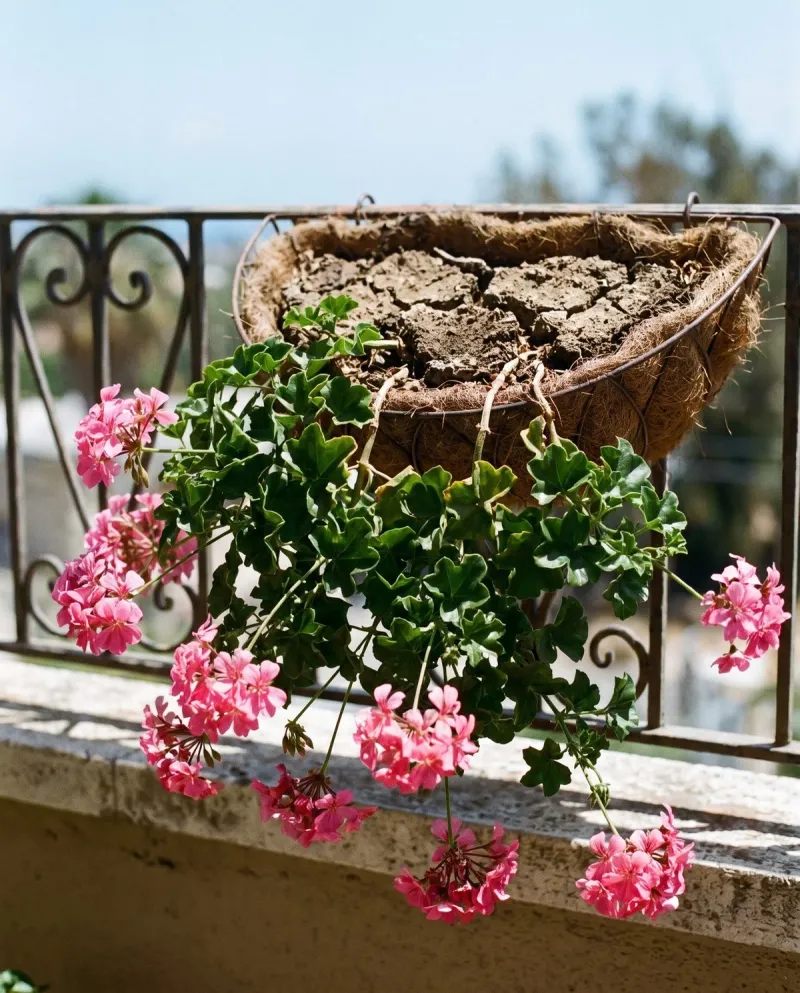
Checking the soil before watering beats any calendar-based schedule. For most container geraniums, watering deeply when the top one to two inches of soil have dried out is a practical starting point.
University of Minnesota Extension guidance notes that geraniums tolerate somewhat dry soil better than constantly wet conditions, though repeated wilting from drought stress can still reduce growth and flowering over time.
Hanging baskets and small pots dry out much faster than ground beds or large containers, particularly during hot Southern afternoons. A basket that feels moist in the morning may need water again by evening on a hot July day.
Adjust your checking frequency based on the container size, material, and current temperatures rather than a fixed routine. UGA Extension advises watering deeply when rainfall is insufficient and not allowing plants to wilt repeatedly.
Constantly wet soil creates its own problems. Poor drainage and blocked drainage holes can contribute to root rot, stem rot, yellowing foliage, and weak growth that limits flowering.
UF/IFAS guidance emphasizes that geraniums perform best in well-drained soil or media, and containers must have unobstructed drainage holes. In the heavy rains common to Florida summers, elevating pots slightly or moving them under cover during extended downpours can help prevent prolonged saturation.
Feed container plants without relying on bloom boosters
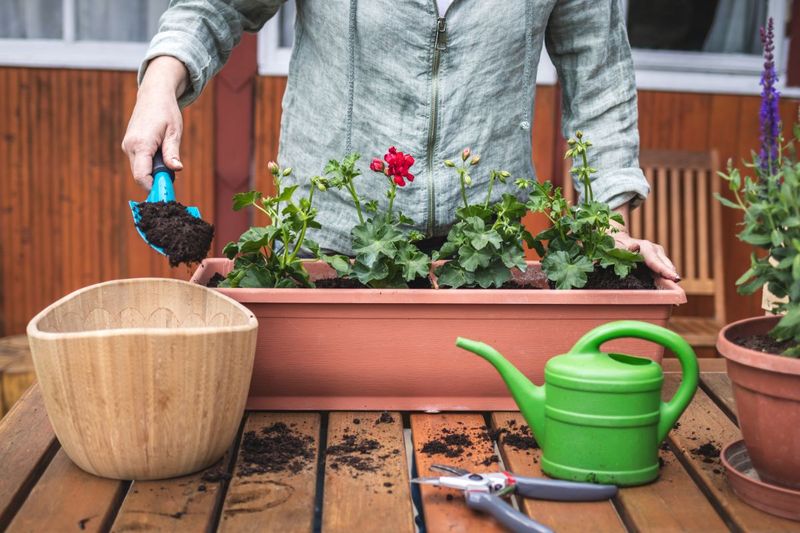
Container geraniums have a limited soil volume, and repeated watering during the growing season gradually leaches nutrients out of the pot. That means plants in hanging baskets or terracotta containers may genuinely need more regular feeding than those growing in landscape beds.
UGA Extension recommends fertilizing geraniums every four to six weeks during active growth, with slow-release products reducing the need for as many applications.
When you apply fertilizer, keep it off the leaves and stems and water it thoroughly into the soil. Fertilizer sitting on plant tissue can cause burning, and dry granules left on the surface may not reach the root zone effectively.
University of Minnesota Extension guidance on container plant feeding reinforces the importance of following product label directions rather than applying more than recommended.
High-phosphorus fertilizers marketed as bloom boosters are not a reliable default fix for slow flowering. Excess fertilizer can damage plants and contribute to water-quality problems.
UMN recommends soil testing when symptoms or growing conditions suggest a nutrient problem, and their fertilizer selection guidance favors a balanced, label-directed product over specialty formulas applied without a clear diagnosis. Yellow leaves, for example, can result from overwatering, underwatering, low light, root problems, or disease, not only from a nutrient shortage.
Separate normal fading from Botrytis and other disease
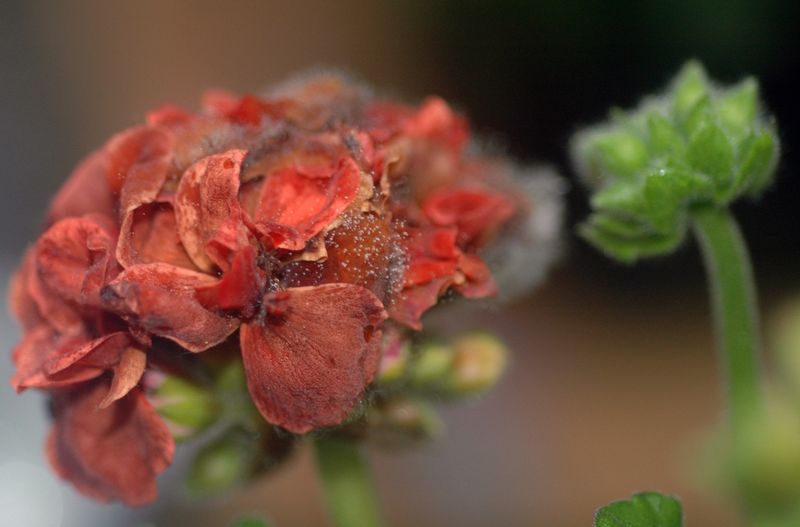
Not every faded flower signals a disease problem, but certain warning signs are worth acting on quickly. Darkening or premature collapse of flowers, gray fuzzy growth on petals or stems, water-soaked lesions on leaves, and spreading leaf spots are all indicators that something beyond ordinary heat stress or seasonal decline may be at work.
Botrytis blight is a common culprit in humid, crowded, or frequently wet conditions, and Penn State Extension’s geranium disease guide identifies it as a significant problem for geraniums in wet or poorly ventilated settings.
The Texas Plant Disease Handbook and Cornell’s Botrytis blight fact sheet both recommend removing faded flowers and infected tissue promptly, improving air circulation around plants, and avoiding overhead watering or any practice that keeps flowers and foliage wet for extended periods. Crowding plants together in a humid corner of a porch or placing them where water splashes regularly onto the foliage increases disease pressure considerably.
UMN’s geranium flower diagnostic tool notes that discolored or prematurely collapsing flowers can have multiple causes. Sanitation and improved air circulation are the right first responses, but they do not guarantee recovery once a disease is established.
If symptoms persist or spread despite removing affected tissue, a closer look at the specific pathogen involved may be needed before choosing a next step.
Let heat-stressed plants recover as conditions cool
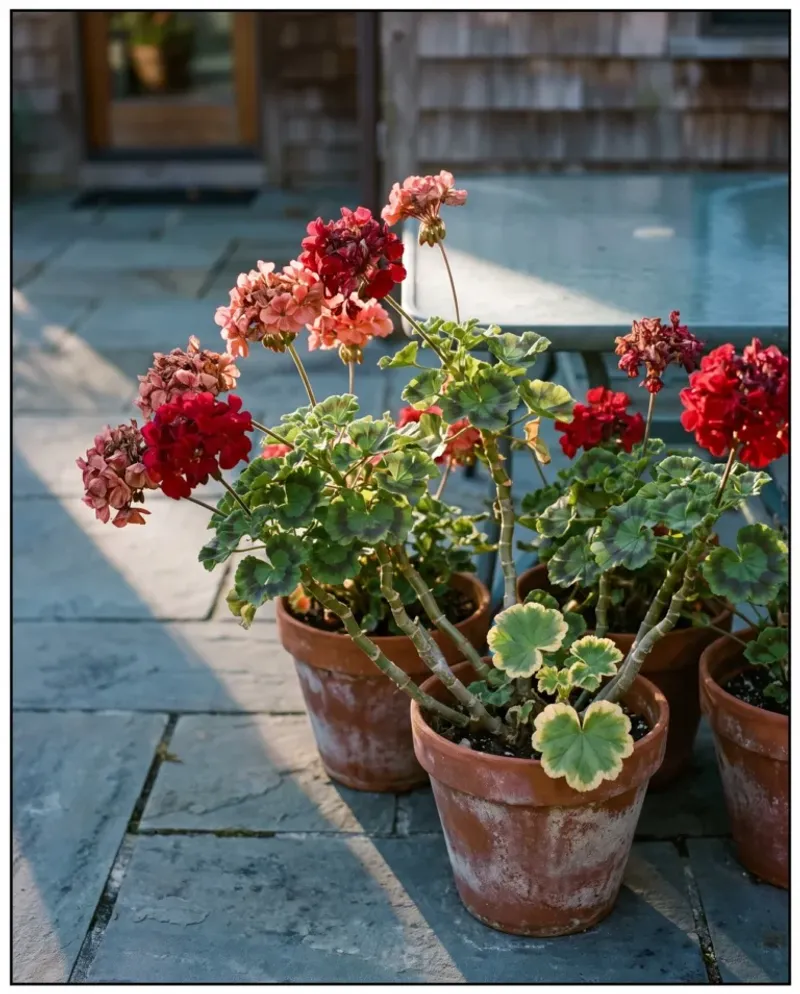
High daytime temperatures and warm nights are not a care failure, but they do directly limit what geraniums can do during peak Southern summer. UGA Extension describes heat and warm nights as direct causes of reduced growth and flowering, and that distinction matters when diagnosing why a plant has gone quiet.
A geranium that looked great in April and is now struggling in August may simply be responding to conditions rather than to anything the gardener did or skipped.
UF/IFAS guidance notes that in Florida, geranium flowering commonly fades by mid- to late summer, with plants in north Florida potentially recovering and blooming again in fall and winter as conditions cool. The cultivar also matters: common zonal and ivy-leaved types handle Southern heat better than regal or Martha Washington geraniums, which are more likely to decline and not recover as readily through a hot season.
For plants with long, sparse stems after a heat-related pause, cutting them back in late summer and following up with appropriate feeding gives the plant a better structure for renewed growth. UGA specifically recommends this approach, while making clear that pruning does not produce immediate flowers.
Renewed blooming after a cutback depends on cooler nights and moderate temperatures as much as on the pruning itself, so patience is part of the recovery plan.
Use a simple reset before expecting another bloom flush
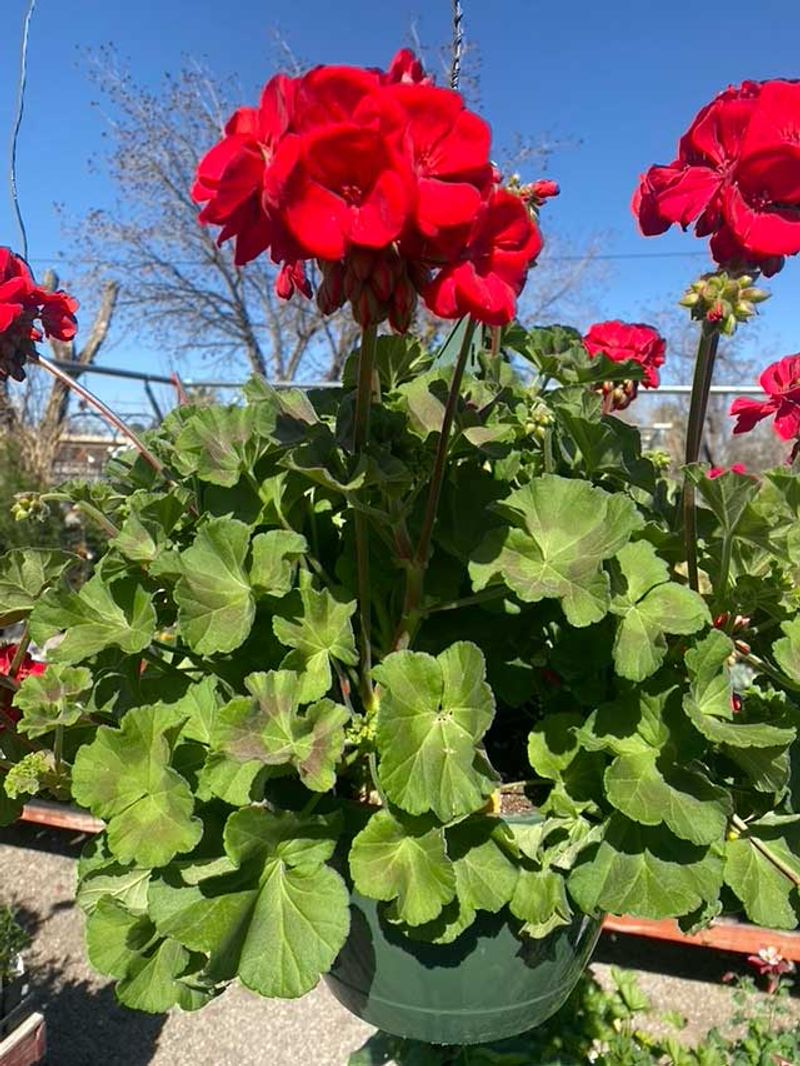
Before expecting a new flush of flowers, work through a short checklist rather than making several changes at once. Start by removing any spent flower stalks cleanly at the base.
Then assess light: count the hours of direct sun the plant actually receives and consider whether afternoon shelter would help during the hottest weeks.
Check the soil next. Press a finger into the top inch or two and water deeply only if it has dried to the appropriate depth.
Look over the plant for any darkened or collapsed flowers, gray growth, or leaf spotting that might suggest disease rather than ordinary decline. Iowa State Extension’s annual geranium guide and UGA Extension both support this kind of systematic approach before reaching for fertilizer or other interventions.
Feed only if the plant is in active growth, nutrient depletion seems likely, and the label supports the application rate.
UF/IFAS guidance is a useful reminder that correcting a limiting care problem may improve and extend flowering, but seasonal heat, cultivar, and disease still set the outer boundaries. The most reliable outcome from a care reset is a healthier, better-maintained plant, and a healthier plant gives blooms the best possible chance when conditions allow.