
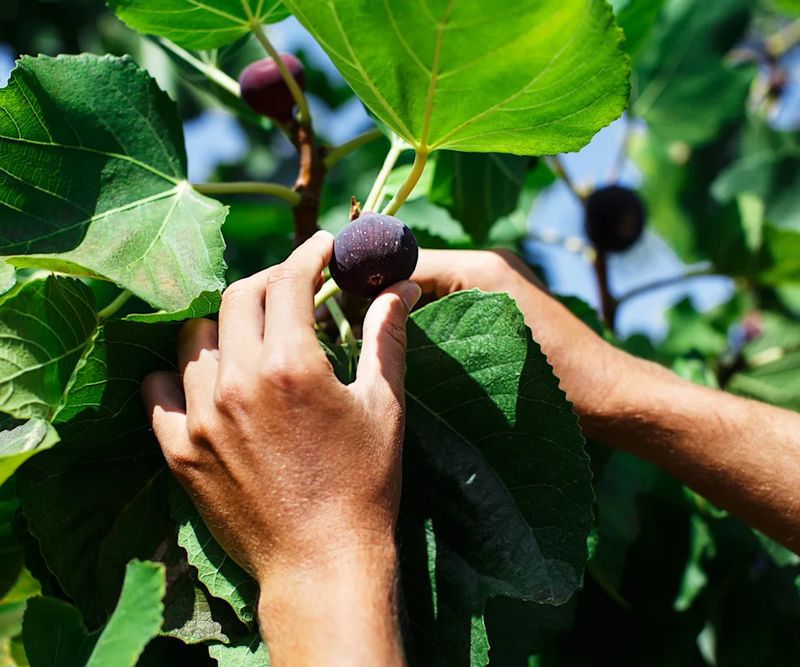
If your fig tree is loaded with developing fruit right now, there is still something practical you can do to help those figs finish well. The real goal is not setting new fruit but giving the crop already on the branches the best possible chance to ripen properly.
Hot, dry Southern summers put fig trees under stress that can lead to poor flavor, premature drop, and disappointing harvests. Steadying the moisture around your tree’s root zone is the most evidence-backed correction you can make at this stage of the season.
Steady moisture gives existing figs a better chance
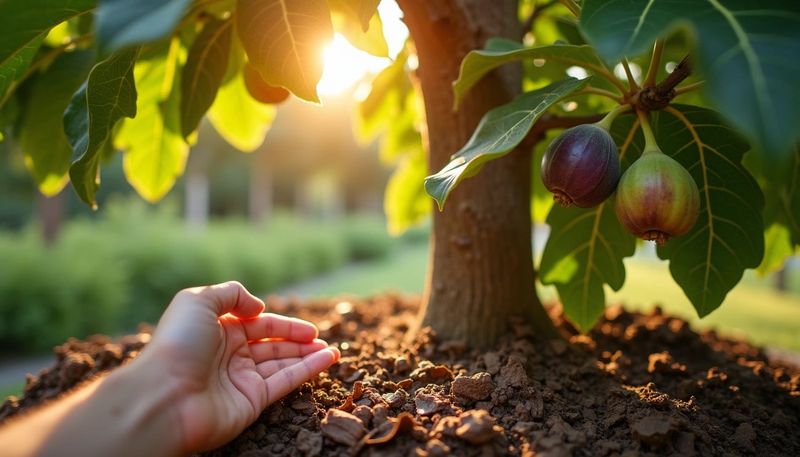
Fruit already hanging on your fig tree is what matters most right now. The title’s phrase “set a sweeter harvest” refers to fruit formation, but the practical opportunity at this point in the season is something different: helping the figs already on your tree finish ripening rather than starting a brand-new crop.
That distinction matters because the actions that support existing fruit through ripening are not the same as those that encourage new setting.
Hot, dry conditions that are common across the South during summer can quietly damage a fig crop before you even notice a problem. UGA Cooperative Extension guidance on home garden figs specifically notes that dry, hot periods before ripening can cause poor fruit quality, and that supplemental watering can reduce the problem.
Sharp swings between very dry soil and sudden heavy watering create a different kind of stress that can push figs to drop before they are ready.
According to UC IPM’s fig drop resource, both excessive irrigation and drought conditions are linked to premature fruit loss and reduced production. Correcting inconsistent moisture now may improve the odds that your existing figs finish properly, especially after a stretch of dry, hot weather.
That is a realistic and worthwhile goal, even if it cannot guarantee sweeter fruit from every tree.
Water the root zone without flooding it
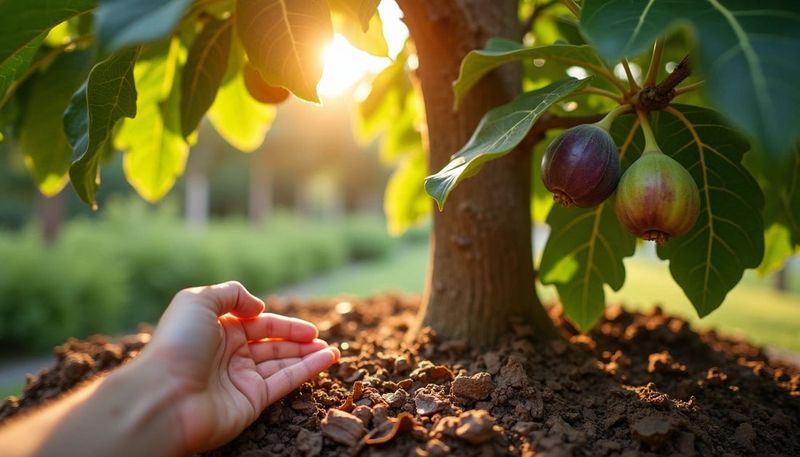
Fig trees have shallow, fibrous roots that spread out near the surface rather than diving deep, which makes them more sensitive to drought than many gardeners expect. Texas A&M AgriLife Extension describes figs as relatively drought-sensitive and notes that local performance varies with site and climate.
When those surface roots dry out during a Texas or Florida summer heat stretch, the tree starts cutting its losses, and developing fruit is often the first thing to go.
The practical goal is to moisten the root zone thoroughly and then check conditions before watering again rather than sticking to a rigid schedule. UGA recommends roughly 1 to 1.5 inches of water per week from rainfall or irrigation during summer as a general starting benchmark, but that number is not a universal prescription.
Rainfall, soil type, drainage, and heat all shift what your specific tree actually needs on any given week.
Push a finger or a moisture probe a few inches into the soil near the drip line to check before you run the hose. Evenly moist soil feels damp and cool without water pooling or standing on the surface.
Saturated soil cuts off oxygen to the roots and creates its own set of problems, so the target is consistent moisture, not wetness. UF/IFAS guidance on figs reinforces that well-drained soil is a key part of healthy fig production, which means drainage matters as much as the amount of water you apply.
Use mulch and drainage to hold moisture steady
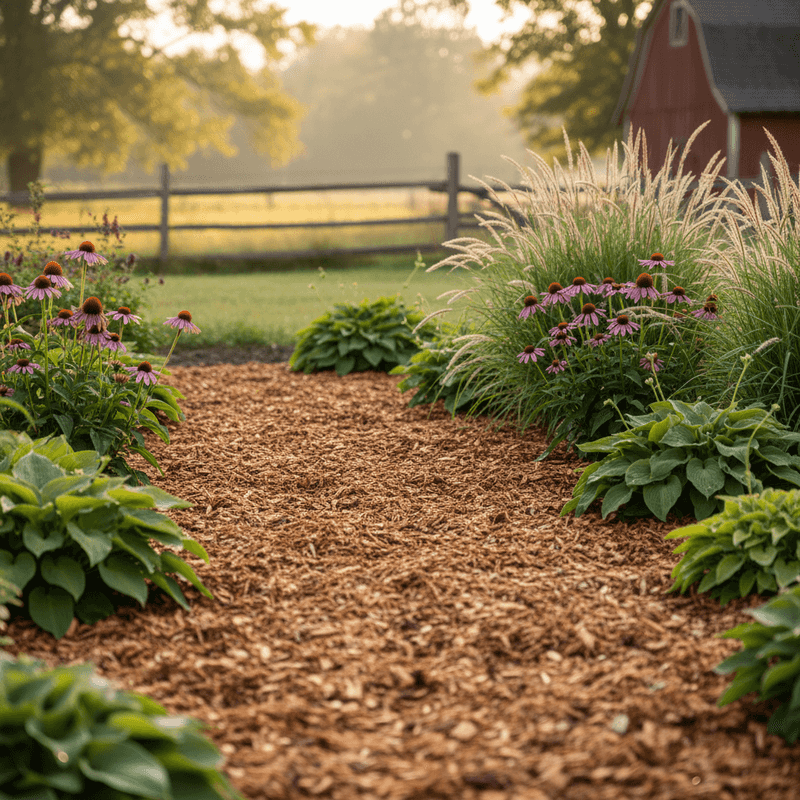
Organic mulch is one of the simplest tools available for keeping fig tree moisture consistent between waterings. Spread a 3- to 4-inch layer over the root zone, covering the area out to the drip line or beyond, and you slow the rate at which summer heat pulls moisture out of the soil.
UGA specifically recommends organic mulch for figs and notes that it can reduce drought-related problems during hot weather. Wood chips, straw, and pine bark all work well for this purpose.
One detail that matters: keep the mulch a few inches away from direct contact with the trunk. Mulch piled against the bark traps moisture and can encourage rot or pest activity at the base of the tree.
A small gap between the mulch ring and the trunk protects the tree while still delivering the moisture-retention benefit across the root zone.
Drainage deserves equal attention, particularly for gardeners in Florida and other humid parts of the South. UF/IFAS Gardening Solutions notes that wet soil and heavy rain can increase the risk of splitting and disease pressure on ripening figs.
If your planting area tends to hold water after rain, improving drainage or adjusting irrigation frequency will do more for fruit quality than adding more water. The goal in every case is evenly moist, well-drained soil rather than daily irrigation or periods of deliberate drought stress.
Reject late-season sweetness shortcuts
Several popular fig tips circulate every summer that sound logical but are not supported by extension guidance for home gardens. Stopping irrigation entirely to “concentrate” the sugar in developing figs is one of the most common.
The problem is that drought stress, excessive irrigation, and inconsistent watering can all damage fruit quality or trigger premature drop, so deliberately withholding water is not a safe general recommendation for a Southern backyard tree carrying a ripening crop.
A single deep watering after a dry stretch also cannot reliably change the sugar content of every fig on the tree at once. What one good watering can do is begin to correct ongoing moisture stress, which may help the tree support the fruit it already has.
A controlled fig study on irrigation depth and potassium found that the relationship between water and soluble solids is not simple and varies with conditions, which is why no single formula translates reliably to every home garden.
Late-season fertilizer shortcuts deserve the same skepticism. UGA lists overfertilization as a cause of premature fruit drop and notes that mature fig trees in Georgia are typically fertilized once a year in early spring, not repeatedly late in the season.
Excess nitrogen in particular tends to push the tree toward leafy, vegetative growth at the expense of fruit. A last-minute potassium application is not established as a universal home-garden sweetness treatment either.
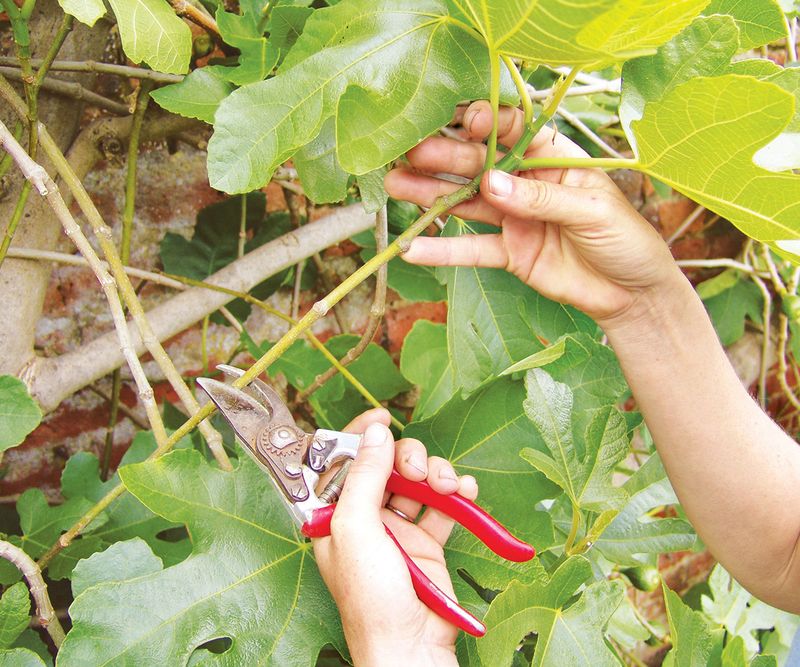
Similarly, UF/IFAS advises against heavy late-season pruning or stripping healthy leaves to expose figs, since that can remove productive wood and reduce the tree’s ability to support the crop it is trying to finish.
Let the final ripening stage build flavor
Steady soil moisture supports ripening, but it does not directly inject sweetness into the fruit. The flavor that makes a tree-ripe fig worth waiting for builds during the final days on the branch.
Research on sugar accumulation in late fig ripening found that soluble sugar levels rise sharply during the final ripening stage, with dramatic changes in sugar metabolism occurring as the fruit approaches full maturity. A fig pulled from the tree even a day or two early can be colored and soft but still noticeably less sweet than one that finished completely.
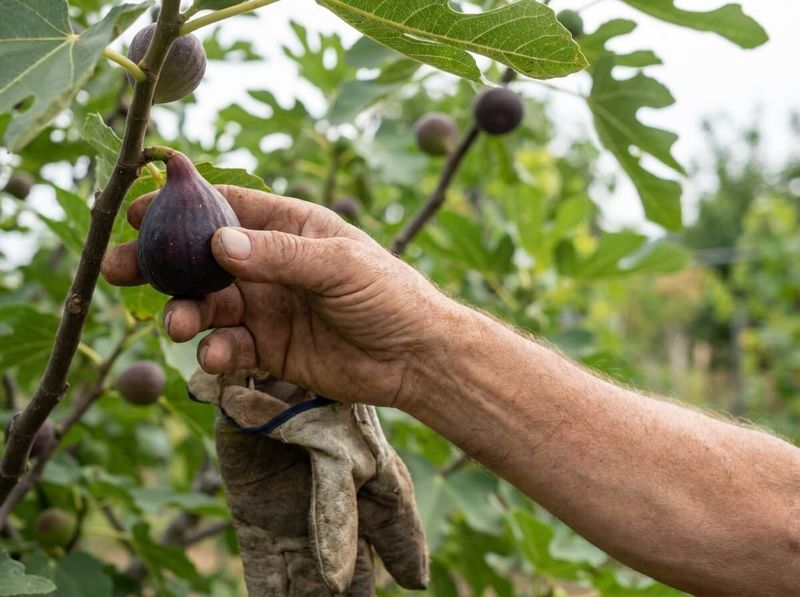
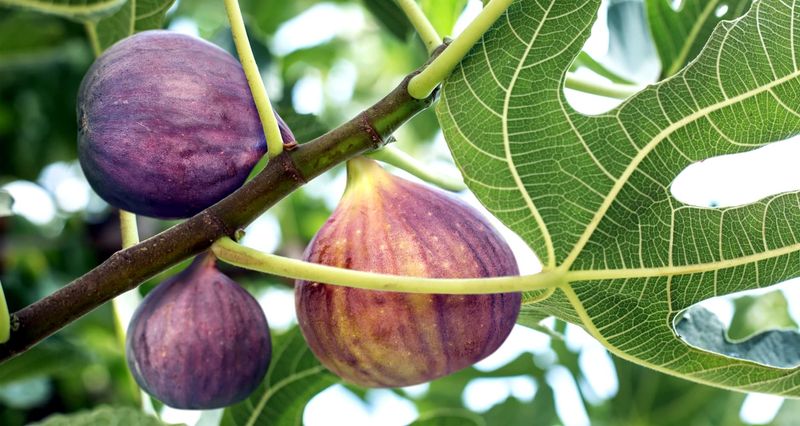
Knowing when to pick requires reading several signs together rather than relying on color alone. UC IPM recommends harvesting figs when the fruit has reached its cultivar’s mature color, feels soft to a gentle squeeze, shows a drooping neck where the stem bends, and separates from the branch with little resistance.
Milky white latex at the stem end is a reliable sign that the fig is not fully ripe yet. Skin color alone can mislead, especially with green or yellow-green cultivars like Kadota that are fully ripe without ever turning brown or purple.
Figs do not improve substantially after picking the way some other fruit can, so patience on the tree pays off more than picking early and hoping the fruit sweetens on the counter. When harvesting or doing any pruning, wearing gloves is a practical precaution.
UF/IFAS extension notes that fig latex can irritate the skin, particularly for people with sensitivity, so gloves protect your hands during both picking and any light maintenance work around the tree.
Cultivar and climate determine whether fruit can finish
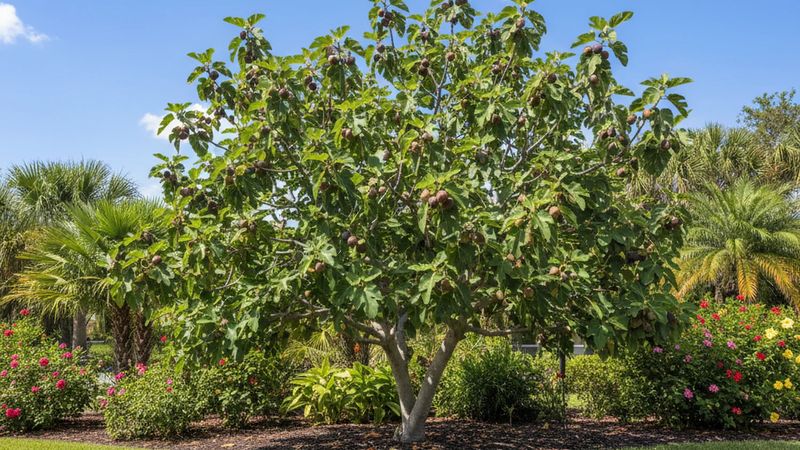
Whether your tree still has a realistic ripening window depends on more than watering. Florida and parts of Texas offer long warm seasons, but the actual deadline for any given tree comes down to cultivar, frost risk, shade, drought history, tree age, and how mature the existing fruit already is.
Texas A&M AgriLife Extension notes that figs must ripen on the tree and that local performance varies with climate, site, and variety. A tree in south Florida with half-developed fruit in September faces a very different timeline than one in north Texas with the same fruit in late October.
UF/IFAS places Florida fig ripening broadly from July through October, which suggests that some trees in the state still have a reasonable window depending on location and cultivar. UF/IFAS also notes that common figs recommended for Florida home gardens are parthenocarpic, meaning they do not require pollination to set fruit, which removes one variable from the ripening equation for those cultivars.
Tree age and crop type add further complexity. UGA explains that young fig trees may take several years to produce quality fruit, and that some varieties carry an early breba crop on older wood plus a later main crop on current-season growth.
Pruning advice that works for one crop type can eliminate the other, so gardeners should know which crop their tree is carrying. Cultivars like Celeste can drop fruit during hot weather even when care is otherwise reasonable, which means steady moisture helps but cannot overcome every variety’s limitations.
If existing figs are still very small and immature with frost approaching, no amount of watering can force them to finish before the season closes.
Protect ripe figs through the final harvest
A practical end-of-season routine for fig growers comes down to a short, repeatable sequence. Check the soil near the drip line every few days and water deeply when the root zone feels dry, aiming for evenly moist rather than saturated.
Keep the mulch layer intact over the root zone without letting it pile against the trunk, and skip any heavy late-season fertilizer or drastic pruning that could redirect the tree’s energy away from the fruit it is trying to finish.
Once figs begin to soften, check the tree frequently, ideally every day or two. UC IPM advises harvesting promptly once figs reach full ripeness because ripe fruit is highly perishable and quickly draws insects, birds, and disease.
Sour rot is a particular concern in warm, humid Southern conditions and can ruin fruit that was perfect just a day earlier. UGA notes that frequent harvesting during peak ripeness reduces losses to all of these pressures.
Steady moisture through this final stretch may improve the odds for any fig that has a realistic window to finish. What actually determines the flavor in the bowl is the cultivar you planted and how completely the fruit was allowed to ripen on the tree.
Getting the watering right creates the conditions for a good result; the tree and the fruit do the rest.