
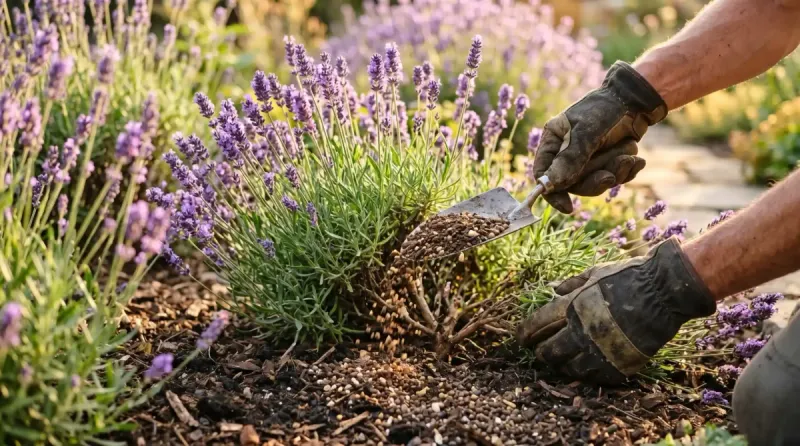
Lavender is one of those plants that rewards a little neglect more than a lot of attention, especially when it comes to feeding. Many Southern gardeners watch their lavender push out thick, lush foliage each season while the flowers stay stubbornly sparse, and the instinct is to reach for fertilizer.
But adding nutrients at the wrong time, or in the wrong form, can make that leafy problem worse rather than better. Before you open the fertilizer bag, it helps to know what your lavender actually needs and why timing matters so much.
Lavender Usually Prefers a Leaner Diet
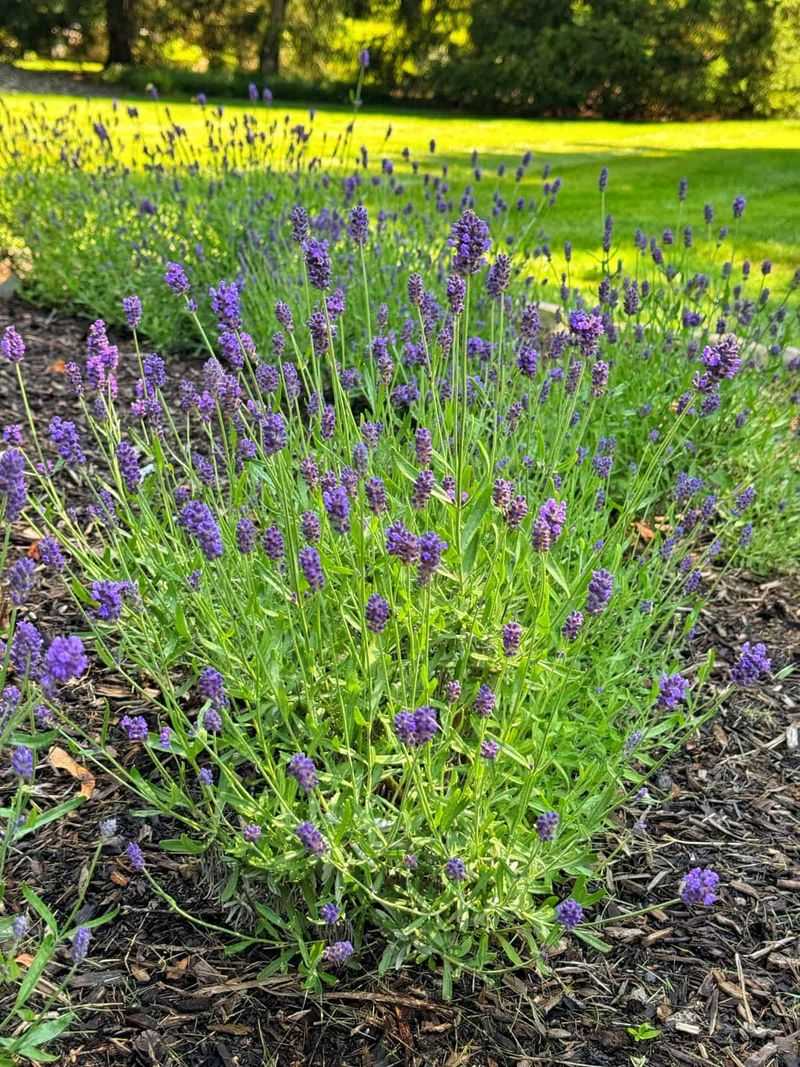
Mature lavender is a plant that genuinely thrives on neglect in the nutrition department. UF/IFAS guidance on English lavender describes it as growing best in dry, somewhat infertile soil, which is almost the opposite of what most gardeners expect.
Reaching for fertilizer each season can actually work against the compact, flower-rich growth most home gardeners are hoping to see.
The pattern of vigorous leaves with few blooms is frustrating, but fertilizer is only one of several possible explanations. Poor drainage, inadequate sunlight, an unsuitable cultivar for your region, watering stress, or root problems can all produce that same lopsided result.
UF/IFAS Pasco County’s beginner lavender guide notes that excessive fertilization can lead to leggy growth and reduced fragrance, but it also points to site conditions as equally important factors.
Not every lavender plant fits the same low-fertility rule. New transplants getting established, container-grown plants with depleted potting mix, slow-growing specimens, or plants in soil where a test has confirmed a real deficiency may genuinely benefit from a light, well-timed feeding.
Utah State University Extension observes that over-fertilized lavender tends to produce more foliage but fewer flowers. The wiser starting point is diagnosing what is actually limiting the plant before adding anything to the soil.
Excess Nitrogen Can Favor Foliage Over Flowers
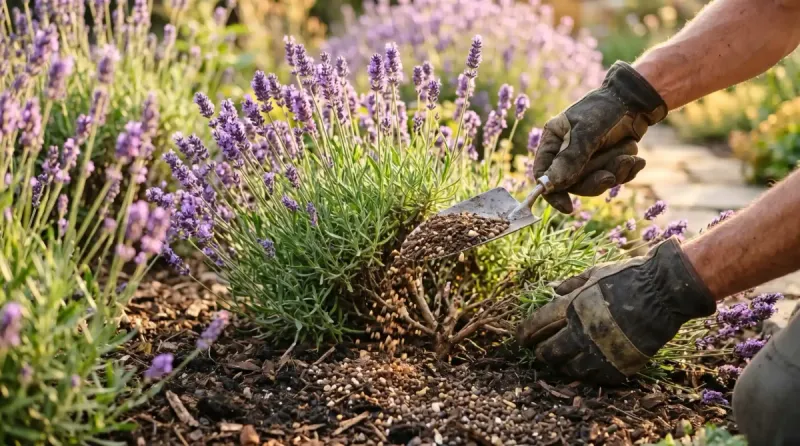
When lavender gets more nitrogen than it can use productively, the plant tends to redirect energy into soft, leafy shoots rather than compact stems and flower spikes. The Royal Horticultural Society warns that high-nitrogen fertilizers and manure can produce floppy lavender plants, a description that matches what many Southern gardeners see after well-intentioned spring feeding.
UC ANR training material goes further, noting that excessive nitrogen in lavender production encourages soft, succulent growth that is low in essential oil. That is a production-context finding, but it points to a real mechanism: nitrogen pushes vegetative growth at the expense of the compounds that make lavender fragrant and productive.
Research findings are more mixed than a simple rule suggests, though. A peer-reviewed study on Lavandula angustifolia found that high nitrogen altered growth and reduced volatile-oil percentage in some treatments, while a separate hydroponics experiment found essential-oil yield was not significantly changed across the tested nitrogen levels.
A third study of Lavandula dentata found that organo-mineral fertilization increased flower yield under controlled production conditions, a result that reflects a specific species, rate, and experimental setup rather than a general prescription for home gardens.
The practical takeaway for home gardeners is narrower than any single study: avoid nitrogen-heavy fertilizers and routine manure applications, and understand that excessive feeding may favor leafy growth and may affect fragrance or oil production under some conditions, but the outcome is not guaranteed to be the same in every yard or with every cultivar.
Use the Growth Stage, Not the Calendar, to Time Feeding
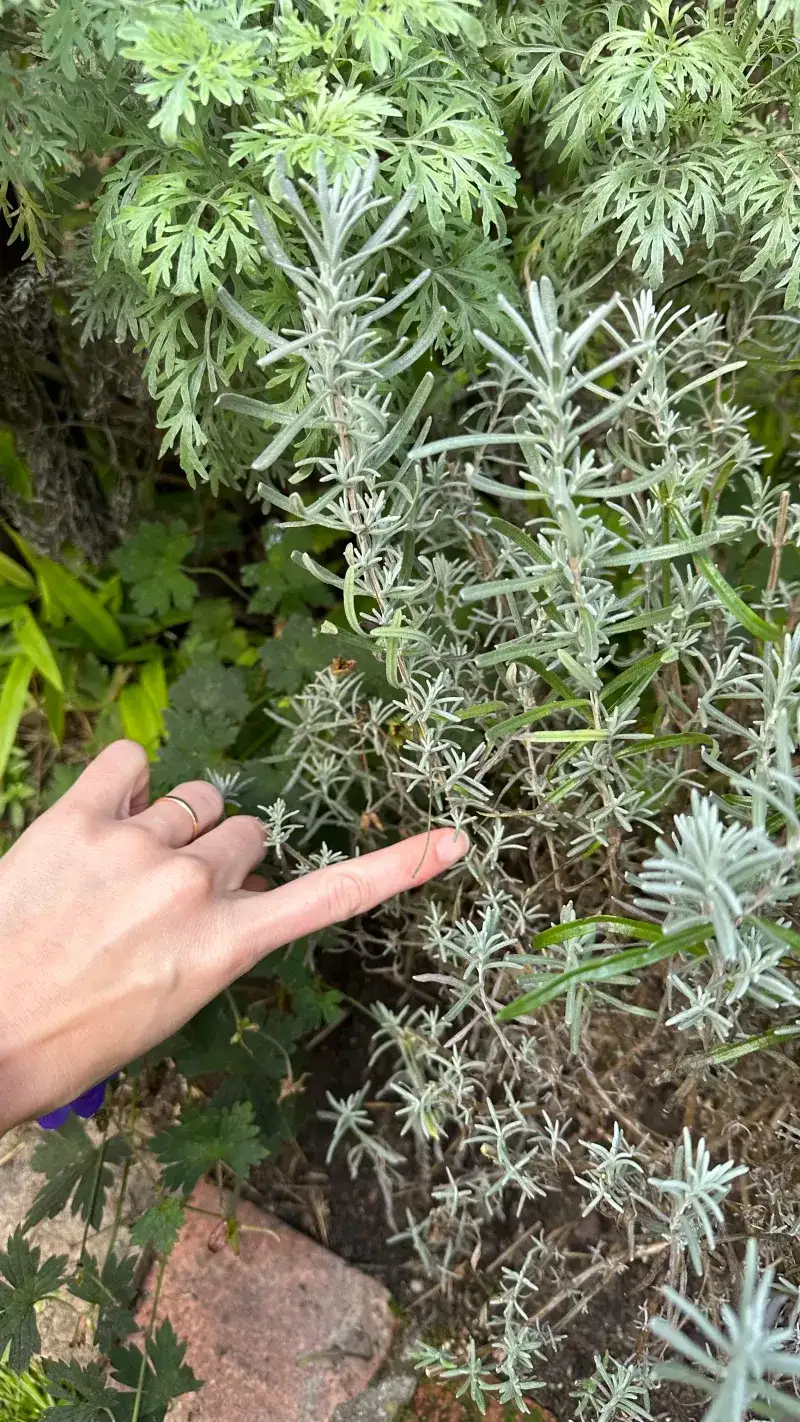
Watching the plant, rather than watching the calendar, is the more reliable way to time any lavender feeding. UC IPM’s cultural guide for lavender recommends applying fertilizer, when a plant genuinely needs it, during early active growth and watering it in well.
The same source explicitly cautions against fertilizing during flower development, because that is the window when nitrogen-driven vegetative growth can most directly compete with blooming.
No single month maps cleanly onto that guidance across the entire Southern United States. A Texas gardener in Zone 8 may see lavender break dormancy and begin active growth weeks earlier or later than a Florida gardener managing a cultivar adapted to subtropical conditions.
Species, cultivar, local winter temperatures, and summer heat all shift the timing of growth flushes and bloom cycles, which is why growth stage is a more honest guide than any fixed date on the wall.
Mature, well-established plants in good soil may not need fertilizer at all in a given season. UF/IFAS notes that lavender grows best in somewhat infertile conditions and that nutrient-rich soil can work against the plant’s natural tendency toward compact, fragrant growth.
The practical habit is to observe the plant first: look for active new shoots as a signal that the plant is in a receptive growth phase, and hold off on any feeding once you can see flower buds beginning to form.
Check the Planting Site Before the Fertilizer Bag
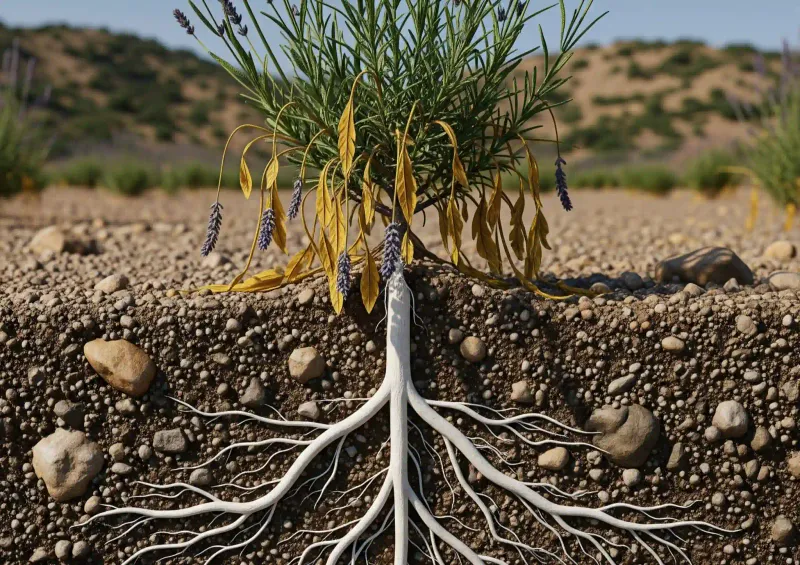
A lavender plant that is not flowering well is sending a signal, but that signal does not automatically point to a nutrient shortage. Before adding anything to the soil, check whether the plant is getting at least six hours of direct sun each day.
Shade from a fence, a nearby shrub, or a growing tree canopy can suppress blooming just as effectively as any soil problem, and adding fertilizer will not fix a light deficit.
UF/IFAS guidance for English lavender identifies wet, heavy soil as a major threat to plant health, warning that poor drainage increases the risk of root damage and winter injury. Soggy roots cannot take up nutrients efficiently even when nutrients are present, so adding more fertilizer to a plant sitting in inadequately drained soil can make the stress worse rather than better.
Check that water moves away from the root zone quickly after rain or irrigation.
UC IPM recommends well-drained soil with a pH between 6.5 and 7.5 for lavender, and pH outside that range can limit nutrient availability regardless of how much fertilizer is applied. Yellow leaves or slow growth in lavender can also stem from overwatering, root rot, or an unsuitable cultivar for the local climate.
UF/IFAS Pasco County advises identifying the actual cause of decline before treating it, because adding nutrients to a plant already stressed by moisture or pH problems rarely produces the improvement gardeners are hoping for.
Let a Real Fertility Need Justify Feeding
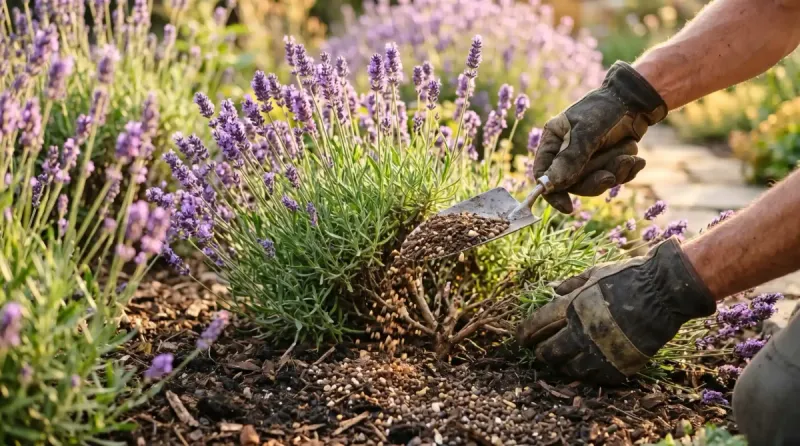
A soil test is the most honest starting point for any lavender feeding decision. Guessing at a nutrient deficiency based on leaf color or slow growth alone risks adding fertilizer to a plant that does not need it, while the actual problem, whether that is pH, drainage, light, or root stress, goes unaddressed.
Texas A&M AgriLife Extension warns that excess fertilizer can damage or kill plants and recommends soil testing through county Extension offices as the reliable way to know what a site actually needs.
When a test or a credible diagnosis does confirm a fertility gap, the approach should be light and well-timed. UC IPM gives a specific example of incorporating a balanced fertilizer such as 10-10-10 at roughly half a pound to one pound per 100 square feet before planting, or side-dressing established plants early in the growing season.
That recommendation applies to particular site circumstances, not to every established lavender plant as an annual routine.
High-phosphorus bloom-booster products are sometimes marketed as a shortcut to forcing flowers, but the evidence gathered from Extension sources does not support that approach as a reliable fix for lavender that is not blooming. Penn State Extension’s lavender production guidance emphasizes correcting site conditions and avoiding overfertilization rather than chasing flowering with specialty fertilizers.
UF/IFAS fertilizer basics similarly stress matching product and rate to a confirmed need, following label directions, and accounting for existing soil fertility before adding anything new.
Container Lavender Needs a Separate Nutrient Check
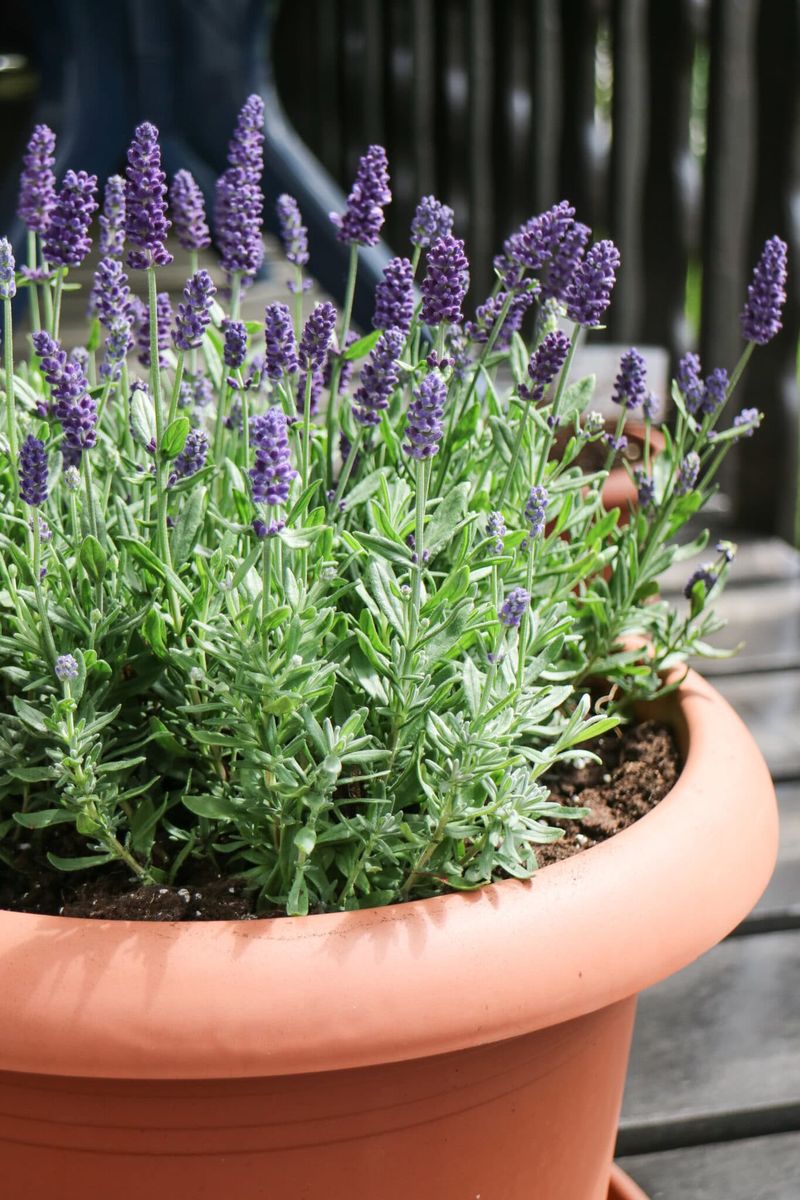
Lavender growing in a pot faces a different nutrient situation than the same plant in the ground. Frequent watering, which container plants often need in Southern heat, can gradually flush nutrients out of the potting mix through a process called leaching.
Over time, a container that started out with adequate fertility can become depleted, and the plant may begin to show the slow growth or pale foliage that signals a genuine need.
That said, many commercial potting mixes already contain a starter charge of fertilizer, so a newly potted lavender may not need supplemental feeding for weeks or even months. NC State Extension’s container plant guidance recommends checking what nutrients are already present in the mix before adding more, and accounting for the plant’s watering frequency and leaching rate when deciding whether and how much to feed.
Iowa State University Extension notes that container plants do eventually need fertilizer as the mix’s original nutrients are used up or washed away.
When feeding is warranted, choose a fertilizer labeled for container use and apply it at the rate the product specifies. A controlled-release granular product is one reasonable option because it delivers nutrients gradually, but it is not the only suitable form.
UF/IFAS fertilizer guidance cautions that overapplication in any form can cause salt buildup in the root zone, which can injure or kill container plants. Start conservatively and watch how the plant responds before adding more.
Florida Conditions Can Mimic a Fertilizer Problem
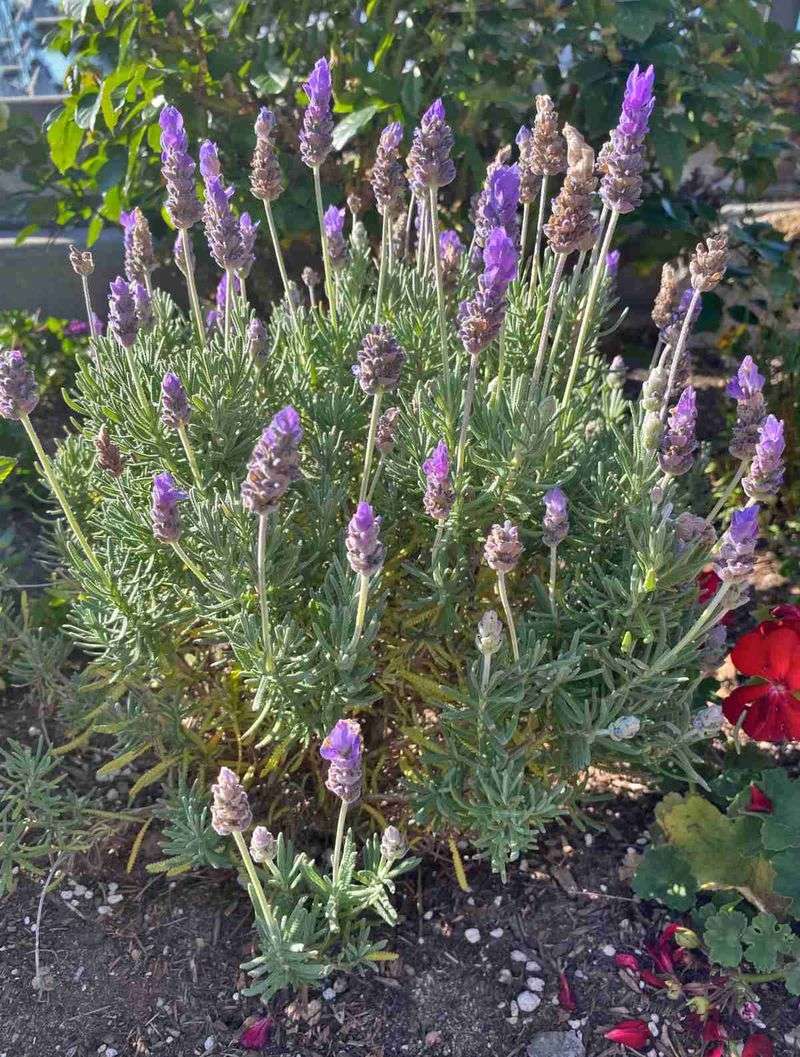
Florida gardeners troubleshooting sparse lavender blooms often find that fertilizer timing is not the core issue at all. English lavender, the species most associated with classic fragrance and silvery foliage, can struggle severely in Florida’s summer heat and humidity.
Prolonged warmth, high moisture in the air and soil, and the state’s frequent summer rainfall create conditions that stress the plant at its roots long before any fertilizer decision becomes relevant.
UF/IFAS Pasco County identifies French, Spanish, and some lavandin cultivars as better suited to Florida’s growing environment than traditional English lavender, because those types tend to tolerate heat and humidity more gracefully. Cultivar choice matters enormously here, but the right selection still depends on local microclimate, drainage, and how the site manages summer moisture.
UF/IFAS Manatee County extension notes that root rot and fungal disease from prolonged soil moisture can devastate lavender in warm, wet climates, producing dieback and poor flowering that looks deceptively similar to a nutrient problem. Improving drainage, avoiding overhead irrigation, and choosing a well-adapted cultivar may do far more to restore flowering than any change in fertilizer schedule.
UF/IFAS English lavender guidance reinforces that pH sensitivity and soil moisture management are critical first concerns in Florida, and that fertilizer adjustments should come only after those environmental factors are addressed.
Sometimes the Best Rescue Is No Fertilizer
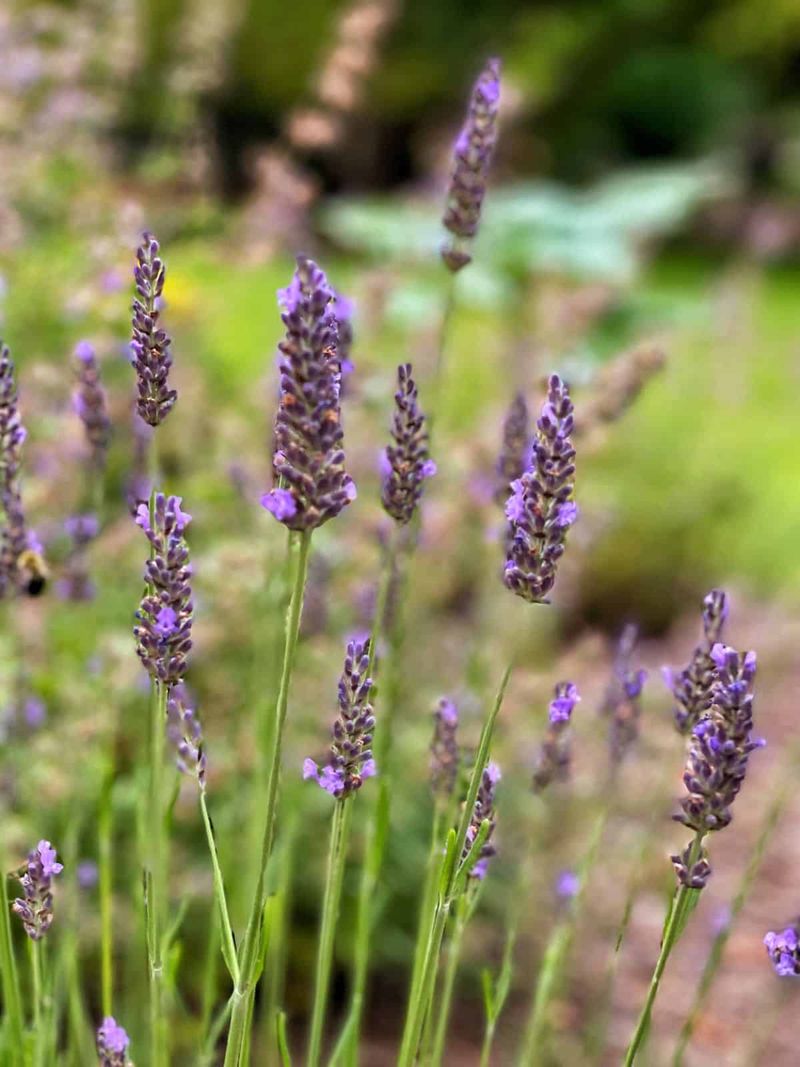
Before adding anything to the soil, run through a short checklist. Confirm the plant is getting full sun, that water drains away from the root zone quickly, and that no root rot or fungal damage is hiding beneath the soil line.
Then identify the plant’s current growth stage: UC IPM is clear that fertilizing during flower-bud development can favor vegetative growth, so if buds are already forming, hold off entirely.
If the site checks out and the plant is in early active growth with a confirmed or strongly suspected nutrient need, a light, appropriately labeled feeding applied at the right moment is a reasonable step. For most established lavender in Southern gardens, though, the more productive intervention is improving conditions rather than adding nutrients.
UF/IFAS reminds gardeners that lavender performs best in relatively infertile soil, and many plants that seem to need a boost actually need better drainage, more light, or a cultivar swap.
Lavender tends to reward restraint. The plants that bloom most reliably are often the ones that receive the least intervention, planted in the right spot and left to do what the species does naturally in lean, sun-drenched conditions.