
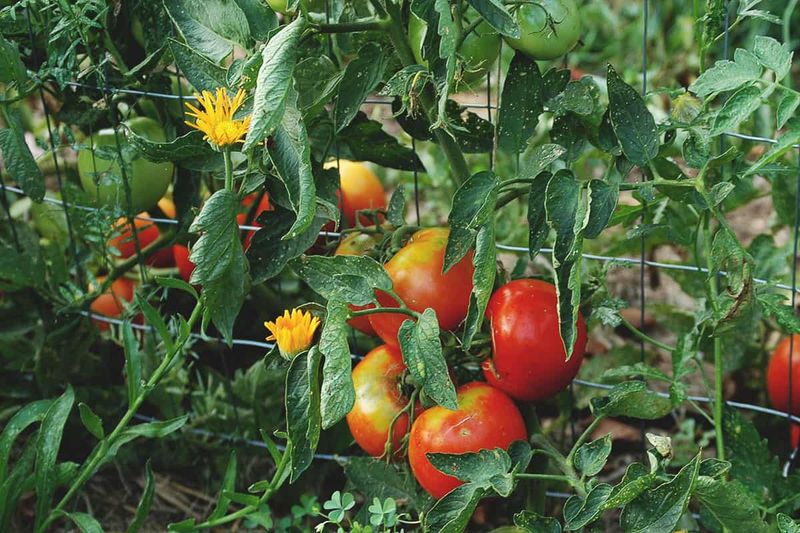
Tomatoes are not always the easiest crop to grow, and when they start yellowing, wilting, or producing poorly, it is tempting to blame whatever is growing right next to them. The plants sharing your garden bed really can make things harder for your tomatoes by pulling away water, nutrients, and sunlight.
But nearby plants are just one possible reason for decline, and sometimes the real culprit is heat, inconsistent watering, or disease. Working through the clues around your tomato systematically can help you figure out what is actually going on.
Nearby plants may contribute to tomato decline
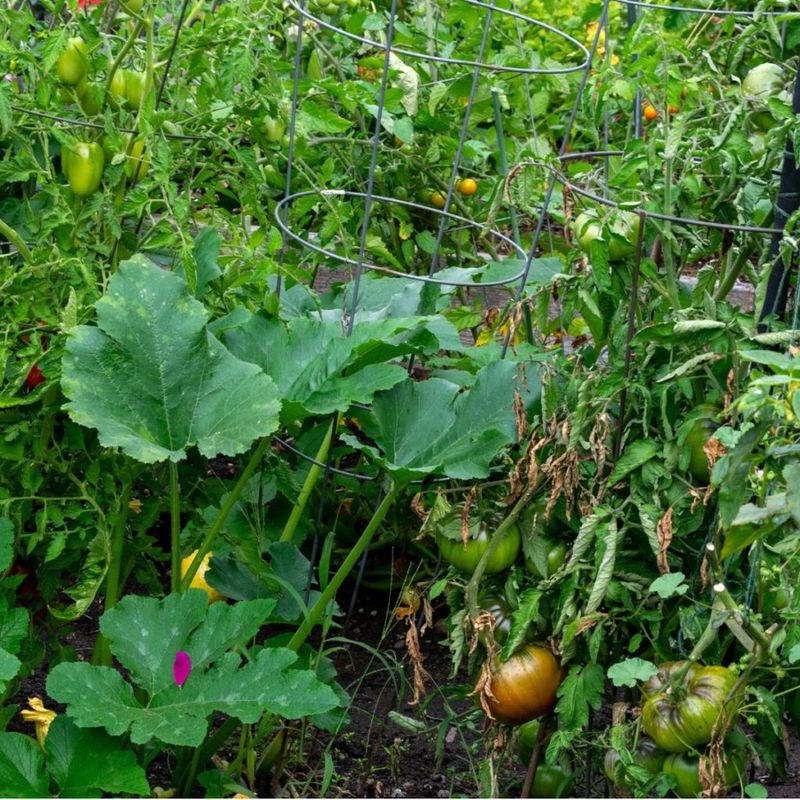
Tomatoes growing beside other plants are not automatically doomed, but the plants sharing their space can sometimes make things noticeably harder. When weeds, volunteer crops, shrubs, or trees overlap a tomato’s root zone or cast shade over its canopy, the tomato may end up competing for light, water, nutrients, and physical room to grow.
Texas A&M AgriLife Extension identifies weeds as competitors for water, nutrients, light, carbon dioxide, and space in vegetable gardens, and that kind of pressure can show up as slower growth or reduced fruit production.
Above ground, a different issue can develop. Dense foliage from neighboring plants or tightly packed tomato vines may restrict air movement around leaves, slowing how quickly foliage dries after rain or irrigation.
That slower drying can increase the severity of some fungal and bacterial foliar diseases when conditions already favor those pathogens.
Root competition from trees and shrubs adds another layer to investigate. UGA Extension notes that tree roots commonly spread horizontally through upper soil layers, where they may overlap with a vegetable bed’s root zone.
Still, competition is only one possible explanation for tomato decline. Heat, inconsistent watering, pests, disease, poor fertility, and root damage can produce very similar symptoms, so the sections ahead treat each category of nearby plant as a clue to investigate rather than an automatic cause.
Clear weeds and crowded volunteers first
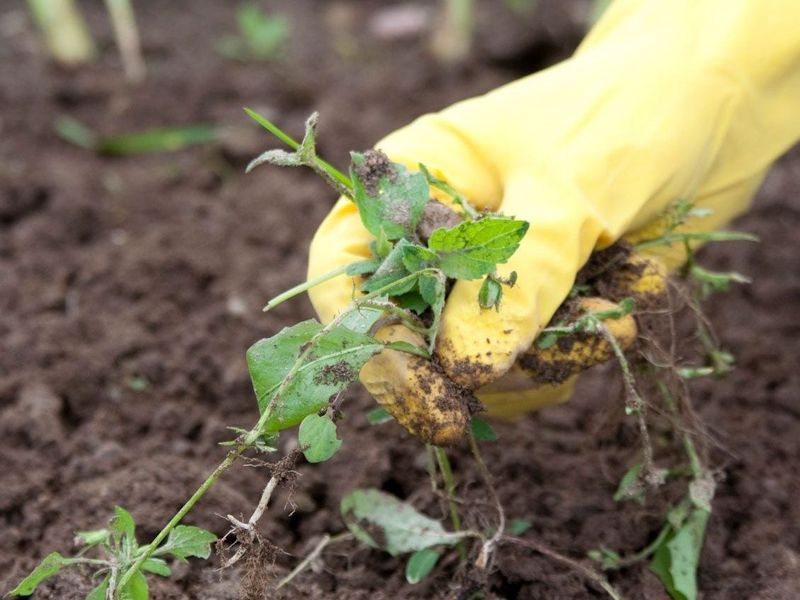
Start your investigation right at ground level. Crouch down and look at the soil within a foot or two of your tomato’s stem.
Grass clumps, broadleaf weeds, and volunteer plants that sprouted from last season’s seeds are easy to overlook once the garden gets busy, but they can be drawing from the same moisture and fertility your tomato depends on.
Heavy weed pressure is a credible contributor to poor vegetable performance. Beyond water and nutrients, Texas A&M AgriLife Extension’s weed management guidance notes that weeds can also harbor insects and pathogens that affect vegetables, including viruses associated with tomatoes.
A patch of dense grass or a sprawling volunteer squash plant right beside your tomato is worth removing even if you are not certain it caused the problem.
Use your hands or a shallow hoe to pull or cut weeds without digging deeply near tomato roots. Oklahoma State Extension warns that cultivation around tomatoes should stay shallow to avoid damaging the root system, which can create its own set of stress symptoms.
Treat this cleanup as a useful diagnostic step rather than a guaranteed fix. If the tomato improves after you clear the competition, that is meaningful information.
If it continues to struggle, the cause likely lies elsewhere and you will need to keep looking.
Check sunlight and shared tree-root zones
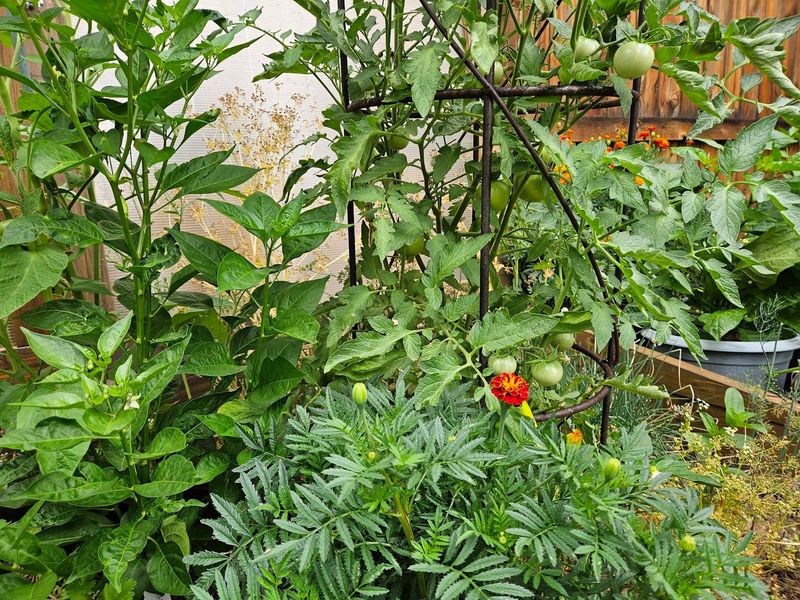
A tree or shrub can affect a nearby tomato even when its branches never come close to touching the plant. Shade is the most obvious issue.
UGA Cooperative Extension’s Georgia Homegrown Tomatoes guide recommends choosing a sunny location that receives at least eight hours of direct sunlight daily, and advises against placing tomatoes near large plants that create significant shade. If a nearby tree has grown taller or fuller since you planted your tomato bed, reduced light hours could explain weaker growth and poor fruit set on their own.
Root competition is a second possibility worth investigating, though it is harder to see. Tree roots often spread horizontally through the upper 18 inches of soil, and that zone overlaps directly with where tomato roots forage for water and nutrients.
The extent of root spread varies by species, soil type, irrigation patterns, and site conditions, so finding a large tree nearby is a clue to consider rather than proof of harm.
Watch for a consistently dry soil zone around your tomato even after watering, especially if a large tree or shrub is growing within 10 to 15 feet. That pattern suggests root competition may be pulling moisture away faster than your tomato can use it.
Before removing or drastically pruning an established landscape tree, confirm that shade or persistent dryness is actually present, identify the species, and look for matching symptoms. Removing a mature tree that turns out not to be the problem is a costly mistake that cannot be undone.
Dense growth can slow leaf drying
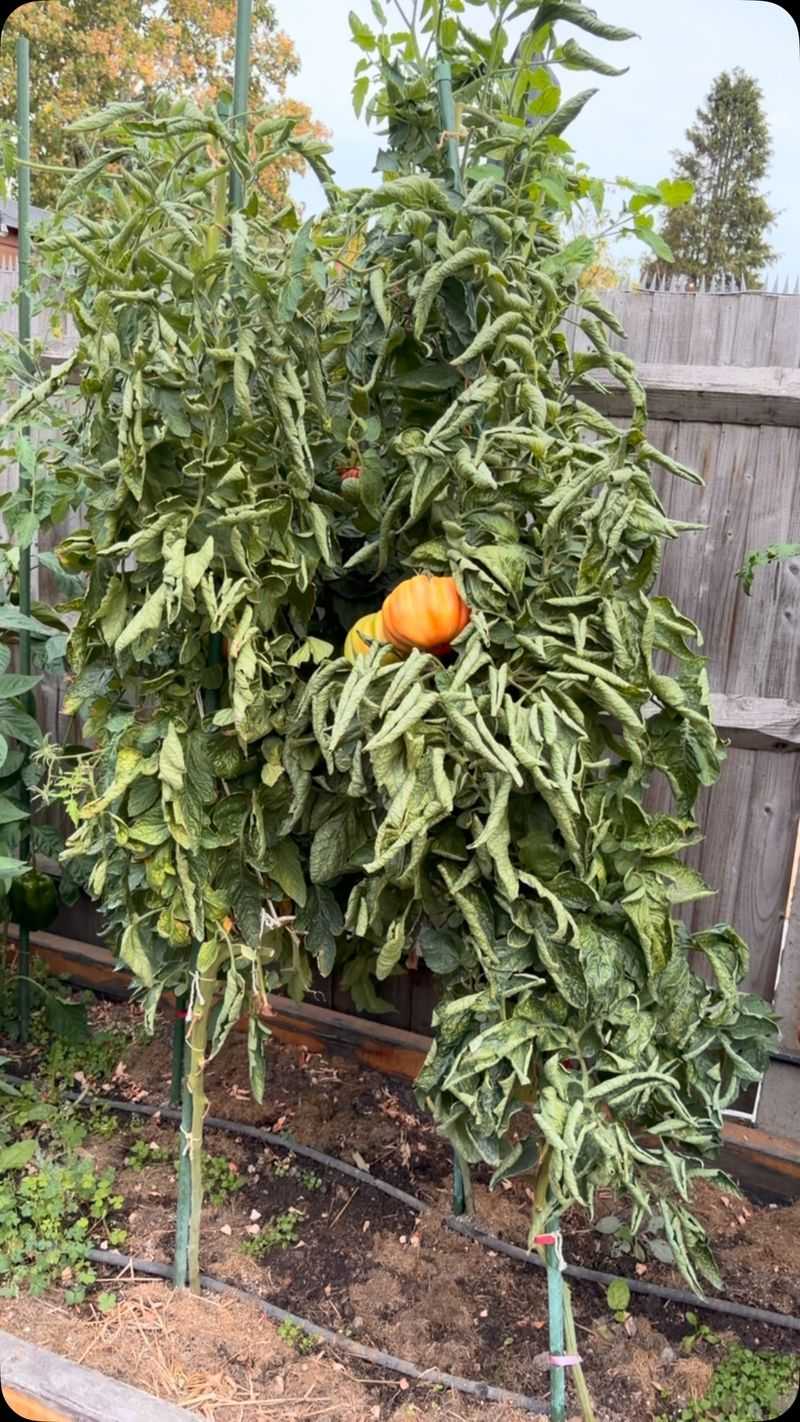
Above the soil, crowding creates its own set of problems. When tomato foliage grows thickly together, or when neighboring plants press close against the vines, air movement through the canopy slows.
Leaves that stay wet longer after rain or overhead irrigation create conditions where some fungal and bacterial pathogens can establish and spread more easily.
Spacing, staking, and pruning all help address this. UGA Extension’s disease management guidance for home vegetable gardens specifically recommends proper spacing, staking, and trellising to improve air circulation around tomato plants.
Better circulation allows foliage to dry faster, which can reduce the severity of foliar diseases, though these practices lower disease pressure rather than cure an infection that is already underway.
How much space a tomato actually needs depends on the variety, whether you are using a cage, stake, or trellis, and your local growing conditions. University of Minnesota Extension notes that staking and pruning help keep plants upright and improve air movement.
General guidance suggests anywhere from one to three feet between plants, with indeterminate varieties typically needing more room than compact determinates. If your tomato plants are leaning into each other or into neighboring crops, creating even a modest gap and tying vines to a support can make a noticeable difference in how quickly the canopy dries after a summer thunderstorm.
Treat black walnut as a separate possibility
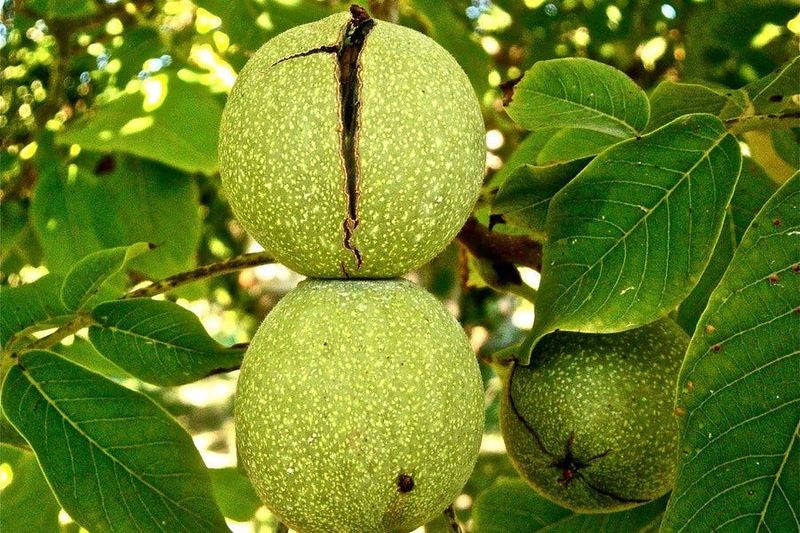
Black walnut trees deserve their own category because the problem they create is not simply competition for water or light. Black walnuts and several related species produce a compound called juglone, which can be toxic to sensitive plants.
Tomatoes are among the crops listed as sensitive, and exposure may cause yellowing, wilting, poor growth, or eventual plant death.
What makes juglone especially tricky is that the symptoms can look a lot like drought stress, but Penn State Extension’s guidance on juglone-producing plants makes clear that wilting can occur even when the soil remains moist. Watering more will not fix the problem if juglone is the cause.
The compound enters the soil through roots, fallen leaves, hulls, and decaying wood, and Penn State notes that it can persist in the soil for years after a walnut tree is removed, particularly where roots are still breaking down underground.
If your tomato is growing within the root zone of a black walnut, the most practical options are to relocate the tomato to a different area of the yard, or to use a raised bed lined with a root barrier to limit contact with contaminated soil. Remove fallen walnut leaves and hulls from around the planting area promptly, and avoid using walnut-based wood chips as mulch.
A tomato that continues to wilt and yellow despite adequate moisture and no other obvious cause, and that happens to be growing near a walnut tree, is a situation where relocation makes more sense than continuing to troubleshoot in place.
Restore space, moisture, and safer growing conditions
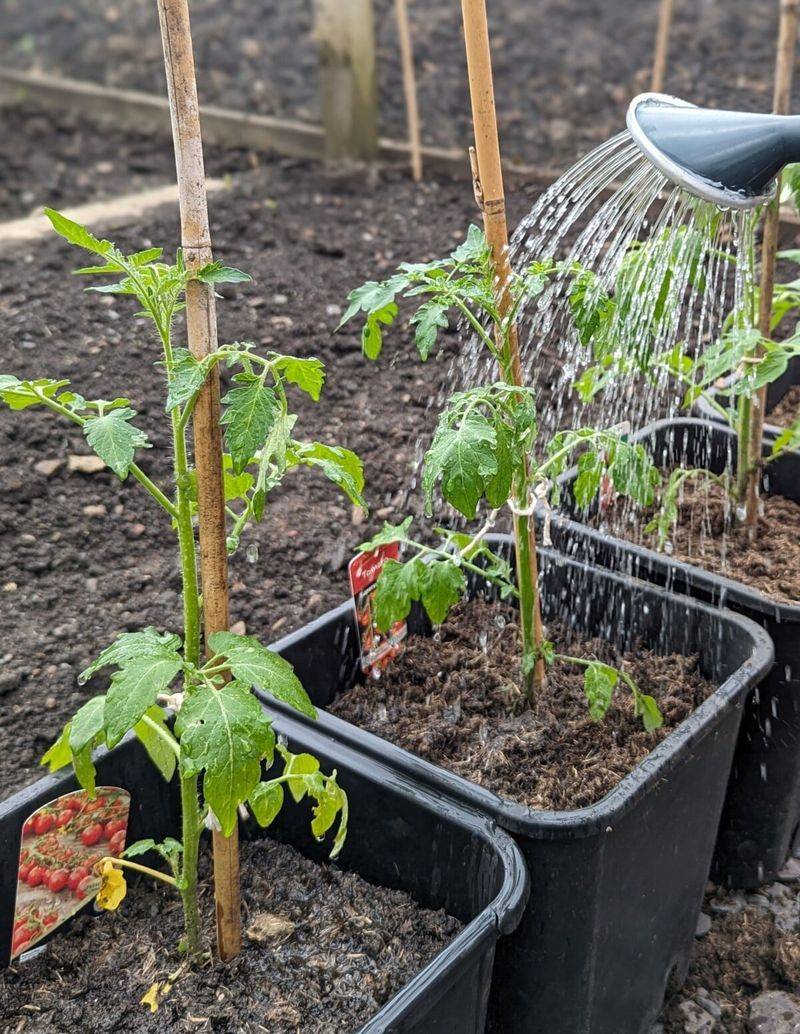
Once you have identified which nearby plants are the most likely contributors, a practical response follows a clear sequence. Start by removing weeds, grass, and volunteer plants growing immediately around the tomato.
Then step back and assess sunlight: count how many hours of direct sun the plant actually receives. Oregon State University Extension’s tomato growing guide recommends a minimum of six hours of full sun, with more being better for fruit production.
If a neighboring plant or structure is cutting into that window, repositioning or pruning it is worth considering.
Apply about two to three inches of organic mulch around the base of the tomato, keeping it a few inches away from the stem itself. Texas A&M AgriLife Extension’s tomato production guide recommends mulching to conserve soil moisture, moderate soil temperature, suppress weeds, and reduce soil splash onto lower foliage.
Mulch is a much safer tool than deep cultivation, which can damage tomato roots and create stress that looks similar to competition damage.
Water deeply and consistently rather than a little every day. University of Minnesota Extension warns that shallow, frequent watering encourages shallow roots that are more vulnerable to drought between cycles.
Aim to wet the soil several inches deep at each watering session, and let the surface dry slightly before watering again. Hold off on adding extra fertilizer as a default reaction to suspected competition.
Excess fertilizer can cause its own problems, and soil testing gives you a more accurate picture of what the plant actually needs before you add anything.
Nearby plants are not automatically harmful
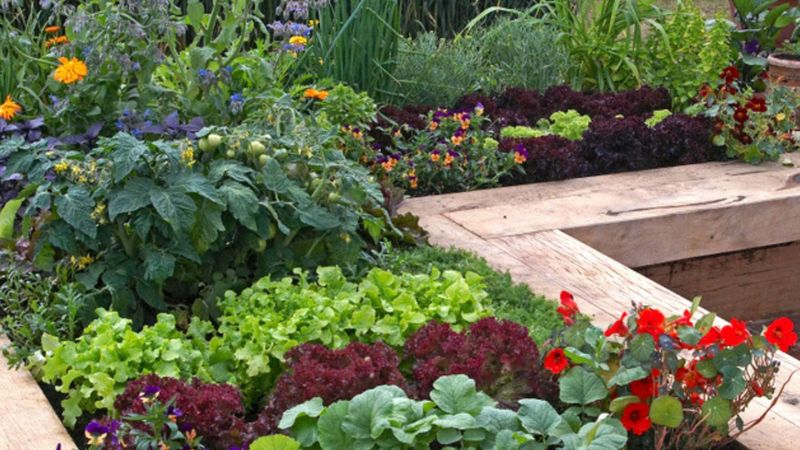
Pulling out every plant near your tomato is not the answer, and some neighboring plants can actually share space without causing any measurable harm. University of Minnesota Extension’s companion planting guide specifically describes interplanting tomatoes with short-season crops like lettuce or spinach as a practical way to use garden space efficiently before the tomato canopy fills in and shades those areas naturally.
Research on companion planting effects is more nuanced than popular gardening advice often suggests. In a three-year greenhouse study, researchers examining companion plants and tomato greenhouse production found that basil, marigold, and lettuce did not significantly reduce tomato productivity, while white mustard significantly reduced early and total tomato yield as well as average fruit weight.
That contrast shows why blanket rules about companion planting do not hold up. The outcome depends heavily on which species are involved, how much space they share, and how the garden is managed.
When your tomato continues to struggle despite removing obvious competitors, broaden your checklist. Southern gardeners in Florida and Texas especially need to account for heat-related stress.
UGA Extension notes that temperatures around 90 to 95 degrees Fahrenheit can interfere with tomato pollination, which can explain poor fruit set even when the plant itself looks reasonably healthy. Inconsistent watering, root disease, insect feeding, foliar pathogens, and nutrient imbalances all produce symptoms that overlap with what competition looks like.
Treat competition as one item on the list, not the top suspect by default.
Observe the plant before making a major change
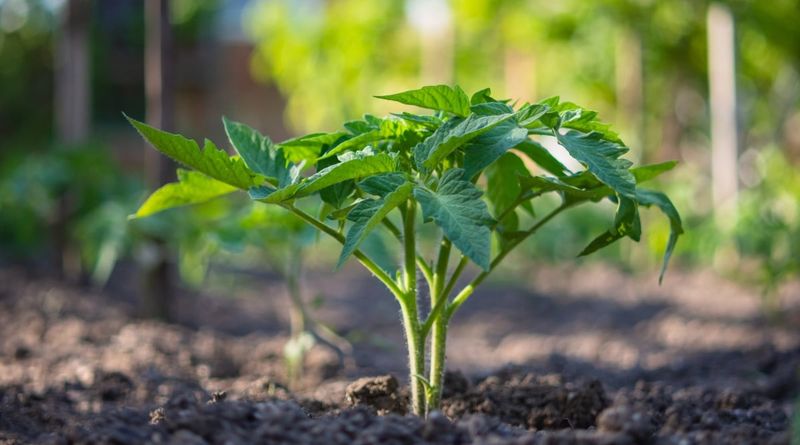
After clearing manageable weeds and volunteers, improving airflow with better spacing or staking, applying mulch correctly, and settling into a consistent deep-watering routine, give the tomato a week or two to show a response. Watch for new growth that looks stronger, leaves that hold their color, and stems that stay upright without wilting during the cooler parts of the day.
Persistent problems after those adjustments are a signal to widen the search. Check for insect damage on leaf undersides, look for lesions or spots that suggest foliar disease, and consider whether ongoing weed pressure has returned quickly enough to undo your cleanup.
If the tomato is near a black walnut and wilting persists despite adequate moisture, revisit the relocation guidance for juglone-sensitive crops. Relocate or remove a neighboring plant only after you have confirmed through observation that it is genuinely contributing to the problem.
A struggling tomato deserves a real diagnosis, not just a cleared garden bed.