
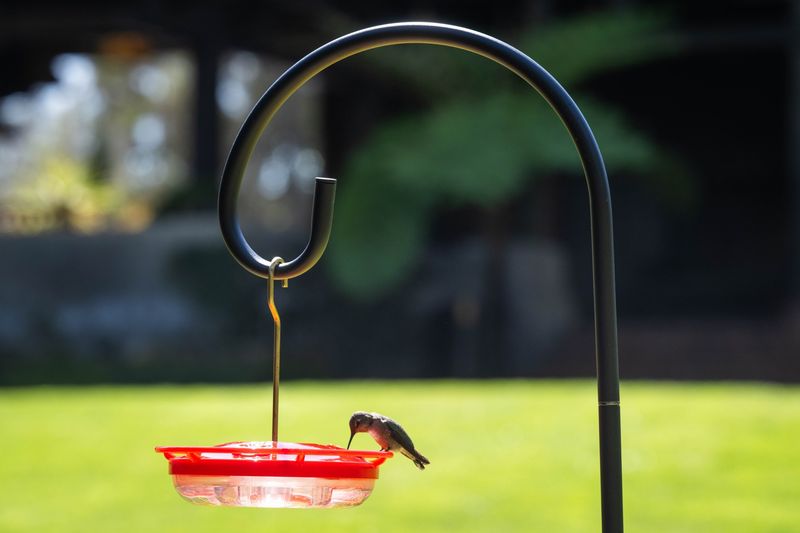
Walking out to check your hummingbird feeder and finding it untouched can feel like something went wrong overnight. The truth is, a quiet feeder does not always point to a problem you caused.
Hummingbirds respond to dozens of factors outside a homeowner’s control, from seasonal migration to a yard full of blooming flowers just down the street. Before changing anything, it helps to understand what is actually going on.
A quiet feeder does not prove that anything is wrong
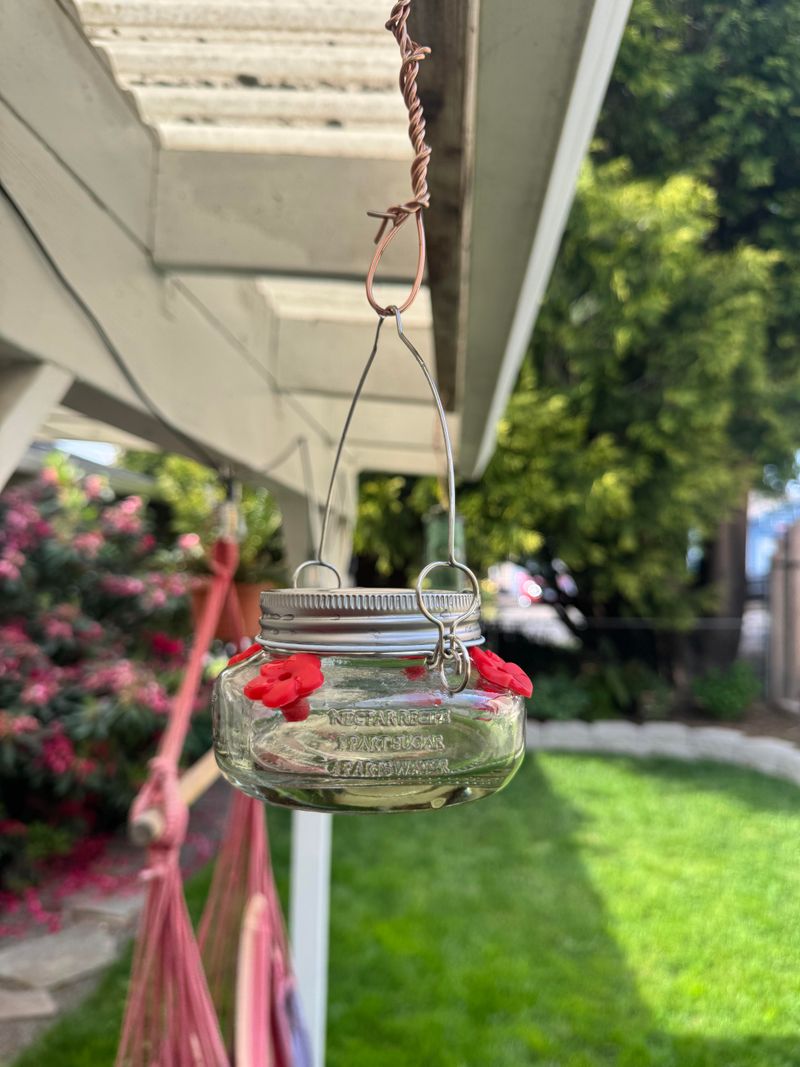
Fewer visits to a feeder can feel alarming, but the feeder going quiet is often a normal part of how hummingbirds move through the landscape. Ruby-throated Hummingbirds migrate through and out of Southern states on a seasonal schedule, and post-breeding movement can pull birds away from a yard weeks before full migration begins.
Weather shifts, nesting behavior, and changes in when birds pass through a particular corridor can all reduce how often a feeder gets used.
Natural flower abundance is one of the most overlooked reasons a feeder slows down. Research on hummingbird foraging patterns has found that feeder visit counts can fall when natural nectar sources are plentiful nearby, meaning a yard full of blooming plants may actually be drawing birds away from the feeder rather than out of the neighborhood.
Neighboring feeders and adjacent habitat can have the same effect.
A single territorial bird can also make a feeder look abandoned. If one dominant male is chasing others off, the feeder may appear unused even while hummingbirds remain active in the area.
Cornell Lab guidance on declining feeder visits recommends starting with observation rather than assuming something is broken. Watch the feeder and the surrounding yard at different times before drawing conclusions.
Confirm whether the birds have truly disappeared
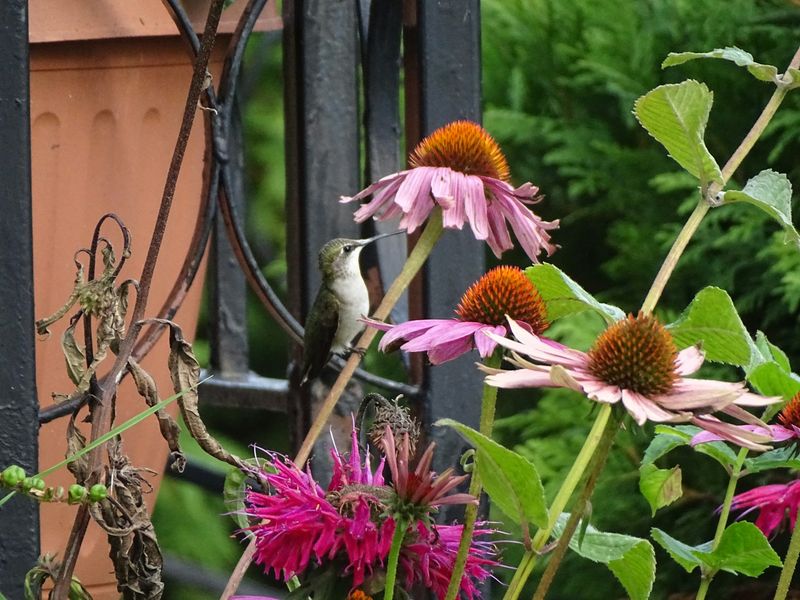
Before adjusting anything in the yard, spend a few days watching at different times. Hummingbirds are most active in the early morning and late afternoon, and a single visit can last only a few seconds.
Missing those brief appearances can create the impression that no birds are around when they are actually passing through regularly.
Check beyond the feeder itself. Scan nearby flowers, shrubs, tree edges, and fence lines where hummingbirds often perch or forage.
A bird using a neighbor’s feeder or a patch of salvia two yards over may not show up at yours for days at a time. Cornell Lab’s feeder-visit explainer points out that nearby habitat and competing feeders can shift where birds spend their time without any real decline in local numbers.
Territorial behavior deserves particular attention. One aggressive male can post up near a feeder and drive off every other bird that approaches, making the feeder look empty to a casual observer.
Oklahoma State Extension guidance on feeder placement and Cornell Lab’s feeding tips both suggest placing several smaller feeders out of sight from one another, which can reduce a single bird’s ability to control all the feeding spots. That approach may improve access for other birds, though it does not guarantee more overall visits.
Check nectar freshness and feeder cleanliness first
Nectar quality is one of the fastest things to check and one of the most consequential. The correct mixture is one part refined white sugar to four parts water, and the nectar should stay completely clear.
Audubon’s hummingbird feeding FAQ advises against honey, artificial sweeteners, brown sugar, molasses, and red dye. Honey can promote bacterial and fungal growth when diluted in water, and dye adds no benefit since natural flower nectar is clear.
Red feeder parts are enough to help birds notice the feeder without coloring the liquid inside.
In Southern heat, nectar spoils faster than most people expect. Replace it every two to three days during warm weather, and sooner if it turns cloudy or you see floating particles.
Cloudy nectar should be discarded rather than topped off. Cornell Lab’s feeding guidance notes that fermented or moldy nectar can harm hummingbirds, so erring on the side of freshness is the right call in a Texas or Florida summer.
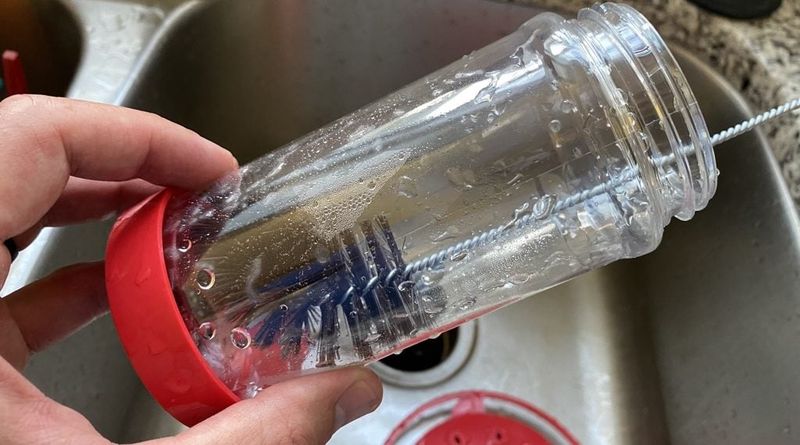
Cleaning the feeder every time you refill it, or at least every few days, is not optional in warm climates. Take the feeder completely apart, scrub all ports and crevices with a small brush, rinse thoroughly, and let it dry before adding fresh nectar.
USGS wildlife health documentation on fungal disease in hummingbirds underscores why a clean feeder matters. Mold in crevices can persist even when nectar looks fresh, so a thorough scrub with each refill is the safest habit.
Cornell Lab’s feeder-cleaning guide walks through the full process if you want step-by-step detail.
Balance feeder visibility, heat, and territorial access
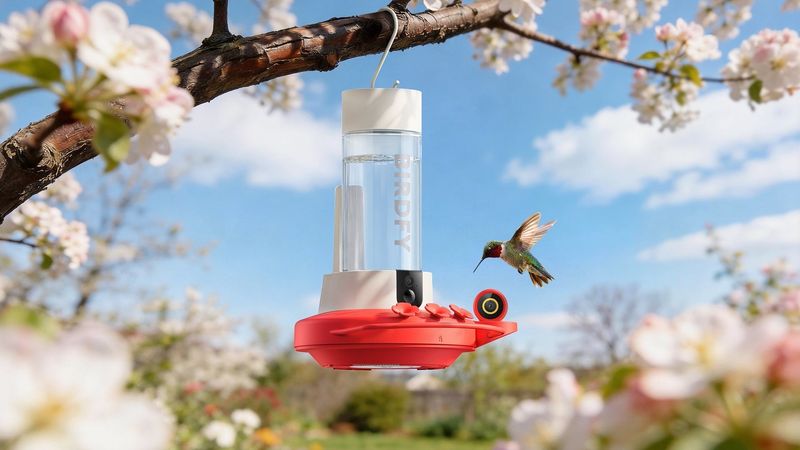
Where a feeder hangs affects whether birds find it, how long the nectar stays usable, and whether one bird can control the whole setup. A good starting position is somewhere visible from open air but close enough to shrubs or trees that hummingbirds have a nearby perch or escape route.
Feeders tucked too deep into dense cover can be harder for passing birds to spot.
Shade is sometimes recommended to slow nectar spoilage, and partial shade does help on the hottest days. A study on hummingbird feeder preferences published in peer-reviewed research on feeder conditions found that birds did not universally prefer shaded feeders, and in some conditions showed more visits at sunnier locations.
The practical takeaway is to prioritize freshness and visibility rather than following a strict sun-or-shade rule. Keeping nectar fresh by replacing it on schedule matters more than the exact light conditions.
Territorial access is the placement issue most likely to reduce the number of birds using a feeder. Cornell Lab’s feeding recommendations and Oklahoma State Extension’s feeder tips both suggest using several smaller feeders placed out of one another’s line of sight.
A dominant bird can guard a single feeder with multiple ports just as effectively as it guards a small one, so spreading feeders across different areas of the yard is a more reliable approach than simply adding more ports to one feeder.
Build habitat that supplies nectar, insects, and shelter
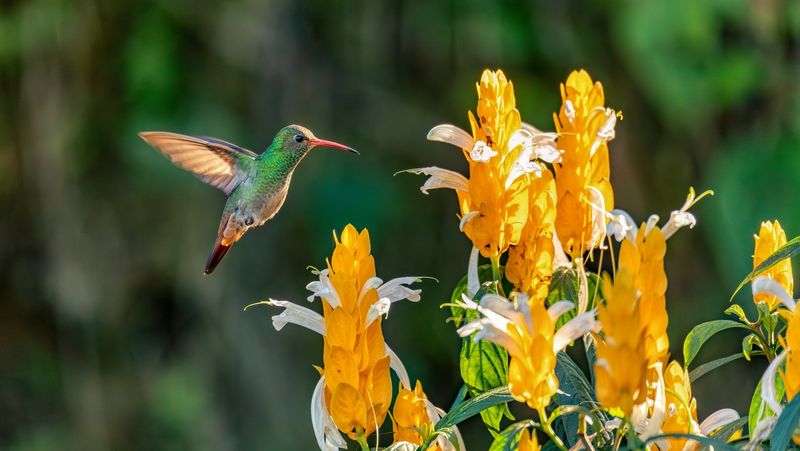
Sugar water alone cannot meet everything a hummingbird needs. Texas Parks and Wildlife’s species profile for Ruby-throated Hummingbirds notes that small insects and spiders are an important protein source, especially during nesting and for growing young.
A yard that supports insect populations through diverse plantings gives hummingbirds a more complete food supply than a feeder alone can offer.
Flowers arranged to bloom in sequence through the season keep hummingbirds returning over a longer window. For Florida gardeners, UF/IFAS nectar plant guidance and UF/IFAS hummingbird gardening resources list firebush, coral honeysuckle, coral bean, cardinal flower, butterfly milkweed, trumpet vine, and red star hibiscus as options worth considering, with suitability varying by region of the state.
Texas gardeners can find regionally appropriate choices through TPWD’s hummingbird planting guide, which includes Turk’s cap, coral bean, esperanza, hibiscus, salvia, and bee balm. Always confirm local invasiveness, cold tolerance, and water needs before planting any species.
Native plants are a useful priority because they tend to support local insect communities, but hummingbirds also visit many ornamental plants, and Audubon’s habitat guide emphasizes structural diversity alongside plant choice. Layered vegetation with low groundcovers, mid-height shrubs, and taller trees gives birds places to perch, rest, and hide.
For water, shallow dishes, misters, and droplets on foliage work better than deep birdbaths. U.S.
Fish and Wildlife Service’s Hummingbird Haven guide recommends keeping water sources clean and avoiding stagnant containers. Broad pesticide applications reduce insect food supplies and can expose hummingbirds directly, so minimizing pesticide use and following product labels protects the yard’s value as habitat.
Florida Fish and Wildlife’s native plant resources offer additional context for Florida readers on building insect-friendly landscapes.
Reduce hazards without overstating their effect on visits
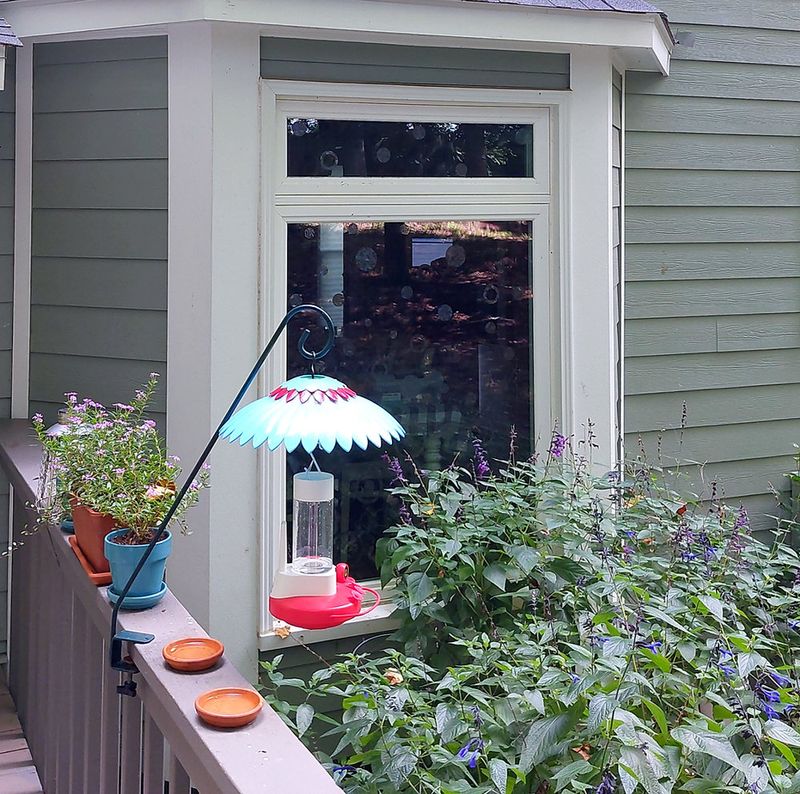
Cats and window collisions are genuine wildlife hazards, but they are not reliable explanations for a feeder going quiet. Keeping cats indoors or physically separated from areas where hummingbirds feed and rest is a straightforward safety measure that protects birds from injury without requiring any assumptions about why visit counts changed.
Window strikes are a separate concern. Glass can be invisible to fast-moving birds, and repeated collisions at the same window are a sign that something needs to change.
USGS guidance on preventing window strikes recommends applying exterior markings in a dense pattern, specifying a spacing of no more than two inches by two inches for windows where small birds are hitting repeatedly. Exterior treatments work better than interior ones because they interrupt the bird’s view of the glass from the outside.
The U.S. Fish and Wildlife Service’s Bird-Friendly Home Toolkit covers both cat management and window safety as part of a broader approach to reducing yard hazards.
Addressing these issues is the right thing to do for bird welfare, but homeowners should not expect hazard reduction alone to bring hummingbirds back to a feeder. Migration, natural food availability, and regional habitat conditions remain the larger variables.
Read Florida and Texas seasons on their own terms
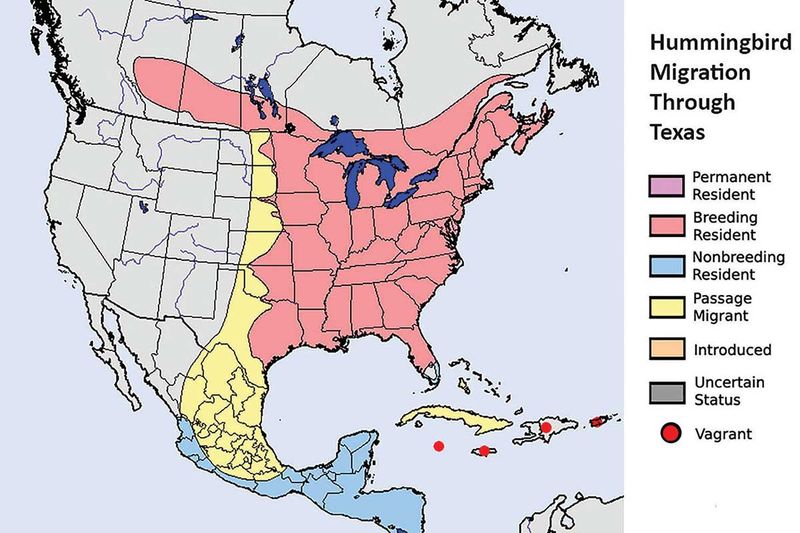
Geography changes what a disappearance actually means. Florida’s backyard hummingbird presence is dominated by Ruby-throated Hummingbirds, which are the state’s principal breeding species.
Other species can appear seasonally or as uncommon visitors, but most Florida gardeners watching a feeder are primarily tracking Ruby-throateds. Florida Museum of Natural History research on hummingbirds in Florida provides useful context on the state’s species history.
A gap in Florida feeder visits often reflects the Ruby-throated’s migration out of the state in fall rather than a yard problem.
Texas operates differently. The state supports multiple hummingbird species, and the Gulf Coast sees significant migration concentrations each fall.
TPWD’s hummingbird identification guide for Texas covers Ruby-throated, Black-chinned, Rufous, Buff-bellied, and other species that can appear depending on location and time of year. A feeder that was busy in August may go quiet by October not because anything is wrong but because the birds have moved through.
Not every Texas location follows the same seasonal pattern, so local observation and eBird data can help clarify what is normal for a specific area.
Leaving a feeder up does not delay or prevent migration. TPWD’s guidance on hummingbird feeders states that Texas feeders can remain up year-round, and recommends leaving a seasonal feeder out for about two weeks after the last observed bird before taking it down.
Cornell Lab’s fall-feeding explainer confirms that day length and seasonal biology, not feeder availability, drive migration timing. Removing a feeder early does not help birds migrate and may leave late-moving individuals without a food source.
Use a sensible checklist, then give the yard time
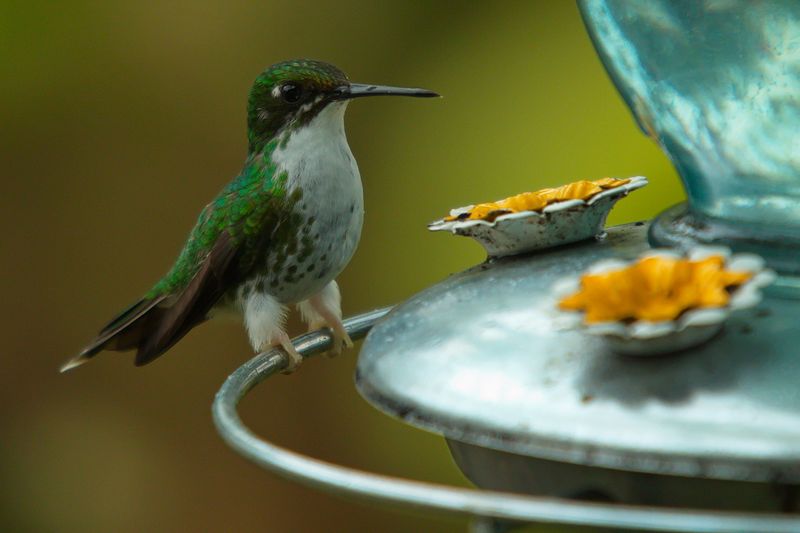
Working through a short checklist is more useful than reacting to one slow week at the feeder. Start by observing at multiple times of day before assuming the birds are gone.
Then check the nectar: is it fresh, clear, and mixed correctly? Has the feeder been fully cleaned and dried before the last refill?
If territorial behavior seems likely, try adding a second feeder placed out of sight from the first.
From there, look at the yard itself. Do flowers bloom in sequence through the season, or does the yard go bare for weeks at a time?
Are there shrubs and trees where hummingbirds can perch and rest? Is there a shallow water source that stays clean?
Have pesticide applications been reduced to protect insect food supplies? Are cats kept away from feeding and resting areas, and has any problem window received exterior markings spaced two inches apart or closer?
These steps improve the yard’s safety and suitability, but none of them can guarantee hummingbirds will return on a particular timeline. Migration, weather, and habitat choices in neighboring properties remain outside any homeowner’s control.
Cornell Lab’s feeder-visit context page and TPWD’s feeder FAQ both recommend checking local eBird data or regional survey information if you want a clearer picture of what is happening beyond your yard. A well-maintained yard with continuous flowers, clean water, and fresh nectar is the strongest invitation you can offer; the rest is up to the birds.