

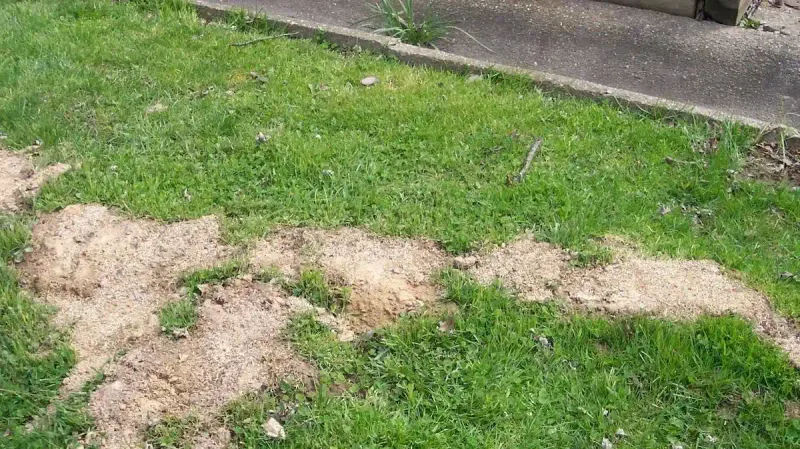
Raised ridges snaking across your lawn and small volcano-shaped mounds appearing overnight are signs that a mole has moved in, and the damage can spread fast. Many gardeners reach for castor oil, a familiar item sold in most garden centers, hoping it will send the animal packing before the lawn gets worse.
That idea has some real science behind it, but the results are more complicated than the packaging often suggests. Understanding what castor oil can and cannot do will help you make a smarter call before spending money on something that may only partly solve the problem.
Identify the animal before treating the lawn
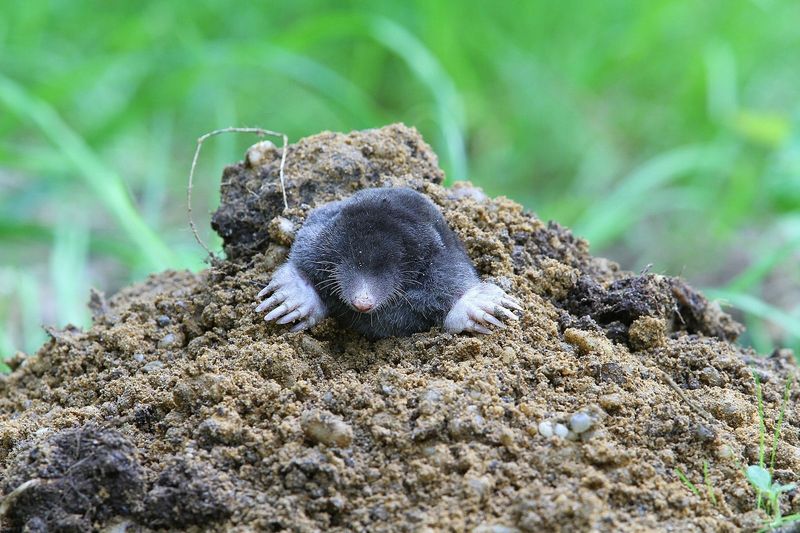
Raised ridges and fresh mounds are frustrating, but treating the wrong animal wastes time and money. True moles leave two distinct calling cards: shallow, raised surface tunnels that look like soft ridges pushed up from below, and small mounds that tend to be roughly symmetrical and shaped like a low volcano.
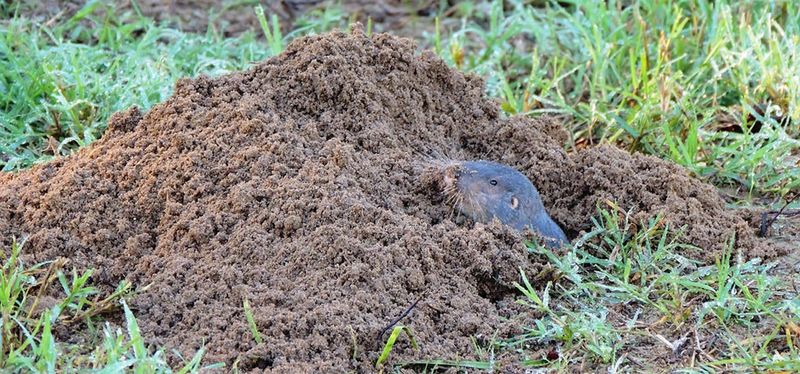
Pocket gophers, which are common in parts of the South, leave larger and noticeably asymmetrical mounds, often with a plugged hole off to one side.
Florida readers face an extra wrinkle. Mole crickets are insects that tunnel through turf and produce surface damage that can look a lot like mole activity at a glance.
They require a completely different identification process and a separate management plan, so UF/IFAS guidance on lawn pest identification recommends confirming the pest before applying any control measure.
One thing worth clearing up about moles: they are not eating your grass roots. Moles primarily pursue earthworms, grubs, beetles, and other soil invertebrates that live underground.
The visible damage to turf comes from tunneling itself, which loosens roots, dries out soil, and leaves the lawn uneven. According to UF/IFAS wildlife damage identification guidance, moles can actually provide some ecological benefit by consuming soil pests and aerating the ground.
One isolated mound does not automatically call for treatment; a response makes most sense when fresh tunneling becomes persistent and the damage reaches a nuisance level.
Castor-oil repellents may reduce activity in limited cases
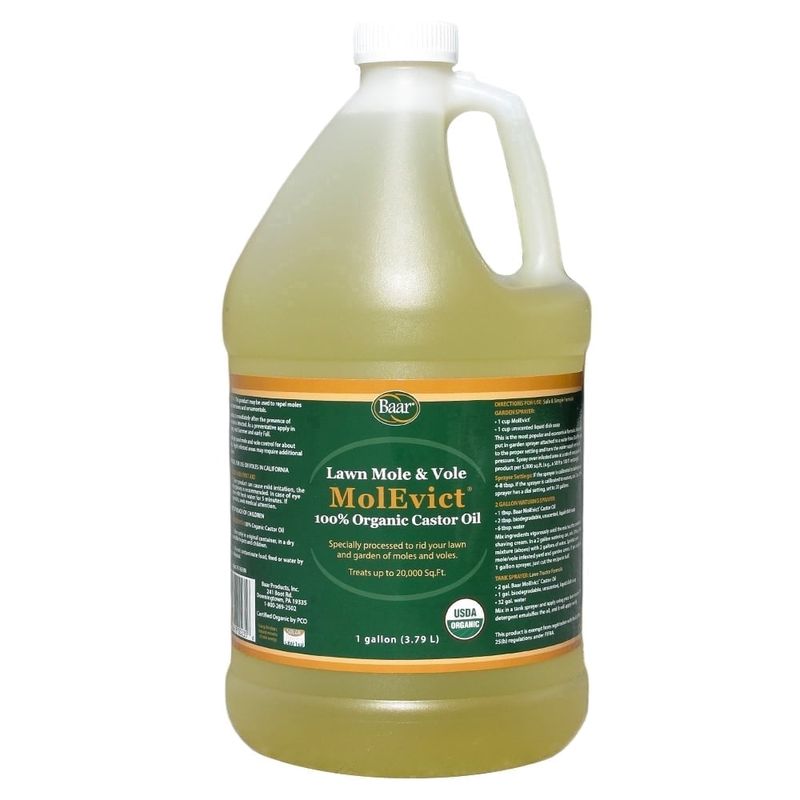
Castor oil is the garden staple most commonly marketed as a mole deterrent, and you will find it in granular and liquid repellent products at most home and garden retailers. The idea behind its use is that the oil makes the soil and its invertebrate inhabitants unpleasant to moles, discouraging them from tunneling through a treated area.
That sounds appealing, but the evidence behind it is more conditional than the label photos suggest.
A Kentucky field study on eastern-mole activity found that one commercial Molexit formulation reduced burrowing in some treated lawns and produced periods without recorded activity lasting around six weeks. Even so, the researchers described the results as only “some level of efficacy,” and a separate study in the same body of research found no significant difference between treated and untreated areas.
That is a meaningful gap between “may help” and “reliably works.”
Extension guidance across the country is mixed. Penn State Extension describes castor-oil remedies as doubtful and inconsistent, while other university sources acknowledge at least limited efficacy for commercial formulations under certain conditions.
What the Kentucky study does not establish is a universal result: the findings apply to eastern moles tested with a specific product, and results for other mole species, other regions, or other formulations are far less certain. Reduced activity in one yard also does not mean the mole has left the neighborhood; it may simply be tunneling on an adjoining property until conditions change.
Buy a product labeled for mole control
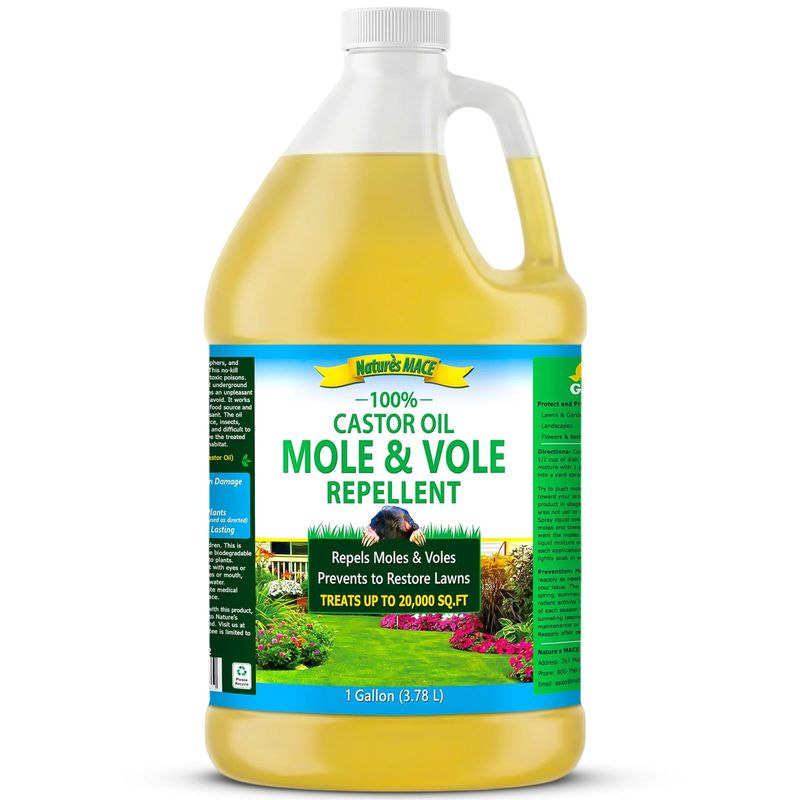
Before buying anything, look specifically for a product whose label states it is intended for mole control. That label is not just marketing copy.
Under federal law, EPA guidance on pesticide labels makes clear that the label is a legally enforceable document that governs where, how, at what rate, and how often a product may be applied. Using a product in a way that contradicts its label is a violation of federal pesticide law, not just a bad idea.
Household castor oil from the pharmacy shelf, dish soap, or a homemade blend poured into tunnels is not a substitute for a tested and labeled formulation. The concentration, carrier ingredients, and application method all affect whether a product behaves the way the research tested it.
Improvised mixtures have not been evaluated under the same conditions, and there is no label to follow, which removes the legal and practical framework that governs safe use.
Minimum-risk status adds another layer of confusion worth addressing. Castor oil qualifies as an ingredient eligible for certain federal minimum-risk pesticide exemptions, but the EPA’s minimum-risk pesticide program does not review or confirm whether any individual product meets all exemption requirements.
States may also impose their own registration rules. Additionally, Virginia Cooperative Extension notes that several older castor-oil mole-repellent registrations have expired or been canceled over time.
Always check the current label and confirm the product is legal in your state before purchasing.
Treat active tunneling according to the label

Locating active tunnels is the essential first step before applying any repellent. Press down a section of raised surface tunnel firmly with your foot and mark it.
Check back in roughly 24 hours. If the ridge has been pushed back up, the tunnel is active and a reasonable target for treatment.
University of Minnesota Extension guidance on mole management supports this approach, noting that traps or treatments placed in inactive tunnels are unlikely to produce results. The same logic applies to repellents.
Liquid castor-oil repellents are generally applied across the entire area you want to protect, not just along a narrow perimeter strip at the lawn’s edge. A mole can tunnel beneath a border treatment and continue working through the middle of the yard without ever contacting the repellent.
Internet Center for Wildlife Damage Management guidance on liquid repellent applications recommends thorough watering into the lawn after application, and also notes that heavy irrigation can leach the product out of the soil faster than intended.
Every application detail, including rate, timing, watering instructions, reapplication intervals, and any safety precautions, should come from the current product label rather than from general advice. Labels can differ between brands and between formulations of the same brand, and following them is both legally required and practically important for getting any benefit the product might offer.
Treat the label as the final word on how and when to apply.
Florida soil and weather can change how long it lasts
Sandy soil and heavy rainfall are two conditions that can shorten how long a castor-oil repellent stays effective in the ground. UF/IFAS mole management guidance reports that emulsified castor-oil products tend to persist longer in clay and loam soils than in sandy soils, and that rainy periods may require more frequent reapplication to maintain any deterrent effect.
Much of Florida sits on sandy, well-drained soils that drain quickly, and the state’s summer rainy season can wash a treatment out faster than the product’s calendar schedule implies.
Irrigation adds a similar challenge. Lawns that run sprinkler systems frequently may experience faster leaching of the repellent than lawns in drier conditions.
The practical upshot for Florida homeowners is that a single application may not hold through a week of afternoon storms, and the right reapplication timing should come from the product label and from watching the lawn for renewed tunneling rather than from a fixed schedule.
Texas and other Southern states may face very different conditions. Soil types, average rainfall, irrigation habits, and even the mole species present can vary considerably across the region.
The UF/IFAS findings describe Florida conditions specifically, and wildlife damage management guidance does not generalize those results to every Southern location. If you garden in Texas or another state with different soil and climate, treat your own observations and the product label as more reliable guides than Florida-based data.
Choose trapping when active damage keeps going

Fresh ridges reappearing a day or two after a properly applied repellent treatment are a clear signal that the current approach is not doing enough. At that point, trapping becomes the more practical option.
Missouri Extension’s nuisance mole guidance identifies trapping as the most successful and practical method for eliminating active mole damage, and the distinction matters: a repellent may discourage activity temporarily, but a trap removes the animal causing the problem.
Traps need to go into active tunnels, not abandoned ones. Use the same compression test described earlier to confirm a tunnel is being used before setting any trap.
Placing a trap in a tunnel the mole has already moved on from produces nothing. University of Minnesota Extension likewise identifies trapping as the most effective approach and emphasizes locating the right tunnel first.
Escalating to trapping makes the most sense when fresh tunneling continues after a labeled repellent has been properly applied, when damage covers a large area of the lawn, or when you simply need a more dependable outcome than a temporary deterrent can offer. That said, one isolated mound in an otherwise undisturbed lawn does not automatically require a trap.
Wildlife damage management resources note that intervention is most defensible when tunneling has reached a genuine nuisance level rather than as an automatic response to any sign of mole presence.
Avoid remedies that add risk without reliable control
Several popular folk remedies circulate online and in garden-center conversations, but none of them have reliable research support and some carry real risks. Sonic stakes and vibration devices are frequently marketed as humane deterrents, but extension and wildlife-management sources consistently report little or no reliable effectiveness.
Mothballs, chewing gum, bleach, gasoline, and broken glass have all appeared in informal advice over the years; each one is either environmentally harmful, potentially unlawful when used as a pesticide, or simply ineffective based on available evidence.
Penn State Extension specifically flags castor beans and the so-called mole plant as unproven and potentially problematic, noting that these plants can be toxic and may become invasive weeds. Planting them around a lawn perimeter does not constitute a tested or labeled control method.
Broad insecticide applications deserve special attention because they seem logical but carry meaningful downsides. The reasoning goes that removing a mole’s food supply will force it to leave, but moles eat a wide range of soil invertebrates, including earthworms, not just grubs.
Virginia Cooperative Extension guidance on mole management explains that broad-spectrum insecticides can harm beneficial soil organisms, birds, pets, and other wildlife, and the mole may simply shift to eating whatever prey remains. The safer path is accurate identification, a currently labeled product applied as directed, tolerance of limited activity when damage is minor, or trapping when the situation calls for a more dependable result.
UF/IFAS mole guidance also cautions against folk remedies and supports the same evidence-based approach.
Use castor oil as a cautious first experiment

Treating a mole problem with a castor-oil repellent works best as a carefully managed first attempt rather than a guaranteed solution. Start by confirming the animal is actually a mole using the identification steps covered earlier.
Then select a product with a current label that specifically lists mole control, apply it to the protected area following the label’s directions on rate, watering, and timing, and watch for renewed tunneling over the following days. UF/IFAS wildlife damage guidance supports confirming the pest before any treatment, and that step alone prevents wasted effort on the wrong animal.
Be straightforward with yourself about what success looks like. A castor-oil repellent may reduce mole activity in your lawn for a period of time, but it does not guarantee the animal leaves the area permanently, eliminates the food supply that drew it in, or prevents a neighboring mole from moving in later.
Evidence outside the eastern-mole studies is less certain, and results will vary with soil type, rainfall, formulation, and the individual animal. Wildlife damage management resources and Missouri Extension both point to trapping as the more dependable choice when persistent damage matters more than temporary discouragement.
Tolerating a modest level of mole activity is also a reasonable option when tunneling stays limited, since moles consume soil pests and loosen compacted ground. The animal doing quiet work beneath a corner of the yard is a different situation from one that has turned half the lawn into a network of ridges.
Knowing the difference is what turns a garden staple into a useful tool rather than a false promise.