
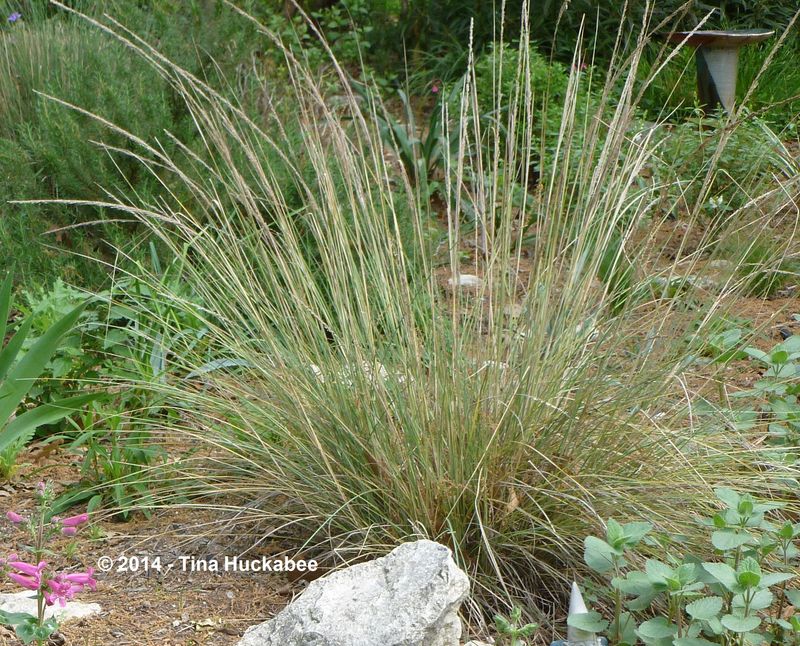
Somewhere between water-wise landscaping and backyard wildlife, there is a plant that California gardeners keep overlooking: deergrass. This large native bunchgrass grows tall enough to give dragonflies a place to land and scan, which means it may quietly make your yard a little more useful to these fast-flying insect hunters.
The idea is worth exploring honestly, because the full story involves some real planting work, a few fire-safety rules, and a clear-eyed look at what one grass can and cannot do for mosquito pressure in a dry California yard.
Deergrass offers the structure behind the idea
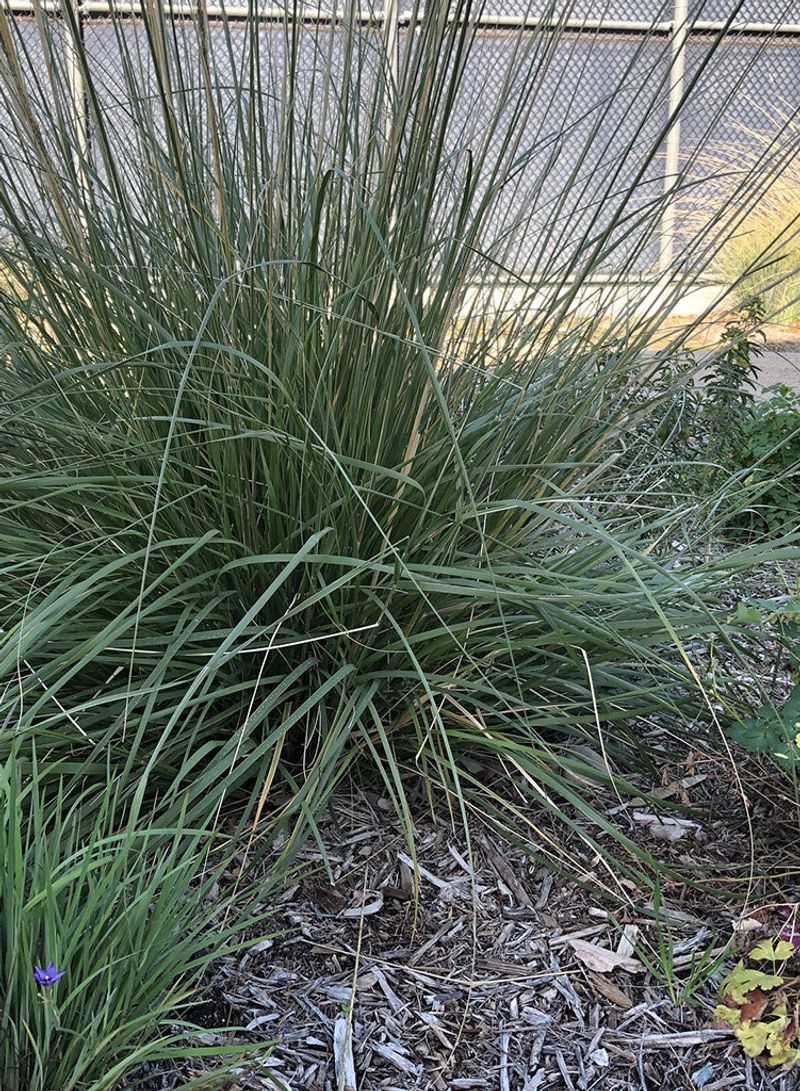
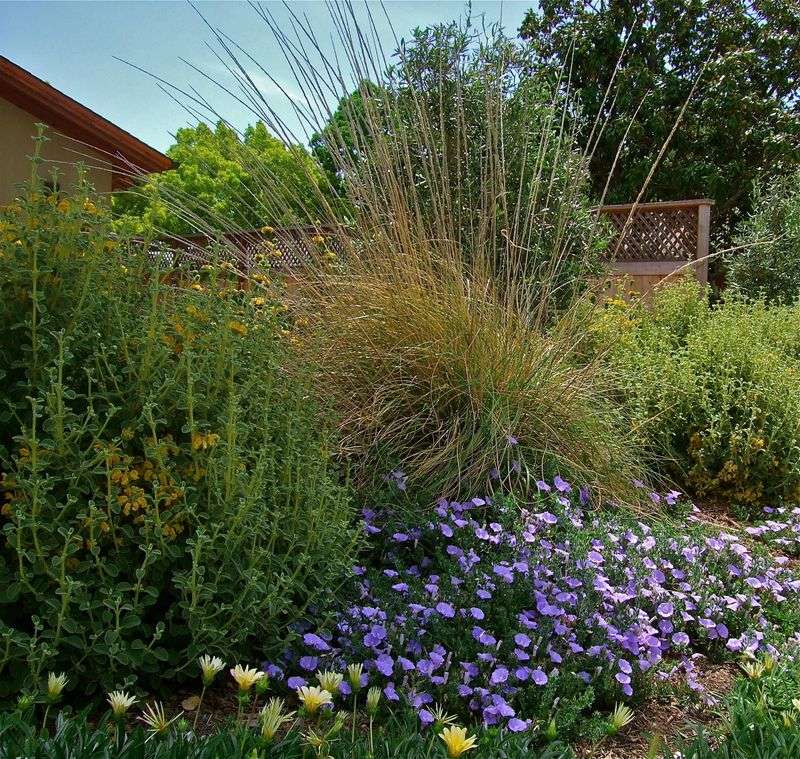
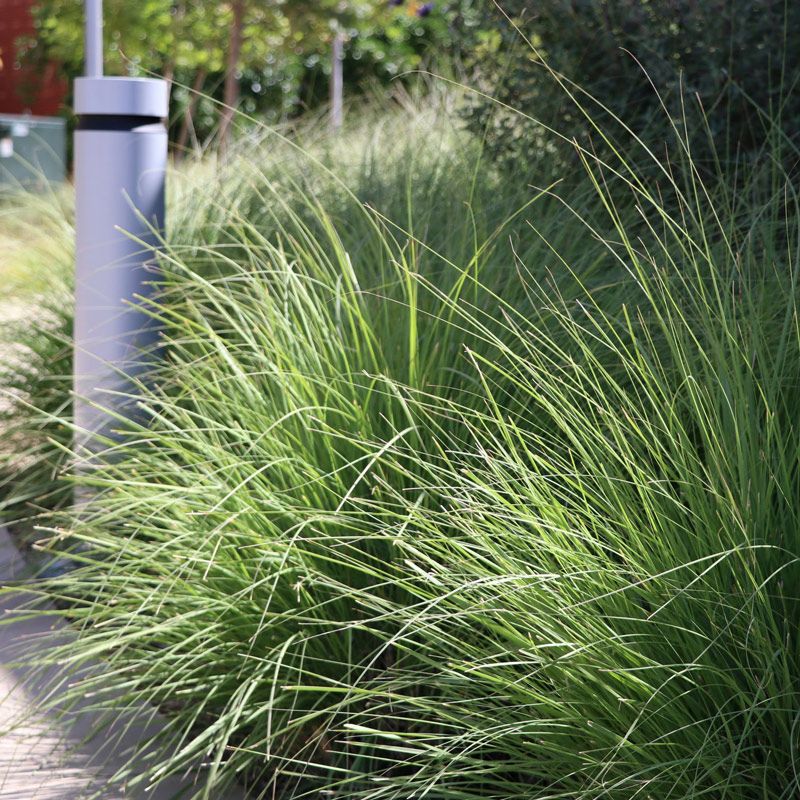
Muhlenbergia rigens, commonly called deergrass, is a perennial bunchgrass native to much of California and parts of the Southwest and Mexico. Where a lot of ornamental grasses stay tidy and compact, deergrass does something different: it builds a wide, fountain-shaped clump with arching foliage and slender flower stalks that push several feet above the leaves.
UC Cooperative Extension’s profile of Muhlenbergia rigens puts mature plants at roughly 3 to 5 feet tall and 4 to 6 feet wide, which gives the grass a physical scale that most ornamental alternatives simply do not reach.
That scale is exactly what makes deergrass relevant to dragonfly perching. The plant does not produce any chemical that attracts or deters insects.
Its value is purely structural: tall, upright stems and arching foliage give a dragonfly somewhere to land, rest, and survey the surrounding area. Any special mosquito-repelling property is not part of the picture here.
Deergrass prefers full sun and handles a range of California soils as long as drainage is adequate. It does not perform well in heavy clay that stays wet, and it is not a candidate for a shaded bed or a cramped border.
UC ANR guidance specifically notes that its mature footprint makes it a poor fit for tight spaces, so plan for a planting area at least 4 to 6 feet wide before you commit.
Good uses include a single specimen in a wildlife garden, a small drift along a sunny fence line, or a structural anchor at the edge of a native planting. Deergrass is sometimes confused with purple needlegrass, California’s state grass, but the two are quite different.
USDA Forest Service documentation on Nassella pulchra shows it is a smaller grass with distinct cultural needs, so guidance written for deergrass should not be applied to needlegrass or treated as interchangeable advice for every California bunchgrass.
Tall stems can give passing dragonflies a place to perch
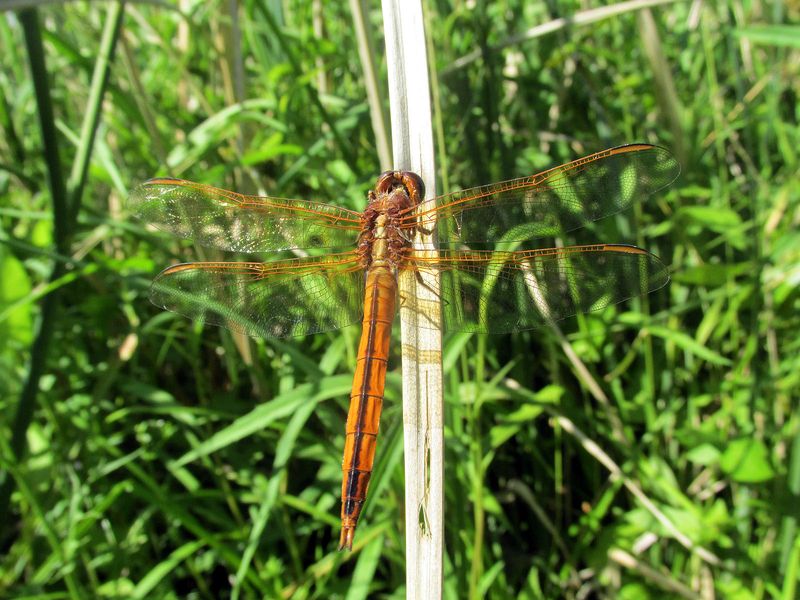
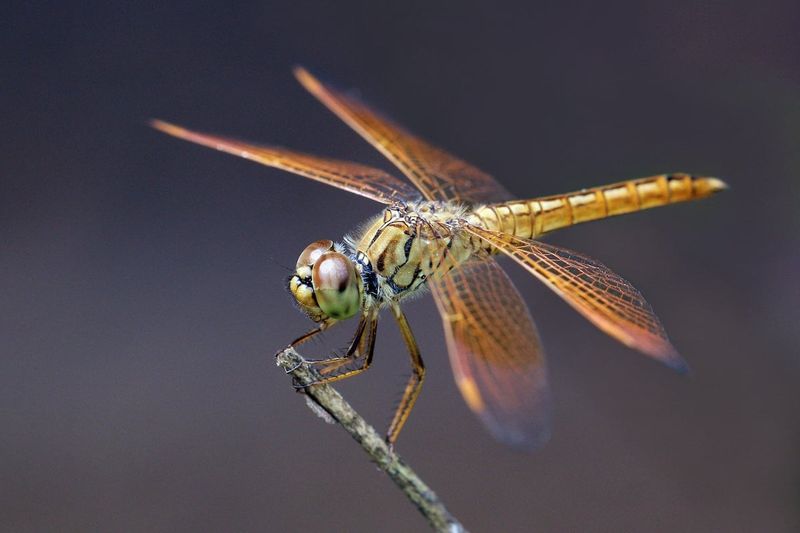
Watch a dragonfly for a few minutes on a warm afternoon and a pattern becomes obvious: it lands, waits, launches to catch something, and returns to nearly the same spot. That behavior depends on having a perch worth returning to, and California observations document exactly what those perches look like.
UC ANR’s field notes on dragonfly perching record California dragonflies using grass tips, plant stems, tree branches, and bamboo garden stakes as landing spots, sometimes returning to the same stem repeatedly on a given day.
Mature deergrass can supply that kind of structure. Its upright flower stalks stand well above the foliage clump, giving a perching dragonfly an unobstructed view of the surrounding area.
Whether a particular dragonfly will choose those stalks over a nearby branch, fence post, or bamboo stake depends on the individual insect and the specific site. The evidence shows that dragonflies use grass stems as perches; it does not show that deergrass specifically causes them to return on a reliable schedule or patrol a defined corridor around a yard.
That distinction matters for setting honest expectations. A single clump of deergrass may attract a visiting dragonfly that happens to be moving through the area.
It may also go unnoticed by any dragonfly for days at a time, especially if there is no suitable aquatic habitat nearby. The grass creates an opportunity, not a guarantee.
If you want to offer perch structure before your deergrass matures, a few upright bamboo stakes or thin wooden dowels pushed into the bed can serve the same function right away. Dragonflies are not particular about materials.
They want height, sun exposure, and a clear sightline, and a stake delivers all three while the grass spends its first season putting down roots.
A perch does not create a dragonfly breeding site
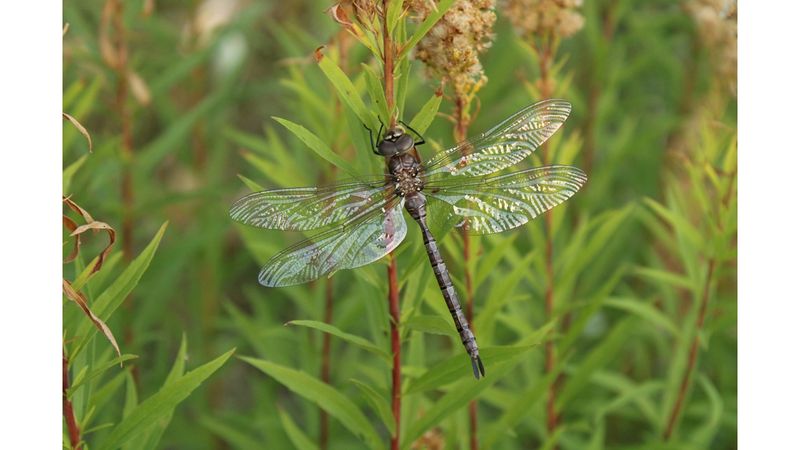
Adult dragonflies and their larvae live in completely different worlds. The adults fly, hunt, and perch in open air.
The larvae are aquatic, spending weeks or months underwater before emerging as the winged insects most people recognize. A grass planting, no matter how tall or well-placed, cannot bridge that gap.
Deergrass provides above-ground structure; it does not create or substitute for the water habitat that dragonflies need to reproduce.
A 2023 meta-analysis in the Journal of Animal Ecology on dragonfly and damselfly predation emphasizes the connection between adult habitat on land and larval habitat in water. The research treats these as linked systems: green space for adults, blue space for larvae.
A yard that provides only one of those elements may still attract visiting adults, particularly if a pond, wetland, irrigation channel, or other water body is nearby, but it cannot sustain a local breeding population on its own.
The practical implication is straightforward. If your neighborhood has a pond, creek, or retention basin within reasonable flight distance, you may see more dragonfly activity in your yard than someone gardening in a fully dry, landlocked suburban block.
The deergrass may help those visiting adults find a useful perch. A yard with no aquatic habitat anywhere nearby may see very little response to the grass planting regardless of how well it is established.
Adding water to the yard sounds like an obvious solution, but unmanaged water creates a serious problem. Saucers, birdbaths, tubs, buckets, and unmaintained ponds all become mosquito-breeding sites within a week of filling.
Any water feature you add needs regular attention: drain and scrub it weekly, keep it moving with a pump, or use an appropriate, label-compliant larvicide where the water cannot be removed. A wildlife pond managed well can support dragonfly larvae and limit mosquito production at the same time, but that outcome requires active maintenance, not just a container of standing water left in the sun.
Plant for establishment before expecting low-water performance
Fall is the right time to put deergrass in the ground across most of California. Mild winters give the roots several months to spread before the first dry season arrives, and the natural rainy period reduces how much supplemental water you need to apply.
Spring planting is possible, but it immediately pushes a young plant into the hardest stretch of the California calendar: long, hot, dry months with no rainfall to help.
UC Cooperative Extension’s deergrass profile confirms that newly planted deergrass needs supplemental summer irrigation, particularly in inland areas, until the plant is fully established. That establishment period typically runs through at least the first full dry season.
Skipping summer water in year one is a common reason new plants fail, especially in hot inland valleys where soil temperatures stay high for months.
Site selection matters as much as timing. Choose a spot with full sun and soil that drains reliably.
Deergrass tolerates a range of soil types, but standing water around the crown after rain will shorten the plant’s life. Leave the full 4-to-6-foot mature width free of competing plants, hardscape, and foot traffic before you plant.
Crowding the clump at installation means removing neighboring plants later, so build in the space from the start.
Once established, deergrass can survive with little or no summer irrigation in many California settings, which is a real advantage in a drought-conscious yard. Supplemental water during summer will keep the foliage looking greener and denser, but the plant does not require it after the root system is fully developed.
The UC Davis Arboretum’s native grass guide reinforces this pattern: low-water performance is an outcome of good establishment, not a feature that kicks in automatically the day you plant.
The phrase “plant once” is only accurate with those qualifications attached. A well-established deergrass clump can be long-lived and low-maintenance relative to many landscape plants, but it earns that status through a first-year commitment to regular watering and proper siting.
Think of establishment as the investment that makes the long-term ease possible.
Maintain the clump while meeting fire-safety rules
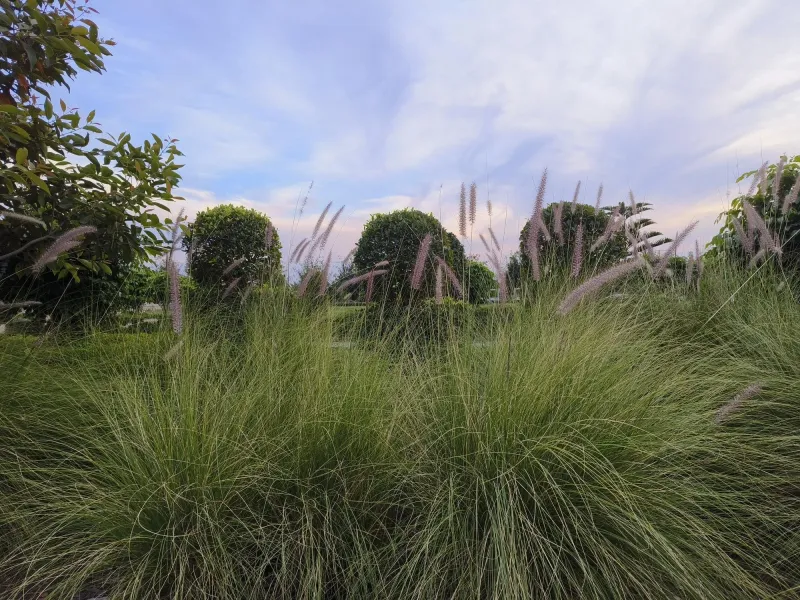
Deergrass is not a set-it-and-forget-it plant. After several years of growth, dead material accumulates inside the clump and the base can become heavily thatched.
That thatch is dry, fibrous, and slow to decompose on its own. Leaving it unmanaged is a maintenance problem in any yard and a fire-safety problem in California’s wildland-urban interface and dry inland communities.
UC ANR recommends cutting deergrass to approximately 3 inches or lower every one to three years during dormancy, typically in late winter before new growth begins. Some garden situations call for annual cutting.
The right frequency depends on how quickly your plant accumulates dead material, how dry your site is, and what your local fire authority requires. When a full cut feels too drastic, removing dead material by hand or with a rake is an alternative that can extend the time between full reductions.
Placement within your landscape is just as important as pruning frequency. California Board of Forestry defensible-space zone requirements specify how vegetation must be managed within 100 feet of a structure, with Zone 1 (0 to 30 feet) carrying the strictest rules for removing dead or dry material and maintaining separation between plants.
A large, dry grass clump placed too close to a wall or under eaves can become a direct path for fire to reach a structure.
The practical guidance is to treat deergrass the same way you would any other large native perennial in a fire-prone California yard. Maintain vertical clearance so the plant does not connect ground-level fuel to overhead branches or a roof.
Maintain horizontal spacing so individual plants do not form a continuous fuel bed. Remove accumulated thatch before fire season, not during it.
CAL FIRE’s defensible space program makes clear that local jurisdictions can impose requirements stricter than the state baseline, so check with your county or city fire department for the specific rules that apply to your address. Wildlife value never overrides those requirements.
Dragonflies do not turn one grass into mosquito control
The idea that planting deergrass will keep mosquitoes in check is appealing, but the supporting evidence is narrower than the claim suggests. A 2023 meta-analysis in the Journal of Animal Ecology found that dragonfly and damselfly nymphs consumed an average of about 40 mosquito larvae per nymph per day in experimental studies.
That is a meaningful finding about aquatic predation by immature odonates under controlled conditions. It is not a prediction of how many adult mosquitoes a homeowner will see fewer of after planting a grass.
The gap between those two things is significant. The nymphs in those studies were underwater, eating mosquito larvae before they ever became flying adults.
A deergrass clump in a dry yard does not produce or house nymphs. It may attract visiting adult dragonflies, but adult odonates are generalist predators, not mosquito specialists.
Field research on adult damselflies in urban areas found that blood-feeding flies, including Aedes mosquitoes, made up only a small share of their total prey. The rest of their diet consisted of other small flying insects.
Describing dragonflies as mosquito hunters is accurate in a loose sense, but treating them as a reliable mosquito-reduction tool overstates what the field evidence actually shows.
For real reductions in residential mosquito pressure, CDC guidance on mosquito control at home points consistently to source reduction: empty, scrub, and refill birdbaths and pet dishes weekly; dump water from plant saucers, buckets, and tarps; cover rain barrels with tight screens; and eliminate any container that holds standing water for more than a few days. Where water cannot be removed or covered, a label-compliant mosquito larvicide such as a Bti dunk is a targeted option that does not harm non-target insects.
Broad-spectrum insecticide spraying is a poor default response. It kills beneficial insects alongside mosquitoes and can reduce the very dragonfly population you are trying to support.
Deergrass fits into a mosquito-management strategy as habitat support for visiting predators, not as a replacement for the steps that actually interrupt the mosquito breeding cycle.
Make deergrass one part of a realistic wildlife plan
Deergrass earns a place in a California yard when a few conditions line up: full sun, enough room for a clump 4 to 6 feet wide, soil with reasonable drainage, and a willingness to water regularly through the first dry season. UC Cooperative Extension’s deergrass profile supports all of those requirements, and the plant’s long-term low-water performance makes it a sensible fit for drought-conscious California landscapes once it is established.
The broader strategy that actually supports dragonfly activity involves more than one plant. Provide perch structure with tall stems or supplemental stakes, as UC ANR’s dragonfly perching guidance describes.
Protect or properly maintain any nearby aquatic habitat, because that is where dragonfly larvae develop. Follow CDC source-reduction steps to eliminate mosquito-breeding containers, which also removes the standing water that undermines the dragonfly-friendly yard you are trying to build.
And place the grass according to California defensible-space zone requirements, removing accumulated thatch before fire season each year.
Deergrass will not guarantee a dragonfly patrol above your yard or a measurable drop in the mosquito count. What it can do is make a well-managed California yard a more useful stopping point for visiting dragonflies that are already moving through the area.
That is a modest, honest, and genuinely worthwhile outcome, and it holds up best when the surrounding landscape is doing its job too.