
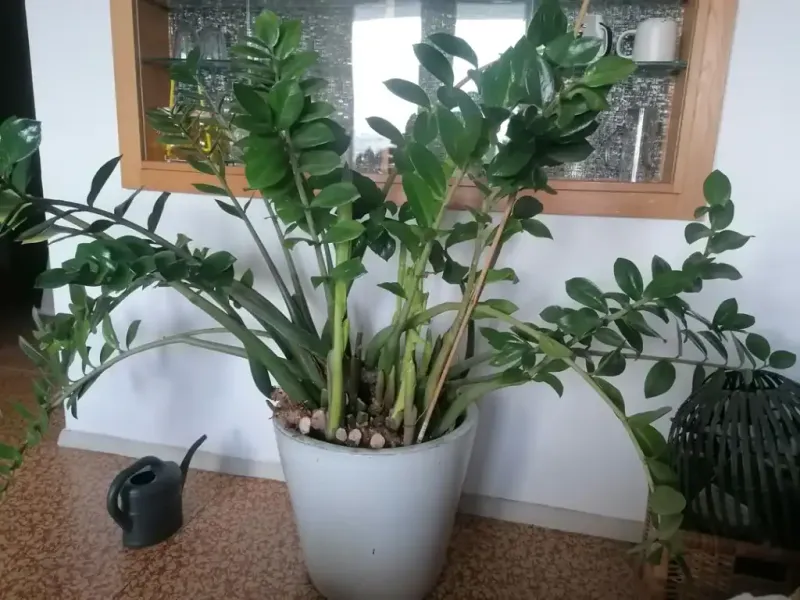
A ZZ plant that looks bare or uneven can worry even an experienced plant owner, but the cause is usually something correctable rather than a sign the plant is dying. Most sparse ZZ plants need better conditions and time, not aggressive cutting or heavy feeding.
Understanding what is actually driving the open look helps you make smarter changes and avoid accidentally making things worse.
A sparse ZZ plant is not always a failing plant
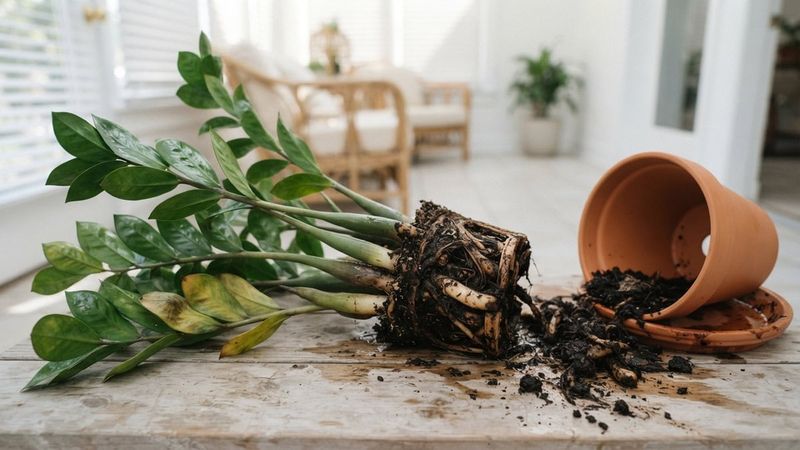
Not every open-looking ZZ plant is in trouble. The plant naturally produces upright to arching stems from underground rhizomes, and a pot with only a handful of rhizomes will always look less crowded than one packed with them.
Firm, dark green leaves and steady if slow growth are signs of a healthy plant, even when the stems look widely spaced or wand-like.
When growth does look genuinely stretched, wider leaflet spacing and leaning stems can point to inadequate light. UF/IFAS guidance on ZZ plant care notes that the plant can survive and even produce new leaves under very low interior light, but brighter indirect light generally supports faster and sturdier growth.
That means a dim corner may keep the plant alive without producing the compact, full look many owners want.
A third possibility involves actual stem loss, which looks different from slow or stretched growth. If stems have disappeared and the soil has stayed wet for long periods, root or rhizome damage is worth considering.
Before changing anything, check the visible clues: are the remaining leaves firm and green, or are they yellowing and wilting despite moist soil? UF/IFAS Emerging Pathogens Institute guidance on houseplant diagnosis cautions that yellowing alone does not confirm overwatering, since low light, poor drainage, temperature stress, or nutrient issues can produce similar symptoms.
Reading the full picture before acting prevents unnecessary changes that could stress a plant that is simply growing at its own pace.
Bright, indirect light improves the next wave of growth
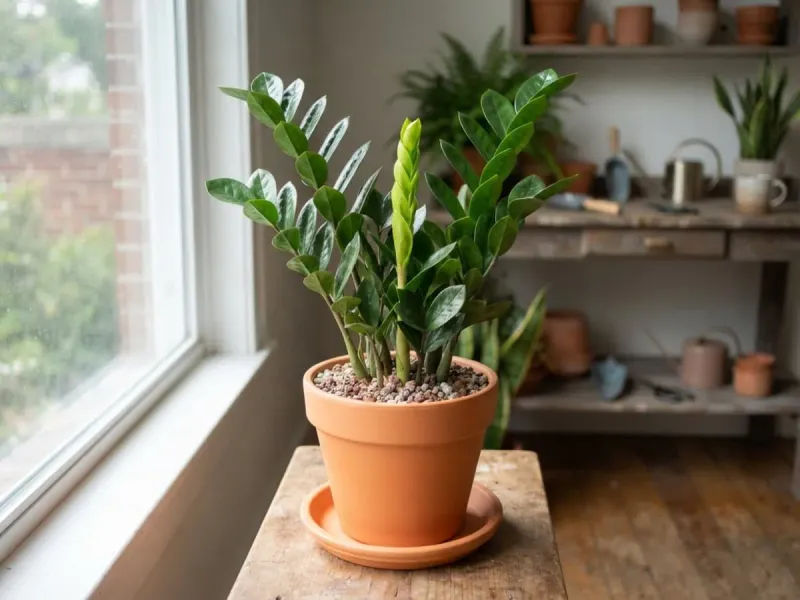
Light is the single most practical lever for improving how a ZZ plant grows over time. Moving the plant toward a bright room near a window, with a sheer curtain filtering harsh afternoon sun when needed, gives new stems better conditions to emerge sturdier and more upright.
University of Connecticut Extension and Iowa State University Extension both identify bright, indirect light as better for ZZ growth than low-light placement, even though the plant can tolerate dim conditions.
If the plant has been sitting in a dark corner for months, increase its light exposure gradually rather than moving it directly into a sunny spot. Direct afternoon sun, especially through south- or west-facing windows in Florida or Texas, can scorch ZZ foliage and cause bleaching or brown patches that are hard to reverse.
A gradual transition over a couple of weeks lets the plant adjust without additional stress.
Rotating the pot every few weeks is a simple habit that helps distribute light more evenly across all sides of the plant, reducing the one-sided lean that makes some ZZ plants look especially sparse from certain angles. Rotation will not create new stems or force an existing stem to branch, but it can improve the plant’s overall presentation and help future growth emerge more evenly around the container.
The payoff from better light shows up in new shoots, not in old bare sections, so patience matters as much as the move itself.
Wet roots can make a once-full plant look thinner
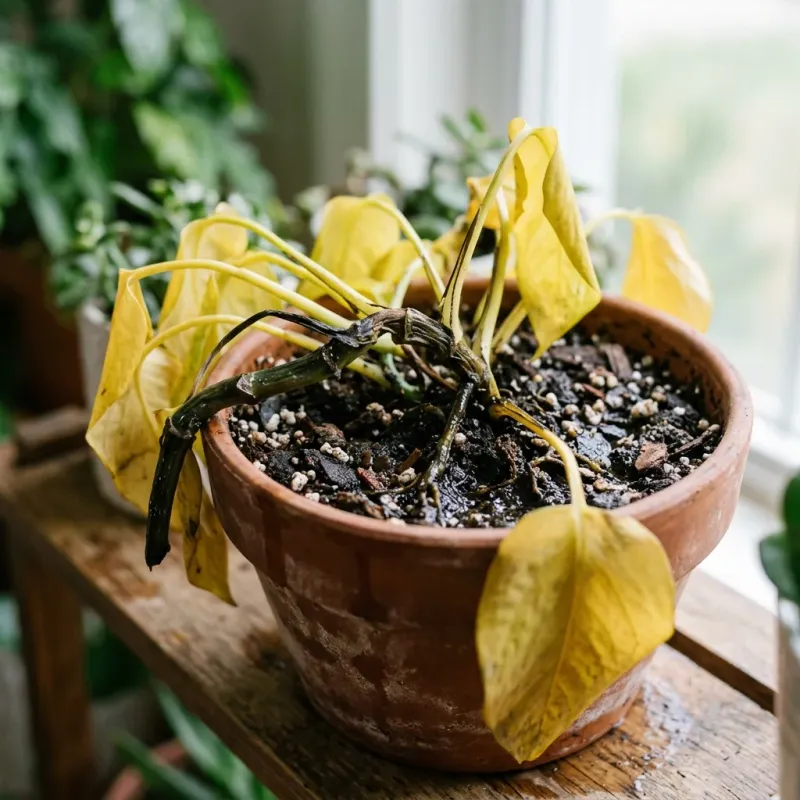
Water management matters more for ZZ plants than for most common houseplants, because the underground rhizomes that store moisture are also the structures that produce new stems. When soil stays wet for too long, those rhizomes and their roots can begin to break down, and stems that were once present can disappear one by one.
A plant that looked reasonably full six months ago but now has noticeably fewer stems may be showing the slow result of excess moisture.
The practical rule is to let the potting medium dry substantially before watering again, then water thoroughly and let excess drain completely. Clemson Cooperative Extension emphasizes using a container with drainage holes and emptying any standing water from saucers or decorative cachepots promptly.
Leaving a ZZ plant sitting in pooled water, even briefly, increases the risk of root damage over time. No fixed watering schedule works for every home, because light levels, container size, soil type, and season all affect how quickly the medium dries out.
When yellowing, wilting despite wet soil, or persistent sogginess appear together, inspecting the roots is a reasonable next step. Healthy roots feel firm; soft, brown, or black roots are consistent with damage, though a qualified diagnosis considers the full picture rather than one symptom alone.
Houseplant diagnosis guidance from UF/IFAS reinforces that yellowing by itself is not proof of overwatering. Correcting moisture conditions protects whatever healthy rhizomes remain, but it does not instantly replace stems that have already been lost.
Pruning and extra fertilizer cannot manufacture new shoots
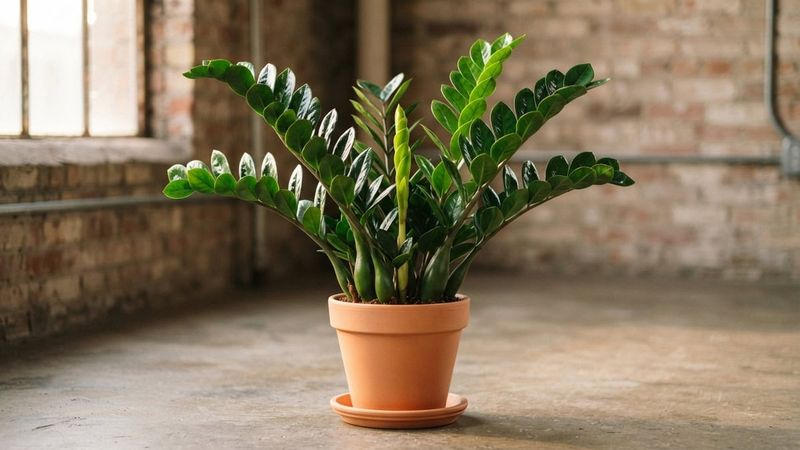
Cutting back stems is one of the first things people try when a ZZ plant looks bare, but it rarely produces the bushy result they are hoping for. ZZ stems grow directly from underground rhizomes, not from branching points along an existing stem.
Removing a stem generally eliminates that stem rather than triggering reliable branching at the cut. UF/IFAS ZZ plant care guidance supports pruning only for removing damaged or unattractive growth, not as a proven method for encouraging density.
Fertilizer is the other common shortcut that often disappoints. A light application during active growing periods can support a healthy, well-lit ZZ plant, but it cannot compensate for inadequate light, damaged roots, or a container that simply has too few rhizomes to produce more stems.
North Carolina Cooperative Extension guidance on fertilizing houseplants recommends conservative feeding rather than frequent or heavy applications. Excess fertilizer can cause salt buildup and leaf tip burn, adding cosmetic damage to an already stressed plant.
The temptation to do something visible and immediate is understandable, especially for Southern plant owners watching a plant sit unchanged through a long warm season. However, aggressive pruning or heavy feeding on a sparse ZZ is more likely to set the plant back than to fill it out.
UC IPM houseplant problem guidance notes that over-fertilizing is itself a source of houseplant decline. Keeping interventions minimal while improving light and watering conditions gives the plant its best chance to grow new shoots on its own schedule.
Rhizomes determine density, and division does not add them
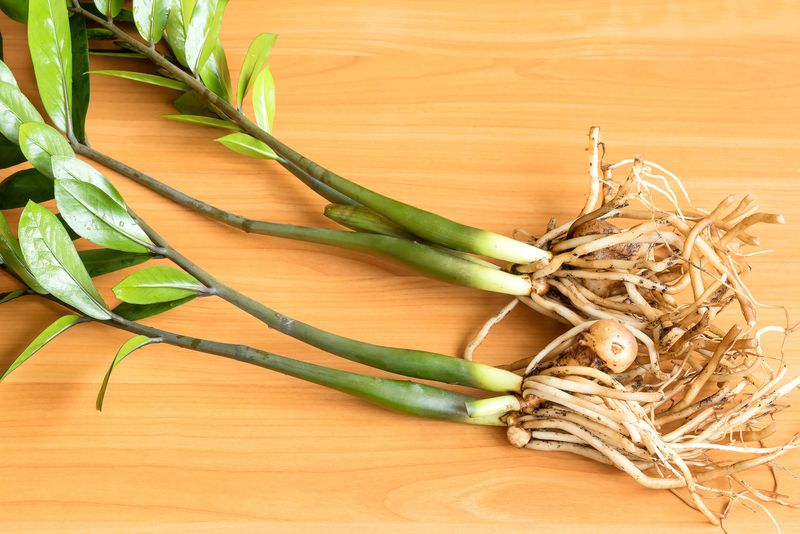
Every stem a ZZ plant produces starts underground as a shoot from a rhizome. A pot that contains only three or four small rhizomes has three or four potential starting points for stems, regardless of how carefully the plant is tended.
This is why some well-cared-for ZZ plants remain visually open: the limiting factor is the number of rhizomes present, not the quality of care alone.
Division is sometimes suggested as a way to make a ZZ plant fuller, but the logic does not quite hold up. Separating an established plant into multiple sections reorganizes its existing rhizomes into different containers; it does not create additional rhizomes or increase the plant’s total shoot count.
University of Illinois Extension explains that division is most useful as a propagation method, since each section with viable roots and rhizomes can grow into an independent plant over time. Iowa State University Extension propagation guidance notes that dividing established sections is faster than starting from individual leaflets, because each division already has vegetative structures to support growth.
For a genuinely fuller-looking container, the most direct approach is combining multiple plants or adding separately established rhizome divisions that each bring their own roots and shoots to the pot. Each section should have enough healthy roots to support itself before being combined.
UF/IFAS commercial production guidance for ZZ plants links rhizome number and size directly to the time needed to produce a full-looking plant, which explains why a larger pot alone does not solve the problem. A bigger container without more rhizomes just means more soil to stay wet around the same number of stems.
A fuller ZZ plant takes months, not a weekend
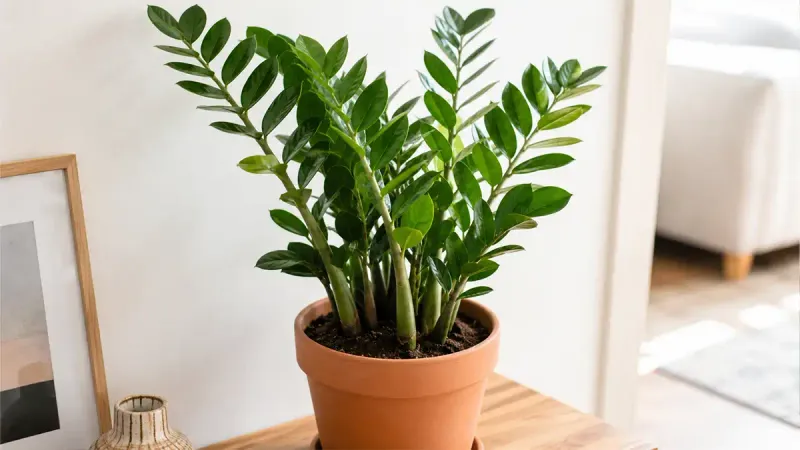
ZZ plants are genuinely slow growers, and new stems tend to appear in spurts rather than at a steady pace. University of Connecticut Extension and Iowa State University Extension both describe the plant as slow-growing, which means evaluating recovery over months rather than weeks is more realistic than watching for weekly changes.
A plant that receives improved light and corrected watering may not show obvious new growth for several months, especially if it is recovering from previous stress.
Leaflet propagation is technically possible, where individual leaflets are removed and placed in moist medium to eventually form a small rhizome and then a shoot. UConn reports that rhizomes may begin forming in about a month under greenhouse conditions but can take up to nine months indoors.
For anyone hoping to fill out a sparse plant quickly, leaflet propagation is not a practical rescue tool; it is a long-term project that requires patience and controlled conditions.
While waiting for new growth, a focused inspection for pests is worth doing if growth looks distorted, leaves appear stippled or sticky, or stems seem weaker than expected. Check leaf undersides, stem bases, and the joints where leaflets meet the main stem for signs of scale, mealybugs, spider mites, or aphids.
University of Illinois Extension guidance on houseplant pests and UC IPM houseplant problem resources describe the signs to look for, including webbing, waxy residue, and distorted new growth. Pests are not the most common explanation for a sparse ZZ, but they can quietly weaken a plant that might otherwise be recovering well.
Use better care first, then decide whether the container needs more plants
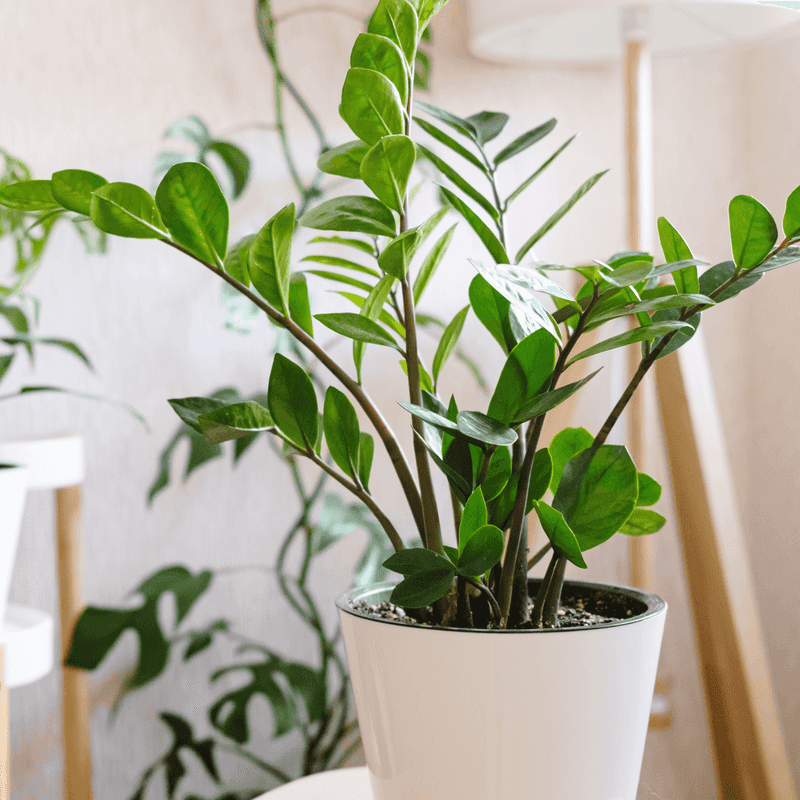
The most useful sequence for a sparse ZZ starts with diagnosis. Check whether the plant is naturally open with few rhizomes, showing stretched growth from low light, or losing stems from excess moisture or root trouble.
From there, move the plant toward bright indirect light and rotate it periodically for even exposure, then let the potting medium dry substantially between thorough waterings. Inspect roots and check for pests only when symptoms suggest a deeper problem.
Pruning, excess fertilizer, and a much larger pot are not reliable shortcuts to fullness. University of Connecticut Extension, UF/IFAS, and University of Illinois Extension consistently frame ZZ care around patience, appropriate light, and careful watering rather than aggressive intervention.
Better conditions improve the quality and direction of future growth; they do not fill gaps in existing stems. Adding separately established rhizome divisions or combining multiple plants into one container is the clearest path to a visibly fuller pot, since each new section brings its own shoots.
UF/IFAS commercial production guidance confirms that rhizome count drives density more than any single care adjustment. A healthy ZZ with few rhizomes may simply remain open and architectural, which is not a flaw so much as the plant being exactly what it is.