
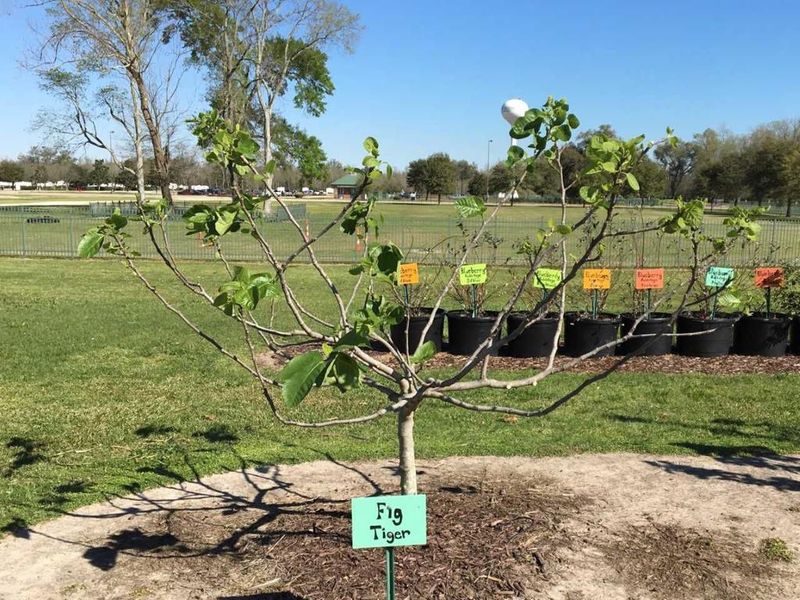
A fig tree can keep producing fruit year after year with surprisingly little pruning, but one poorly timed cut can wipe out an entire crop before you ever taste it. The key is knowing which wood carries the fruit you want and working around it instead of through it.
Southern gardeners in Florida and Texas face a different set of timing rules than growers in colder states, so advice from up north does not always apply here. Get the timing right for your tree and your region, and you protect the harvest you already have.
Pruning timing protects a crop—it does not guarantee a bigger one
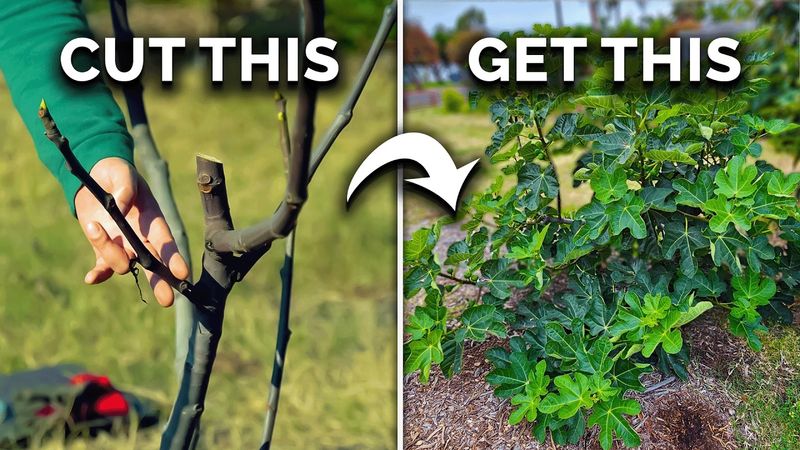
Fig trees are remarkably self-sufficient. UF/IFAS guidance states plainly that fig trees do not require pruning to remain productive, and UC IPM notes that mature figs tolerate everything from very light to heavy pruning.
That flexibility is reassuring, but it cuts both ways: because figs can fruit well without any intervention, there is no guarantee that pruning will increase next year’s yield.
The real danger is removing the wrong wood at the wrong time. Heavy winter pruning can eliminate the breba crop entirely or reduce the total harvest on an established tree.
Texas A&M Extension reports that heavy pruning of mature Celeste trees reduces yield, which is a practical warning against cutting aggressively just because the calendar says it is time.
Pruning does earn its place in the garden for specific, defensible reasons: controlling height so fruit stays within reach, improving access through a crowded canopy, removing hazardous or damaged wood, and maintaining a framework that holds up over seasons. UC IPM confirms that these structural goals are the strongest case for pruning a fig. The governing principle is selective crop preservation, not cutting for its own sake.
Learn which wood carries each fig crop
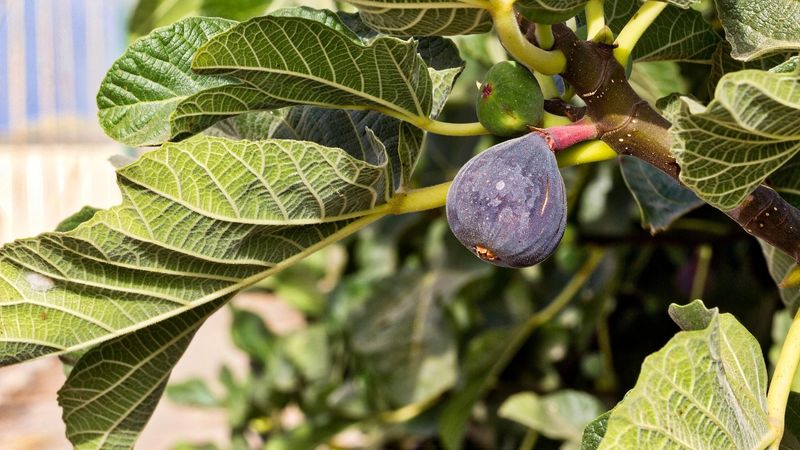
Before making any significant cut, it helps to understand what fig wood actually does. Many fig cultivars can produce two separate crops, and each one grows from a different type of wood.
University of Maryland Extension and New Mexico State Extension both explain that the breba crop forms on last year’s wood and ripens earlier in the season, while the main crop forms on the current season’s new growth and generally ripens later in summer or fall.
That distinction is the hinge point for every timing decision. If you cut away one-year-old branches during dormancy, you are cutting away the wood that would have produced your early figs.
The main crop is safer from winter pruning because it has not grown yet, but even then, severe cuts can remove productive framework and slow recovery.
Cultivar and climate also matter. UGA Cooperative Extension notes that not every fig produces a meaningful breba crop, and the size and reliability of the early harvest varies by variety and location.
Before scheduling any major work, watch your tree through at least one season to see which crops it actually carries. A tree with a strong, reliable breba harvest calls for a completely different approach than one that only produces a main crop in late summer.
UC ANR specifically recommends avoiding heavy winter pruning on breba-producing trees and pruning just after the main crop instead, which keeps one-year-old wood intact through the season when it matters most.
Schedule major cuts around the crop you intend to preserve
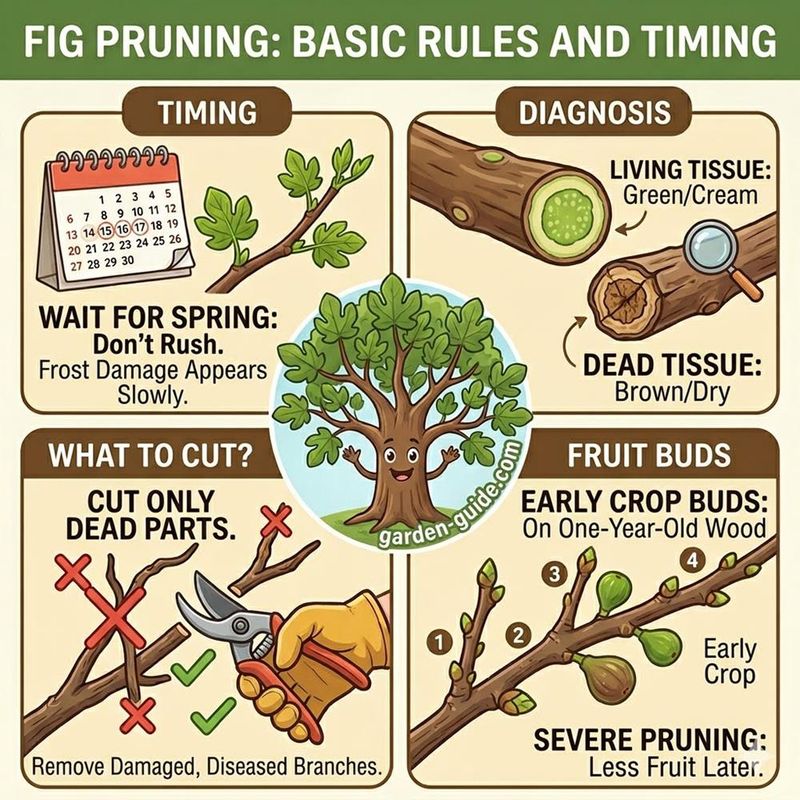
Knowing which wood carries each crop makes the scheduling decision straightforward, even if the execution requires some patience. For gardeners who value the breba harvest, the rule from UC ANR is clear: keep one-year-old wood intact through the season and hold major pruning until after the main crop finishes.
That is not the same as pruning immediately after the brebas ripen. Cutting heavily right after the early crop removes the wood that is still carrying or developing the main crop, so the full season needs to finish before substantial reshaping begins.
UF/IFAS reinforces this by recommending that pruning follow fruit harvest, allowing the tree time to set up for the following year. Gardeners focused primarily on the main crop have more room to work with during dormancy, since that crop develops on new growth rather than last year’s wood.
Moderate dormant-season pruning can fit that goal, but severe cuts are still risky. Removing too much older framework can reduce total yield, weaken branch structure, or delay recovery by more than one season.
There is also a meaningful difference between minor hazard removal and major structural pruning. Dead branches, a limb rubbing against the fence, or a low-hanging shoot blocking the path can come out at almost any point without disrupting the crop timeline.
UC IPM and USDA guidance both support removing problem wood as needed, while reserving substantial size reduction or reshaping for after the intended crop. After any significant pruning, allow enough growing time for new growth to harden off before cold weather arrives.
Use regional weather and harvest timing as your calendar
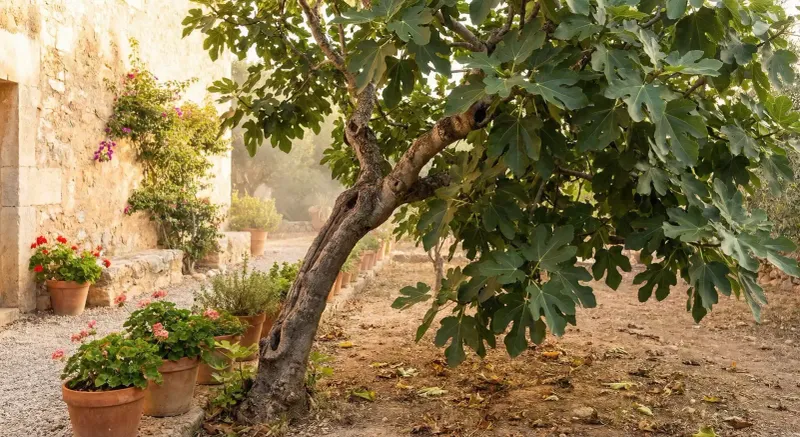
A fixed calendar date for fig pruning does not work equally well across the South. Florida and Texas present conditions different enough from the mid-Atlantic or Pacific coast that advice written for those regions can lead gardeners astray.
UF/IFAS Gardening Solutions recommends pruning only after fruit ripens, with timing landing in early or late summer depending on the cultivar and when the harvest actually finishes. The practical rule in Florida is to follow the crop, not the month.
UF/IFAS also cautions that heavy winter pruning can remove the following crop entirely, and that late-maturing cultivars may already face a significant yield reduction from post-harvest pruning if it comes too late in the season. That makes it even more important for Florida gardeners to track their specific tree’s harvest window rather than applying a blanket date.
Texas presents a different challenge. Texas A&M Extension identifies winter injury as common outside the warmest parts of the state, and regional temperature swings can make a fixed pruning date unreliable.
When a tree suffers freeze damage, waiting for regrowth to begin before removing damaged wood is safer when conditions allow, since living wood is easier to identify once new growth appears. A badly damaged tree may regrow from the base and need more than one season to recover fully.
Gardeners in colder parts of the South may find that late-winter cleanup after the worst freezes suits their situation, as University of Maryland Extension describes for mid-Atlantic growers. Warm-region guidance from University of Arizona Extension recommends pruning after the second crop, which aligns with the post-harvest approach.
Let local harvest timing and freeze patterns guide the schedule rather than a universal date.
Remove damaged and crowded wood first
Whatever the season, a restrained first pass through the tree is almost always appropriate. Start by looking for wood that clearly needs to go regardless of timing: dead branches, diseased or broken limbs, shoots that cross and rub against each other, and low-hanging growth that blocks access to the fruit or the ground beneath the tree.
UGA Cooperative Extension lists these as the baseline cuts that keep a fig tree manageable without requiring a specific pruning window.
UC IPM adds that inward-growing shoots and branches that interfere with harvesting are also reasonable targets. Suckers sprouting from the base deserve a closer look before you cut them all.
Unwanted suckers should come out, but in a bush-form fig, selected basal shoots may serve as permanent trunks or as replacements after freeze damage kills upper wood. Remove the ones you do not need and keep the ones with a structural purpose.
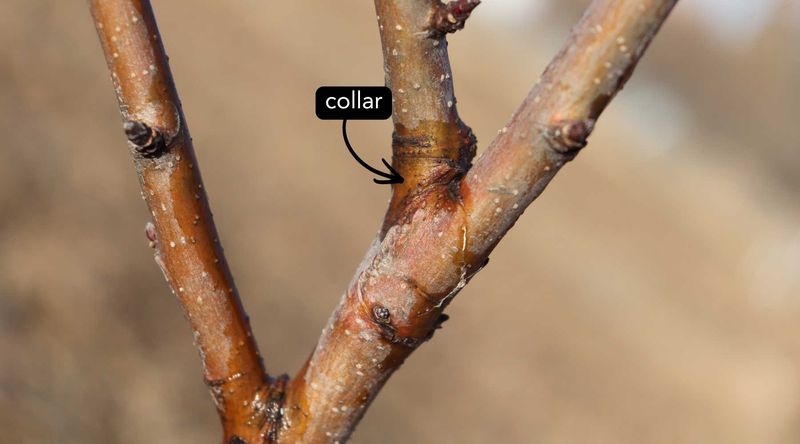
Cut technique matters as much as cut timing. UGA Extension on pruning technique recommends cutting back to a bud, a lateral branch, or the branch collar rather than leaving a long bare stub.
Stubs do not heal cleanly, can become weak and unproductive, and may invite decay over time. Cutting too deeply into the branch collar is equally problematic because it injures the tissue responsible for wound closure.
A clean cut at the right point is the simplest way to give the tree the best chance of sealing over quickly.
Train a manageable bush when winter damage is common
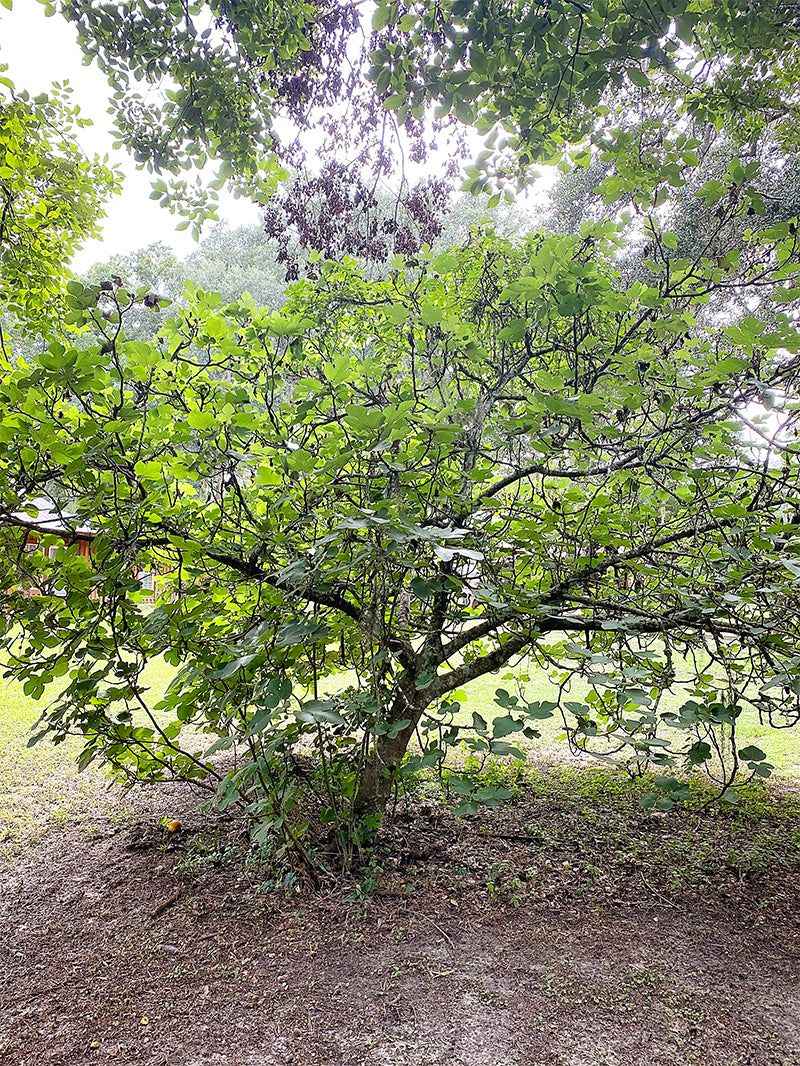
Single-trunk fig trees look tidy, but in parts of the South where freezes can kill upper wood and force the tree to regrow from the base, a multi-trunk bush form often makes more practical sense. UGA Cooperative Extension recommends selecting roughly three to eight well-spaced leaders after establishment to build a bush-form plant that stays low enough to harvest easily and recovers more predictably after cold damage.
The bush form suits Texas fig growing particularly well. Texas A&M Extension notes that common figs in the state are often grown as spreading, multi-trunked plants, which reflects both the regional freeze risk and the practical reality that figs regrow vigorously from the base when the top is damaged.
Keeping height manageable means more of the harvest is reachable without a ladder, and the lower structure is somewhat less exposed to the worst cold.
Bush training does not promise a larger harvest. What it does offer is easier access, predictable size, and a framework that can absorb freeze damage without losing the entire tree.
Ask Extension notes that severely pruned or heavily damaged plants may need multiple growing seasons to return to normal production, so the goal of bush training is recovery and manageability rather than any short-term yield increase.
Avoid vigorous regrowth that costs fruit
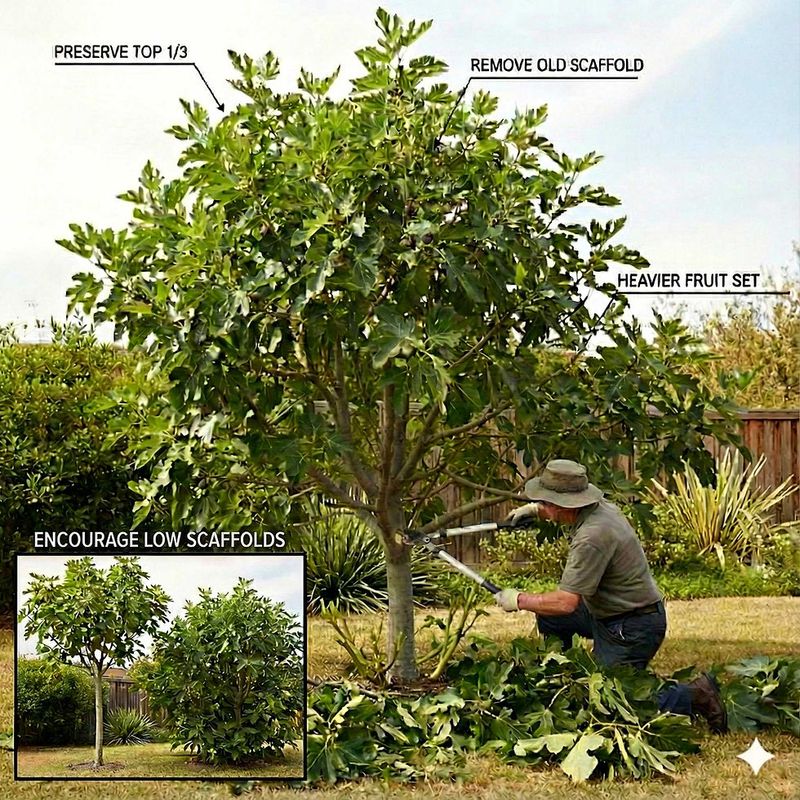
Heavy pruning often triggers a flush of fast, upright new growth, and it can be tempting to read that response as a sign the tree is thriving. Strong vegetative regrowth and a good fruit harvest are not the same thing, and confusing the two leads to one of the most common pruning mistakes home gardeners make.
UC ANR notes that excessive vegetative vigor can delay ripening or push the tree toward leaves and shoots at the expense of fruit development.
UGA Cooperative Extension adds that excessively vigorous or over-fertilized fig plants may drop fruit before it matures, which means a tree putting energy into rapid new growth after heavy pruning may sacrifice fruit set in the process. Removing all older wood when brebas matter is a particularly costly version of this mistake, since those branches were the entire early-season harvest.
Late-season pruning that stimulates tender new growth is another hazard worth avoiding in Texas and other areas with unpredictable winters. New shoots that emerge late in the season may not harden off before a freeze arrives, leaving them vulnerable to cold damage that sets the tree back further.
Ask Extension confirms that a heavily pruned or freeze-damaged tree can require multiple growing seasons to return to normal production.
Canopy thinning deserves the same skepticism. Opening the tree does not automatically improve fruit quality, and UC IPM cautions that dense foliage can protect fig bark from sunburn.
Any canopy work should serve a clear access or structural purpose rather than the assumption that more light always helps.
Protect yourself while pruning
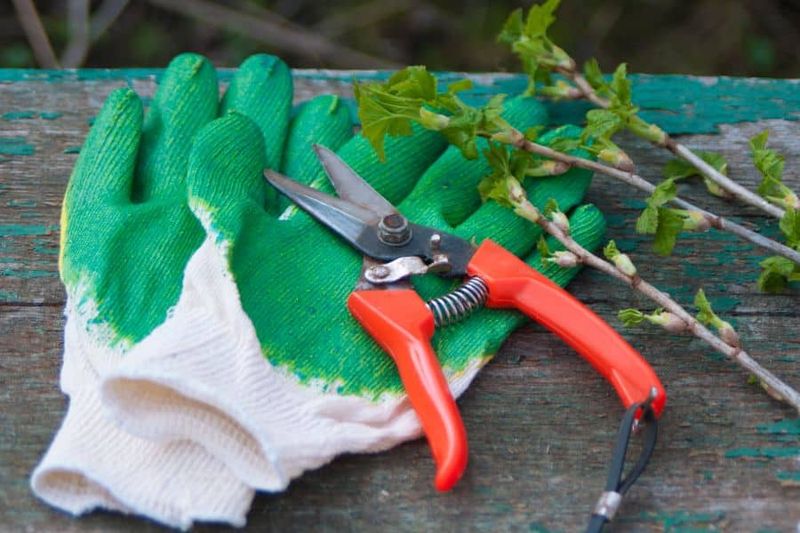
Fig trees release a milky white latex when cut, and that sap can irritate skin on contact. UF/IFAS recommends wearing gloves and long sleeves when pruning figs, and NC State Extension notes that skin exposure to fig latex combined with sunlight can worsen irritation in some people.
Covering up before you start is a simple precaution that avoids an uncomfortable reaction.
Eye protection is a reasonable general pruning safety measure. Branches under tension can snap back, and wood chips or debris can reach your face during any pruning session.
UC Cooperative Extension Sonoma County includes eye protection among its fig pruning recommendations as a standard precaution. Wearing safety glasses costs nothing and covers the risk.
After finishing the work, wash any exposed skin with soap and water to remove sap residue before spending more time in the sun. Avoid touching your face or eyes while pruning, and launder clothing that caught sap before wearing it again.
Choose the crop, then make the smallest effective cut
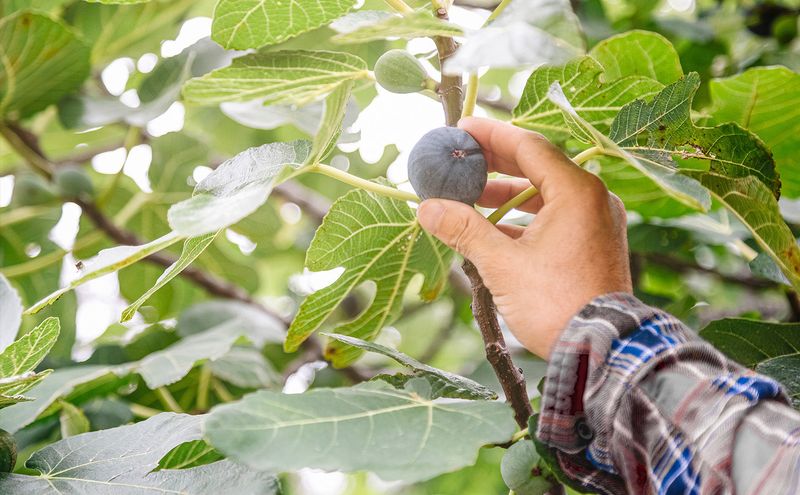
A practical checklist makes the whole process less guesswork. First, identify which crop your tree reliably produces.
If brebas are part of the harvest, retain one-year-old wood through the season and hold major cuts until after the main crop finishes. UF/IFAS and UC ANR both point to post-harvest timing as the safest window for significant work on a breba-producing tree.
If the main crop is the priority, moderate dormant-season pruning is more tolerable, but keep cuts selective. Remove only what genuinely needs to go: dead, damaged, crossing, or hazardous wood first, then structural adjustments if size or access is a real problem.
UC IPM and University of Arizona Extension both support the post-harvest, minimum-necessary approach for warm-region figs.
The honest payoff from careful pruning is a tree that stays manageable, keeps its fruiting wood intact, and holds a framework strong enough to carry a harvest. Next year’s yield still depends on cultivar, climate, tree health, and growing conditions.
A well-timed, well-placed cut is the best thing you can do. The tree does the rest.