
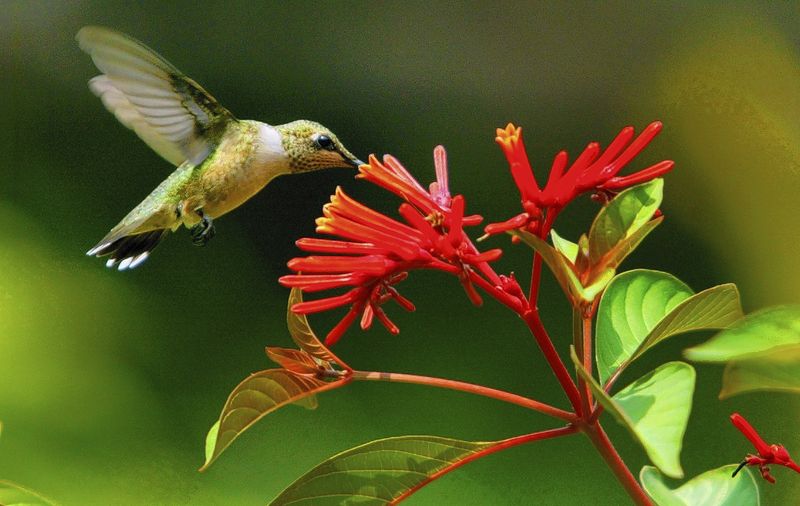
Most people take their feeders down in September and think the hummingbird show is over. In the South, especially Florida and Texas, fall is actually a busy time as migrating hummingbirds pass through hungry and looking for fuel.
If your yard has nothing blooming, they simply fly on to a neighbor’s garden. The good news is that a handful of tough, heat-loving flowers can keep nectar flowing well into October and beyond.
1. Mexican Bush Sage
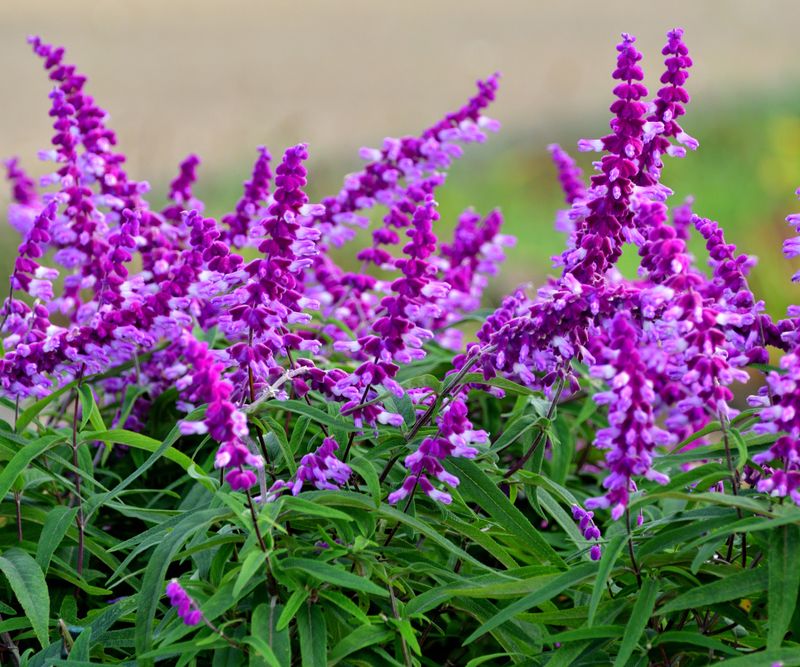
Ask any Texas gardener about fall color and Mexican bush sage usually comes up within a minute. Its velvety purple spikes wait all summer, then explode just as the first cool front rolls through.
That timing is exactly why hummingbirds love it. Migrating birds heading toward Mexico need quick energy, and each fuzzy spike holds dozens of small tubular flowers packed with nectar.
A single mature plant can feed visitors for weeks, often from September until the first frost.
Plant it in full sun with soil that drains well, since soggy roots can cause it to rot. Once established, it handles drought like a champ, which makes it a smart pick for yards that bake in August.
Give it about four feet of room, because it may grow wide and tall by fall.
Here is a handy trick. Pinch the stems back by about a third in early summer to keep the plant bushy and less floppy.
Skip trimming after mid-July, or you might cut off the flower buds you are waiting for.
In North Florida and most of Texas it often returns each spring, so one planting can pay off for years.
2. Firebush
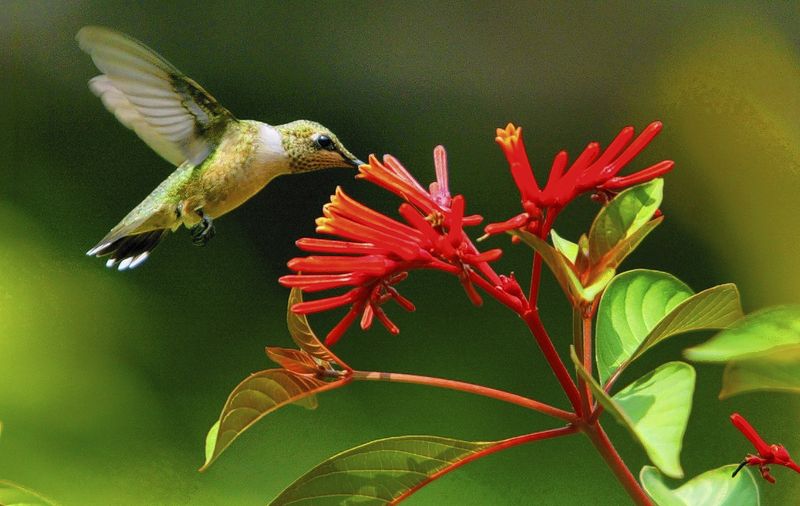
Florida natives do not get much tougher than firebush. Hurricanes, heat waves, and sandy soil barely slow it down, and it keeps blooming when most flowers look worn out.
The flowers are narrow orange-red tubes, basically custom-built for a hummingbird beak. Butterflies visit too, and songbirds snack on the small dark berries later in the season.
You get a whole wildlife buffet from one shrub.
In Central and South Florida, firebush may flower nearly all year. Farther north and in the Texas Gulf Coast region, it usually blooms from late spring through October, then dies back if frost hits.
Many gardeners cut it to the ground in winter and watch it return in spring.
Plant it where it gets at least six hours of sun for the heaviest bloom. It tolerates partial shade, though flowering can be lighter.
Water regularly the first season, then it can usually handle dry spells on its own.
One caution: buy the true native Hamelia patens when you can. Some nurseries sell compact, non-native types that may produce fewer flowers for your hummingbirds to enjoy.
3. Pineapple Sage
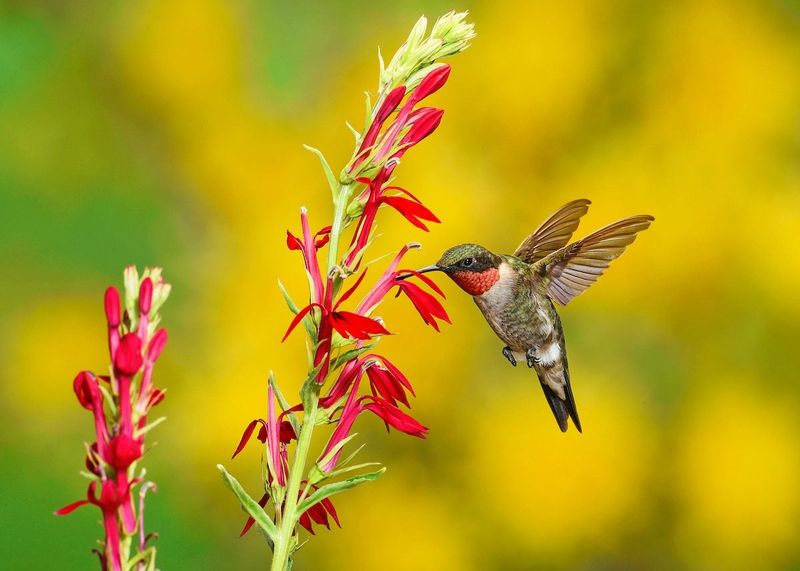
Brush your hand across the leaves and you will smell pineapple, which is half the fun of growing this plant. The other half shows up in fall, when bright scarlet spikes appear almost overnight.
Pineapple sage is a late bloomer on purpose. It reacts to shorter days, so flowers usually open in September and October, right when hungry migrants arrive.
Red is a color hummingbirds seem to find fast, and these blooms are hard to miss.
It grows quickly into a leafy three to four foot mound. Morning sun with a little afternoon shade works well in hot Texas and Florida yards, since midday heat can wilt the leaves.
Keep the soil evenly moist, but not soggy.
Did you know the leaves and flowers are edible? Many cooks toss them into iced tea, fruit salad, or lemonade, so it pulls double duty near the kitchen door.
In cooler parts of the South, a hard freeze may knock it back. A layer of mulch over the roots can help it survive and return next year.
In frost-free areas, it often grows more like a small shrub.
4. Turk’s Cap
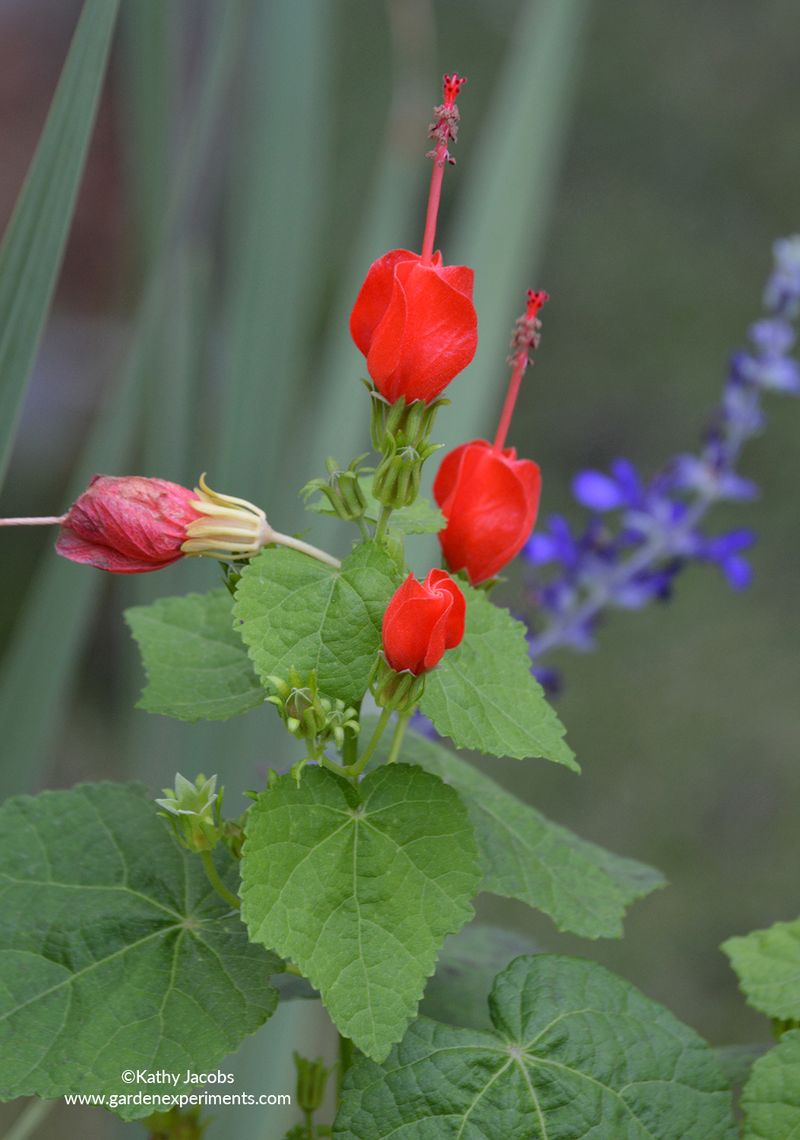
Got a shady corner where nothing wants to bloom? Turk’s cap might be the answer you have been looking for.
This Texas native thrives under trees and along fences where sun-loving flowers struggle. Its little red blooms look like hibiscus flowers that never fully open, curling into a swirl.
Hummingbirds do not seem to mind that odd shape one bit, and they return to it again and again from summer through fall.
Few plants are as easygoing. Turk’s cap tolerates clay, drought, heat, and shade, and it usually bounces back after pruning.
Deer tend to leave it alone, too, which is a real bonus in suburban neighborhoods where deer browse flower beds.
Plant it in spring or fall and water it well the first few months. After that, it generally gets by on rainfall except during long dry spells.
It spreads slowly, so give it some room or be ready to share extras with friends.
A fun extra: the small red fruits that follow the flowers are edible and taste a little like apple. Birds and small wildlife often find them before you do, but that just adds to the life in your yard.
5. Cigar Plant
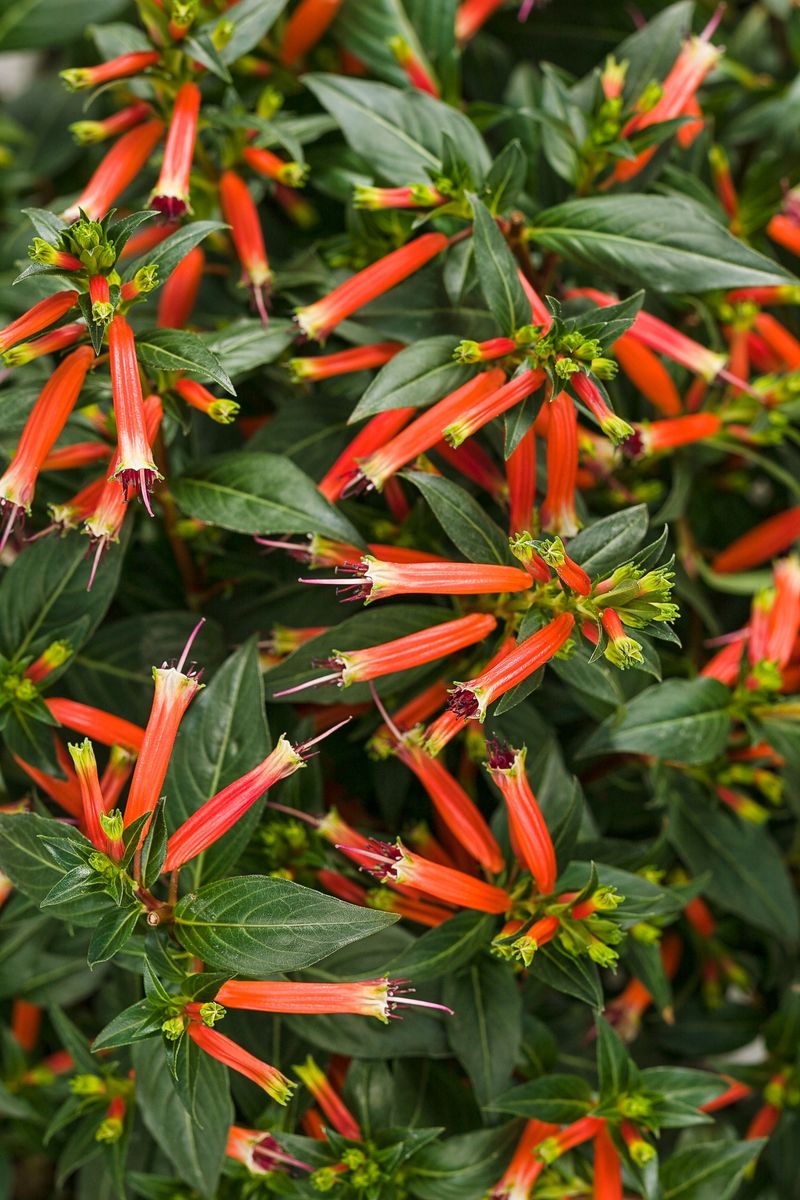
Tiny flowers, big payoff. Cigar plant produces hundreds of slim orange-red tubes with ashy white tips that look like miniature lit cigars.
What makes it stand out on this list is its size. At one to three feet tall, it fits in porch pots, window boxes, and narrow beds where larger shrubs would crowd things.
You can bring hummingbirds right up to your front steps and watch them from a rocking chair.
Cigar plant blooms heavily from spring through the first frost, and in warm areas of Florida it may keep going through winter. Heat and humidity do not faze it, so it handles those sticky Southern afternoons that wilt petunias and impatiens.
Give it full sun to light shade and soil that drains well. Container plants dry out faster, so check them every day or two during hot weeks.
A light trim in midsummer can refresh a leggy plant and push out a fresh round of blooms for fall.
Bees and butterflies visit as well. If you want a small plant that works hard every single week, cigar plant is an easy yes.
6. Coral Honeysuckle
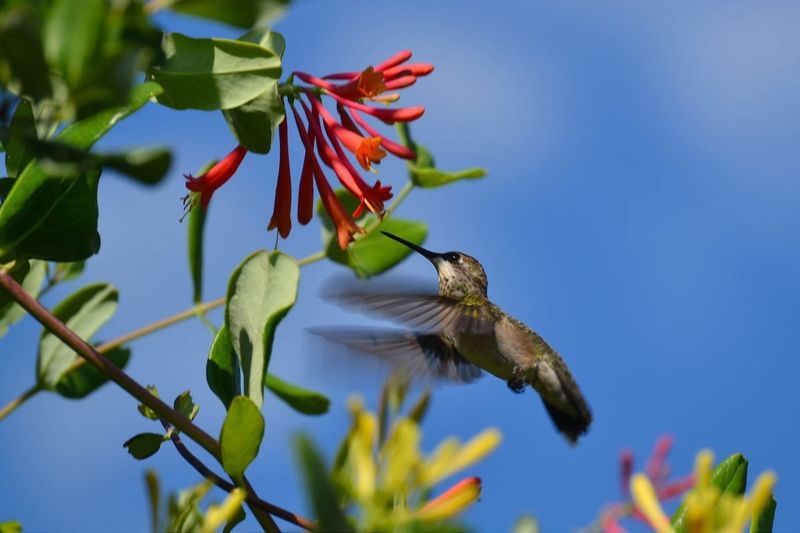
Picture a fence or mailbox post wrapped in clusters of red tubular flowers, with a hummingbird zipping between them. That is coral honeysuckle at its best.
Unlike the invasive Japanese honeysuckle, this vine is native across the South and behaves itself. It will not smother your trees or take over the neighborhood.
Its biggest bloom comes in spring, yet it often reblooms in waves through summer and fall, giving migrating birds another reliable stop in October.
It is also one of the best vertical options for small yards. Train it up a trellis, arbor, or porch rail, and you gain flowers without giving up ground space.
In Florida and South Texas, it usually keeps its leaves all year.
More sun means more flowers, so aim for at least a half day of direct light. Water new plants regularly, then back off once roots settle in.
Watch for aphids on new growth, and a strong spray of water can often knock them off.
In late fall, the vine may produce small red berries that songbirds enjoy, making it a year-round wildlife plant.
7. Tropical Sage
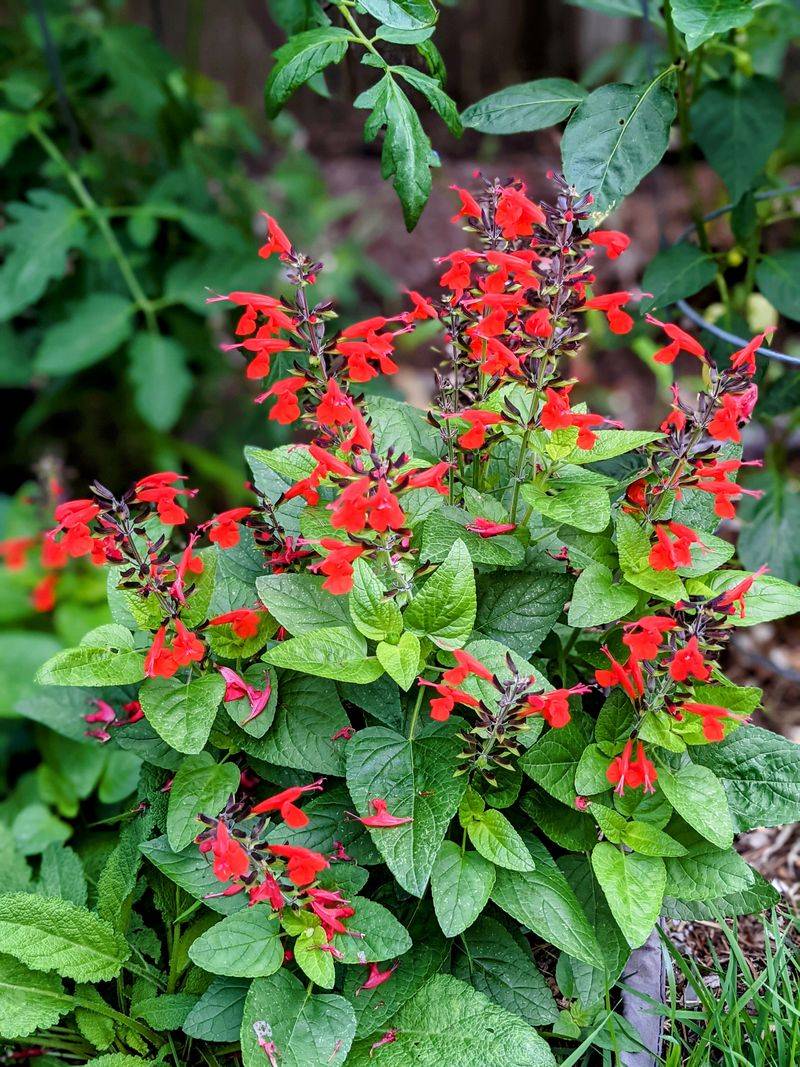
If you want a flower that practically plants itself, meet tropical sage. Scatter a few seeds, and you may have a patch that returns for years.
Salvia coccinea is native to Florida and parts of Texas, and it blooms from spring right through fall. Its slender spikes hold bright red flowers, though pink and white forms exist too.
Hummingbirds visit it constantly, and it often keeps producing nectar when other plants have faded in the October heat.
Here is the secret to keeping it going. Snip off spent flower spikes every couple of weeks, and the plant usually answers with new ones.
Leave a few to go to seed near the end of the season if you want free plants next spring.
It grows about two feet tall and handles poor sandy soil, drought, and full sun without much fuss. Partial shade works, but blooming may be lighter.
Because it is inexpensive and fast, it makes a great filler between slower shrubs like firebush or Turk’s cap.
Pair several plants from this list and you can create a nectar trail that keeps hummingbirds stopping by well into fall.