
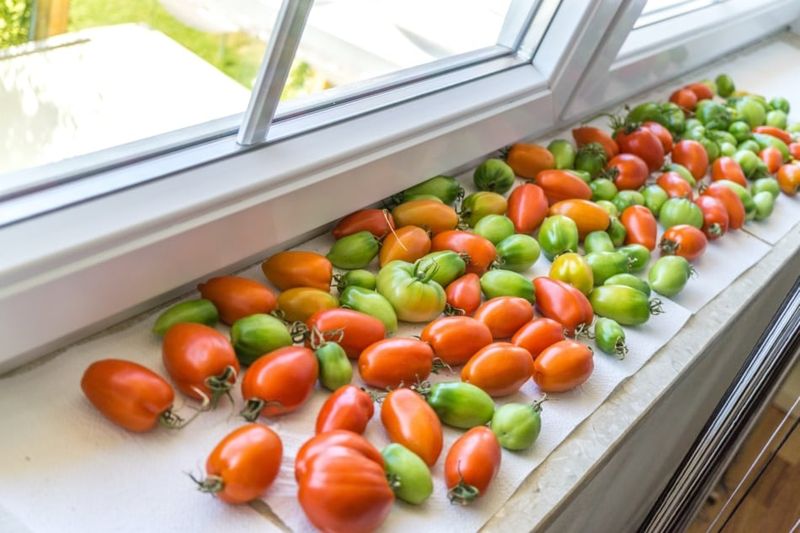
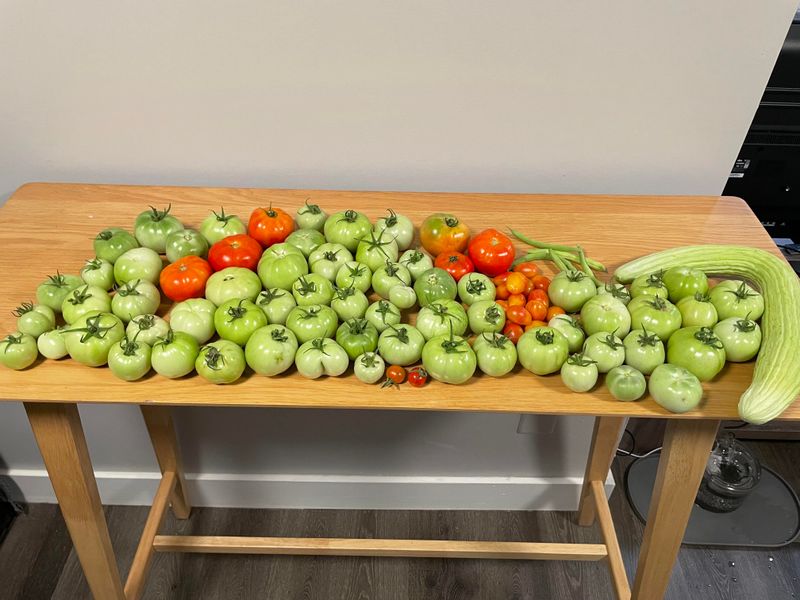
A cold snap is on the way, and your vines are still hung with hard green tomatoes. Some of that fruit can finish ripening on a kitchen counter, but some of it never will.
The difference comes down to one thing you can check in a few minutes. Knowing what to look for can save a good handful of tomatoes from the compost pile.
Maturity—not green color—is the deciding cue
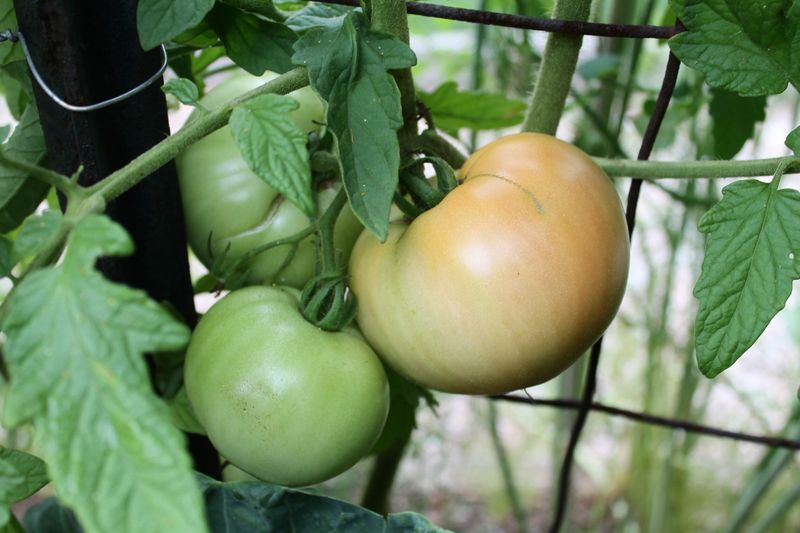
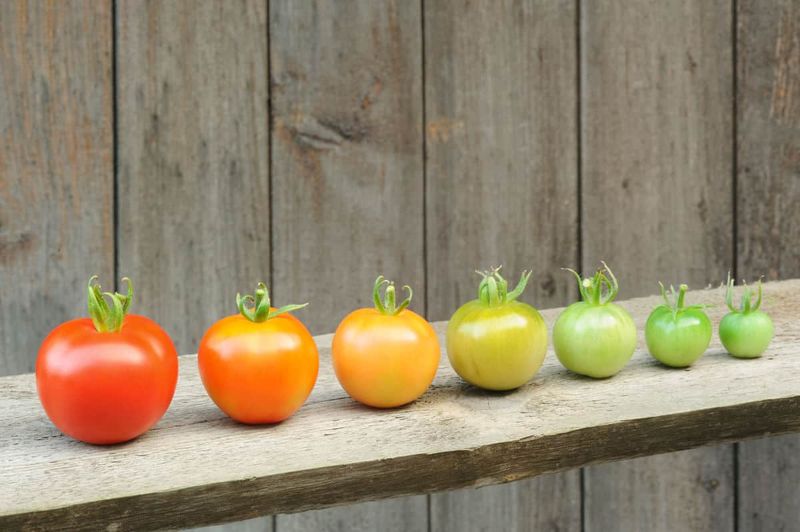
Green skin alone tells you very little. A tomato that is dark, matte, and still small has probably not reached the point where it can ripen on its own after picking.
For ordinary red-fruited varieties, the better candidates are close to full size and have shifted toward a lighter, glossier, or whitish green.
Treat those looks as clues, not promises. UF/IFAS guidance notes that outside signs are not completely reliable, so a fruit can look right and still disappoint.
When you are unsure, sacrifice one representative tomato and slice it open. Mature fruit has developed jelly-like gel around the seeds, and the seeds resist the knife instead of cutting cleanly.
Immature fruit has soft seeds and little or no gel, and Alaska extension warns that it may shrivel or color poorly. UConn Extension describes the same cut test.
Those mature-green tomatoes are your best bets for the counter.
Harvest suitable fruit before frost
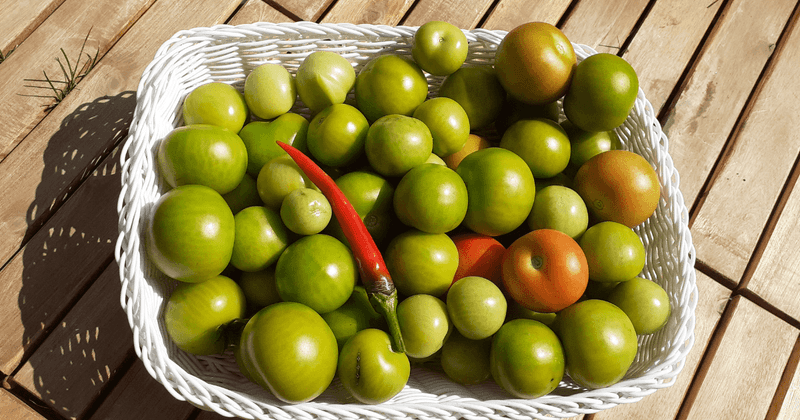
Once you have sorted out which tomatoes look mature, the next move is timing. University of Illinois Extension recommends picking the mature green fruit you want before a killing freeze.
Ripening then happens indoors, on its own schedule, with no promised finish date.
A cool night is not the same as frost. In much of Florida and Texas, several mild nights may pass before any real freeze, and one chilly evening does not automatically ruin your crop.
Still, Oregon State Extension notes that several days below 50°F can hurt quality, so watch your own forecast rather than a calendar date.
Fruit that already shows some color is a more conservative pick. Texas A&M AgriLife advises picking at the pink stage, though mature-green fruit can also ripen if it is truly mature.
If frost has already touched a tomato, look it over. Firm fruit may be fine, while water-soaked, mushy fruit should go.
Prepare firm fruit for indoor storage
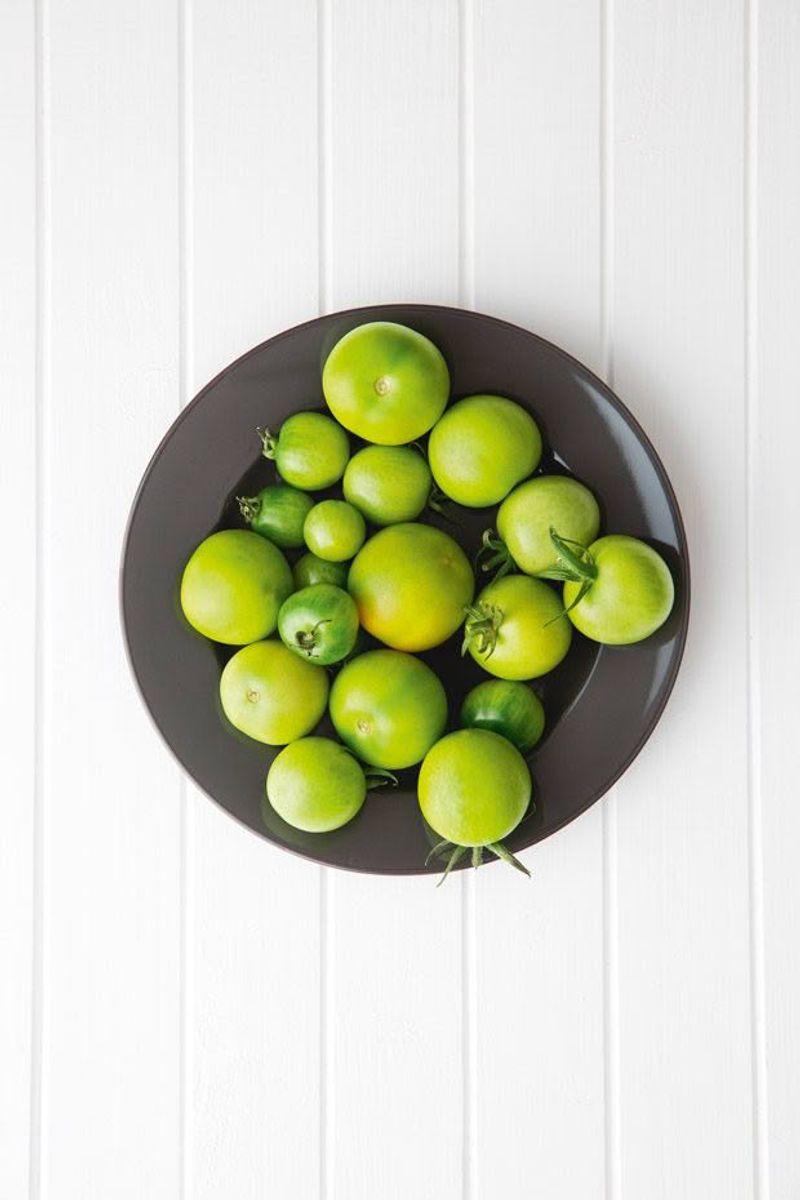
A little sorting now saves a lot of mold later. Pick through your harvest and keep tomatoes that are firm and free of cracks, soft spots, and insect holes.
Set the blemished ones aside to use right away, since damaged skin invites decay.
Handle each fruit gently, because bruises can turn into rot spots during storage. Iowa State Extension suggests removing the stems and discarding any damaged or decaying fruit.
If dirt or garden residue clings to the skin, wipe or wash the tomatoes, then let them dry completely. UConn Extension also advises drying washed fruit fully before you put it away.
Lingering moisture is a common reason a batch goes bad.
Good prep protects the tomatoes that have a chance, but it cannot rescue small, immature fruit that never reached maturity in the first place.
Use moderate warmth and keep fruit out of direct sun
The setup is simple: a dry, well-aired spot that stays comfortably warm. UConn Extension reports that mature green tomatoes can ripen in about two weeks at 65 to 70°F, while cooler air slows things down.
A pantry, spare room, or closet often works well.
UC Davis lists about 68°F as a good ripening temperature for quality. Treat that as a target, not a rule.
Timing shifts with each tomato’s maturity, the variety, and the conditions in your house.
Skip the sunny windowsill. Cornell Cooperative Extension says tomatoes do not need light to ripen, and direct sun can heat the fruit enough to interfere with color development.
A single layer in a box or tray, with a little space between fruit, helps air move around them.
Inspect regularly; use ethylene only as a nudge
Once the tomatoes are stored, a quick weekly check keeps the batch healthy. Turn each fruit gently, look for soft spots or mold, and remove anything that is decaying before it spreads.
UConn Extension recommends removing rot during those checks.
Tomatoes give off ethylene, a natural gas that helps trigger ripening. UC Davis reports that ethylene exposure starts ripening in mature-green fruit.
Tucking a ripe tomato in with the green ones may speed things up a bit, but it is an optional extra.
Ethylene has limits. It works on fruit that is already mature, and it cannot turn an immature tomato into a ready one.
UF/IFAS makes that same distinction, so a ripe banana will not fix a batch of small, hard fruit.
Keep the rest dry and aired, and move tomatoes to the kitchen as they color.
Expect variable timing and flavor
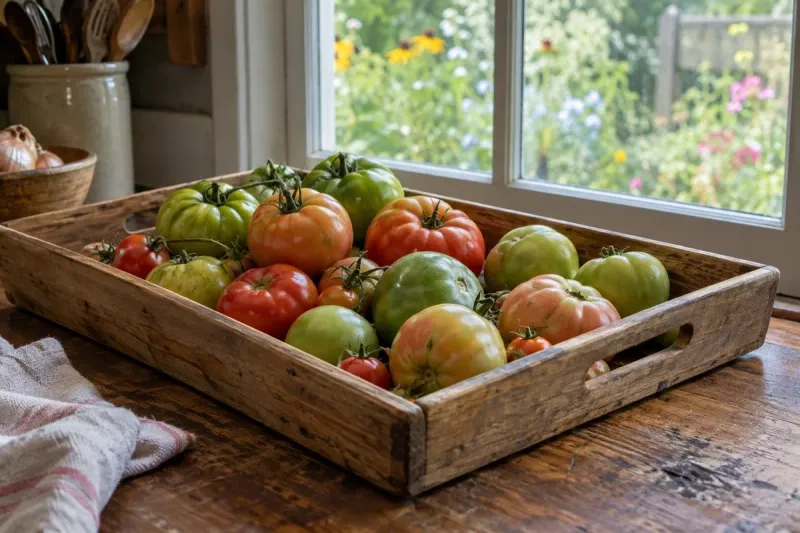
Some tomatoes will blush in a week, others will take longer, and a few will never get there. Mature-green fruit has a better chance than immature fruit, but no one can name a firm date for your batch.
UConn Extension cautions that late-season fruit can be less flavorful than summer tomatoes.
Fruit that stays pale or shrivels is a sign it was picked too young, as Alaska extension points out. Sauces, salsas, and cooked dishes are good ways to use tomatoes that ripen but taste a little flat.
The path is short. Check maturity, pick before frost, prepare firm fruit carefully, and store it shaded and moderately warm.
Picking before frost only protects the fruit from the cold, and it does not guarantee that any tomato will finish ripening.
Think of it as giving the best fruit a fair shot, and being pleasantly surprised by whatever turns red.