
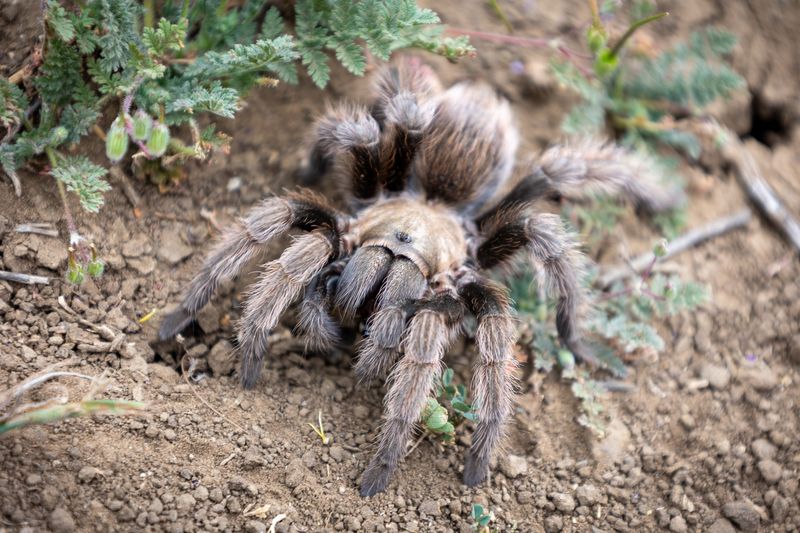
A big, hairy spider strolling across your patio in October can stop you in your tracks. In California, that sighting is often a tarantula on the move, and it is usually just passing through.
Knowing what it is doing, and what it is not doing for your garden, helps you respond calmly. The best move is simple, and it may not be the reason you expect.
Why California tarantulas may wander in fall
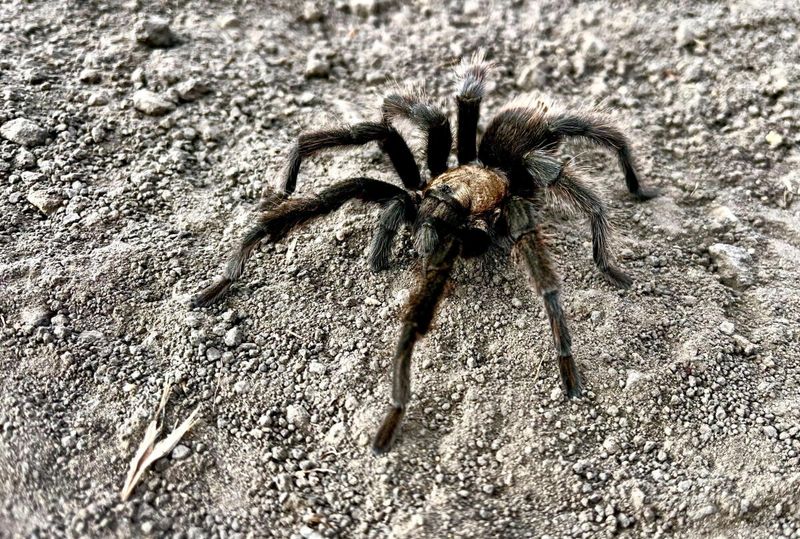
Mature males commonly leave their burrows in late summer and fall to look for females. The Natural History Museum of Los Angeles County gives a typical window of July through November for this roaming.
Timing shifts with weather and location, so think of it as a rough guide and not a statewide calendar.
California is big and varied. A foothill yard in the Bay Area, a desert edge in the Inland Empire, and a coastal canyon in San Diego County will not all see spiders on the same dates.
A warm, dry stretch may bring wanderers out earlier or later than a cool one.
A sighting by itself does not tell you the spider’s sex or why it is out. A tarantula on your lawn in October is very likely a wandering male, but that is a good bet and not a guarantee.
Even specialists can struggle to tell some California species apart just by looking.
Rain can also send spiders moving. UC IPM notes that burrow-living spiders may wander after rain if they need to leave a wet burrow.
So a tarantula crossing the yard after a storm may have a different reason for being out.
Either way, seeing one is a normal possibility for a California yard near open land, not a sign that something is wrong with your garden.
Tarantulas eat insects, but do not promise garden pest control
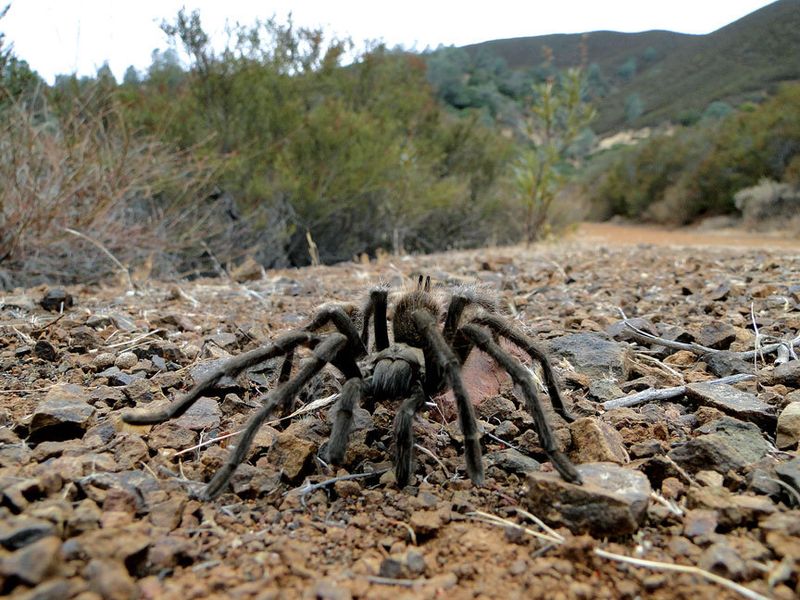
Tarantulas are hunters, not web builders. UC Cooperative Extension describes them waiting near burrow entrances for insects that wander close, then grabbing them.
Their meals are mostly insects and other small creatures that happen by.
Beetles and grasshoppers are documented prey. The National Park Service lists both among the foods of desert tarantulas.
That makes tarantulas real insect predators in the places they live.
Here is where the headline goes too far. Eating insects is not the same as clearing them out of a planting bed.
The California sources reviewed do not show that crickets in garden beds are a major tarantula food, and they do not show that tarantulas measurably reduce pests in a bed.
Also, the spider you see crossing the yard in fall is probably busy with something else. The Natural History Museum says males on mate-searching trips rarely eat or hunt while roaming.
So appreciate the tarantula as a predator, but do not count on it as a garden crew. If beetles or crickets are chewing your plants, that problem needs its own solution.
Give a passing tarantula room to continue
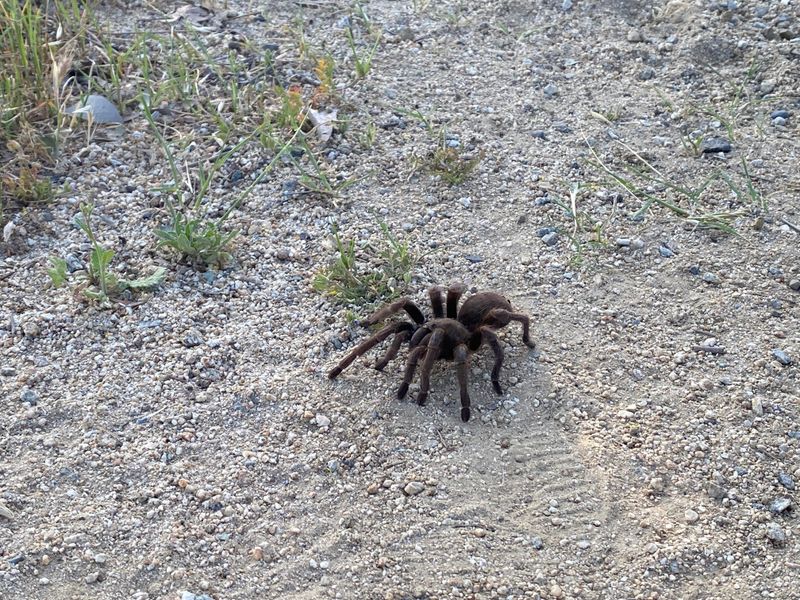
Picture it: you spot a tarantula on the walkway. Stop, take a breath, and watch.
Most of the time it is simply traveling, and it will keep going if nobody bothers it.
Keep a few feet back and let it choose its path. The Natural History Museum recommends appreciating tarantulas from a distance, and that is easy advice to follow in a yard.
Bring pets and kids inside or to another part of the yard until the spider has moved on. A quick walk-through of the route can help too, so nobody steps on it in the dark.
You do not need to capture, move, or handle it. A spider crossing your yard is not an emergency that calls for action.
Within minutes to hours, it will likely be gone into brush or a burrow somewhere else.
Not likely to cause serious harm does not mean safe to handle
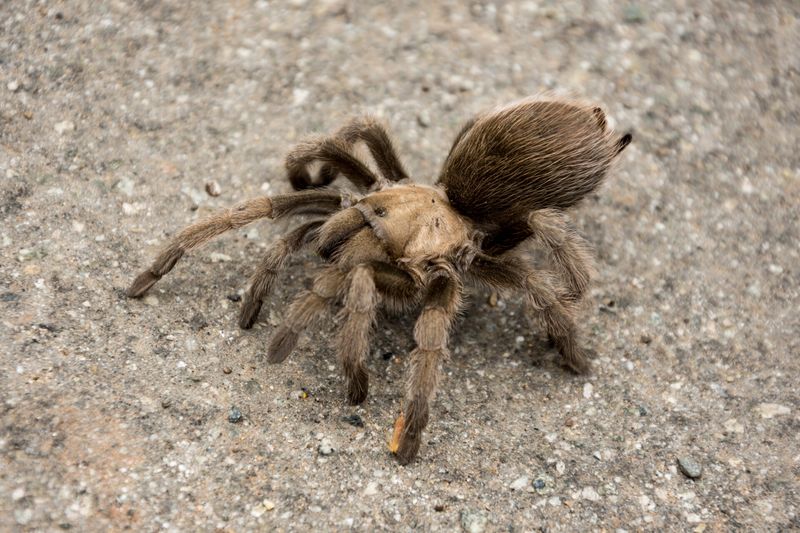
Calm does not mean careless. UC IPM says California tarantula bites are unlikely to be serious.
That is reassuring, but it is not the same as risk-free.
A bite is possible if the spider is provoked or handled. Tarantulas can also flick irritating defensive hairs, which may bother skin or eyes.
Those details are the reason distance makes sense. Most trouble starts when someone tries to pick up, corral, or poke a spider.
Left alone, a wandering tarantula has little reason to bother you.
The risk is also not the same in every encounter. A spider seen from across the patio is a very different situation from one that is cornered or grabbed.
Watching without touching keeps you on the safe side of that line.
The museum’s advice to admire them from afar covers both bites and hairs in one simple habit.
Skip pesticides for a passing outdoor spider
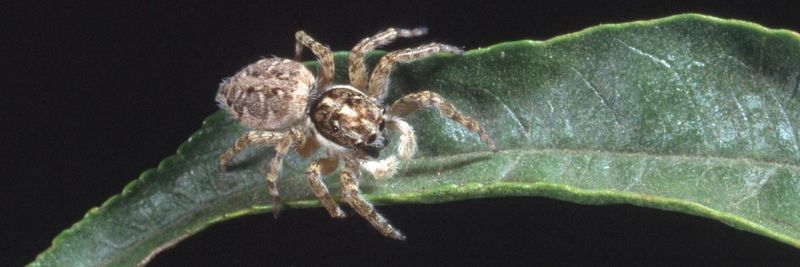
Reaching for a spray can feel like taking action, but it rarely helps. UC IPM says pesticides generally are not needed for spiders outdoors and do not provide long-term control.
Another spider or the same one can simply wander in later.
Spraying also reaches more than the spider. Sprays can hit other creatures in the bed that keep insect numbers in check.
UC IPM’s guidance on beneficial predators recommends avoiding pesticides that harm natural enemies.
That does not mean a tarantula will solve a pest problem. It means killing a passing spider costs you more than it gains.
There is no benefit to treating a yard because one wandered through.
If you have a separate problem, such as plants being chewed, look at that on its own terms and choose the gentlest fix first. For the tarantula itself, the best treatment is to do nothing and let it leave.
Let it pass without expecting pest control
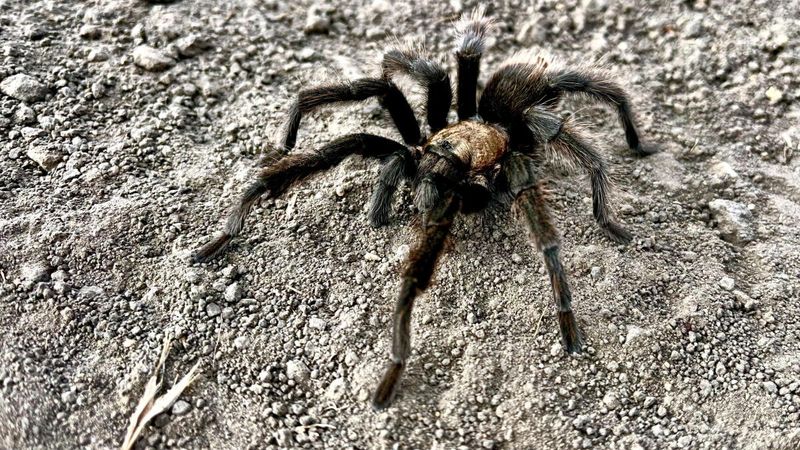
Leave the wanderer alone, keep your distance, and enjoy the rare glimpse. Tarantulas eat insects, but they are not a guaranteed fix for beetles or crickets, so treat any pest help as a bonus, not a promise.
The museum and UC IPM both point toward the same easy path.
By the time you finish your coffee, the spider will probably be gone, and your yard will be exactly as it was.