
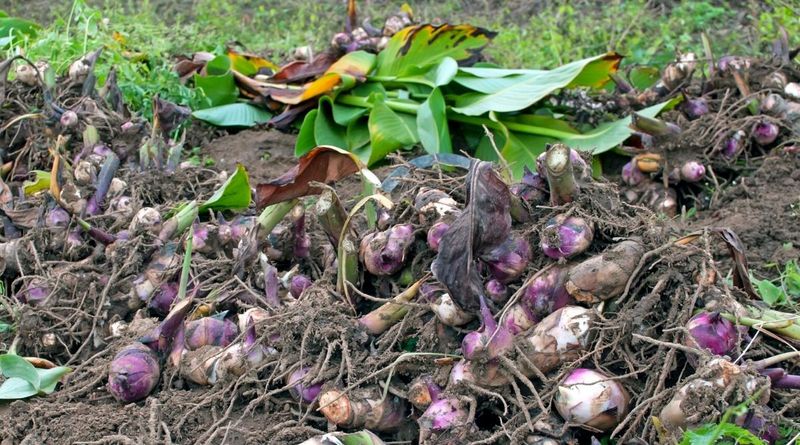
Those tall canna leaves and bright flowers that carried your beds all summer are living on borrowed time once cold weather arrives. What happens underground over winter decides whether the plants return, and the right move depends on where you garden and how your soil drains.
North Carolina has mountain chill, Piedmont swings, and mild coastal winters, so no single plan fits every yard. Here is how to choose between lifting, mulching, and dividing your rhizomes.
Use your local frost window, not a statewide deadline
Winter does not arrive on the same day across North Carolina. Mountain gardens can see cold nights weeks before the coast does, and even two yards in the same town can differ because of low spots, slopes, and nearby buildings.
That is why a single statewide date makes a poor deadline for canna chores.
The State Climate Office runs a tool that helps here. Its Freeze Date Explorer shows historical averages and observed freeze dates for specific locations, so you can see what your own area has usually done.
Pick the station closest to you and look at the range of past dates, not only the average.
Keep in mind that the explorer counts a freeze as 32°F or below at standard sensor height. Frost can form on leaves close to the ground even when that sensor reads a little above freezing.
So blackened canna foliage in your bed may show up before an official freeze is recorded.
Historical averages describe the past. They are not a forecast, and they are not a signal to rush out on a certain weekend.
Use them to plan your supplies, such as a fork, mulch, and storage containers, then watch your local forecast and your own plants for the real cue.
Cold and drainage determine whether to lift
Two things guide this decision: how cold your winters get and how well your bed drains. NC State Extension recommends lifting canna rhizomes in USDA zones 6a and 6b.
It also notes that plants left in the ground can be injured below 25°F, and that rhizomes can rot in poorly drained soil.
In warmer areas, gardeners may leave rhizomes in the ground. NC State’s garden canna guidance describes cutting foliage down after the first frost and covering the bed with mulch.
That option depends on conditions being right, and it is not a promise for every bed.
Zones are a helpful starting point, but they are not a guarantee for one garden. NC State describes western North Carolina as generally zone 6b or 7a in a normal winter, the Piedmont as 7b, and coastal areas as 8a.
Elevation, slope, and exposure can shift those numbers on your property.
Try a quick check. Look at where water sits after a hard rain, and note whether your canna bed is a cold pocket or a sheltered spot near a wall.
Cold zone or soggy soil points toward lifting. A mild location with fast-draining soil makes mulching in place more reasonable.
Lift clumps carefully after frost
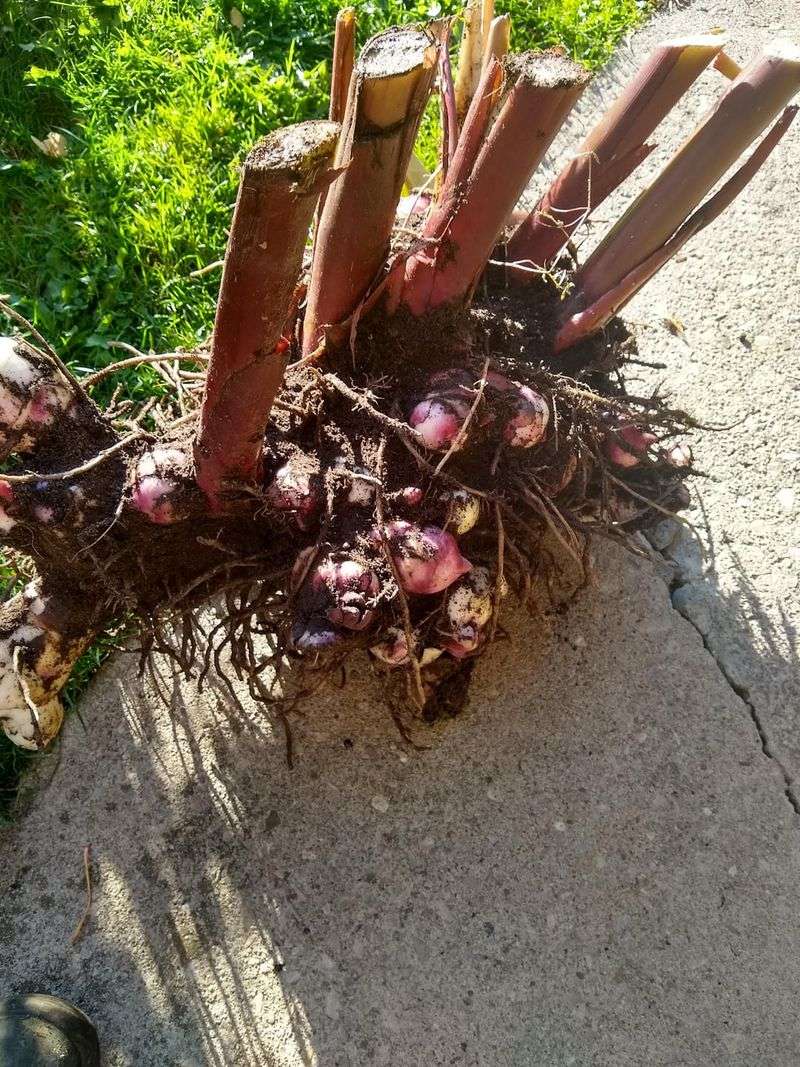
Wait for the first frost to blacken the foliage, then cut the stalks back. For colder spots, especially zones 6a and 6b, NC State recommends lifting the clumps for storage.
Leave a short stub of stem so you can find and handle each clump easily.
A garden fork or spade works well, but take your time. Start digging a good distance out from the stems rather than right beside them, since a blade pushed in too close can slice through the rhizomes.
Loosen the soil all around, then pry the whole clump upward.
Once it is out, shake off loose soil by hand. Look over the rhizomes and note any that are soft, mushy, or damaged, since those are the ones most likely to give trouble later.
Handle the clump gently, because bruises and cuts are entry points for rot.
Dry ground makes this job easier and cleaner, so choose a day after the soil has drained. Tag clumps by variety if you grow more than one, using a plant label or a marker on a paper bag.
Storage conditions come next, and they matter as much as the digging.
Keep stored rhizomes cool, dry, and frost-free
Lifted rhizomes need a place that stays cool, dry, and safe from frost. NC State advises packing the clumps in a dry medium such as peat or vermiculite, and keeping them where temperatures stay above 40°F.
An unheated but protected basement or garage that does not freeze may fit the bill.
Other sources give slightly different numbers. University of Minnesota Extension lists 40 to 50°F.
Putting the two together, a practical range is above 40°F and up to 50°F, though that is a guide and not a rule for every home.
Choose a container that suits your space, such as a box or crate, and set the rhizomes in the dry medium so they are not touching a damp surface. A spot that is too warm may push rhizomes to dry out or sprout early, while one that is damp invites rot.
Every so often, peek at what you stored. If you find soft or moldy pieces, remove them so the problem does not spread to healthy neighbors.
In warmer, well-drained beds, mulch in place
Gardeners in milder parts of the state have a lower-effort route. According to NC State’s garden canna guidance, you can cut the foliage to the ground after the first frost and cover the bed with whatever mulch you have on hand.
Pine straw, shredded leaves, and bark are common choices.
This fits the regional picture from earlier. It is a better match for warmer locations, such as many coastal and some Piedmont beds, than for cold mountain sites.
It still is not a guarantee, because a sudden hard freeze can outpace a thin layer of mulch.
Drainage is the second condition. NC State warns that rhizomes can rot in poorly drained soil, and winter rain on heavy clay can leave a bed wet for days.
If water lingers there, lifting may be the safer choice, or you might consider raising the bed next season.
After mulching, there is little to do until spring. Keep an eye on the forecast during unusually cold snaps, and add extra mulch if a deep freeze is coming.
Divide crowded clumps and keep an eye on every piece
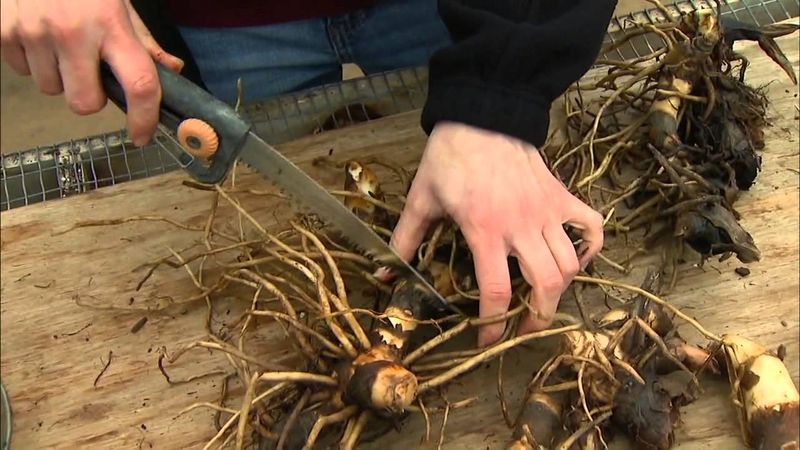
Nothing says you must divide every fall. UF/IFAS suggests dividing when plants become crowded, which might be every few years depending on how fast your clumps spread.
The other good reason is to make more plants for other beds or to share with neighbors.
When you do divide, each piece needs a growing point, often called an eye. University of Minnesota Extension says each division should have at least one.
A chunk without one cannot be counted on to grow.
Wondering where to look? Purdue Extension explains that canna buds sit in the old stem base.
So keep a bit of that base attached to each section when you cut.
Division is a tool for managing crowding and making new plants. It is not a shortcut to larger flowers.
Cut with a clean, sharp blade, and label each piece as you go.
Fall division does not guarantee bigger blooms
The idea that a fall chore will make next summer’s flowers larger sounds appealing, but the guidance does not back it up. Lifting protects rhizomes from winter, and division handles crowding or makes more plants.
Neither one is shown to enlarge blooms.
What does matter for flowering is the growing site. NC State notes that cannas in shade will not flower well, and UF/IFAS says they bloom abundantly in full sun and recommends dividing crowded stands.
Sun, suitable conditions, and a bed that is not overgrown all support flowering.
So begin with your own yard: how cold it gets and how well the bed drains. Whatever you choose, the plants are counting on that answer more than on any single fall chore.