
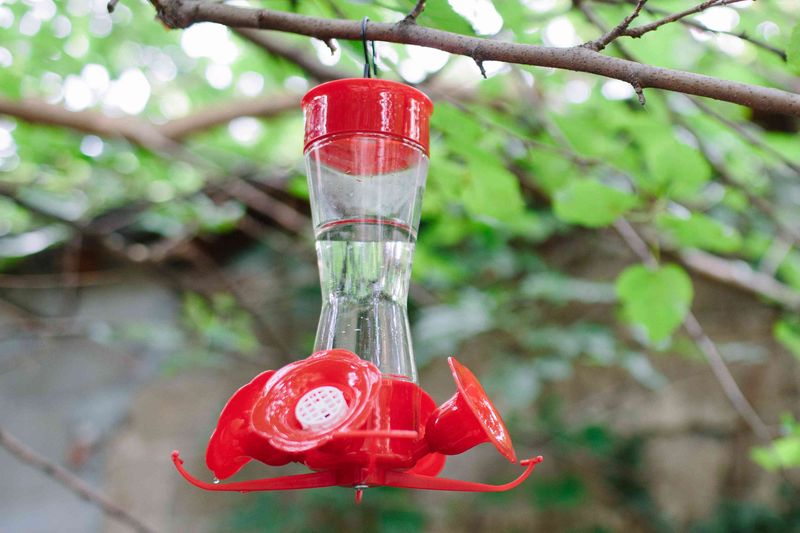
You filled the feeder, hung it up, and now it just sits there while you wait. Before you start blaming yourself, know that the spot where a feeder hangs is one thing you can adjust and test.
A few small changes to shade, shelter, perches, and window distance may make your yard easier for hummingbirds to use and safer for them. Here is how to try a smarter setup without expecting miracles.
A quiet feeder does not prove the spot is wrong
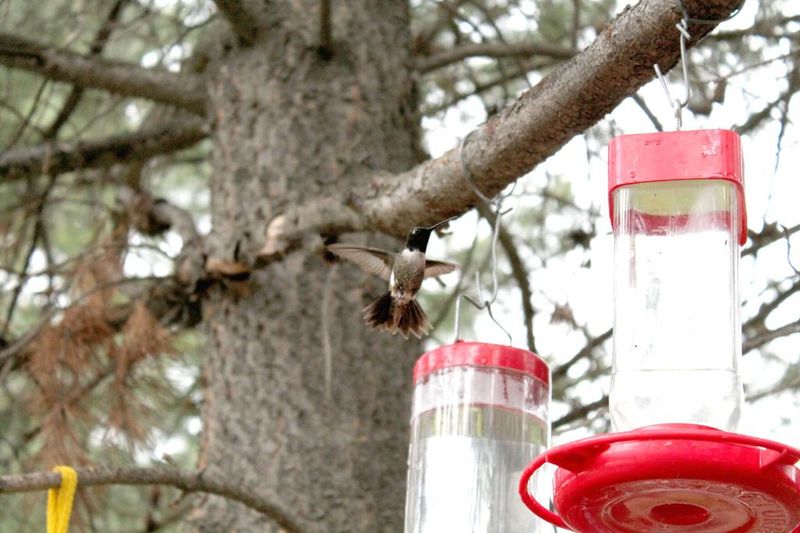
Nobody likes staring at a full feeder with no visitors. Still, an empty feeder does not tell you the location is the problem.
Placement can matter, but it is only one piece of the puzzle.
What you see also depends on which hummingbirds are around and when. In Texas, Texas Parks and Wildlife notes that some hummingbirds show up in winter and that migration timing varies.
A feeder can stay up year-round as long as you maintain it. Florida has its own mix of species and seasons, so a Pensacola yard and a Miami yard will not follow the same calendar.
Think of what follows as a practical trial. Try a better-sited feeder, keep the nectar fresh, and watch over a few weeks.
A different spot may help, but it cannot promise visits. Plants matter too, and UF/IFAS Extension treats nectar plants as part of a hummingbird-friendly Florida yard.
Start with shade and shelter
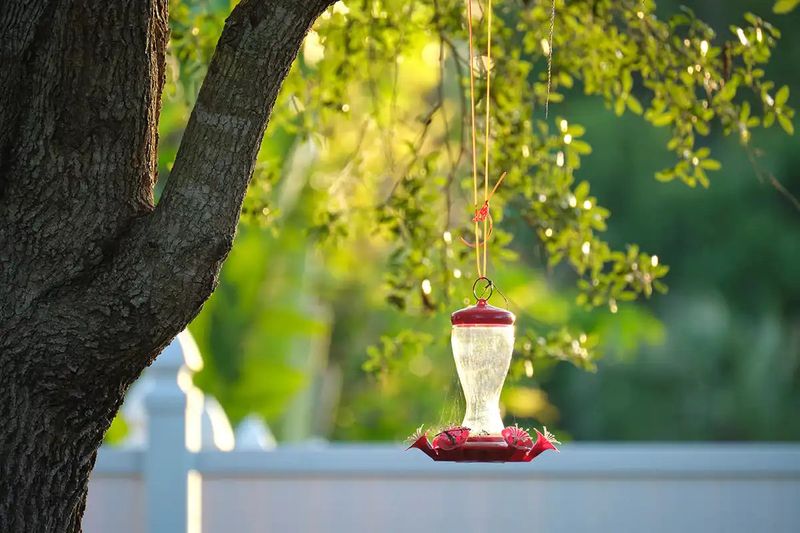
Southern summer sun is intense, so a mostly shaded spot is a sensible first choice. According to Cornell Lab’s feeder placement advice, direct sun can warm the solution, contribute to spoilage, and even make some bottle-style feeders leak.
Shade helps you take better care of the nectar.
Wind is the next thing to check. A feeder that swings in every gust can spill nectar and be harder for a small bird to approach.
A spot near a wall, under an eave, or beside sturdy plants often calms things down.
Rain deserves a look as well. In some feeder designs, a hard shower can dilute the nectar, so shelter from the worst of it helps.
Here is the honest limit: shade is about feeder and nectar care. Nothing shows it draws hummingbirds on its own, and it never replaces cleaning and refilling.
Choose useful nearby flowers and perches
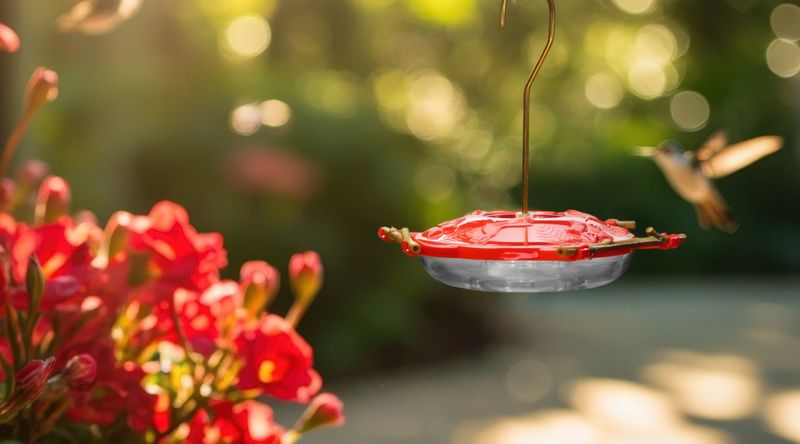
Flowers and perches make a feeder feel like part of a habitat instead of a lone object. Penn State Extension suggests placing feeders near flowering plantings, especially flowers birds already visit.
No source gives a magic number of feet, so treat this as a guide and adjust as you watch.
Perches count too. Audubon notes that hummingbirds use shrubs and branches for cover and resting spots.
A slim branch or shrub within sight of the feeder gives them a place to pause.
Leave open air around the feeder, though. Picture the approach from a bird’s view: can it fly in and hover without bumping into leaves?
Being easy for you to see from a window is nice, but there is no proof that it attracts birds.
Also skip the thick tangle. Cornell warns that heavy cover can give predators such as cats a place to hide.
Keep the feeder close to glass
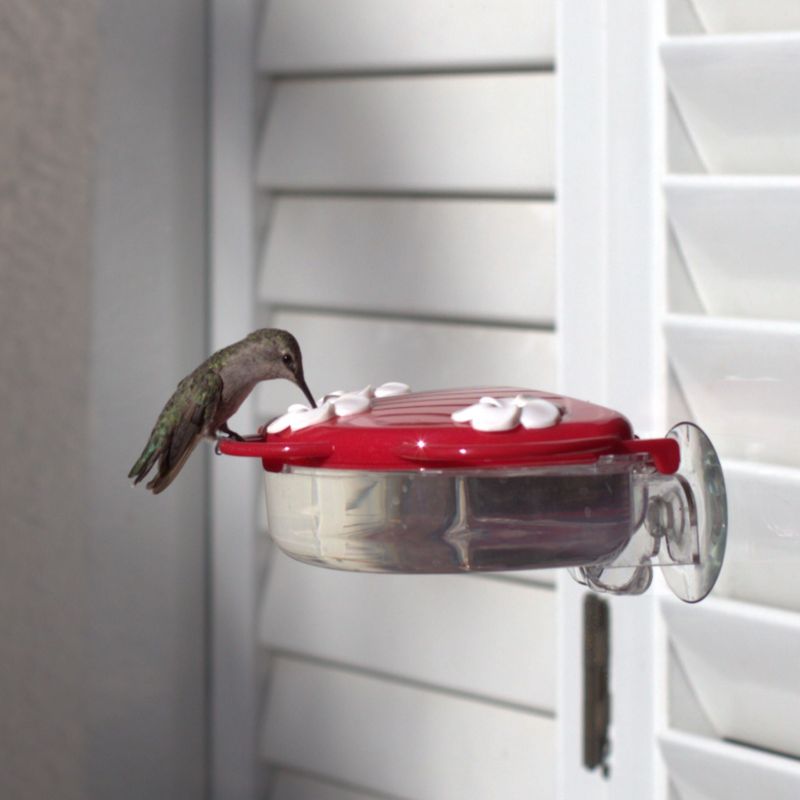
Windows deserve their own decision, because glass can injure birds. Cornell Lab recommends placing a feeder within 3 feet of a window or right on it.
You can read the details in Cornell’s placement guide.
The idea is simple. A bird leaving a feeder that close cannot build up much speed before it reaches the glass, so a bump is less likely to cause serious harm.
You may have heard advice to hang feeders 10 to 30 feet from windows. Do not treat that as a proven safe rule.
Environment and Climate Change Canada explains that the collision study tested feeders at under 1 meter, 5 meters, and 10 meters, and did not establish safety beyond 10 meters.
Window markers or other glass treatments are a separate safety step. They can be added whatever distance you choose.
Keep nectar fresh in Southern heat
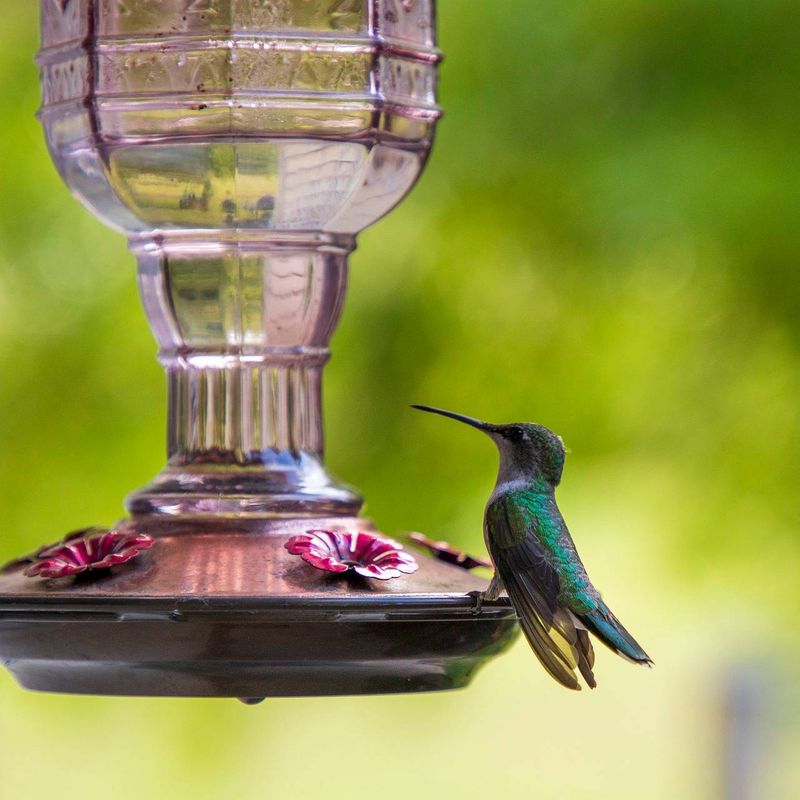
Once the feeder is in its new home, care matters more than location. Hot weather is hard on nectar, and shade only slows things down.
It does not keep nectar safe forever.
Audubon advises cleaning the feeder every 2 to 3 days, or daily when it is particularly hot. Replace nectar right away if it looks cloudy.
Cornell says the same about changing it daily in very hot weather, and you can find more in its feeding hummingbirds guide.
In a Florida August or a Texas heat wave, lean toward the more frequent end. Fill the feeder with smaller amounts so less gets tossed out.
A quick daily look helps. Check for cloudy liquid, floating specks, ants, or leaks.
If anything seems off, empty it, scrub it, and start fresh.
Make a practical trial and support the whole yard
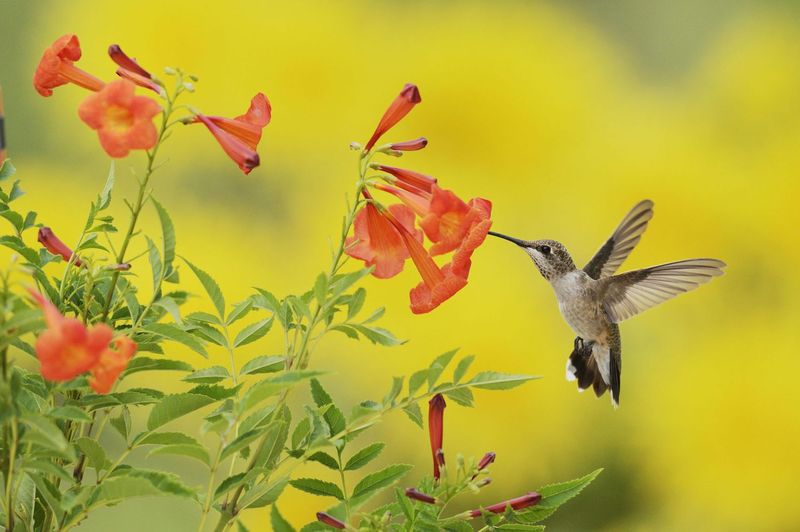
Try a shaded, sheltered spot near flowers or perches, with open air for approach. Keep the feeder within 3 feet of glass, and change the nectar often.
Then give it a few weeks and watch. It is a reasonable experiment, and it may not bring birds right away.
Remember that a feeder is not a full diet. UF/IFAS says it should not be the birds’ only food source.
Audubon recommends flowering plants and notes that hummingbirds also eat insects.
Plant a few nectar-rich blooms, and the feeder becomes a bonus. A yard that feeds hummingbirds all season will always beat one clever hook.