
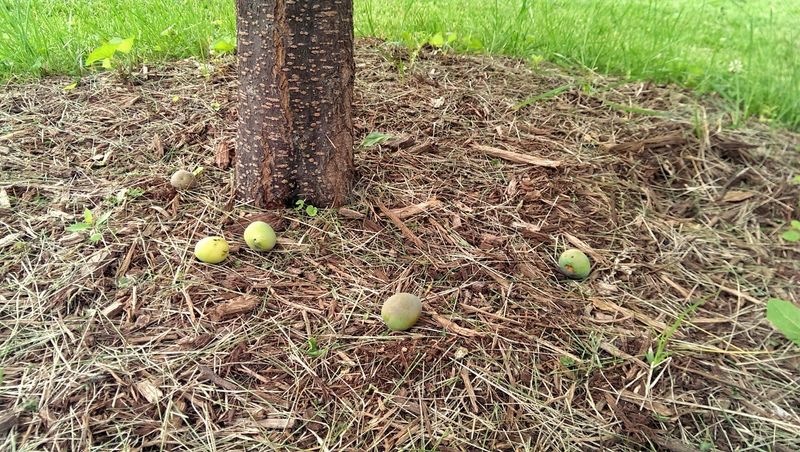
Your persimmon tree is leafy and green, yet fruit keeps landing on the ground. That can feel alarming, especially when you were counting on a harvest.
Some of that drop is normal, and some may point to a problem you can check. Here is how to sort out what is happening before you change how you water or feed the tree.
Some fruit drop is part of the season
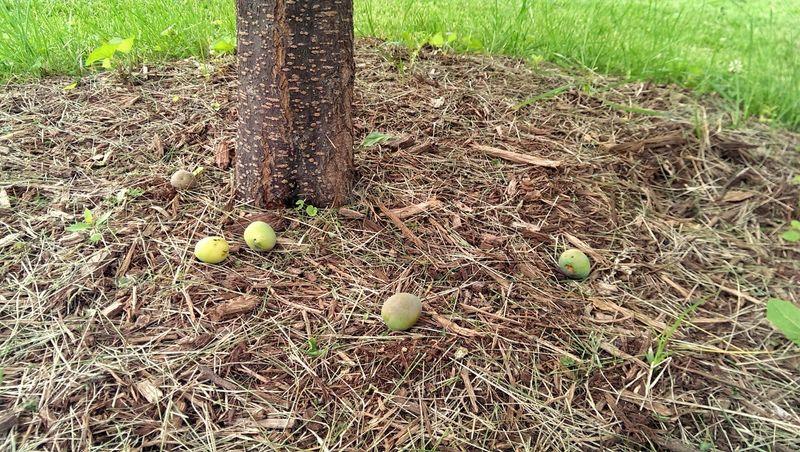
Finding fruit under a persimmon tree does not automatically mean something has gone wrong. UF/IFAS guidance on Florida persimmons describes an initial drop after petal fall, with lighter drops possible in June and afterward.
Trees often shed fruit they cannot carry through to harvest.
So a handful of fallen fruit, by itself, is not proof of a failing tree. Count what you see and compare it with how much fruit still hangs on the branches.
A tree that keeps a good share of its crop is usually managing fine.
Closer inspection makes sense when the drop seems large, keeps going for weeks, or comes with other changes. Look at the leaves for spots or early yellowing, and check the fallen fruit for holes, dark patches, or soft areas.
Think of fruit drop as a symptom, not a diagnosis. It tells you the tree is shedding fruit, but it does not tell you why.
The next steps are about narrowing down the possible reasons, one at a time.
First establish whether the fruit is actually early
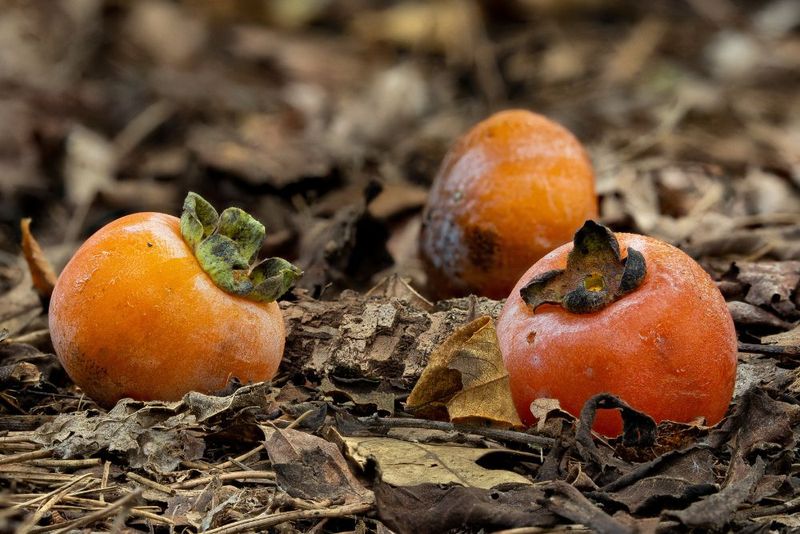
Late September fruit on the ground is not always early. Harvest timing depends on cultivar and location.
UF/IFAS lists Florida cultivars with different harvest windows, and some begin ripening in late September while ‘Fuyu’ is listed for mid-November to early December.
Those dates come from Florida, so do not treat them as one schedule for every Southern yard. Texas gardeners may see a different calendar.
Check the tag or nursery record for your cultivar, then compare it with what your tree is doing.
Next, look closely at the fruit itself. Fully colored fruit that has dropped or been partly eaten may simply be ripe and taken by birds, squirrels, or other animals.
Hard, small, green fruit that falls whole is a different situation. Texas A&M notes that animals may eat fruit before it is fully ripe, so look for bite marks too.
Frost is not required to make persimmons edible, so do not wait on cold weather to judge ripeness. Color and cultivar are better guides.
Check for dry roots and soggy soil
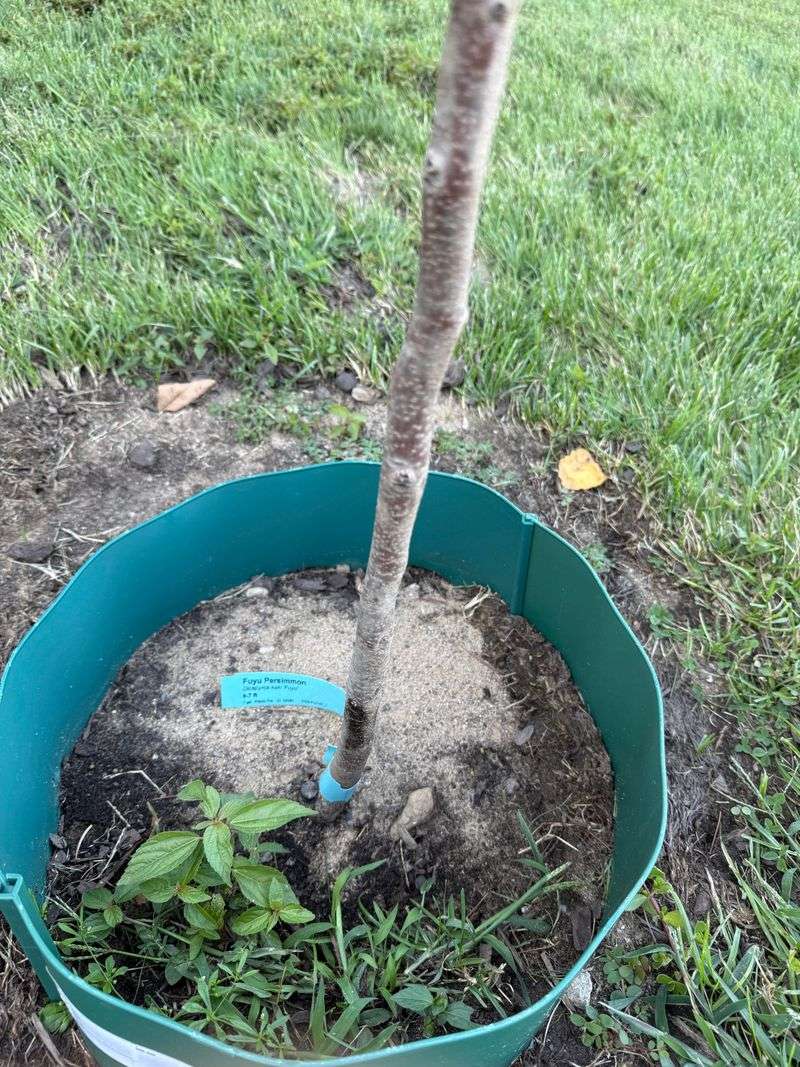
Soil moisture is a sensible first care check, but the answer is not automatically more water. Persimmons can drop fruit under drought stress.
Excess water or poor drainage can contribute too, and UF/IFAS notes that overwatering can increase fruit shedding.
Start by pushing a trowel or your finger several inches down near the edge of the canopy. Dust-dry soil deep down suggests the roots may be short on water.
Soil that feels wet and heavy days after rain or irrigation points the other way.
Then look at the site. Does water pool after storms, as it can in clay soils in parts of Texas or in low spots in Florida yards?
Is a sprinkler hitting the trunk area every day? Those clues matter more than any calendar.
The goal, as UGA Extension’s persimmon guide points toward, is avoiding big swings between very dry and soggy root zones. A fixed watering schedule will not fit every yard, so adjust only after you know what the soil is doing.
Use mulch to moderate moisture, not promise a cure
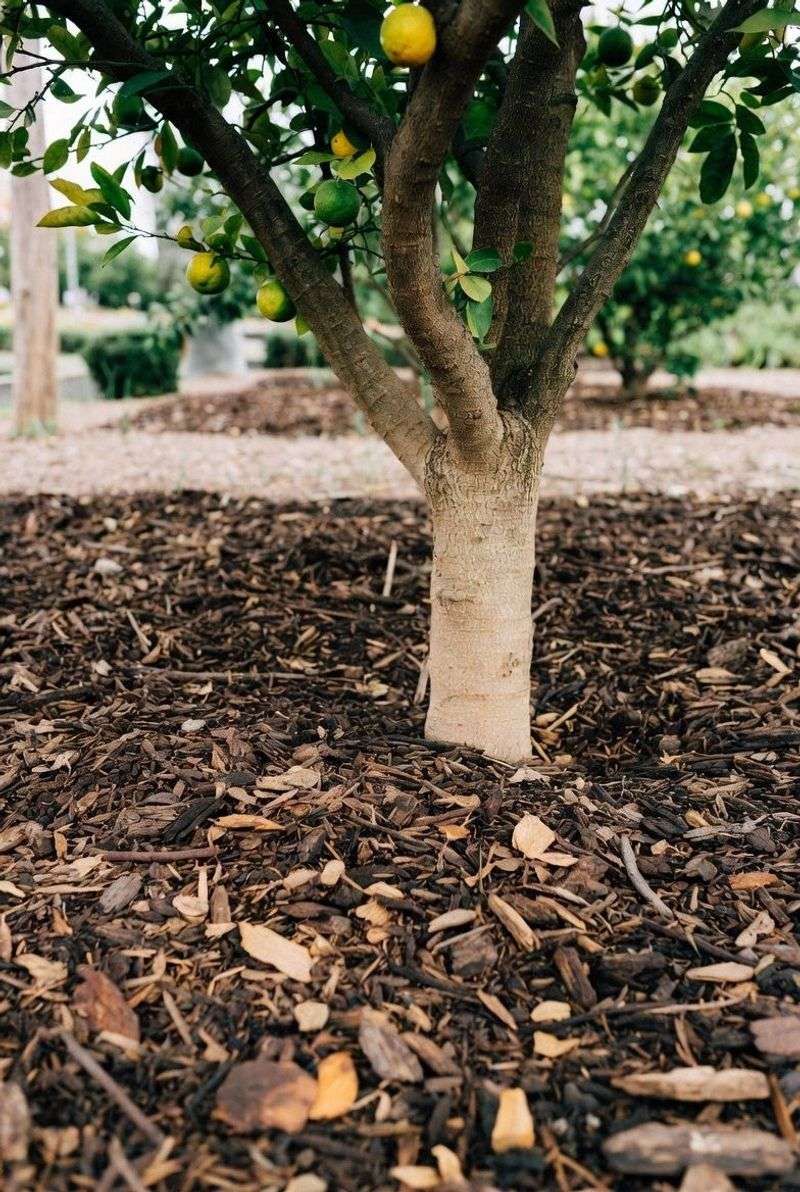
Mulch can help even out soil moisture, which is why it shows up in persimmon advice. Texas A&M says appropriate water and heavy mulch may reduce drop in seedless Oriental persimmons, but they cannot eliminate it.
That qualification matters. Mulch is a support for good moisture habits, not a rescue for fruit already falling.
If the ground is soggy or drains poorly, piling on more mulch will not fix the underlying problem.
Check the soil first, then decide whether mulch fits. A layer of wood chips or shredded leaves spread across the root zone may slow drying in hot weather.
Keep it pulled back a few inches from the trunk so the bark stays dry and airy.
Refresh the layer when it thins out, and look under it now and then. If the soil beneath stays wet for long stretches, ease back on irrigation rather than adding more cover.
Check fertilizer, crop load, and pollination before intervening
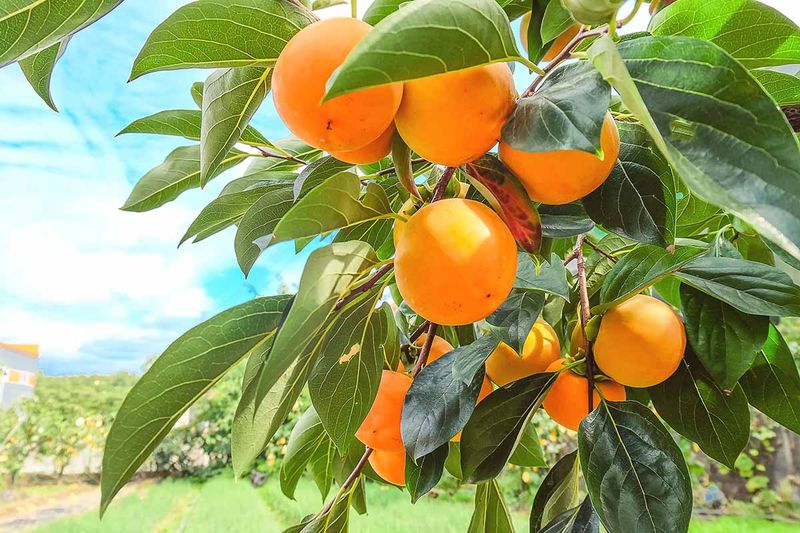
Fertilizer is tempting when a tree disappoints, but it is not a safe reflex. Excess nitrogen is named as a possible contributor to fruit drop by UGA Extension, which advises light feeding for bearing trees.
A soil test can show what your ground actually needs, as Mississippi State Extension recommends.
Crop load matters as well. A very heavy crop can lead to alternate-year bearing, where a big harvest is followed by a light one.
In a heavy-crop year, UGA suggests thinning Oriental persimmons to roughly six inches apart within a month after bloom.
Thinning is preventive. It will not save fruit already dropping late in the season.
Pollination depends on the tree. Native American persimmons are usually male or female, so fruiting may depend on a female tree and suitable pollination.
Many Oriental persimmons can set seedless fruit without pollination, though those fruits may be more prone to drop. Identify your species and cultivar before buying a second tree, because it will not necessarily solve the problem.
Use this season’s observations to plan next year’s care
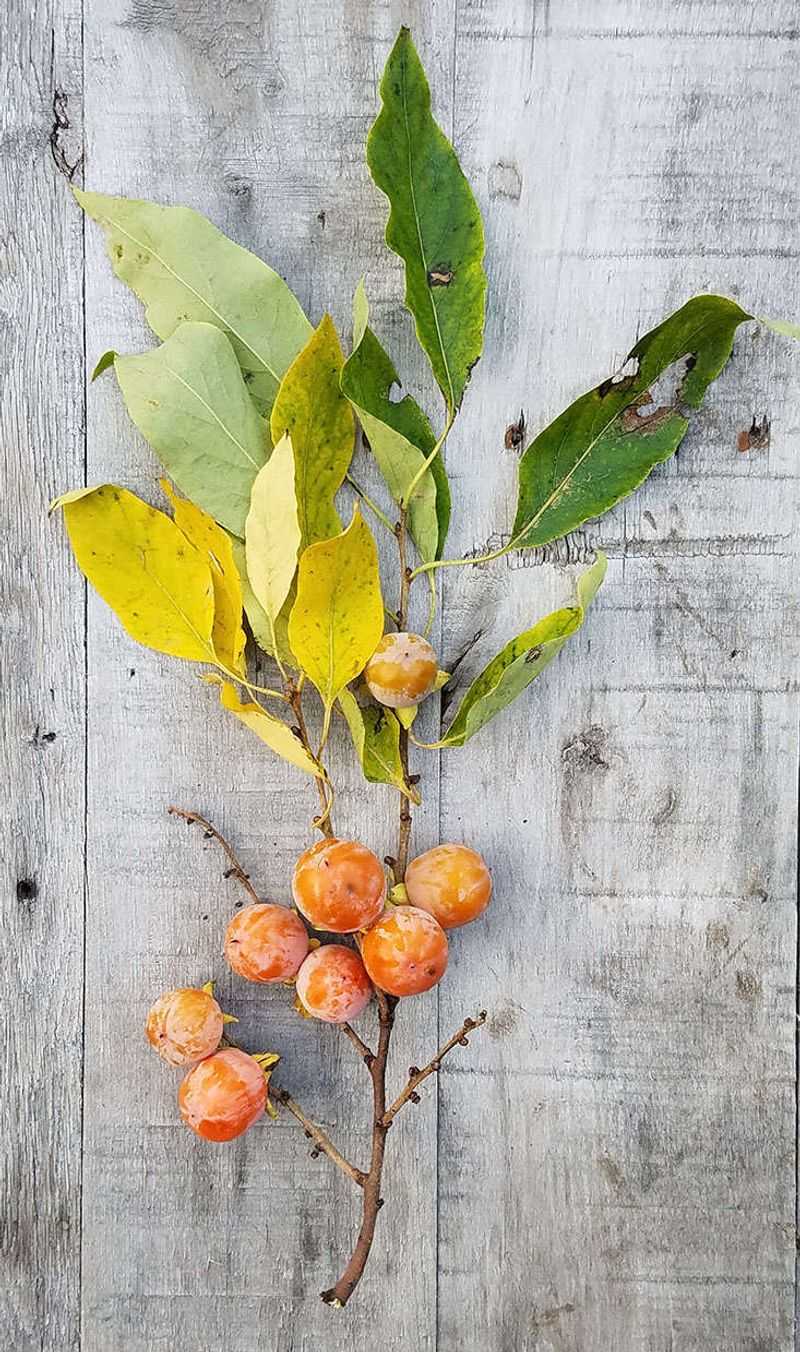
A few notes now can make next season much easier to read. Jot down the dates fruit falls, roughly how much drops, and whether it was green, colored, or animal-damaged.
Add rainfall, irrigation, and any soggy spots you noticed.
When the drop seems worrying, check moisture and drainage before changing your watering. If you skip fertilizer until a soil test calls for it, you avoid adding nitrogen the tree may not need.
Next spring, look at the bloom and early fruit set. If the tree sets a heavy crop, consider thinning as UGA Extension describes for Oriental persimmons, within a month after bloom.
Also keep an eye on the leaves and fruit. UF/IFAS lists crop history, pollination, water and nutrient excesses, and light among the factors affecting drop.
If you see significant leaf spotting, early leaf loss, or damaged fruit, call your local Extension office for a broader assessment.
A fallen fruit is only a clue, and your notes are how it turns into an answer.