
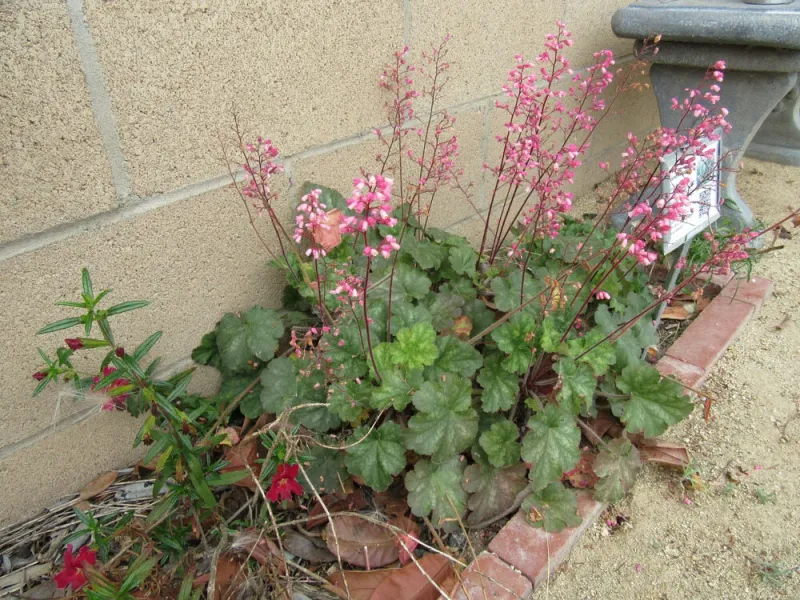
Your driveway edge sits right in the path of wind-blown embers during fire season, and the plants growing there can either slow a fire down or hand it a free ride toward your house. Many California homeowners fill those strips with rosemary, juniper, or dry ornamental grass without knowing those choices can burn hot.
The good news is that plenty of low, moist, water-wise plants stay green, look neat, and support local bees and birds at the same time. Here are nine smart picks that fit the narrow, sunny, hard-working space along your driveway.
1. Dudleya
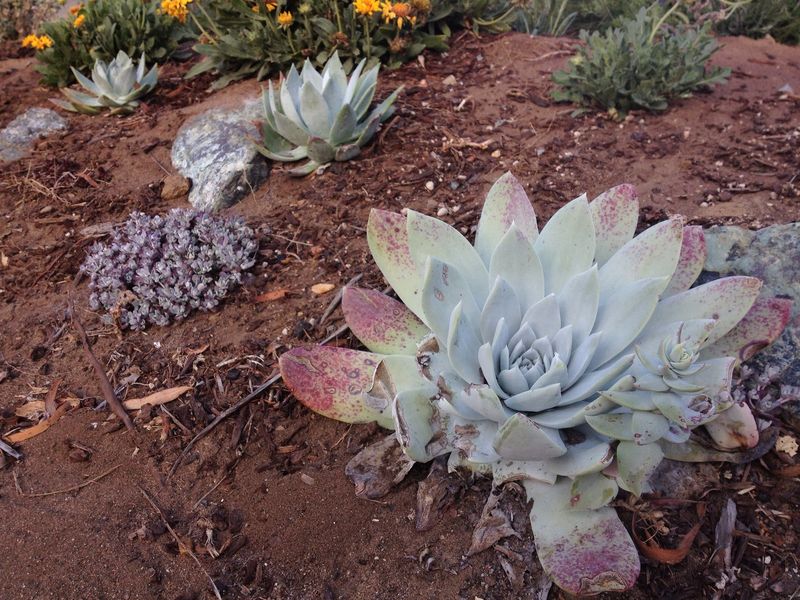
Picture a chalky blue rosette tucked against warm concrete, looking cool even in August. Dudleya is a native succulent from coastal bluffs and rocky slopes, so a hot driveway strip feels right at home to it.
The thick leaves hold water, which means they are hard to ignite compared to woody shrubs. Hummingbirds visit the tall flower stalks in spring, adding a little wildlife bonus to a spot most people ignore.
Plant it at a slight angle in fast-draining soil so water rolls off the crown. Skip summer watering once it settles in, since too much moisture in heat can cause rot.
2. Creeping Red Fescue
Some homeowners worry that ripping out lawn near the driveway means giving up a soft green edge. It does not have to.
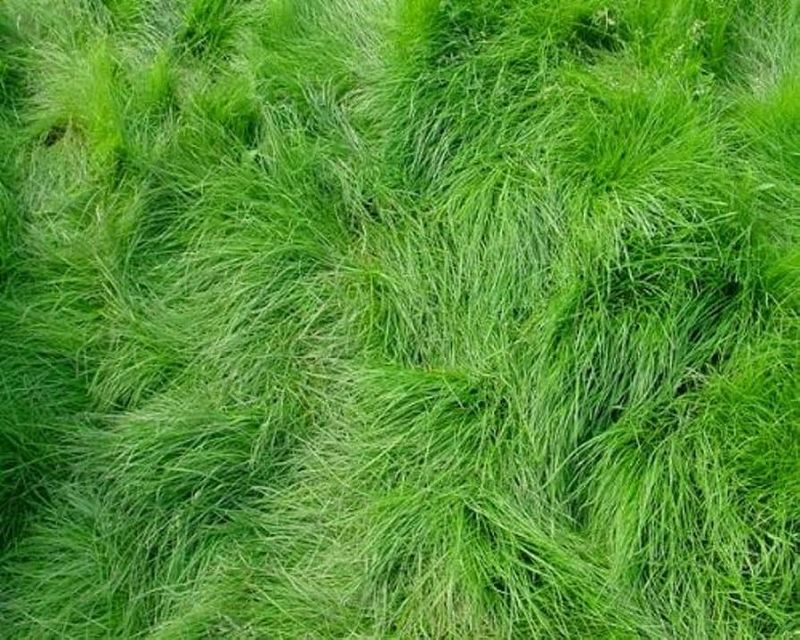
Creeping red fescue forms a fine, low carpet that can stay green with far less water than typical turf, especially in coastal and foothill areas with some afternoon shade. Kept short and lightly watered, it holds less dry fuel than tall, unmowed grass.
Mow it a few times a year or let it flop into a soft meadow look away from the house. Near structures, a trimmed height of a few inches is the tidier and safer choice during fire season.
3. California Fuchsia
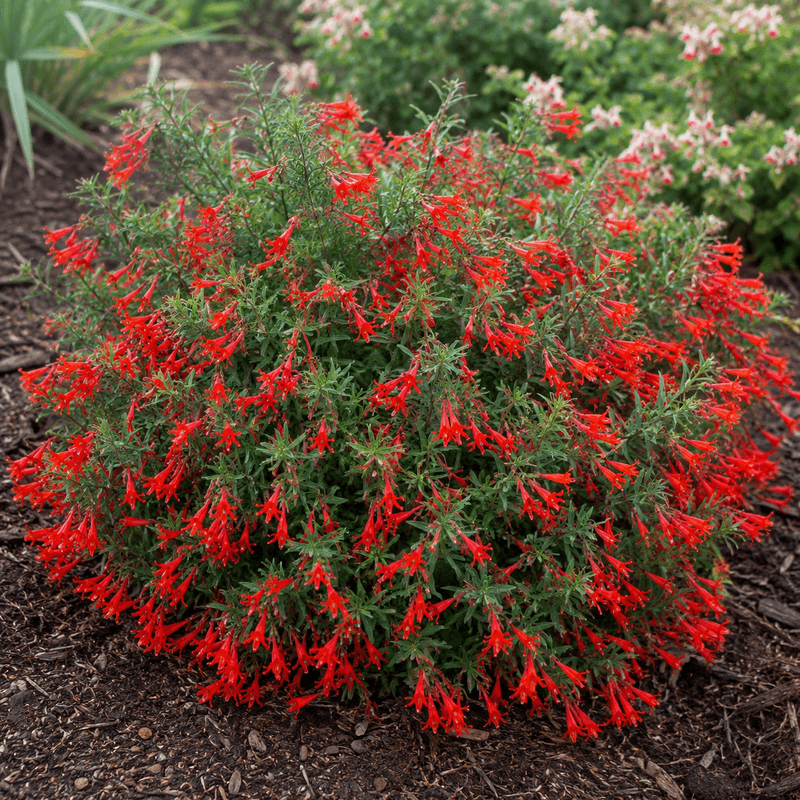
Late summer, when nearly everything else looks tired, California fuchsia lights up with tubular scarlet blooms. Hummingbirds treat it like a fall fuel stop before migration.
Low-growing forms stay under a foot tall and spread along curb edges without climbing onto anything. Cut the stems nearly to the ground in winter to clear old growth and keep the planting neat and low in fuel.
It handles reflected driveway heat well. A deep soak every few weeks in summer can keep leaves greener and flowers coming.
4. Yarrow
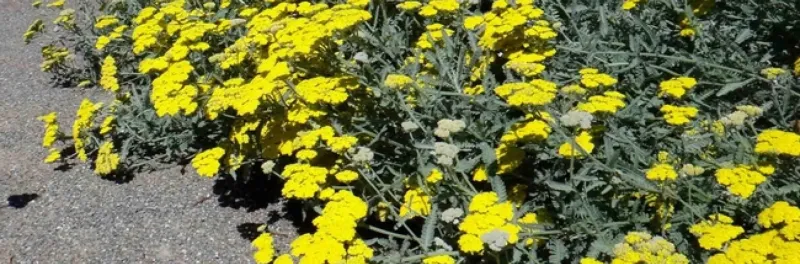
Bees, butterflies, and tiny native wasps all crowd onto yarrow’s flat flower clusters. Plant a strip along the driveway and you create a pollinator runway right where you park.
Native Achillea millefolium spreads by roots into a dense, ferny mat. With occasional summer water, the foliage can stay fairly moist and low, which is exactly what you want near hardscape.
Mow or shear spent flower stalks after bloom so dry stems do not pile up. You can even walk on it lightly, which makes it handy where car doors swing open.
5. Coyote Bush Pigeon Point
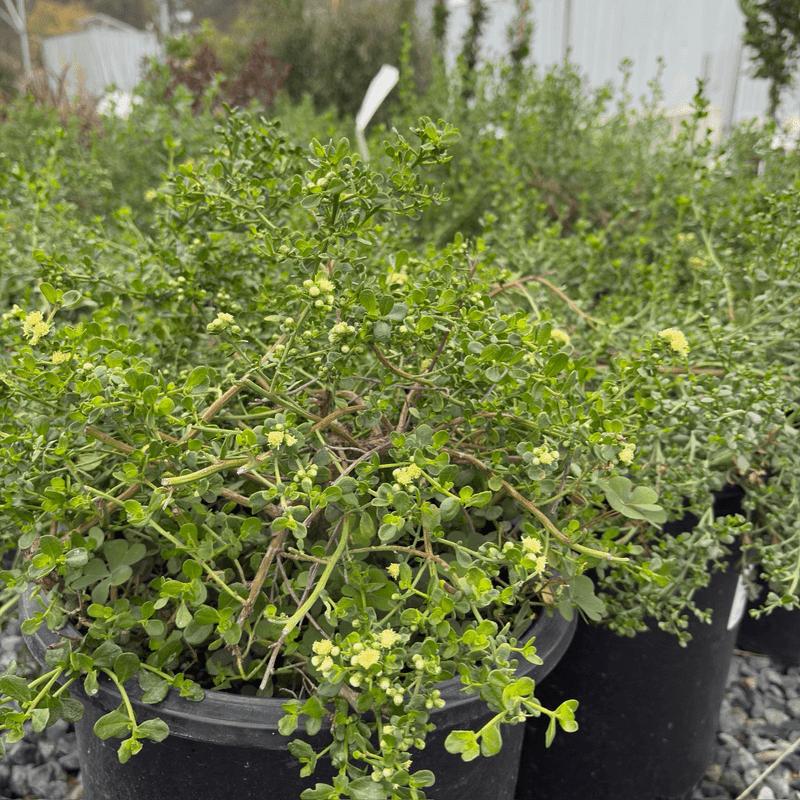
Fun fact: wild coyote brush can grow tall and woody, but the Pigeon Point selection hugs the ground in a bright green mound. That low form is what makes it useful beside a driveway.
It covers slopes fast, holds soil after winter rains, and shelters beetles and small insects that birds eat. Honestly, few groundcovers handle poor, compacted soil so cheerfully.
The catch is maintenance. Shear it every year or two to remove built-up dead wood underneath, since older plants can collect dry material that may burn more readily.
6. Seaside Daisy
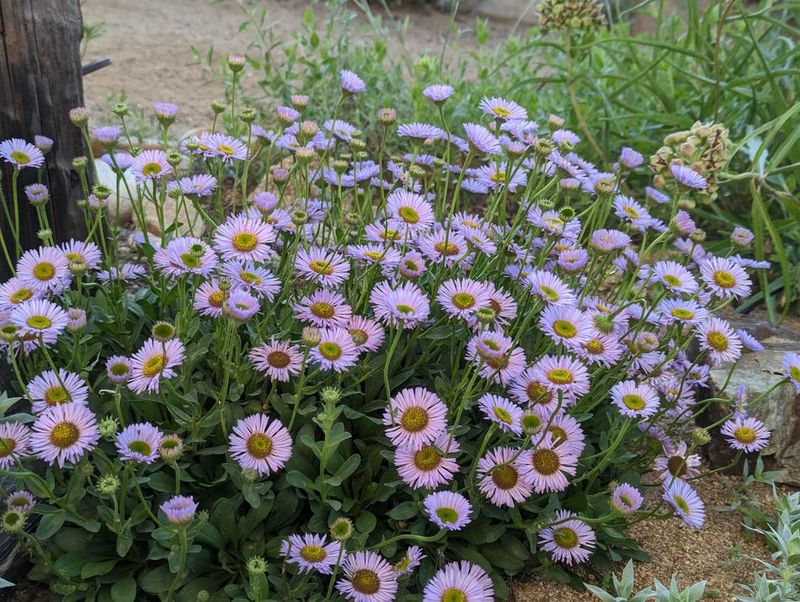
Coastal gardeners, this one feels made for you. Seaside daisy grows naturally on bluffs from Oregon down to Southern California and shrugs off salty breezes.
It forms neat, rounded clumps of fleshy leaves topped with lavender daisies most of the year. The tidy shape means no sprawling mess across your concrete.
Give it light afternoon shade in hot inland spots and deadhead now and then. Small native bees love the yellow centers.
7. Deer Grass Kept Away From the House
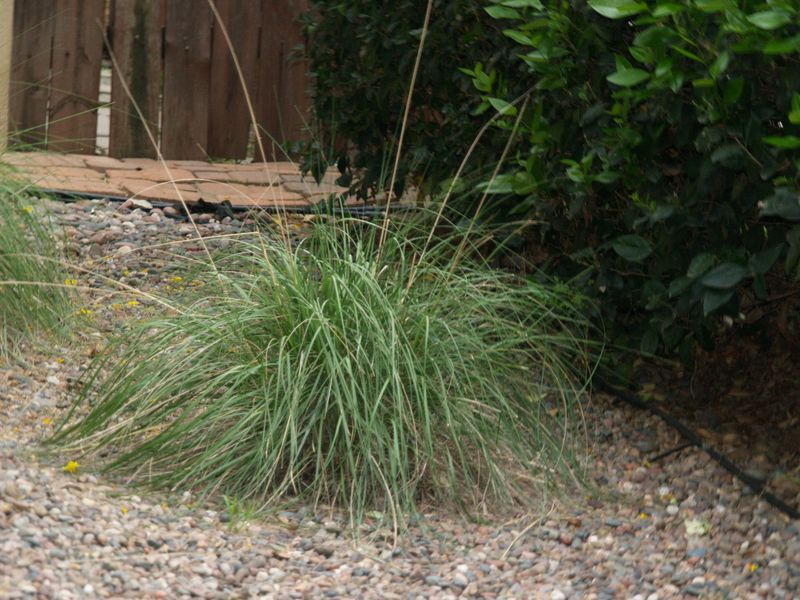
Here is a plant with a warning label. Deer grass gives a long driveway a graceful, rhythmic look, but bunch grasses can carry flames if they get dry and dense.
Use it only where the driveway runs farther from the home, generally beyond the closest defensible zone set by CAL FIRE guidance and local rules. Space clumps apart with gravel between them rather than planting a solid row.
Cut old foliage back hard in late winter so fresh green blades replace the dry thatch. Birds may use the seeds and clumps for cover, so you get habitat with planning.
8. Bush Sunflower
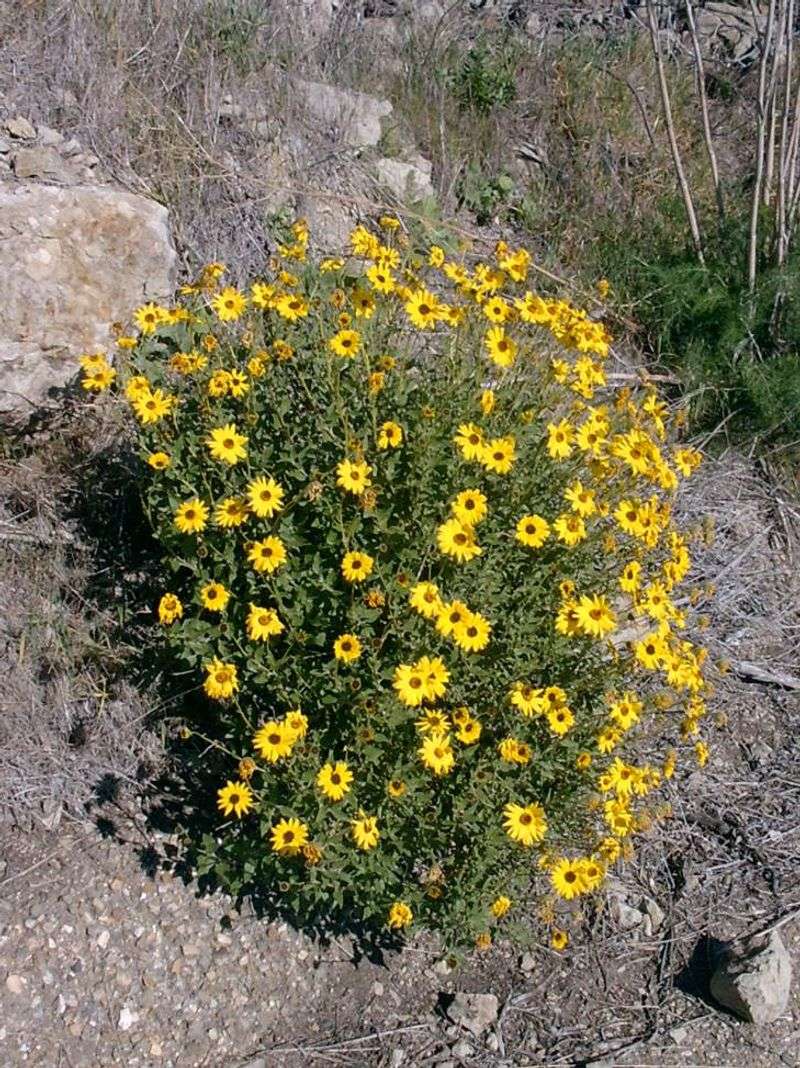
Walking out to the car in March and seeing a wall of sunny yellow flowers is hard to beat. Bush sunflower, Encelia californica, brings that mood with minimal effort.
It stays around three feet and blooms heavily in spring. Butterflies and native bees move through it constantly.
In summer it may go semi-dormant, so cut it back by about half after bloom and pull any dead twigs. That quick trim keeps it compact, cleaner looking, and lower in dry fuel through the fire months.
9. Island Alum Root
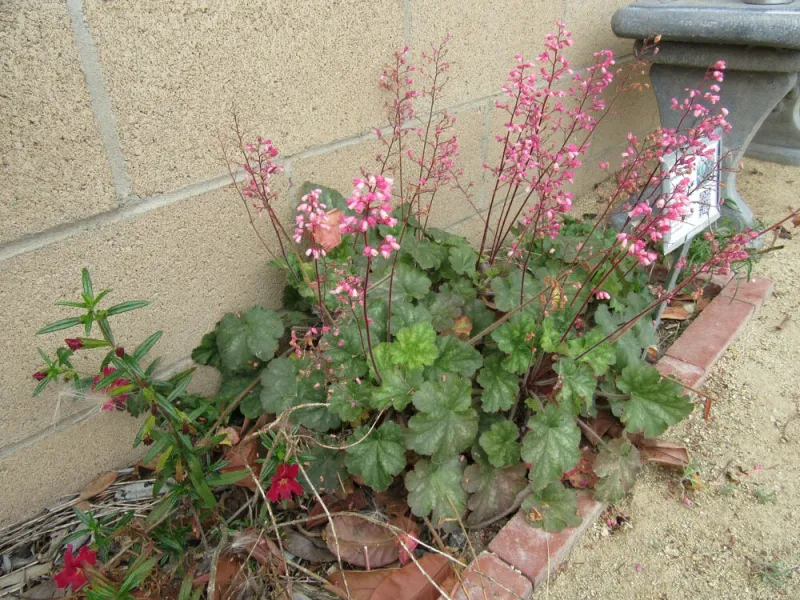
Got a shaded side driveway squeezed between houses? That tricky strip is where island alum root shines.
Native to the Channel Islands, it grows rounded clumps of scalloped leaves that stay green with modest water. Spring brings airy pink flower spikes that hummingbirds visit.
Its soft, leafy foliage holds moisture well, a big improvement over dry bark mulch or woody shrubs in that zone. Remove old flower stems after bloom and the whole planting stays polished.