
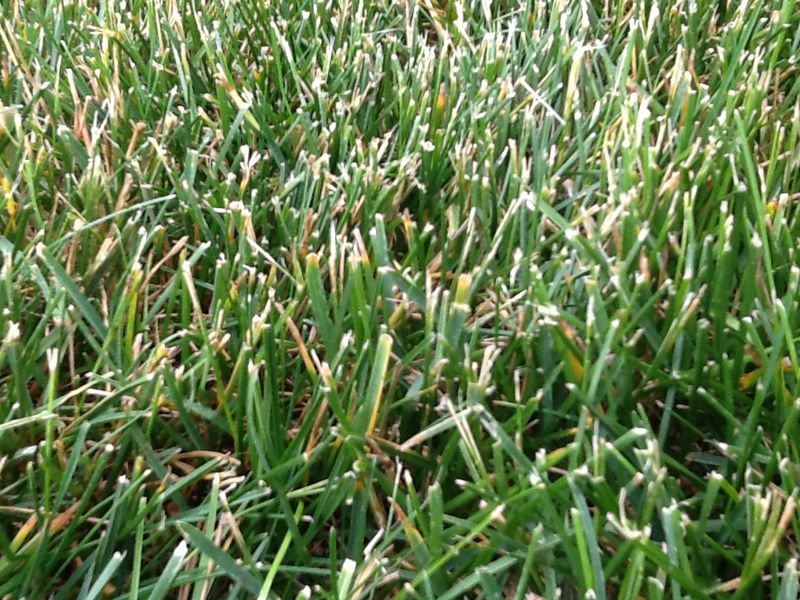
Walk across your lawn an hour after mowing and look closely at the grass tips. If they look frayed, pale, or brownish, your mower blade could be part of the story.
A dull blade is an easy thing to overlook, and it is also an easy thing to fix. Here is how to spot a rough cut, check your blade safely, and sort out what else might be going on if your grass still looks thin.
Ragged tips point to a rough cut
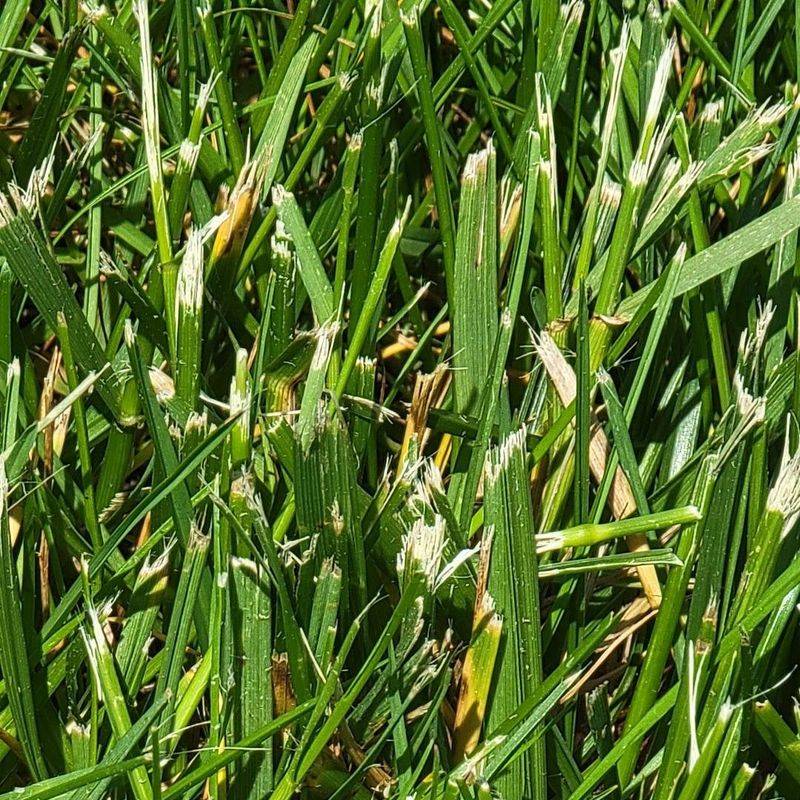
Take a close look at a few blades of grass a day or so after mowing. A clean cut leaves a straight, even edge, while a rough one leaves tips that look torn, frayed, or shredded.
From a distance, the whole lawn may carry a pale, whitish, or brownish cast shortly after the mower passes.
Those signs are consistent with a dull blade. UF/IFAS notes that dull blades shred St. Augustinegrass leaves, and Purdue Extension describes the frayed tissue and whitish look that come with a dull cut.
Keep in mind what this clue tells you. Ragged, discolored tips speak more directly to cutting quality than to how thick your lawn is.
A lawn can look brownish after a rough cut without that alone meaning the grass is dying or thinning, so treat it as one useful piece of information rather than a verdict.
A dull blade can add stress without explaining every thin patch
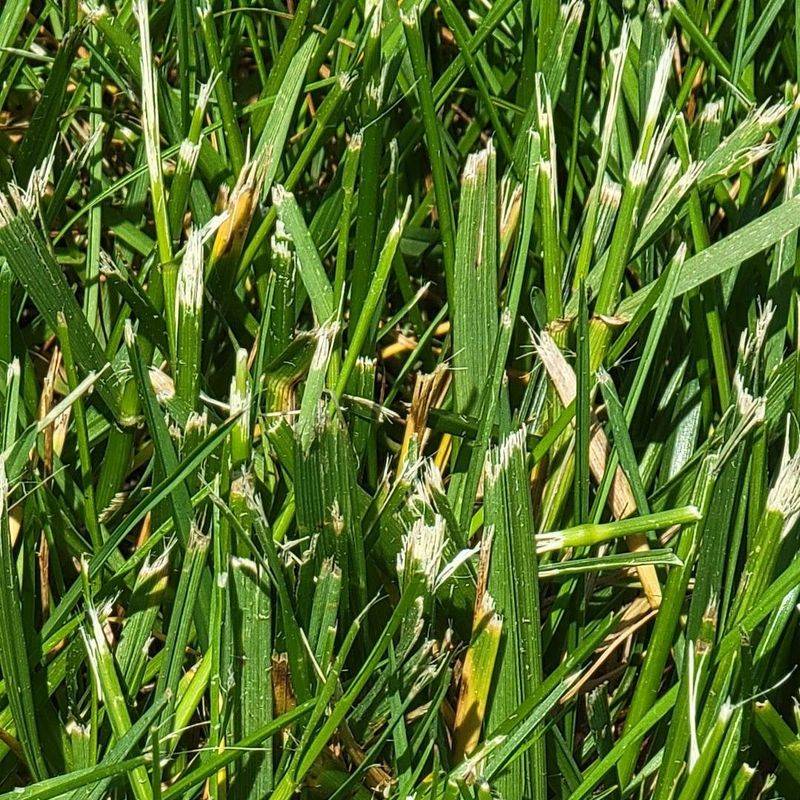
Picture the difference between scissors and a butter knife. A sharp blade slices the leaf cleanly, while a dull one tears and crushes it, leaving rough wounds on every blade it touches.
That kind of injury can put extra strain on the grass.
According to Texas A&M AgriLife, injured turf can become more susceptible to disease, insects, heat, and drought. So a rough cut may add to poor turf condition, especially during a hot Southern summer when the lawn is already working hard.
Still, stress is not the same as a diagnosis. Brown tips alone do not show that grass is dying, and a dull blade is not the usual explanation for a lawn that keeps thinning.
Fixing the blade is a sensible first step, but if sparse areas stick around, other causes deserve a look too.
Inspect the blade safely
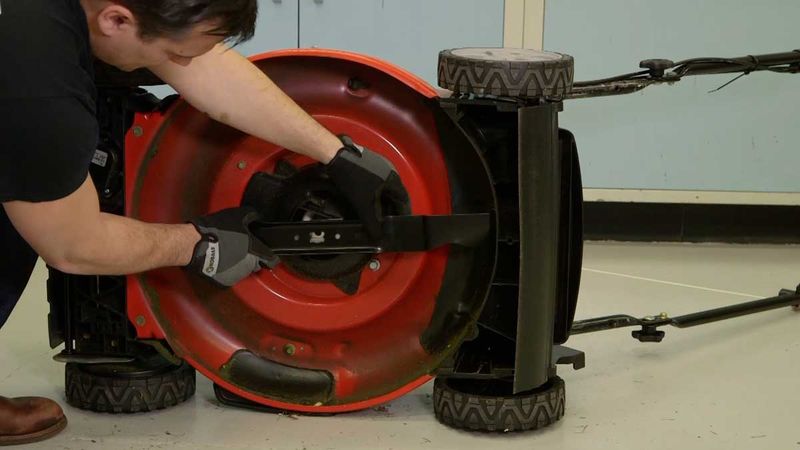
Before you reach under any mower, open the owner’s manual. It shows the correct way to secure your specific machine, and the steps differ between gas, electric, battery, and riding models.
Immobilize the mower first, and only then look at the blade.
For gas mowers, Texas A&M AgriLife advises turning off the mower and removing the spark plug before maintenance. That simple step keeps the engine from starting while your hands are near the blade.
Once the mower is secured, check the cutting edge for nicks, dull or rounded spots, bends, and heavy rust. Wear thick gloves, because even a dull blade can cut skin.
Never touch or remove a blade while the mower could start, and if you are unsure how to tip or lift your model safely, let a repair shop handle it.
Sharpen sound blades and replace badly damaged ones
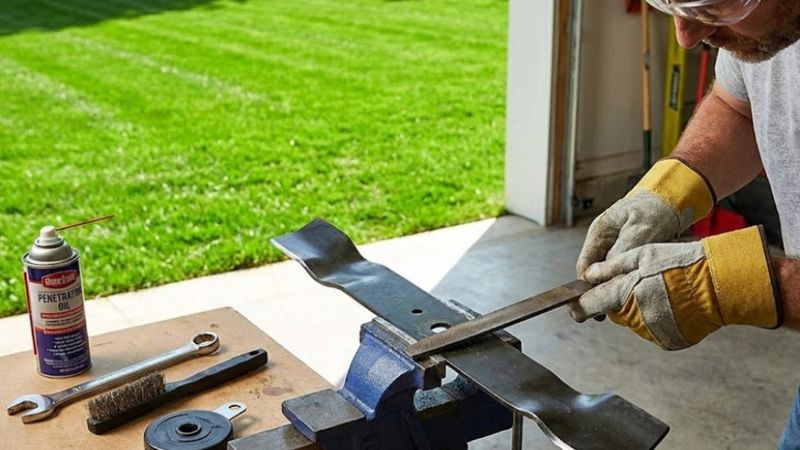
A blade in decent shape can usually be sharpened. One that is badly rusted or deformed is a different story, and Maryland Extension recommends replacing those rather than trying to save them.
Balance matters too. UF/IFAS says rotary mower blades should be sharpened and balanced regularly, since an uneven blade can make the mower vibrate and cut poorly.
As for how often, the advice varies. UF/IFAS suggests monthly sharpening during the St. Augustinegrass growing season, Purdue Extension says four to six times a year, and Maryland Extension points to about every 10 hours of use or generally twice a year.
Your own schedule depends on how much you mow and what your lawn and soil are like, so let the ragged-tip check guide you. If the cut starts looking rough, the blade needs attention.
Match mowing height and timing to the grass

Even a razor-sharp blade cannot make up for mowing too short. The general rule is to remove no more than one-third of the leaf blade per mowing, which UF/IFAS advises for St. Augustinegrass.
Texas A&M’s water-wise lawn checklist also stresses mowing at a height suited to your grass.
The right number depends on your species and sometimes your cultivar. In Florida, UF/IFAS lists about 3.5 to 4 inches for standard St. Augustinegrass cultivars and 2 to 2.5 inches for dwarf types, so a blanket setting will not suit every yard.
Texas lawns vary even more, from Bermudagrass to zoysia to tall fescue in cooler pockets. Check grass-specific guidance such as the Texas A&M tall fescue page, and if you do not know your variety, your county extension office can help you identify it.
Persistent thinning calls for a wider check
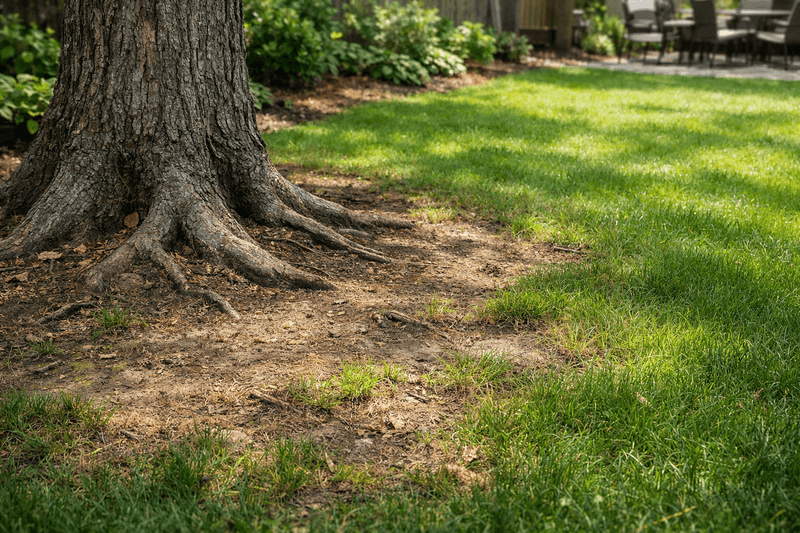
Suppose you have sharpened the blade, set the right height, and the sparse spots are still there. Time to look wider.
UGA Extension lists causes such as insufficient sunlight, soil compaction, freeze injury, and waterlogged soil.
UF/IFAS also points to shade, compaction, watering problems, and traffic as reasons lawns struggle. These are not the only possibilities, and symptoms alone rarely tell you which one you are dealing with.
Start with simple clues. Notice whether thin areas sit under trees, along a walking path, or where water pools, and think about last winter’s cold snaps.
Your county extension office can help narrow things down.
Sharpening can improve how the lawn is cut, but it will not bring back thin or dead areas. That job starts with finding what the grass is struggling against.