
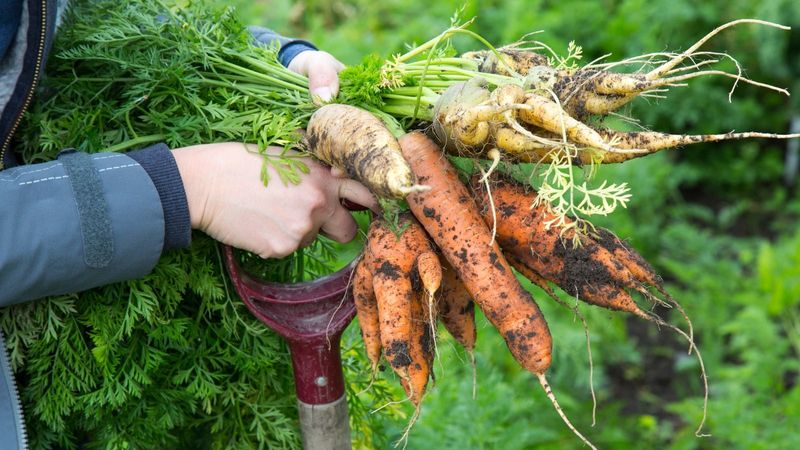
You pull a carrot from the garden and find a thick crown of feathery green leaves on top of a thin, twisted little root. It looks like the plant put all its energy in the wrong place.
Soil is one suspect, but it is not the only one. Sorting out the clues now can help you get straighter roots the next time you sow.
Read the tops and roots as separate clues
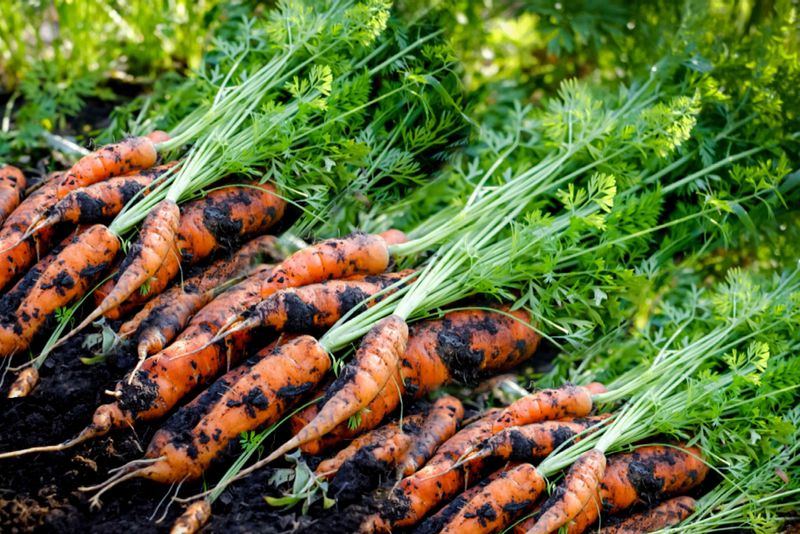
Bushy green tops tell you the plant grew well above ground. They do not tell you what happened below it.
A carrot can have gorgeous foliage and still end up with a skinny root, a forked root, or both.
Skinny and forked are two different problems. A thin root with lush leaves may point toward crowding or too much nitrogen, as Iowa State Extension describes.
A split or twisted root more often suggests something blocked the tip, and UC IPM lists dense or rocky soil among the usual suspects.
Neither look alone names a single cause, so think of this guide as a way to read clues. The steps here are meant to help your next sowing.
They cannot fix roots that have already forked.
What soil can do to a carrot
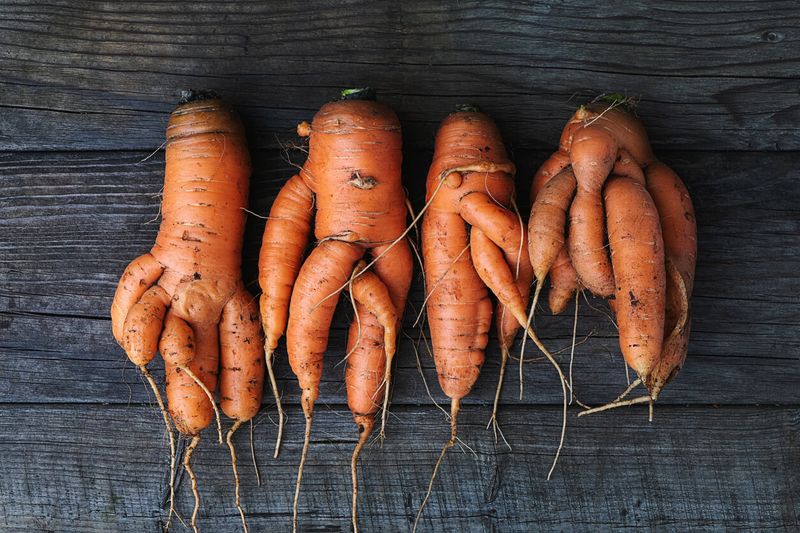
A carrot root pushes straight down from a tiny tip. If it hits a rock, a clod, or a hard layer of packed soil, it may stop, split, or bend around the obstacle.
Heavy soil can also slow maturity and produce rough roots, according to Texas A&M AgriLife Extension. UC IPM likewise connects dense or rocky ground with forking.
This explains twisted, short, or rough-skinned carrots well. It does not explain every crop with lush tops and small roots, so keep looking at the other clues before blaming the dirt.
A quick check in your bed can help. If you find pebbles, hard clumps, or a crusty layer a few inches down, soil was a plausible contributor.
Lush tops can point beyond the soil
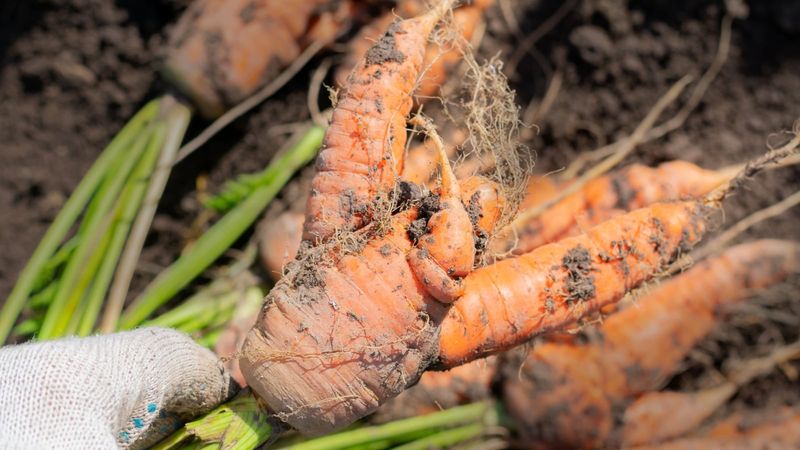
Sometimes the ground is fine and the trouble lies elsewhere. Crowded plants compete for room, and too much nitrogen can push leaf growth.
Both may give you big tops and small roots, and Iowa State Extension lists them as possible causes. Leaf size alone cannot tell you which one you had.
Forked or stunted roots can also come from root-knot nematodes or Pythium root dieback, especially in wet or heavy soils, as University of Minnesota Extension notes. Small swellings or galls on roots are a clue worth noticing, but they do not prove nematodes caused every odd carrot.
Treat these as possibilities, not diagnoses. UC IPM names several causes, so avoid reaching for pesticides based on forked roots alone.
Reset the bed before you sow again
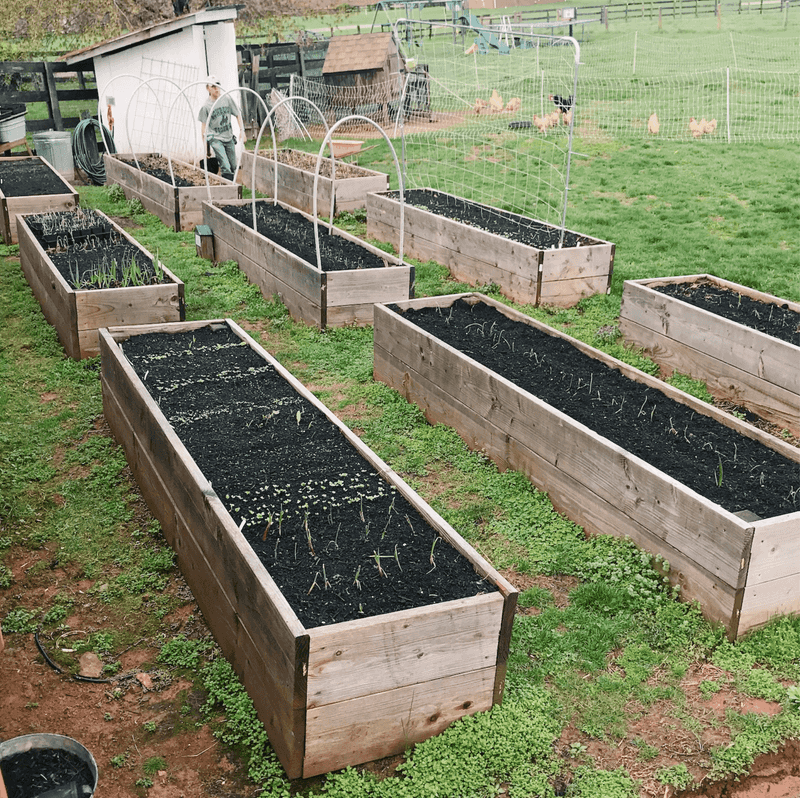
Before the next sowing, give carrots a deep, loose, well-drained bed. Work the soil and pull out rocks, sticks, and hard clods.
Texas A&M suggests working soil about 8 to 12 inches deep, while UF/IFAS describes loosening and clearing it roughly a foot down.
Treat those numbers as a practical range. Match your effort to your carrot’s length and your soil.
A short variety needs less depth than a long one.
Heavy clay benefits from extra attention, and a raised bed filled with loose, well-drained mix is one option when the ground is stubborn. Rake the surface smooth so seeds sit in fine, even soil.
All of this work is meant to prevent problems in the next crop. It will not straighten the carrots you already pulled.
Give roots room and steady moisture
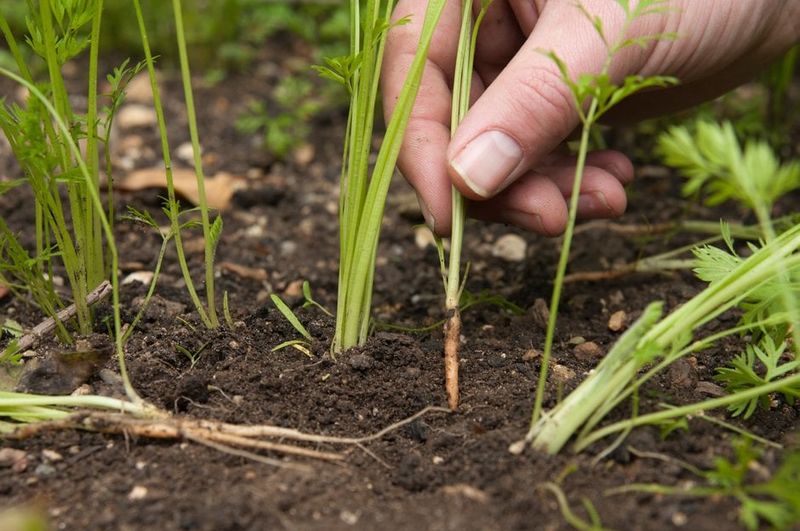
Carrot seeds are tiny and slow, so the top inch of soil must stay evenly damp until seedlings emerge. UC IPM advises uniform moisture at seed depth during that stage.
In Southern heat, a light layer of mulch or a board over the row until sprouting can help, and check it daily.
Once plants are growing, aim for steady moisture. Iowa State Extension notes that drought stress can lead to small, misshapen roots and that uneven watering can split them.
Soggy soil is no better, so skip the daily soaking.
Thin seedlings to the spacing on your seed packet. Texas A&M points to overcrowding as a cause of poor roots.
Water and spacing help, but they are not cure-alls. Rocks, pests, and disease can still cause trouble.
Don’t guess at fertilizer
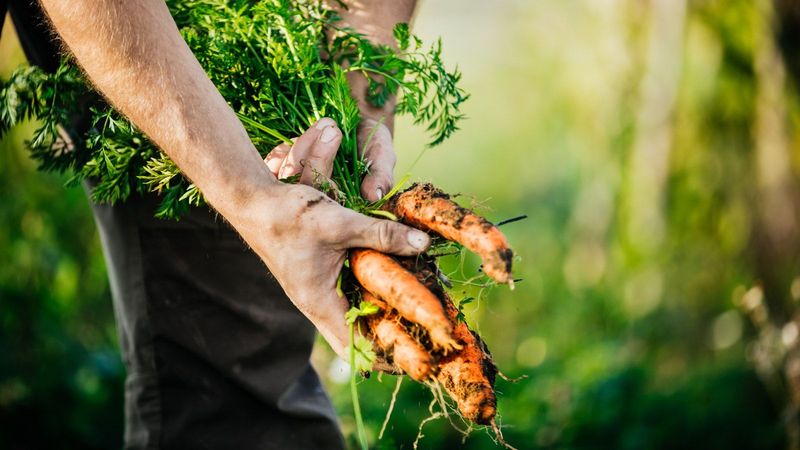
Small roots tempt many of us to add more fertilizer. That can backfire.
Excess nitrogen and fresh manure can get in the way of root development, as Iowa State Extension explains.
What your bed needs depends on what it already holds. Sandy North Florida soil differs from Texas clay, and UF/IFAS bases its carrot nitrogen guidelines on local conditions.
A soil test takes the guesswork out. Follow its results rather than adding phosphorus or any single amendment as a universal fix.
If you want help reading product labels, Penn State Extension shows how to match recommendations to the fertilizer you have.
Test well before sowing so you have time to act on the results.
Match the next crop to your place
Carrots like cool weather, but fall timing differs across the South. UF/IFAS gives September through November as an ideal seeding window for North Florida.
Texas A&M lists different fall timing for South Texas and other parts of the state.
So skip any single date and check your county extension office. Its how-to-grow guide is a useful starting point for Texas gardeners.
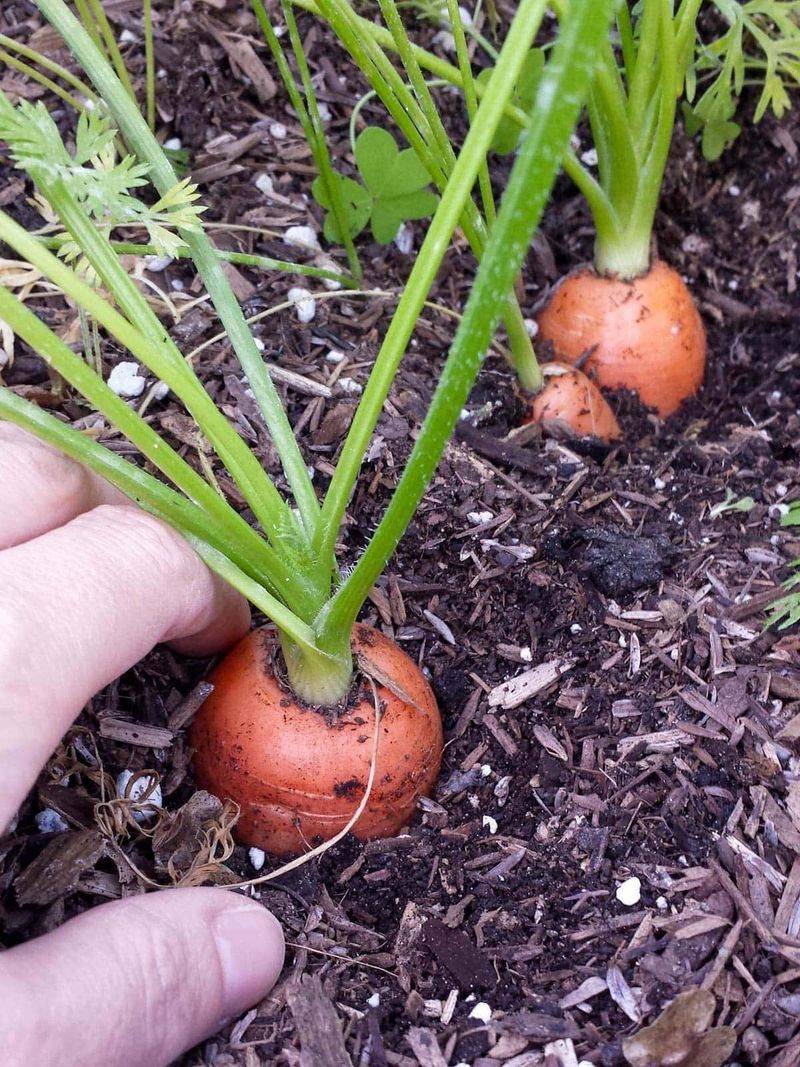
If your soil is heavy, consider shorter types. University of Maryland Extension says stump-rooted or round carrots suit heavy clay.
A short or round carrot is not a failure. UF/IFAS Gardening Solutions notes that varieties naturally differ in root shape and size, so check your seed packet first.
Save the fix for the next sowing
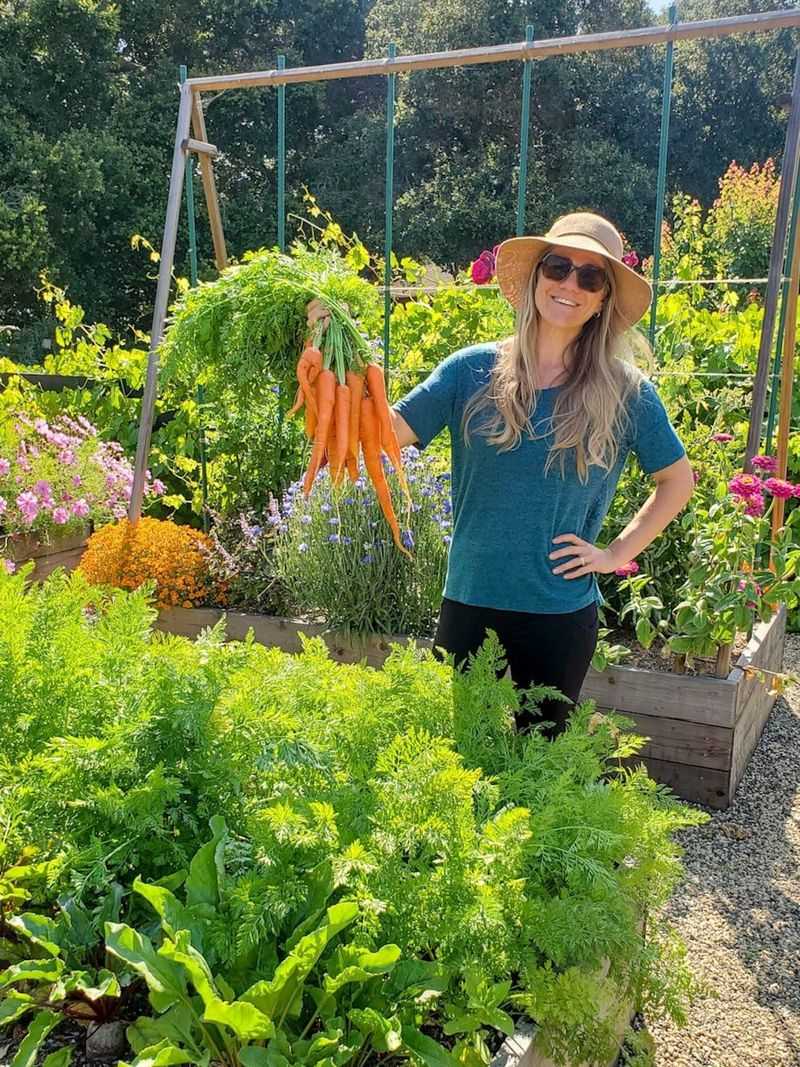
Start by treating this crop as evidence. Note which carrots forked, which were skinny, and whether you found rocks, galls, or crowding.
Then prepare a deep, loose bed, run a soil test, and plan your spacing and watering before any seed goes in.
Better conditions may help future roots, as UF/IFAS and UC IPM both describe these as root-development problems tied to growing conditions. They cannot straighten a carrot that has already forked.
The roots you pulled are a rough draft, and the next bed is your chance to write a better one.