
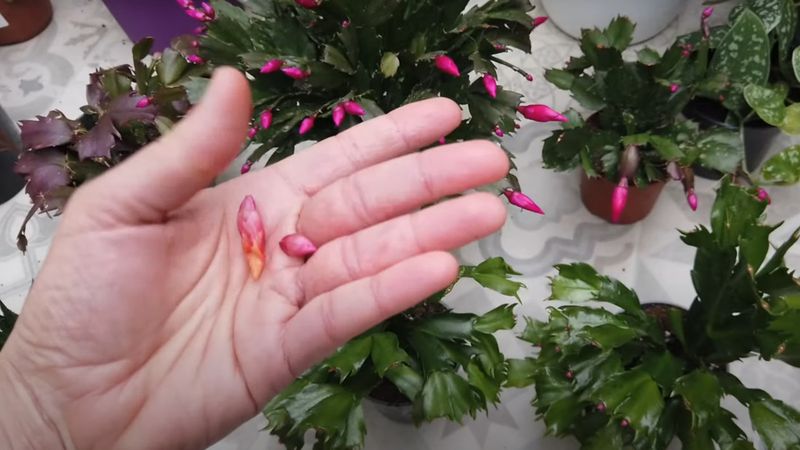
You finally got your holiday cactus loaded with buds, and now they are dropping just before the big bloom. A move from porch to living room can sometimes be part of the story.
Changes in temperature, light, and drafts can stress a budded plant. Here is how to spot the problem and keep as many buds as possible.
A move can change more than the plant’s location
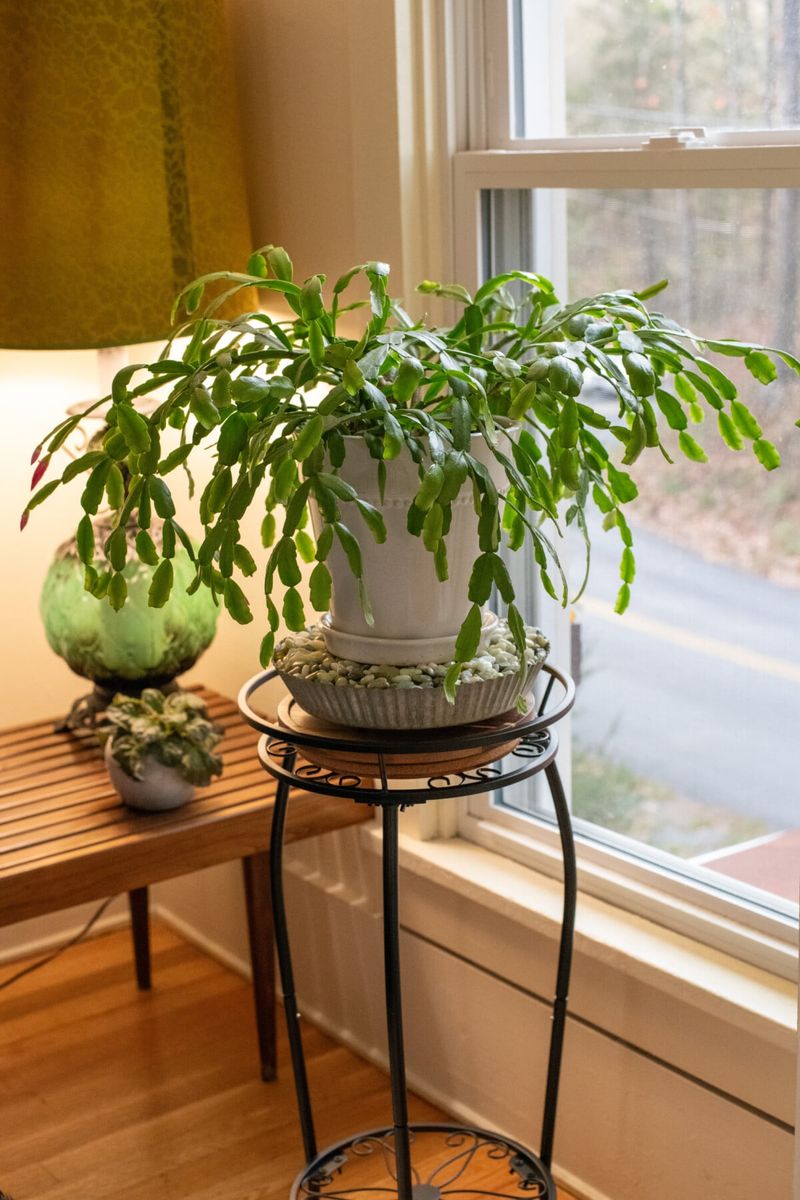
Carrying a plant a few feet seems harmless, but to a cactus full of buds it can feel like a different climate. A porch, a sunroom, and a living room can differ in temperature, light, humidity, and drafts.
Any of those shifts may stress the plant.
That is why Iowa State Extension advises against moving a holiday cactus until its flowers start opening. The buds are sensitive, and steady conditions give them the best chance.
One UF/IFAS Nassau County reader question describes a plant that lost buds after coming indoors from a porch. The author suspected a sharp temperature change.
That is one reported case, not proof that every move causes bud loss.
A move is only one possible trigger. Drafts, light changes, and watering problems can also cause buds to fall, so look at the whole picture before blaming the relocation.
Bring outdoor plants inside before cold threatens them

Avoiding extra moves does not mean leaving a plant outside in the cold. If your holiday cactus spends the fall on a porch or patio, bring it in as nighttime temperatures approach or fall below about 50°F.
That timing matches guidance from UConn Extension, Illinois Extension, and the UF/IFAS Nassau County office. Think of 50°F as a practical cue for moving indoors, not a magic number for bud drop.
In Florida and Texas, a cold front can arrive fast, so watch the forecast and move the pot before the chilly night, not after.
Once the plant is inside, pick its spot and leave it there. Carrying it back and forth between outdoors and indoors adds more swings in conditions, and it may still shed a few buds.
Choose one bright, draft-free indoor spot
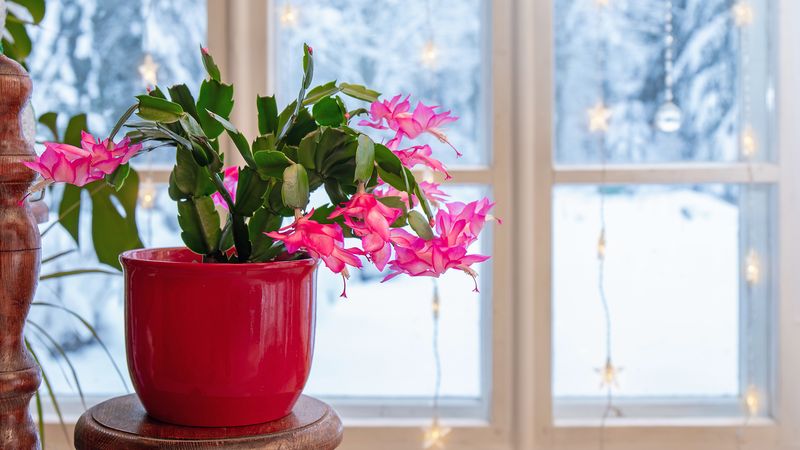
Pick a place with bright, indirect light, such as a spot near a window with a sheer curtain. Keep the plant away from exterior doors, cold window glass, heating vents, fireplaces, and other drafts or heat sources.
For temperature, Iowa State gives 60 to 70°F as a suitable indoor range. University of Minnesota Extension suggests roughly 65 to 70°F days and 55 to 65°F evenings.
Treat those as a comfortable range, not a cure. What matters most is that the spot stays steady from day to day.
A quick test helps. Stand where the plant will sit and notice whether air blows past, whether the glass feels icy, or whether warm air flows from a vent.
If so, try another spot before the plant settles in.
Keep light steady while buds develop
Light and temperature do two different jobs. Day length and temperature help control whether a holiday cactus forms buds in the first place, as UConn Extension explains.
Once buds are visible, the goal changes. Stable conditions matter more than trying to steer flowering.
Warmth above 70°F is linked to less flower formation, but that does not mean a plant with existing buds will drop them at 71°F. The safer message is to avoid very warm spots and sudden swings.
So skip the urge to drag the plant into a dark closet or swing it into a blazing window. Iowa State’s guidance points to leaving a budded plant in place.
If you turn lights on at night nearby, keep in mind that steady routines are easier on the plant than frequent changes.
Keep the potting mix moist, not waterlogged
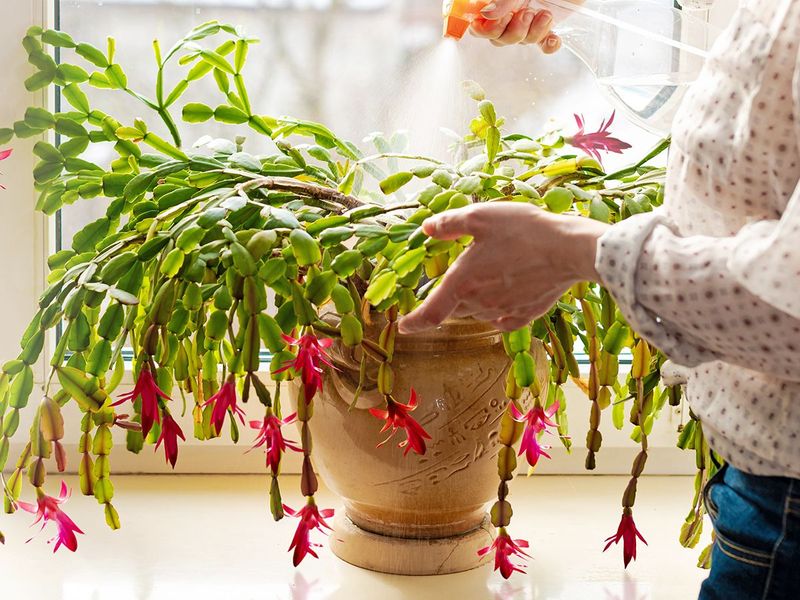
Despite the name, a holiday cactus is not a desert plant. Its relatives come from rainforest areas, so bone-dry mix is not the goal.
Iowa State recommends keeping the mix evenly moist while the plant is budding and flowering.
UF/IFAS Gardening Solutions suggests watering when the top inch feels dry.
Push a finger into the mix. If the top inch is dry, water until the excess runs out of the drainage holes, then empty the saucer so the pot is not sitting in water.
Both extremes can stress the plant, so aim for the middle. Watering this way may help reduce one possible cause of bud loss.
If buds are already falling, stabilize conditions first
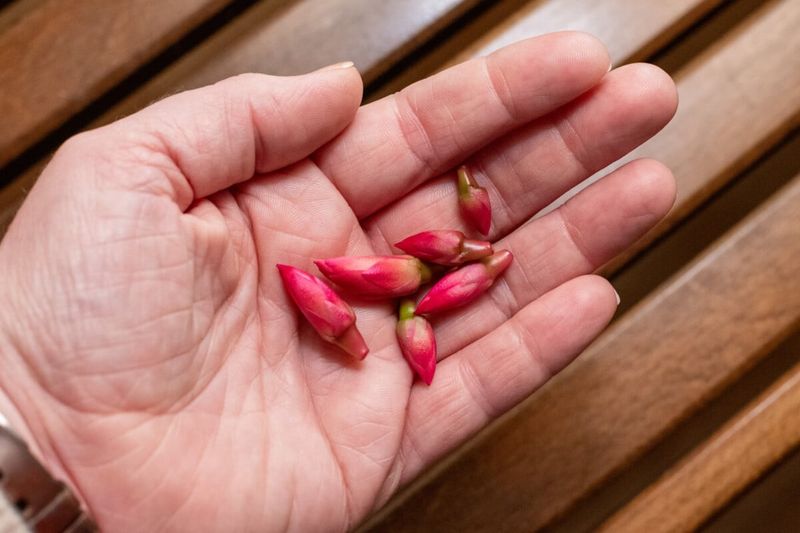
Seeing buds on the floor is stressful, but resist the urge to fix everything at once. Start by playing detective.
Ask whether the plant was recently moved, such as in the porch-to-house case UF/IFAS described. Then check for drafts, nearby heat, sudden light changes, and a mix that is either very dry or soggy.
Correct any obvious extreme, then leave the plant in a consistent spot. Iowa State’s advice to avoid moving a budded plant applies here too.
Bud loss can have more than one cause, and UConn’s care notes also stress steady conditions. Fixing problems may reduce further stress, but it cannot promise the remaining buds will stay.
If a few buds drop and the rest hold, that is often a reasonable outcome.
Let the plant settle through flowering
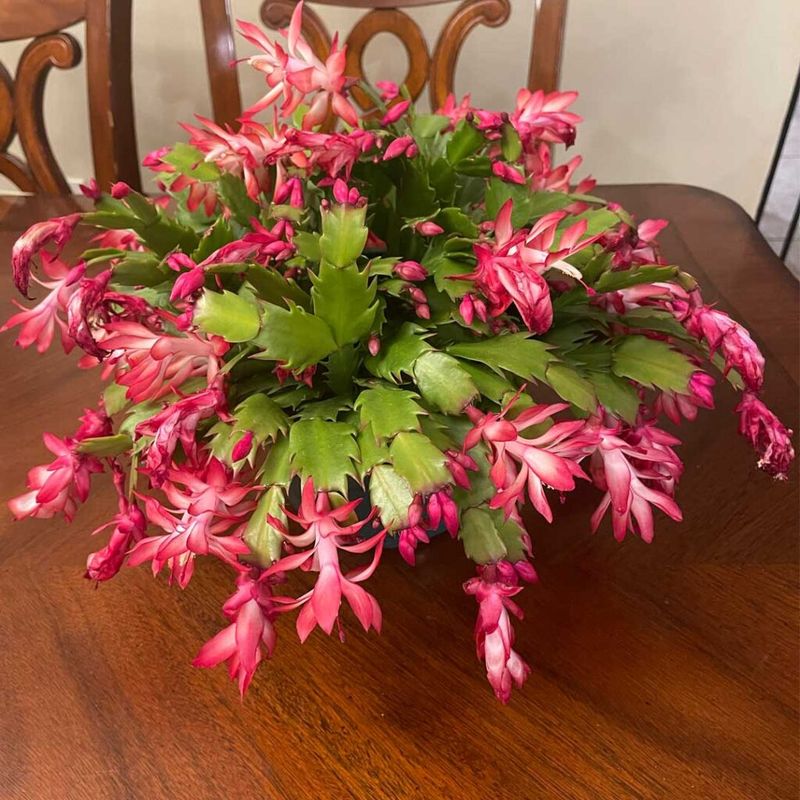
The plan is simple. Bring an outdoor plant in before the cold, as UF/IFAS guidance suggests, and make that one move count.
Then keep its light, temperature, and watering steady while buds develop and flowers open, following Iowa State’s advice to leave it alone until blooms open.
Some buds may still fall, and that does not mean you did something wrong. A plant left in peace is simply more likely to reward you.