
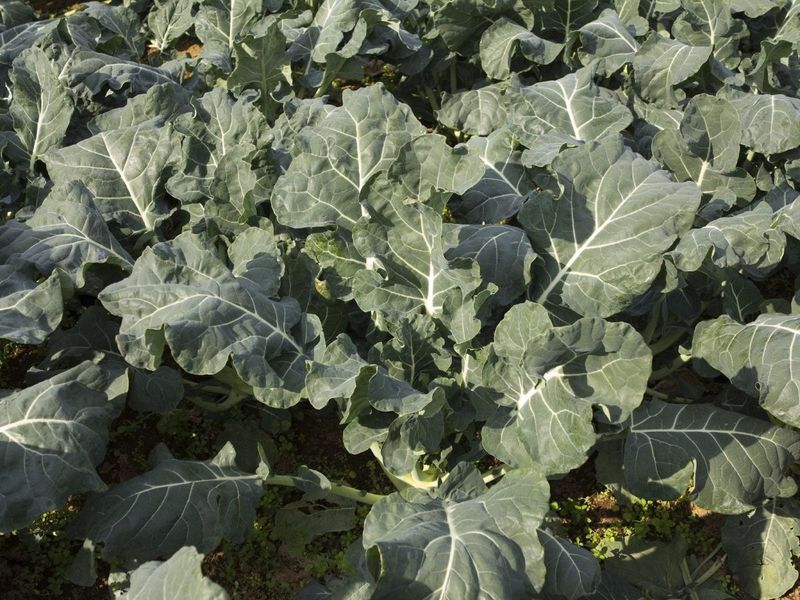
Your broccoli looks lush and healthy, yet the center of the plant is not giving you the crown you planted it for. That is frustrating, especially when fall beds in Florida and Texas only have so much cool weather to work with.
The good news is that several different problems can look alike from a distance. A close look at the center of the plant can tell you which one you are dealing with and what to check next.
First, check whether the plant has formed a head
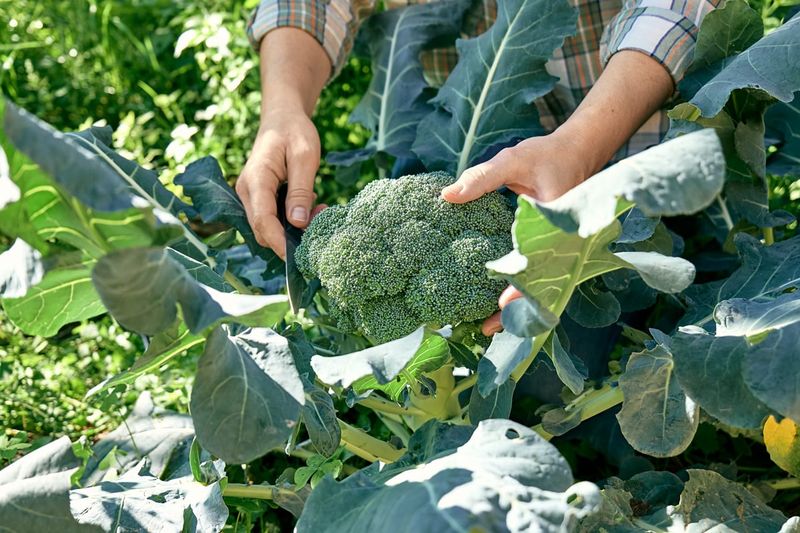
Kneel down and look right into the center of the plant. What you see there matters far more than how big or healthy the leaves look.
You might find nothing at all, a tiny tight head, or a head that is loose or lumpy.
Those three findings are not the same problem. A plant with no head at all points one direction.
A small head that formed early points another. A loose or misshapen head points to a third path.
Extension guidance, including Utah State University’s production problems page, treats these as separate issues with different causes, so it helps to name yours before changing anything.
Next, think back to what you bought. Regular heading broccoli forms one main crown.
Sprouting broccoli is meant to produce many smaller florets instead, as University of Maryland Extension notes. Check the seed packet or plant tag before you call anything a failure.
A damaged growing tip may leave broccoli blind
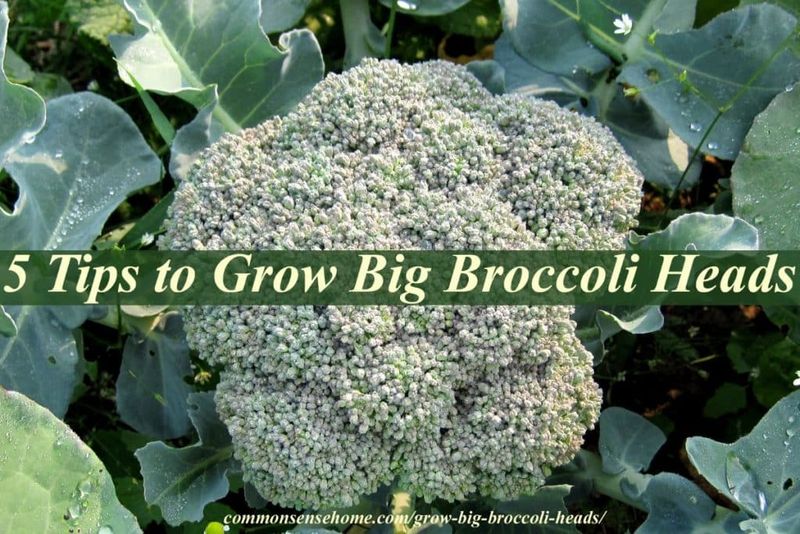
Gardeners call a plant blind when it never forms its normal central head. The usual suspect is damage to the growing point, the tiny tip at the very center where the head would start.
Utah State University Extension links this to cold after transplanting, insects, and other transplant-related stress.
Part the inner leaves and look closely. Is the tip missing, blackened, chewed, or scarred?
Look for caterpillars, frass (their droppings), or ragged feeding near the center. Also think about whether the seedling got knocked, cut, or chilled when it went into the ground.
Big, dark, leathery leaves can fit a blind plant, but they do not prove it. Plenty of healthy plants have large leaves and simply have not started a head yet.
Treat blindness as one possible answer, not the default, and only settle on it if the center itself shows the clues.
A tiny early head points to buttoning
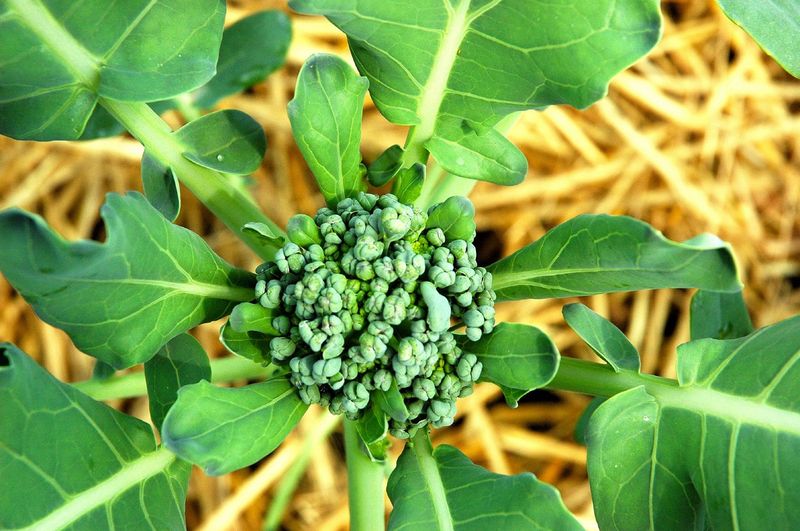
Spot a head the size of a button or a small coin on a plant that is otherwise young? That is buttoning, and it is different from a plant that forms no head.
The plant did start a head, just far too early and too small to grow into a full crown.
Extension sources associate buttoning with several possible contributors: transplant stress, older or oversized transplants, water stress, low fertility, pests, and warm conditions. The Utah State guidance lists these, and University of Minnesota Extension describes the same premature small-head problem.
Those are possibilities, not a verdict for your bed. One garden may have had a root-bound transplant, another a dry spell, another a warm snap.
Think back over the first few weeks after planting and look for the event that fits your plant’s story best.
Fall planting dates depend on where you garden
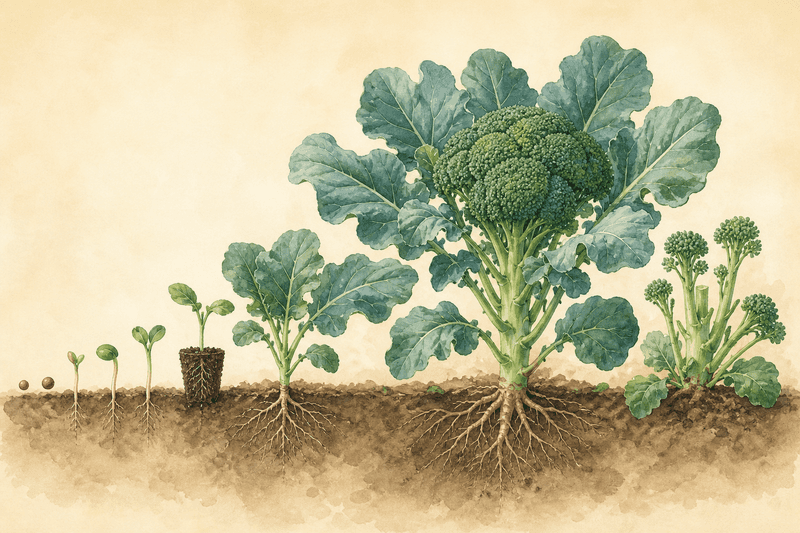
Broccoli is a cool-season crop, so when it goes into the ground can change how it develops. The South does not share one calendar, and Florida and Texas show why.
For Florida, UF/IFAS lists transplant windows of mid-September to mid-February for North and Central Florida, and October through December for South Florida. It also gives roughly 80 to 100 days to maturity in its home-garden guidance.
Texas works differently. Texas A&M AgriLife gives average fall broccoli planting dates of July 15, August 1, September 1, October 1, and November 1 for Regions I through V.
Those are regional averages, not one statewide date.
Maturity numbers also vary by source. A UF/IFAS cole crop production table lists 50 to 70 days from transplant, while the home-garden page gives a longer range.
Check your own variety’s days to maturity and note where the count starts, so you do not expect a head on a date that does not apply to your plant.
Heat and transplant stress can disrupt head development
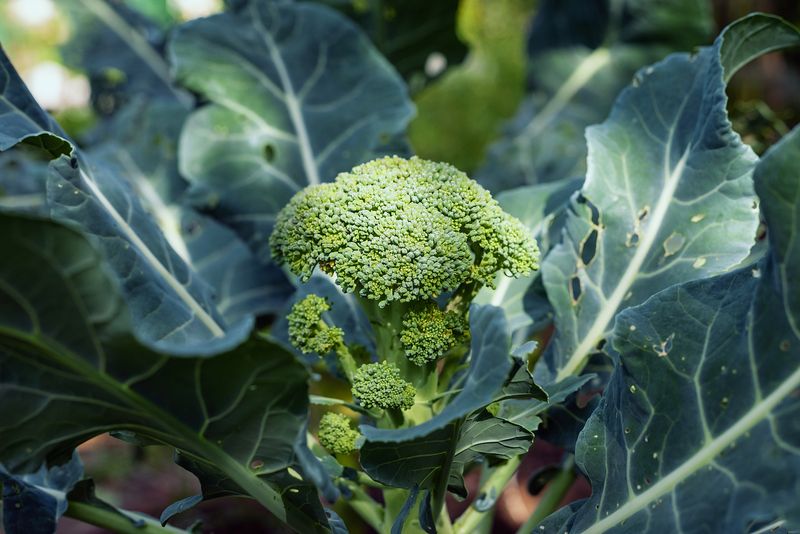
A warm stretch at the wrong moment can leave you with a head that looks rough rather than no head at all. Utah State Extension notes that heat or dry soil around early head formation can cause poor-quality heads.
That is a quality problem, which is different from a plant that has made nothing.
Research summarized by UMass Extension found a sensitive window of about 10 days before a tiny crown is visible in the cultivar Galaxy. That finding belongs to that cultivar and that study.
It is not a temperature rule for every variety in your garden.
Transplant stress is a separate thread. A seedling that struggled after planting, from chilling, rough handling, or a cramped root ball, may form a small premature button.
Jot down when you planted, what the weather did, and what the plant looked like a few weeks later. Those notes help you tell heat damage from buttoning.
Keep moisture steady and diagnose before changing fertilizer
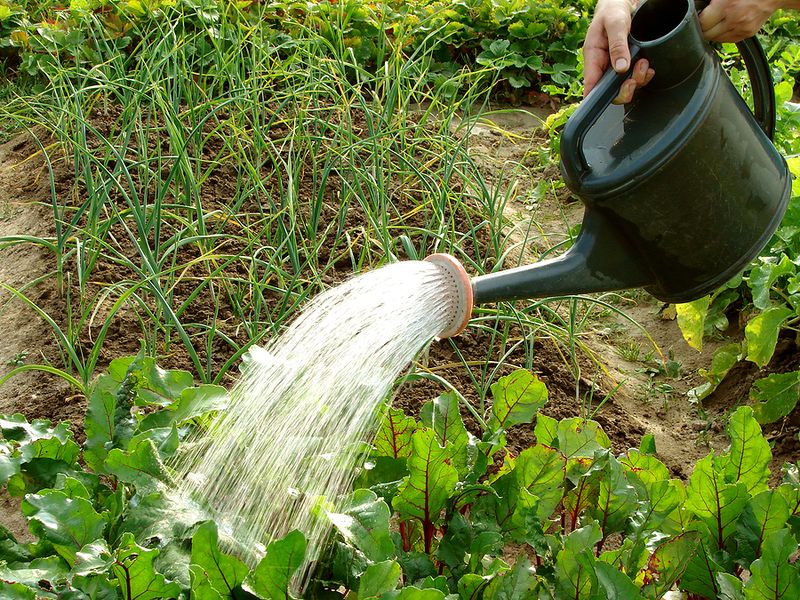
Push a finger into the soil near your plants. Has the bed swung between soggy and bone dry?
Even moisture matters most as a head begins to develop, and Utah State Extension links water stress to head problems.
For Florida, UF/IFAS recommends 1 to 2 inches of water weekly. Treat that as a starting point.
Rain, sandy or heavy soil, and weather all change what your bed actually needs.
While you are down there, check the center of the plant for chewing pests that could injure the growing point.
Resist the urge to grab fertilizer. Extra feeding is not a proven fix for a leafy plant with no head, and excess nitrogen has not been established as the cause.
Low fertility can contribute to buttoning, so a soil test and local extension advice are a better guide than guessing. Boron is the same story: it is tied to specific quality problems and testing, not a casual remedy.
Use the symptom to choose your next step
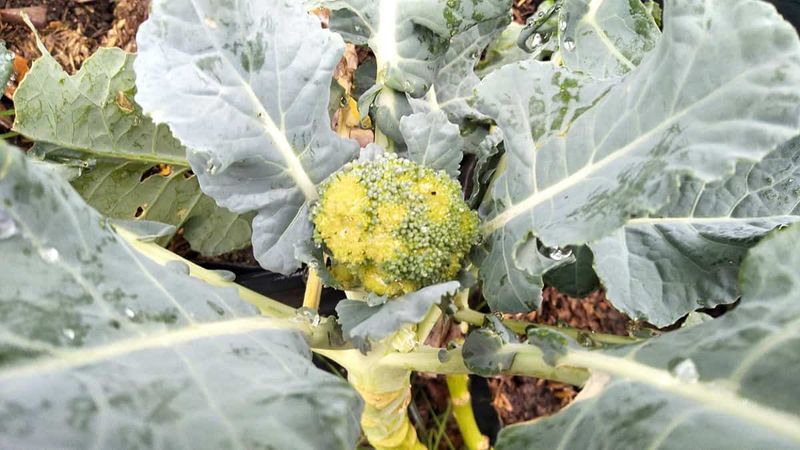
Work through the checks in order. Confirm your broccoli type first, since sprouting types never make one big crown.
Then inspect the growing tip, and see whether a small head is already there. After that, review planting timing, weather, moisture, and pest signs.
Skip the fertilizer guess, and do not judge your plant against one universal calendar. Extension guidance points to several causes, so the symptom you see should steer your response.
Big leaves tell you the plant is growing, and the center tells you the rest.