
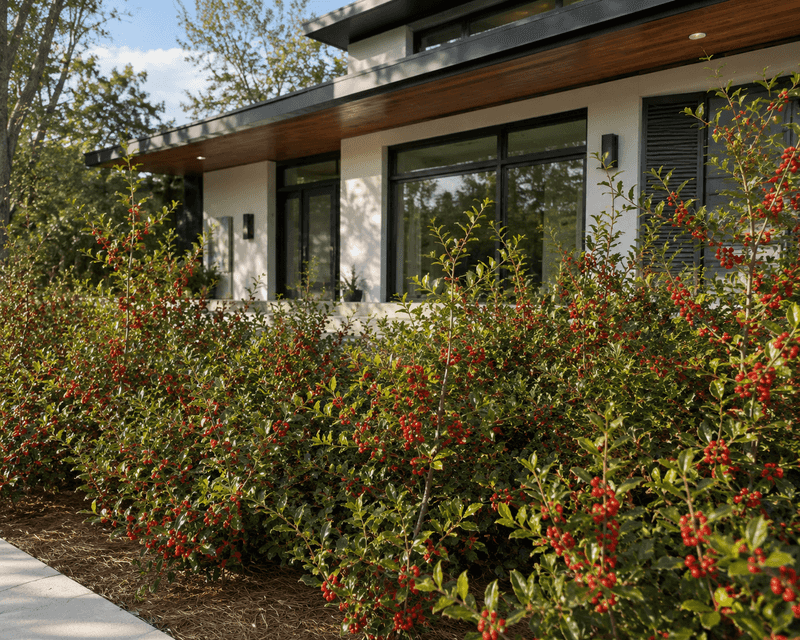
A thick hedge can look beautiful while giving rats a place to hide. Leaves and mulch piled against a patio can also make life easier for roaches.
No shrub drives these pests away on its own, but the right native plants are easier to keep open, tidy, and dry. Here are seven choices that can help you build a better-looking yard with fewer hiding spots.
1. Florida Rosemary
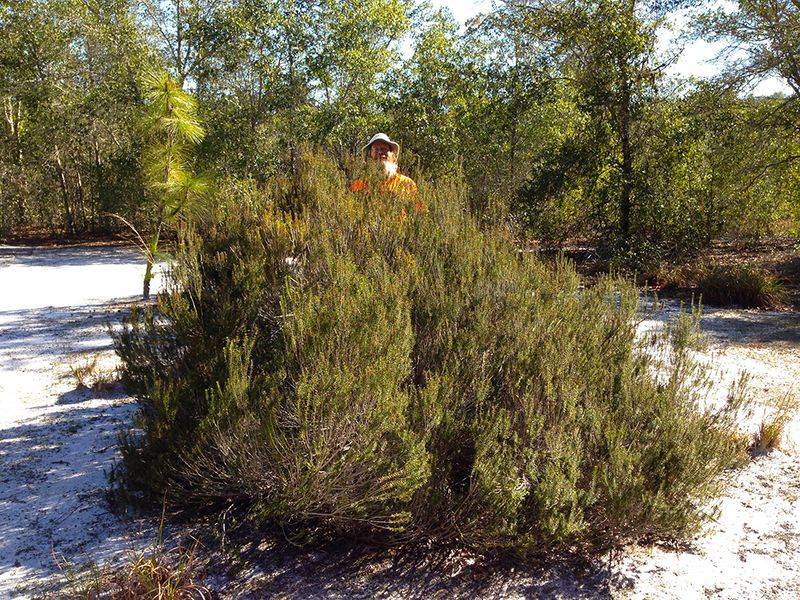
Want a border that looks soft without turning into a leafy cave? Florida rosemary has fine, needlelike leaves and a loose, airy shape.
It suits a sunny bed beside a walkway or patio, where you can see and clean the ground around it.
Plant it in well-drained soil and leave room for its mature width. That matters in Florida, where a shrub squeezed against a wall can trap fallen leaves and make it harder to spot burrows or pest activity.
Florida rosemary is a particularly good match for dry, sandy sites. It is a poor choice for a low spot that stays wet after heavy rain.
Its name is misleading: this is not the rosemary used in cooking, and its scent has not been shown to keep rats or roaches away. The pest-control benefit comes from the layout around it.
Keep the planting open, rake out debris, and avoid storing pots or bags of soil behind the shrubs. You get an attractive native border without giving pests an undisturbed corner.
2. Wax Myrtle
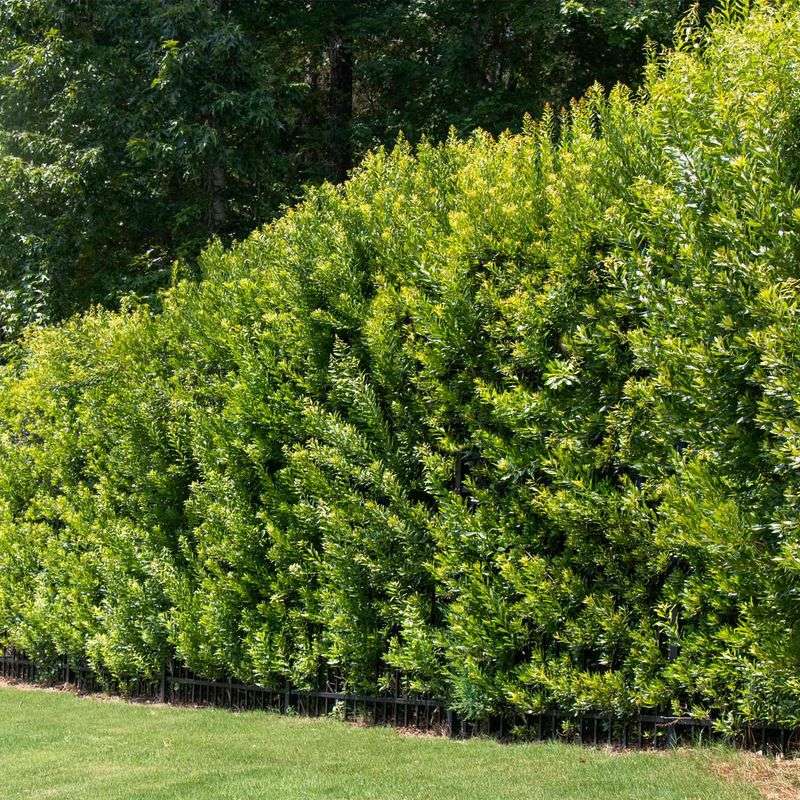
A privacy hedge should screen the neighbors, not hide everything happening at ground level. Wax myrtle grows quickly and handles many Florida conditions, making it useful along a property line.
Its biggest advantage here is that you can shape it into a tall screen while keeping the lower branches thinned enough to inspect beneath it.
Give wax myrtle generous space and prune with a light hand rather than shearing it into a dense block. Keep it back from the house so you can walk behind it, remove fallen leaves, and check for gaps where rats might enter.
If the hedge has grown into an overstuffed wall, thinning selected branches is more useful than trimming only its outer surface.
Wax myrtle is sometimes described as insect-repelling because its leaves are aromatic. Do not count on that scent to control patio roaches.
Female plants also produce berries that wildlife eats, so promptly collect fallen fruit near doors or seating areas if it becomes a problem. For the cleanest patio edge, ask a knowledgeable native nursery whether it can identify a male plant, which does not produce berries.
3. Yaupon Holly
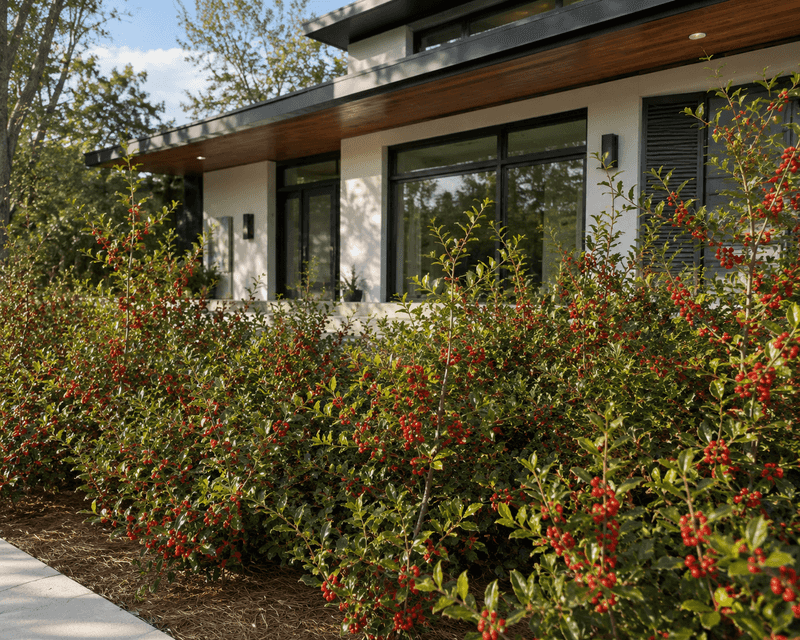
Need a hedge that looks tidy without constant fuss? Yaupon holly tolerates pruning well and can be kept as a crisp screen or a smaller foundation shrub.
That flexibility makes it handy near a porch, where you may want greenery but still need to see the soil and siding.
Choose a variety that fits the space instead of planting a large form inches from the wall. Leave a workable gap behind the shrubs and trim branches that touch the house.
Those simple choices make it easier to clear leaf litter, check vents and openings, and notice signs of rodents before they settle in. Yaupon holly can also handle a range of Florida soils once established, though a new planting still needs regular water while its roots grow.
Female yaupons carry bright berries that feed birds, a welcome feature in many yards. Close to a patio, however, dropped fruit may add to the cleanup.
A male plant offers the same useful evergreen structure without berries, but confirm the plant’s sex with the nursery rather than assuming a label such as dwarf means fruitless. Yaupon is a smart hedge choice, not a rat repellent.
4. Silver Buttonwood
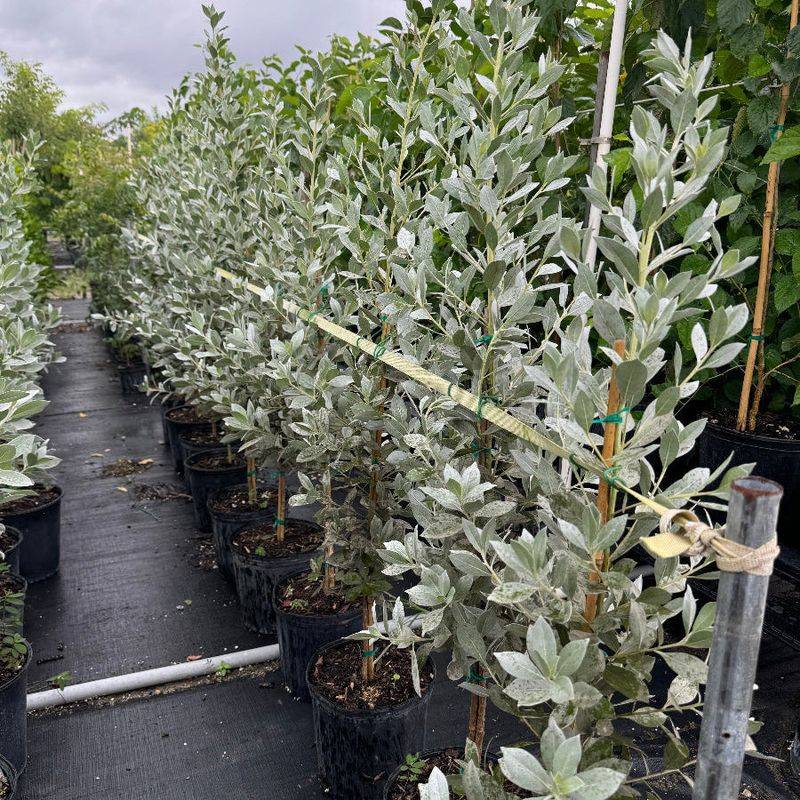
Salt air can leave a patio planting looking worn long before summer ends. Silver buttonwood brings a different look: its pale leaves catch the light, and the plant is well suited to sunny, coastal Florida landscapes.
It makes a striking hedge where many less-tolerant shrubs struggle.
Its role in a pest-conscious yard is practical, not chemical. Set the hedge far enough from the patio and house to allow air movement and easy cleanup.
Prune it to maintain the shape you want, but do not let low growth seal off the space underneath. A visible base makes it harder for rats to travel unnoticed through a long, sheltered run.
Buttonwood prefers good drainage, so check the planting site before putting it beside a downspout or in a spot that ponds after a storm. Sweep leaves and outdoor food crumbs from the patio, and keep trash containers closed.
Roaches will take advantage of water and food even beside the most carefully chosen shrub. For a bright, exposed yard, silver buttonwood earns its place by providing a durable screen that you can maintain without creating a hidden, debris-filled edge.
5. Cocoplum
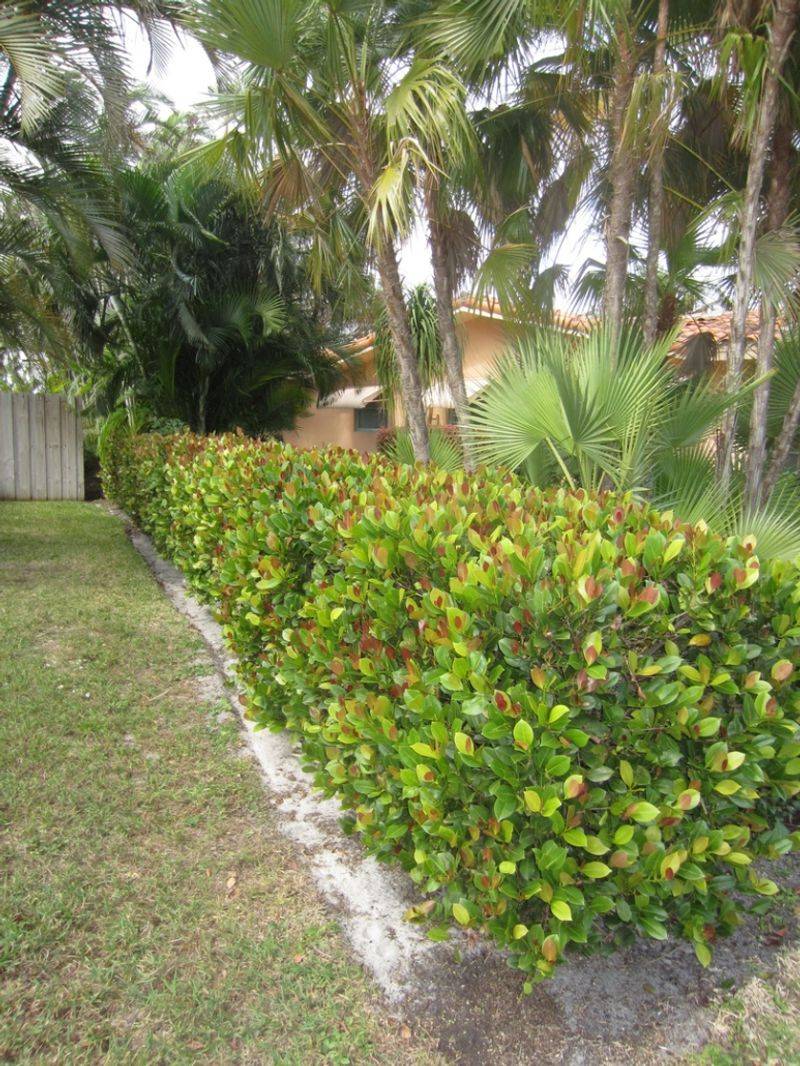
In South Florida, cocoplum can make a handsome, glossy hedge that takes heat and coastal conditions in stride. It is a useful pick when a patio needs some privacy but a tall, sprawling screen would feel too heavy.
Check your area’s conditions before buying, since cocoplum is better suited to warmer parts of the state than to frost-prone sites.
Give each plant enough room to grow without pressing into the patio furniture or house. Keep a clear strip at the hedge’s base, especially near doors, outdoor kitchens, and storage areas.
That strip gives you a place to sweep and lets you spot droppings, burrows, or damp debris. After storms, remove trapped leaves rather than letting them build up under the canopy.
Cocoplum produces fruit, and that is the trade-off to plan for. Fruit can be a welcome wildlife resource, but fallen food close to a building may work against your goal of discouraging rats.
Harvest or collect it promptly, or place a fruiting hedge farther from the patio. Cocoplum will not chase pests off the paving; it works best as part of a layout that leaves no easy buffet or sheltered route to the house.
6. Simpson’s Stopper
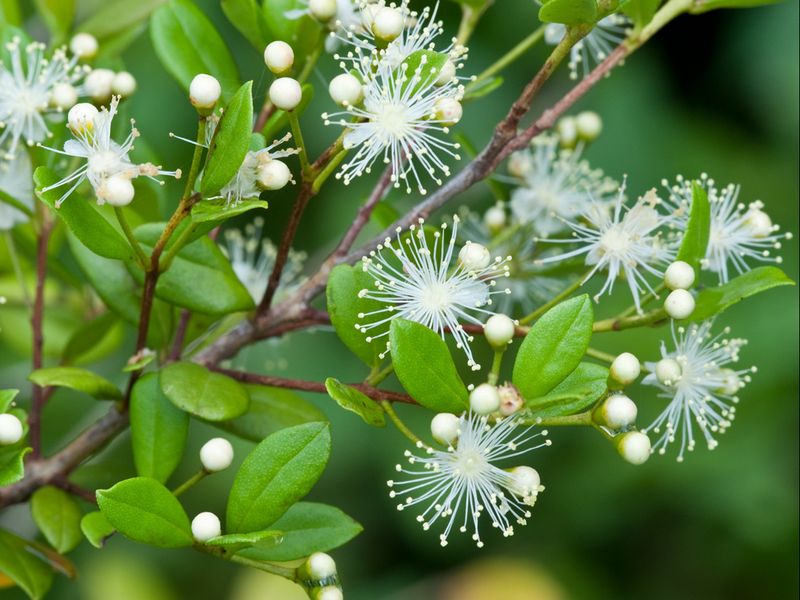
Small white flowers and neat, glossy leaves give Simpson’s stopper a more delicate look than many screening shrubs. It can serve as a loose hedge near a sitting area, offering a little privacy without demanding a rigid, box-shaped trim.
Birds may visit its flowers and fruit, adding life to the garden.
Place it where its mature spread will not block a gate, cover a vent, or crowd an exterior wall. If you want a hedge, leave enough room to reach the ground beneath it for cleanup.
Selective pruning can preserve its natural shape while opening congested lower branches. That is especially helpful after windy weather has blown leaves, wrappers, and other debris into the bed.
The red fruit is attractive, but it also deserves attention near a patio. Pick up what falls rather than leaving it beside a grill or dining table.
In a wildlife-focused yard, a better compromise may be to grow Simpson’s stopper farther from the house and use a fruitless option close to the door. There is no good reason to expect its flowers or leaves to repel roaches.
Its value is an appealing native screen that stays easy to inspect when planted thoughtfully.
7. Firebush
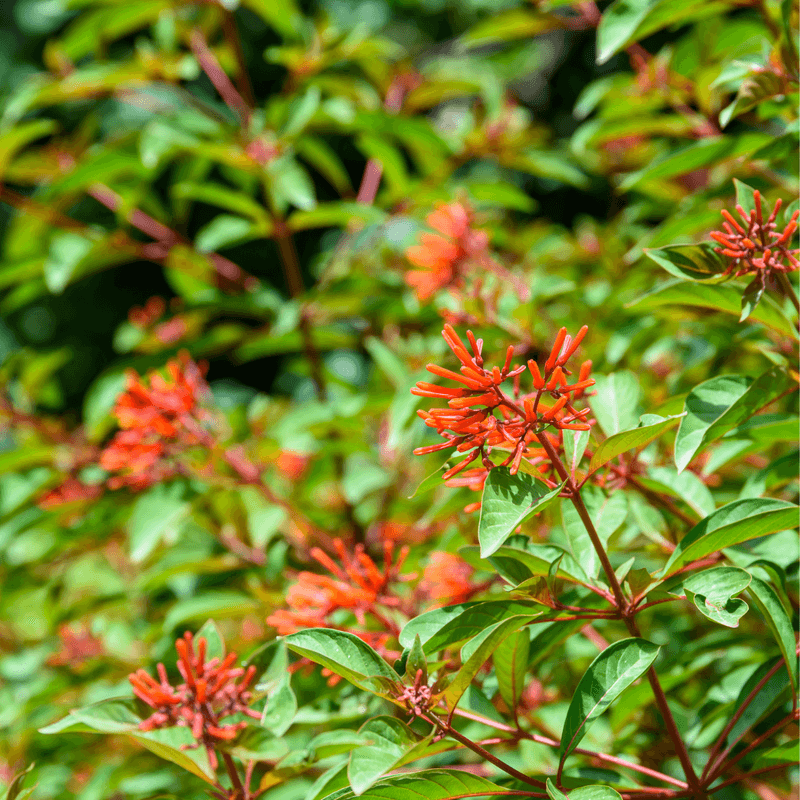
Looking at a plain patio corner, you might want color more than another green wall. Native firebush delivers bright tubular flowers that hummingbirds and butterflies visit.
In a warm Florida yard, it can fill an open, sunny space quickly and make the patio feel more inviting.
Firebush also grows vigorously, which means placement matters. Give it room away from the siding, doors, and outdoor eating areas, then cut back crowded growth as needed.
Avoid using it to cover a pile of unused pots, stacked firewood, or a leaky faucet. Those hidden spaces and water sources matter far more to rats and roaches than the plant you put in front of them.
Its berries feed birds, but fallen fruit should not sit on paving or beside the house. Clear it during routine patio cleanup, along with crumbs and standing water in saucers.
In cooler parts of Florida, firebush may die back after frost and regrow when warm weather returns, so it is less dependable there as a year-round screen. Choose it for flowers and wildlife activity, then maintain open sightlines around it.
No shrub on this list replaces sealing house openings or addressing an active infestation.