
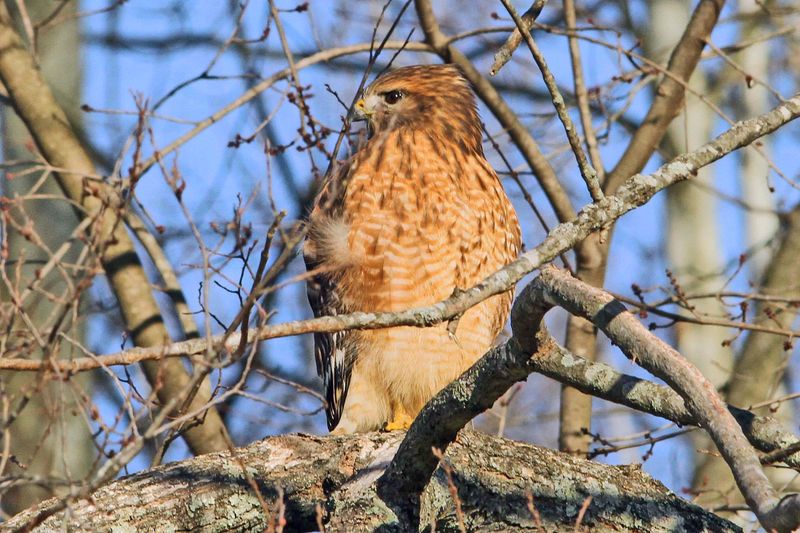
A red-shouldered hawk can spot a rat moving through the grass or a snake crossing an open patch of ground. The right trees give these hawks places to perch and watch.
They cannot promise a pest-free yard, but they can make your space more useful to a hunting hawk. Here are seven Florida natives to consider, from broad shade trees to choices for wet ground.
1. Live Oak
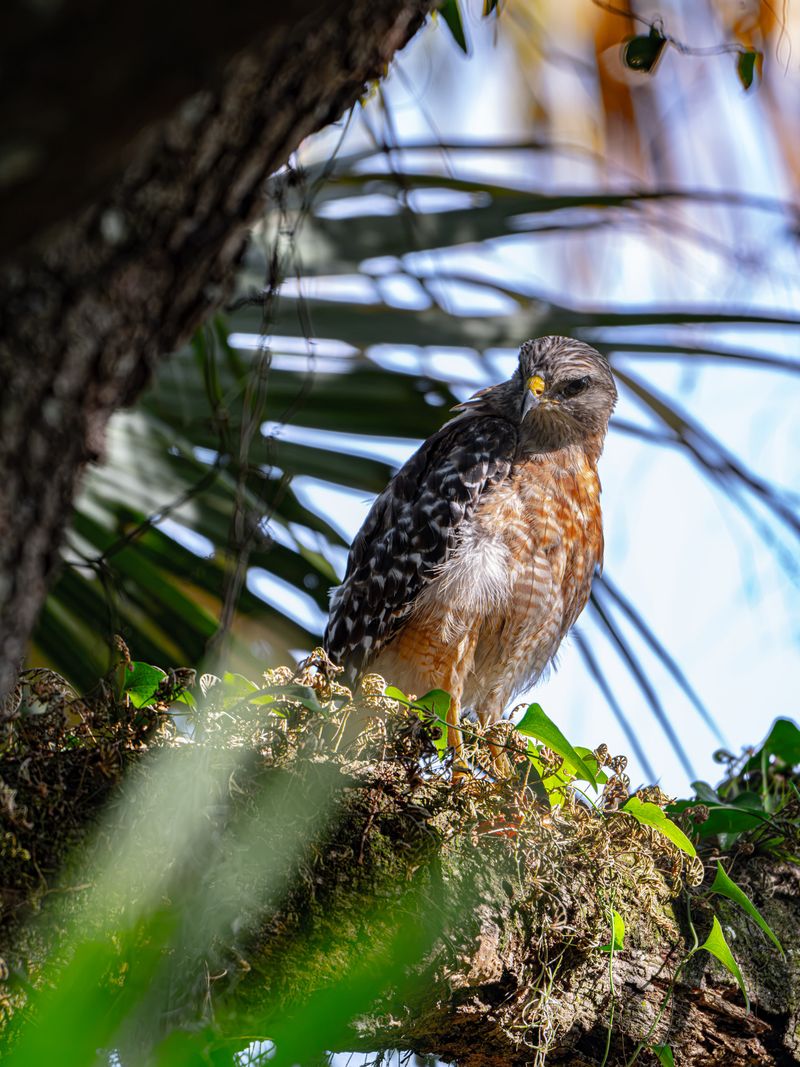
Picture a hawk watching the lawn from a wide, steady branch. A mature live oak can offer just that kind of lookout, along with a large crown that makes an impressive shade tree.
It is a strong choice when you have room for a tree that will grow far beyond a small planting bed.
Live oak is native to Florida and grows best in full sun with space for its roots and limbs. Plant it well away from the house, overhead wires, and places where falling branches would pose a risk.
Give a young tree water while it becomes established, then mulch the root area without piling mulch against the trunk.
For hawks, the useful feature is not simply the tree’s size. Sturdy branches beside a partly open yard can provide a place to scan for movement on the ground.
Leave some clear sightlines rather than filling every inch beneath the canopy with dense shrubs.
Even a frequent hawk visitor will not remove every rat or snake. Keep pet food indoors, secure trash, and seal openings around sheds and homes to address rodents at their source.
Give hawks space, too: do not place a feeder or attempt to lure prey beneath an active perch.
2. Laurel Oak
Need shade in a roomy yard without waiting forever for the canopy to fill out? Laurel oak grows relatively quickly, bringing height and branches to a landscape where a hawk might pause between hunting flights.
Its loose crown can fit naturally near a wooded property edge.
This Florida native does well on a range of sites, including many moist soils, but it needs a generous planting area. A laurel oak is generally shorter-lived than a live oak, so plan for future tree care rather than treating it as a permanent, hands-off fixture.
Have a qualified arborist assess large trees, especially before storm season, and never top a tree to make it fit a tight space.
The best placement pairs a potential perch with a view. A tree at the edge of an open lawn, swale, or lightly planted area may be more useful to a hunting hawk than one buried in a solid wall of foliage.
Red-shouldered hawks use trees to watch for prey, but no particular planting guarantees a visit.
If rats are your concern, pair habitat improvements with basic cleanup: remove spilled birdseed and store animal feed in closed containers. Snakes also have a role in controlling rodents, so watch from a safe distance rather than assuming every snake needs to go.
3. Bald Cypress
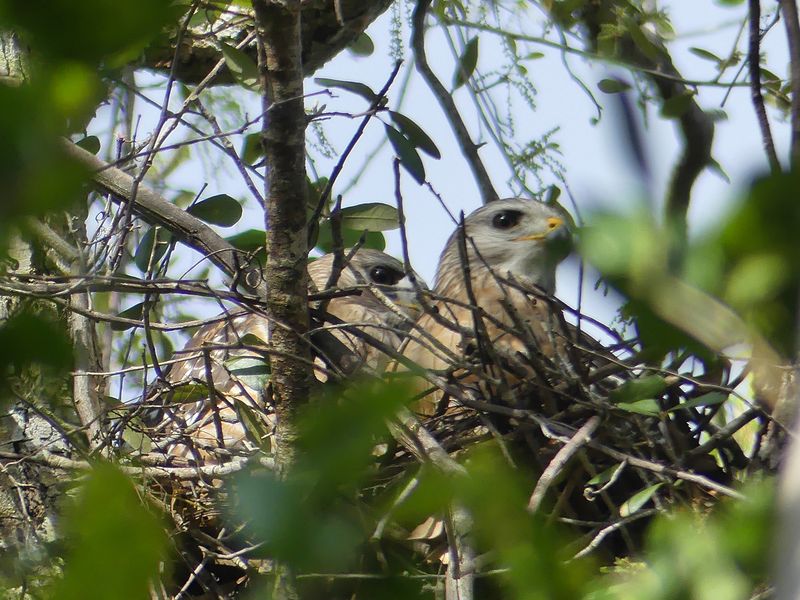
That damp corner where other trees struggle could be the best spot for a bald cypress. Native to Florida wetlands, it tolerates seasonal flooding and offers a tall perch above the water’s edge.
A yard beside a pond, ditch, or natural swale is a better match than a tiny dry courtyard.
Its fine, feathery leaves give the tree a lighter look than many broadleaf shade trees. Bald cypress drops its foliage in the cooler part of the year, opening up views through the branches.
In suitable wet ground, it may also form woody root projections called knees, so allow room where they will not interfere with mowing or walking.
Red-shouldered hawks often use wooded areas near water, where they can hunt a range of small animals. A cypress beside an open bank offers a place to watch that busy edge, although a hawk’s prey will vary by location and season.
Planting one tree will not turn a yard into a guaranteed rodent-control service.
Set a young cypress where its mature height will not conflict with power lines, and water it during establishment if rainfall is scarce. Keep pond edges free of loose trash and avoid rodent poison: poisoned prey can harm the very birds you hope to see.
4. Red Maple
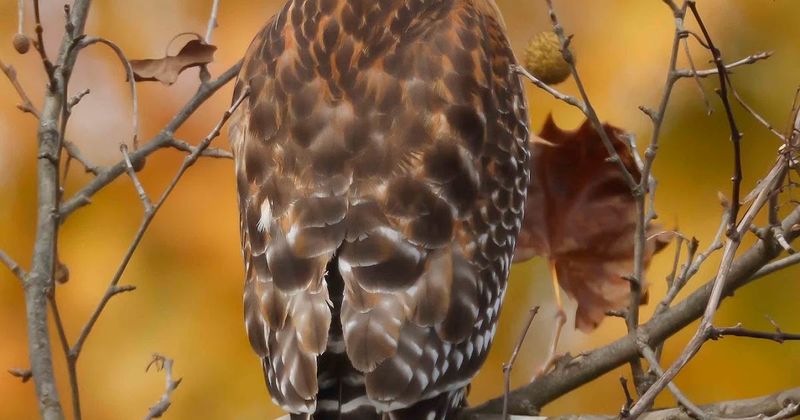
Early color is red maple’s little bonus. Its red flowers and new growth can brighten a Florida yard before many other trees draw attention, while its branches add another possible hawk lookout.
Choose it for a place with dependable moisture, not a strip of baking sand that rarely gets watered.
Florida’s native red maples are commonly found in wet woods and along waterways. In a home landscape, a moist low spot or pond edge generally suits them better than an exposed, drought-prone front bed.
Check the tree’s expected mature size and give it enough clearance from buildings and utility lines.
A maple near an open patch can help create the mix of cover and visibility that a red-shouldered hawk uses while hunting. The tree does not attract hawks by itself; nearby habitat, available prey, and a safe place to land all matter.
Keep some ground visible from the branches rather than letting vines overtake the entire crown.
Before blaming snakes for a yard problem, remember that many harmless species eat rodents themselves. If you spot a snake, keep children and pets back, and contact a qualified local professional if you cannot identify it or need it removed.
Skip glue traps and poison, which can injure wildlife without fixing the food sources that drew rats in.
5. Sweetgum
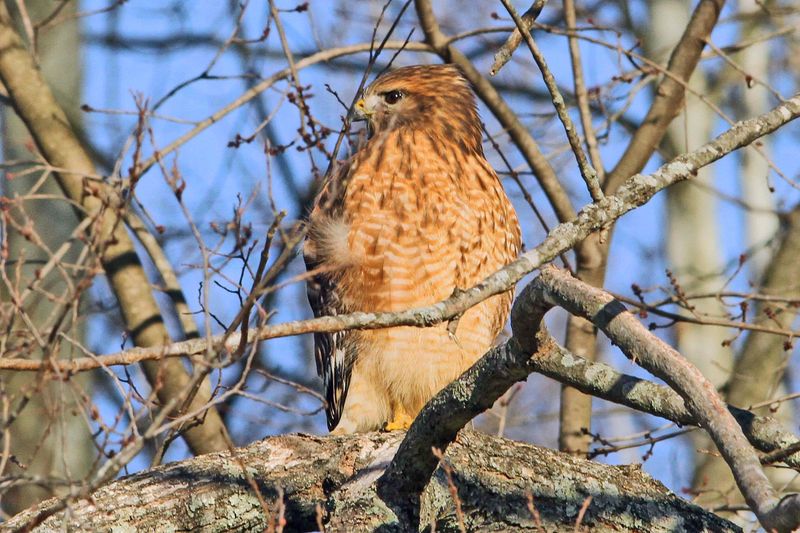
Sweetgum brings a different shape to the list: a tall trunk, an upright crown, and star-shaped leaves that are easy to recognize. On a large property, it can add height along a yard’s wooded edge without needing the enormous spreading crown of a live oak.
A high branch with a view across grass may give a hawk a useful stopping point.
Before planting, look down as well as up. Sweetgum produces spiky seed balls that can be unpleasant under bare feet and troublesome on a patio or driveway.
Put the tree where fallen fruit can stay in a mulched or natural area rather than landing beside a play space.
American sweetgum is native to Florida and is a better fit for sites with adequate moisture than for the driest, most exposed patches of sand. Water a young tree while its roots establish, and leave room for its mature height.
A mixed edge of trees and open ground can be appealing to red-shouldered hawks, but their presence depends on more than any one species.
For practical rat control, close gaps around outbuildings and clear food scraps from outdoor eating areas. If a hawk starts visiting, enjoy the view from a distance and let it hunt on its own.
Do not expect it to take every animal you consider a pest.
6. Slash Pine
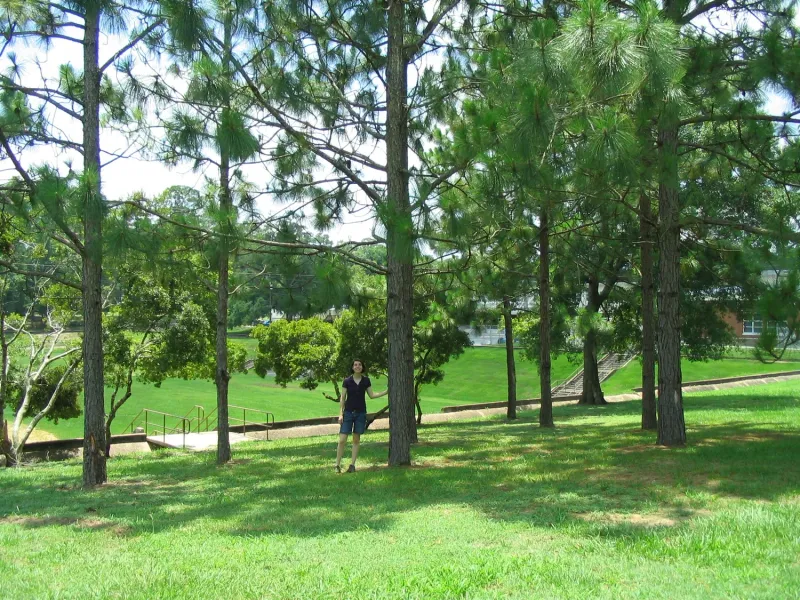
A sandy, sunny lot calls for a tree that belongs there. Slash pine is native across much of Florida and can suit sites where a moisture-loving maple would have a hard time.
As it matures, its tall trunk and upper branches can create lookout spots above a more open yard.
The catch is space. Slash pine grows into a large tree, drops needles and cones, and should not be squeezed against a house or under power lines.
Check local planting guidance and keep a young tree watered during establishment, even if the species is well suited to your site once rooted.
Red-shouldered hawks are often associated with woods and wooded edges, not bare lawns with a lone pole-like tree. A slash pine is most useful here as part of a broader landscape with other trees and a visible hunting area nearby.
Keep the ground below manageable so prey movement can be seen, but avoid stripping a healthy yard of every native plant.
Think of the pine as long-term habitat, not an instant pest fix. Pick up fallen pet food, keep compost free of meat scraps, and protect small pets when hawks are around.
If branches or the trunk show storm damage, ask a qualified arborist to inspect the tree rather than making risky cuts yourself.
7. Southern Magnolia
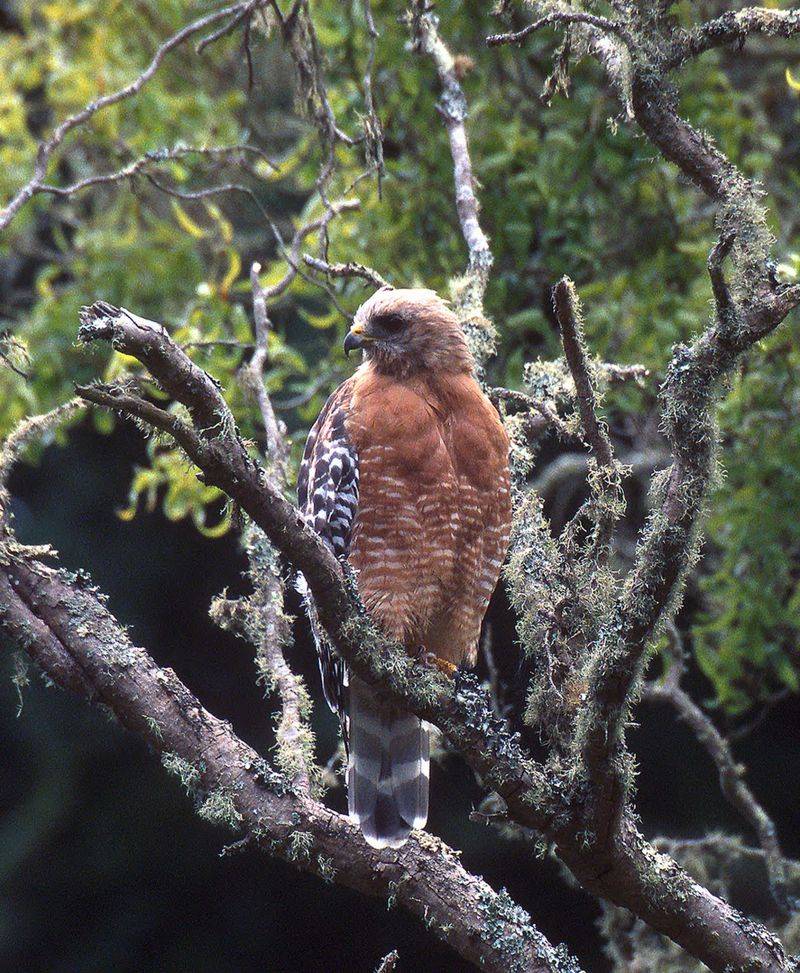
Glossy leaves and big white flowers make southern magnolia the showpiece of this group. It can also offer sturdy branches and year-round cover, especially in a generous yard where the crown has room to develop.
For a hawk, an outer limb facing open ground is more useful as a lookout than the tree’s dense interior.
Southern magnolia is native to Florida, but do not mistake it for a tidy, narrow accent tree. It can grow large and shed leaves, flower parts, and seed structures through the year.
Give it plenty of room away from the house, and let fallen leaves form mulch beneath the canopy where that fits your landscape.
Dense evergreen foliage can provide shelter, while a nearby open area gives a hunting hawk a view. That pairing matters more than the flowers: red-shouldered hawks come for suitable habitat and prey, not blooms.
Position the tree where its mature branches can spread safely, and avoid pruning away healthy limbs simply to make it look like a perch.
After planting, water deeply while roots establish and check soil moisture rather than watering on a rigid schedule. To make the yard less inviting to rats, secure garbage lids and remove fallen fruit from other plants nearby.
A visiting hawk is a welcome wildlife sighting, not a substitute for those simple steps.