
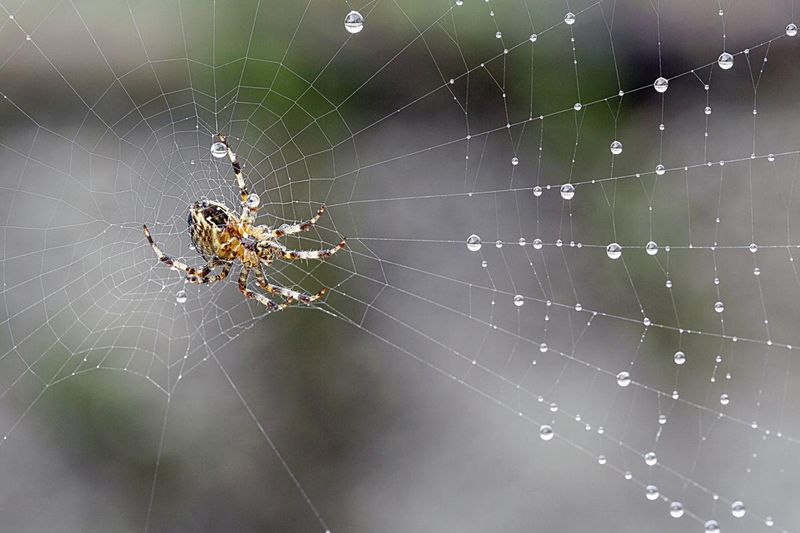
Walk out your door in late summer or fall and you may run into silk strung across the shrubs. It is easy to wonder if the yard has been taken over or if all those webs mean something good or bad.
The truth is more down to earth, and a few simple clues can tell you what you are looking at. Once you know them, deciding what to do takes about a minute.
Fall visibility is not proof of a population boom
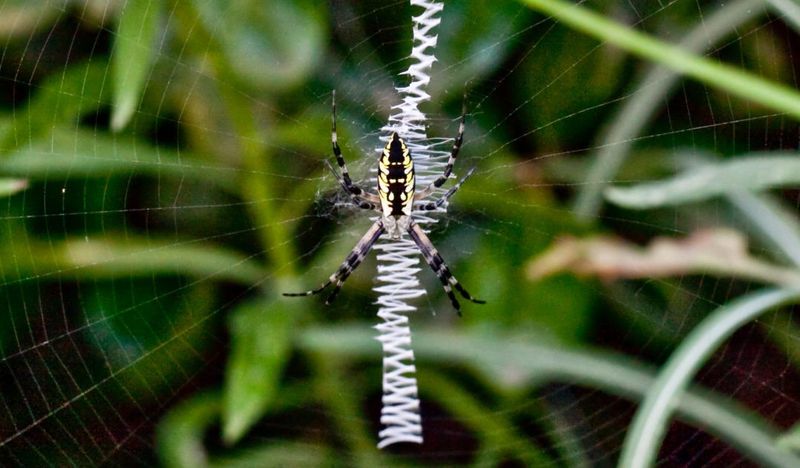
Late summer is when many North Carolina homeowners first spot a black-and-yellow garden spider. By then the spider has grown to its full size, and its big round web is hard to miss.
NC State Extension notes that these spiders mate in late summer or early fall, then lay egg sacs, and that they have one generation per year.
That timing explains a lot. A spider that hatched in spring has had months to grow, so the same animals that were tiny and tucked away in June are now large and out in plain view.
Fall is also when mating and egg laying keep them active and exposed on their webs.
Being easier to see is not the same as being more numerous. Nobody has published a statewide count showing that North Carolina spider numbers jumped this fall, so a claim about a spider boom has nothing solid behind it.
What you are most likely seeing is a familiar seasonal pattern in which bigger, more visible spiders appear right on schedule.
Think of it like leaves changing color. The color is real and noticeable, but it tells you about the calendar, not about a sudden change in the number of trees.
The same goes for webs in your shrubs this time of year.
The eggs overwinter in a silk case, and the young spiders emerge the following spring. That means the spiders you see now are finishing a yearly cycle, and the next round is already tucked away for winter.
What a web can—and cannot—reveal
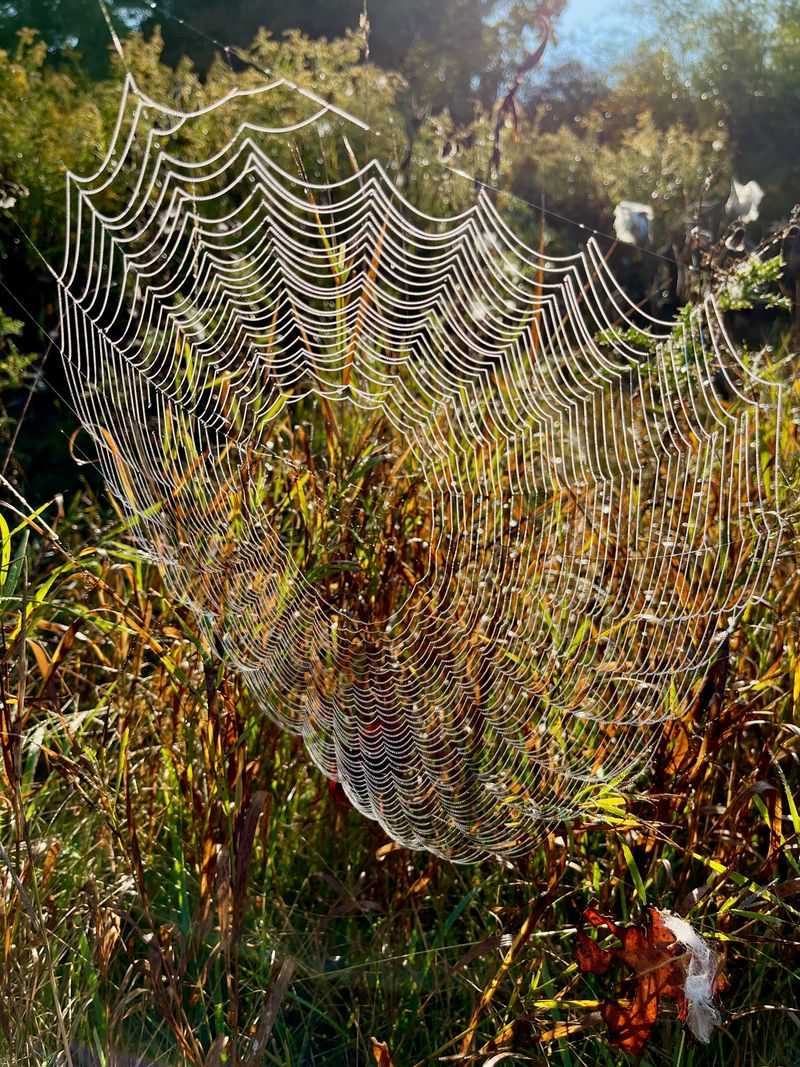
An orb web is a capture tool. Its sticky spiral catches flying insects, and the spider feeds on what lands in it.
That much is simple, but where a spider hangs that net depends on more than hunger.
Research on orb-weavers shows that different species use different parts of the vegetation, build at different heights, and catch different prey. A spider needs solid anchor points, such as twigs, stems, a fence, or a porch rail, to stretch its frame lines.
Where those anchors exist, webs can show up.
Prey resources matter too, but they are only one piece. In a study of forest plots, web abundance followed the vegetation structure available for anchoring, and plots with more prey did not necessarily hold more web-building spiders.
So a web in your azalea or holly tells you that a spider found a workable spot, and it may hint that insects pass nearby. It cannot tell you how many insects are flying around your yard right now or how plentiful prey is.
One web is a single snapshot, not a measurement.
If you want a practical read on a web, look at its setting. Is it stretched between two branches with open air around it?
Is it tied to your gutter or mailbox? Those details say more about anchors and structure than about insects.
A web count is not a yard-health test
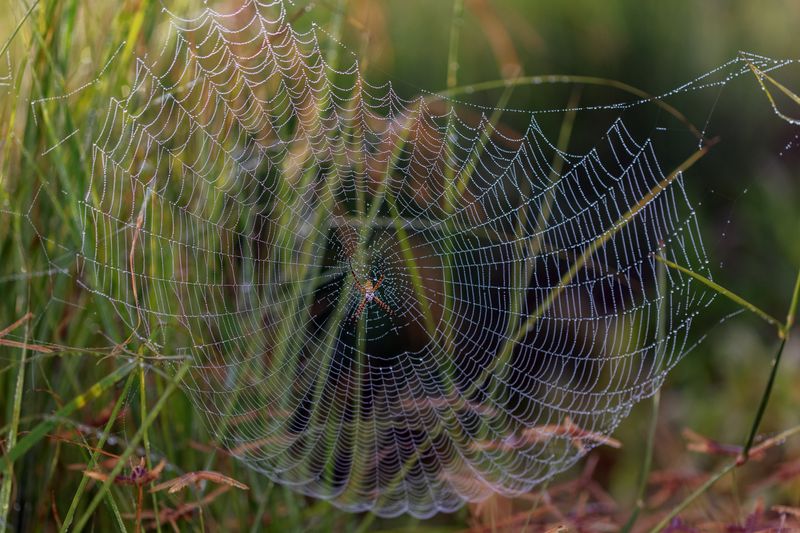
It is tempting to count webs and treat the total like a grade. Ten webs, healthy yard.
Two webs, something is wrong. That shortcut does not hold up.
Scientists do study spider communities as a way to track biodiversity. A recent review in Biological Reviews on the roles spiders play in ecosystems describes these uses, but says broad, long-term monitoring applications still need testing.
Trained researchers use set methods across many sites and many seasons, which is a long way from one homeowner glancing at one hedge.
The same goes for what a single web means. Anchor spots, plant structure, and species all shape where silk appears, and the forest study mentioned earlier found that simplifying vegetation structure reduced web-building spider abundance.
A bare, tidy yard and a layered, leafy one can look very different to a spider, even if neither is better by any other measure.
A more useful way to judge your yard is to look at things you can actually see: plant vigor, soil, water, and how much shelter and variety you have. Webs can sit alongside those clues, but they should not replace them.
If you like the idea of a spider-friendly yard, leaving a few shrubs and perennials standing gives silk-spinners places to build. Just treat that as a bonus, not as a score.
Not every silk-covered branch belongs to a spider
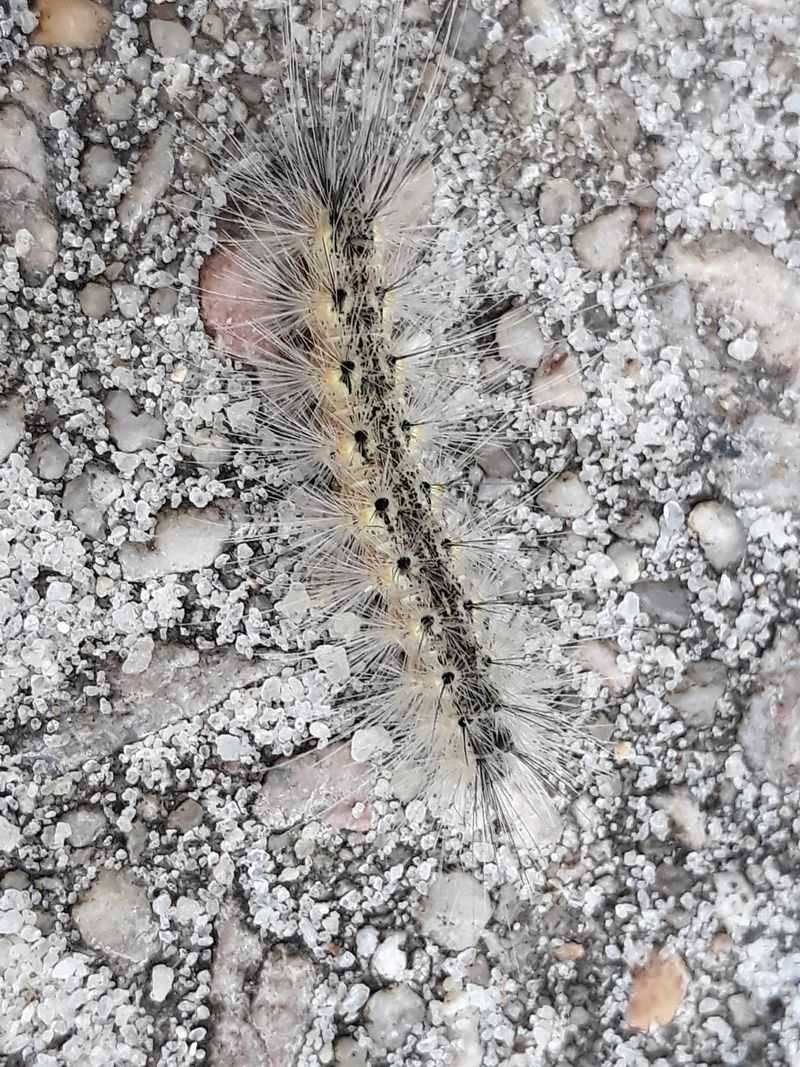
Silk on a branch does not always mean a spider made it. Around the same time orb webs appear, fall webworms spin their own nests, and the two look quite different once you know what to check.
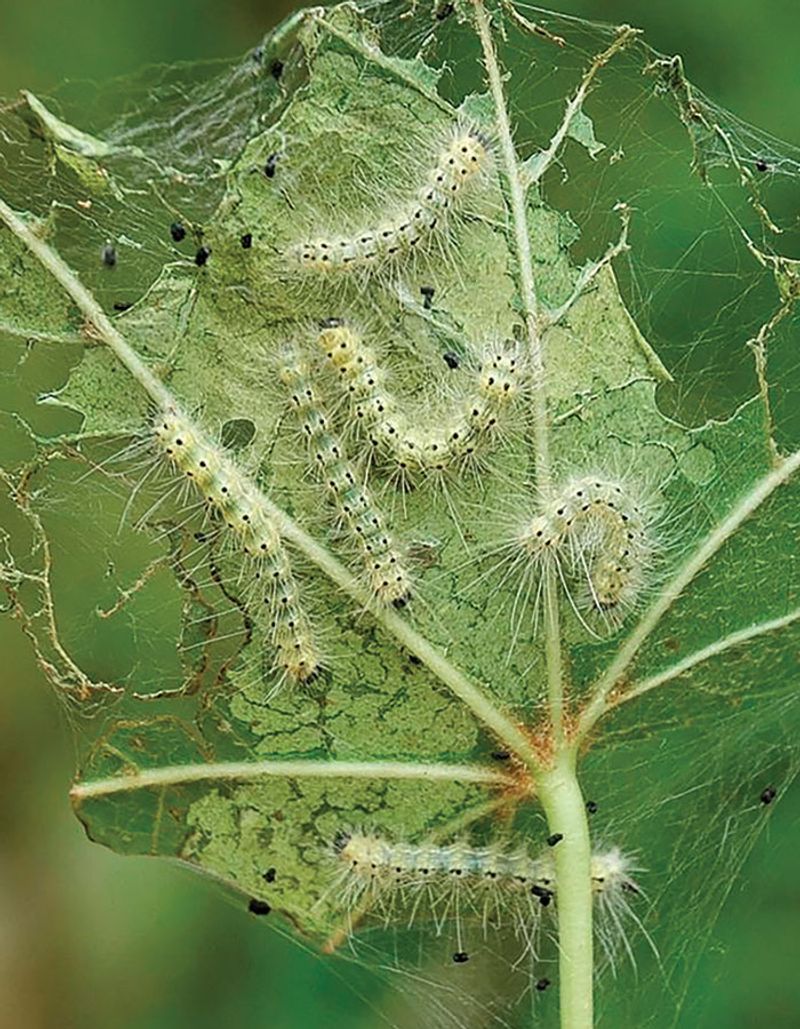
An orb-weaver builds an individual capture web, usually a flat wheel of spokes and spirals with open space around it. A fall webworm nest is a silken tent that wraps around leaves and the tips of branches.
N.C. Cooperative Extension describes these tents as often containing caterpillars, and you may see chewed leaves inside the mass.
A quick test is to ask whether the silk encloses foliage or hangs in open air. A tent full of leaves and caterpillars points to webworms.
A neat wheel with a spider sitting in or near it points to an orb-weaver.
Webs among shrubs can also belong to orb-weavers other than the one you may have heard about. NC State says black-and-yellow garden spiders usually build in fairly open areas rather than dense shrubs.
A web in your hedge may belong to another species, or it may span from the plant to a nearby wall, fence, or post.
Stick to what you can see, such as the shape of the silk, what it encloses, and whether caterpillars are present. Guessing the species from a distance is rarely worth it.
Spiders are predators, not guaranteed pest control
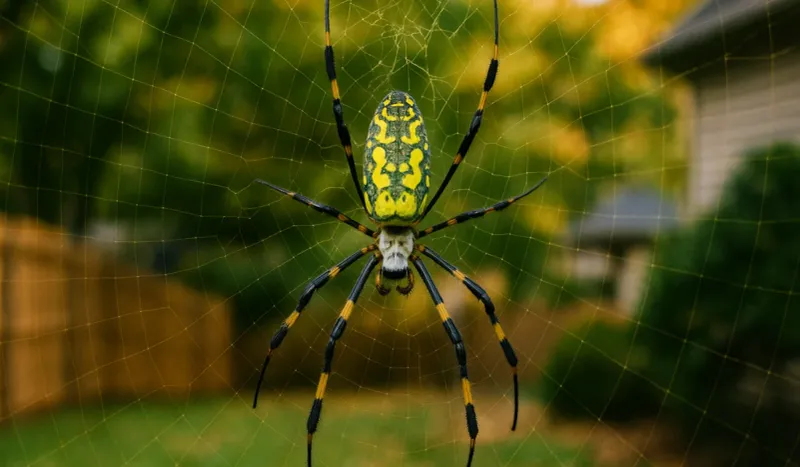
Orb-weavers earn their keep by eating insects that blunder into their webs. NC State Extension considers spiders beneficial in gardens, and it is fair to think of them as part of the yard’s cast of predators.
That said, the benefit is general and modest. A web catches whatever happens to fly into it, and nothing here promises that spiders will cut down mosquitoes, ticks, or all garden pests.
Ticks, for instance, are not flying into orb webs, so spiders are not a tick plan.
It also does not work in reverse. A web full of insects does not prove you have a bad pest problem, and an empty one does not prove you have a healthy yard.
The silk only shows that a spider chose that spot.
For pests you actually worry about, use the steps that target them, such as clearing standing water for mosquitoes and keeping grass trimmed and leaf litter managed near play areas for ticks. Spiders can sit alongside those habits as one more small helper.
Treat them as neighbors that do some useful work, not as a service you can count on.
Leave the spider alone—or move the web gently
Most webs in shrubs are fine to leave right where they are. If one is not in anyone’s way, the spider will likely finish its season and move on.
NC State describes black-and-yellow garden spiders as nonaggressive and says no control is needed, though a bite is possible if one is handled carelessly. Skip picking up any spider you cannot identify.
If a web sits across a doorway or walkway, a broom or a burst of water from a hose is an adequate way to remove it. Keep your hands out of it and let the spider drop away.
It will probably rebuild somewhere less inconvenient. Outdoor pesticide sprays aimed at spiders are generally unnecessary.
If what you found is a webworm tent, the approach changes a little. Extension suggests opening the web or pruning off the affected branch tip if you decide to act.
Damage on established trees is often cosmetic.
Insecticides are usually unnecessary for webworms too, according to NC State Entomology. Identify first, then pick the lightest fix.
Read the webs as clues, not a verdict
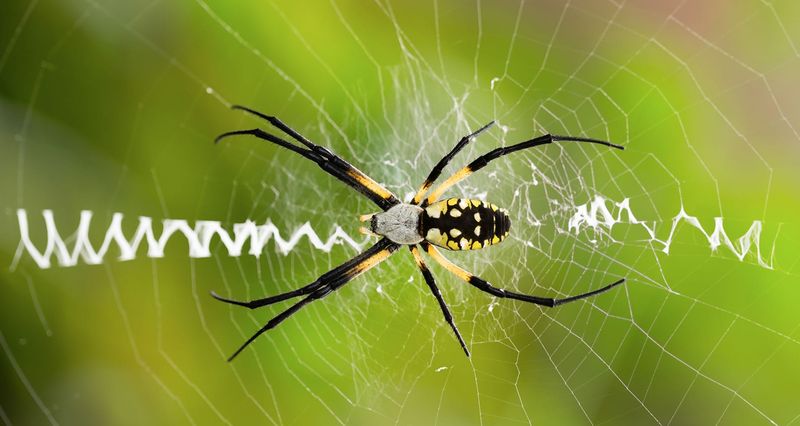
Fall webs usually point to good timing and a workable place to build, such as the seasonal pattern described for black-and-yellow garden spiders. Researchers are still testing how far spiders can serve as indicators of ecosystem health, so one web cannot diagnose your insects or your yard.
Look closely at the silk first, then decide whether to leave it or move it. A web is a small sign that something lives here, nothing more.