
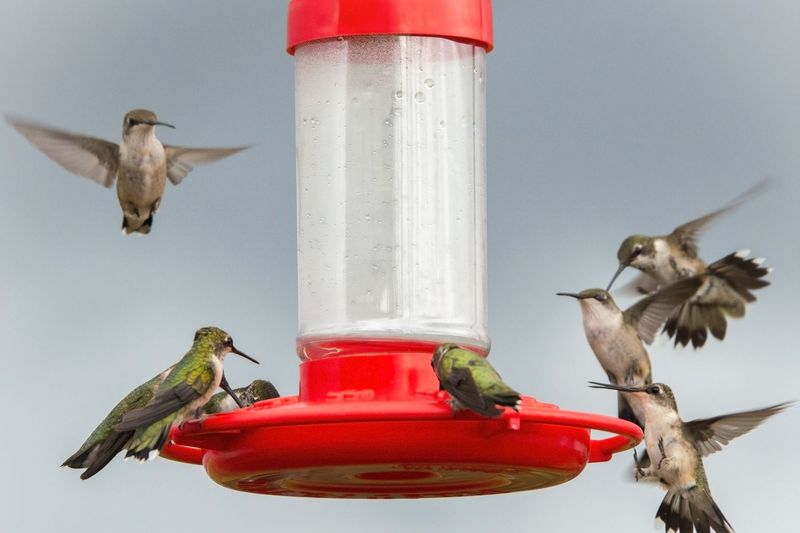
Watch a single hummingbird feeder in early fall and you may see one tiny bird chase off every visitor. That bully act gets worse when migrants are passing through and everyone is hungry.
A smarter yard layout can make it harder for one bird to rule the whole buffet. Here is how to set up feeder stations in a Southern yard, keep the nectar safe, and know what to expect.
A crowded feeder gives a territorial bird one place to defend
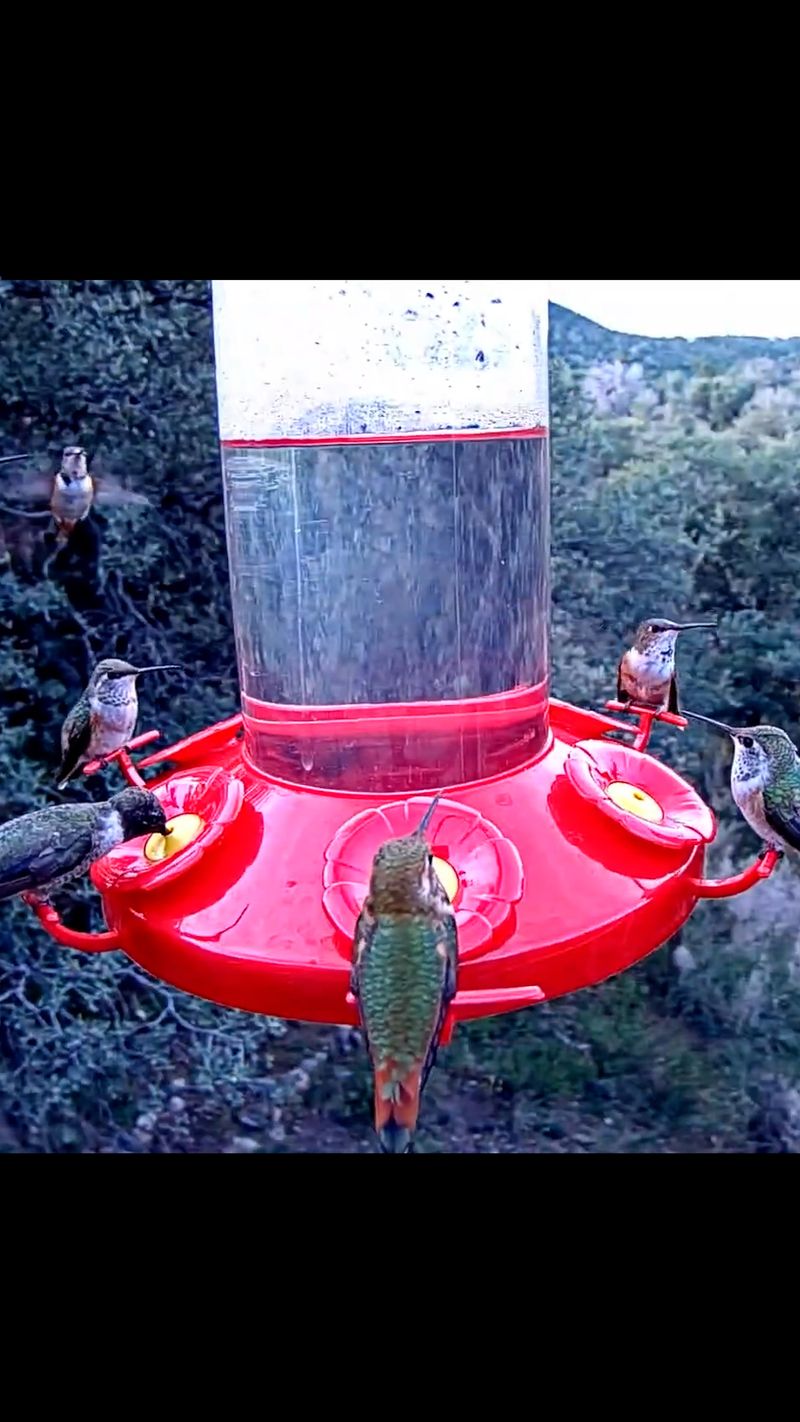
Hummingbirds are not shy about guarding food. As Cornell Lab’s All About Birds explains, they chase rivals away from flowers and feeders, so one feeder can turn into a prize worth fighting over.
In Texas, the ruby-throated hummingbird is described as extremely territorial. Texas Parks and Wildlife notes that large numbers of these birds move through the state in fall and gather along the coast before crossing the Gulf.
That is the rush behind many busy feeders in Texas yards, especially near the coast.
Do not assume the same timing or crowds in every Southern yard. Florida and inland areas may see a different pattern.
A single feeder makes guarding easy, because one bird only has to watch one spot. Several stations placed apart can make that job harder.
It will not end every chase, but it gives other birds more chances to slip in and sip.
Place feeder stations in separate parts of the yard
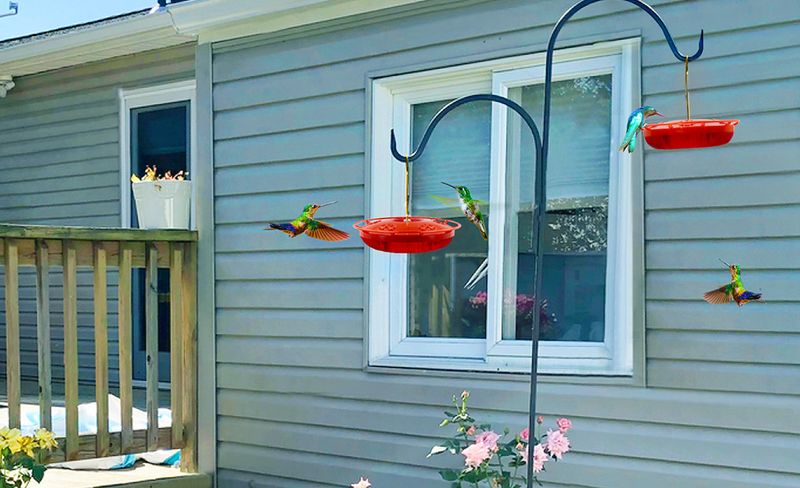
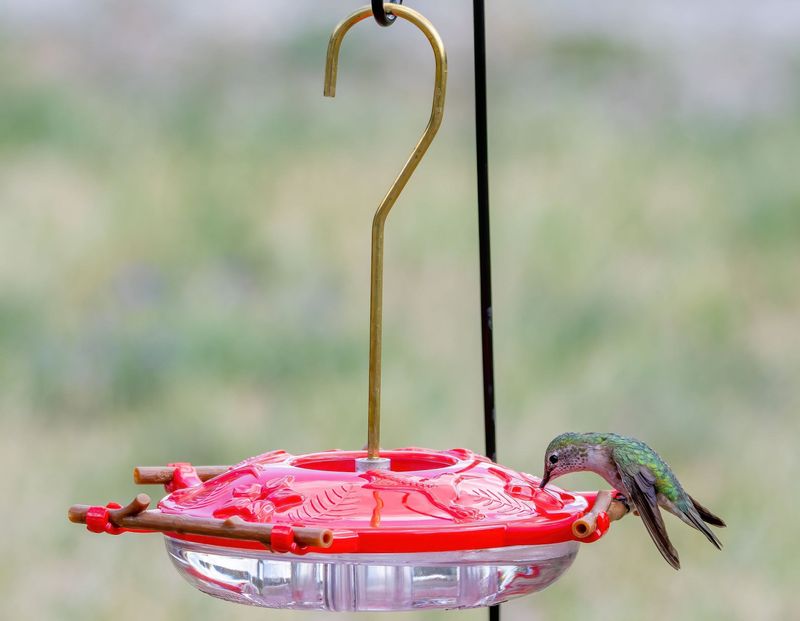
Start with more than one feeder, and use small ones rather than a single big one. Hang them in different zones, such as the front porch, a back corner, and the edge of a flower bed.
Putting three feeders on one hook gives you three feeders but still only one place to defend.
Audubon’s yard guidance points to spacing feeders so the birds cannot see each other. That idea matches what Cornell Lab describes about dominant birds guarding what they can watch.
Feeders that sit close together may not help much if one bird can perch in a tree and keep an eye on every one. A pushy hummingbird may still patrol several stations.
The realistic payoff is less chance for one bird to monopolize your yard. Treat it as a smart experiment, then adjust based on what you see.
Break the line of sight between feeders
Think about what a hummingbird can see from its favorite perch. If it can look across the yard and spot every feeder, it can guard them all.
Your goal is to take that view away.
Use what your yard already has. A corner of the house, a garden wall, a thick shrub, or a trellis can all block the view.
Hang one feeder on the sunny side of a fence and another around the corner on the opposite side of the house.
Walk the yard and stand near each feeder. If you can see the others easily, a hummingbird probably can too.
Move one until a barrier sits between them.
This follows the Audubon advice to keep feeders out of each other’s sight, in line with Cornell Lab’s note that spreading them out helps. A barrier can make guarding harder, but it will not guarantee calm.
Ten feet is a starting point, not a magic distance
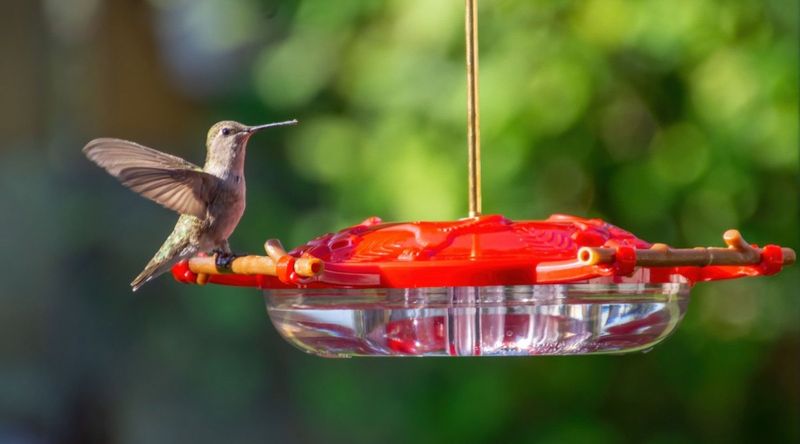
If you want a number, UF/IFAS Extension recommends Florida feeders be at least 10 feet apart. That is a handy Florida reference, not a rule that fits every yard or species.
Distance alone can fall short. Ten feet across an open lawn still lets one bird watch both feeders.
Ten feet with a hedge or a house corner between them works differently.
You may also see 15 feet mentioned in some bird advice, but no one has shown that it is a guaranteed threshold. Audubon’s yard advice focuses on spacing feeders until birds cannot see one another.
Use 10 feet as a place to start, then put your effort into separation and blocked views. Chases may still happen.
Keep each station clean and stocked with safe nectar
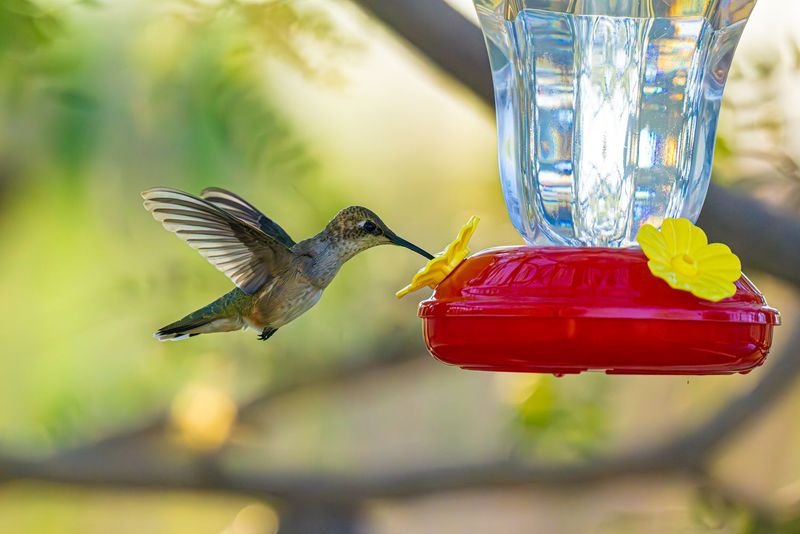
Mix 1 part plain white granulated sugar with 4 parts water. Skip honey, artificial sweeteners, and red dye, and do not make the mix stronger.
UF/IFAS warns that substitutes, honey, or sweeter mixtures can be dangerous to the birds.
Southern heat spoils nectar fast, and sources give different schedules. UF/IFAS lists a range of days between changes, and more often in heat or direct sun.
A careful approach is every 2 to 3 days, and daily in particularly hot conditions. Audubon also says to clean a feeder right away if the nectar turns cloudy.
Clean with hot water and a brush, follow the maker’s instructions, and rinse well. Bleach is not needed.
With several feeders, use smaller amounts so less nectar goes to waste. Feeders are only a snack, so plant nectar-producing flowers too.
Feeders can stay up through migration
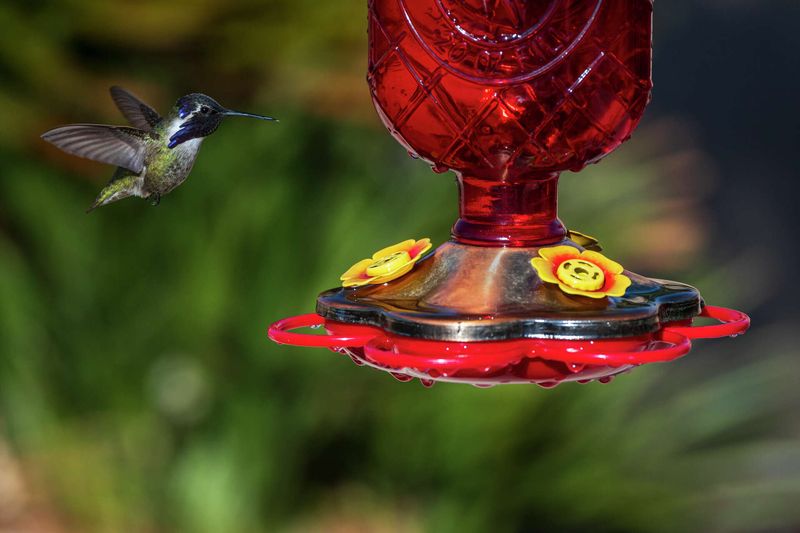
Many gardeners worry that a feeder will make hummingbirds linger past their travel time. Cornell Lab says feeders do not stall migration.
Birds leave when changing daylight and instinct tell them to go.
Texas Parks and Wildlife agrees and, in its nongame wildlife FAQ, suggests leaving feeders up for two weeks after the last hummingbird is seen. That is Texas advice, not a fixed rule for every Southern location.
Late travelers may stop for a quick refuel, so keep any feeder you leave out fresh and clean. Cloudy nectar helps no one.
A better layout may make monopolizing harder
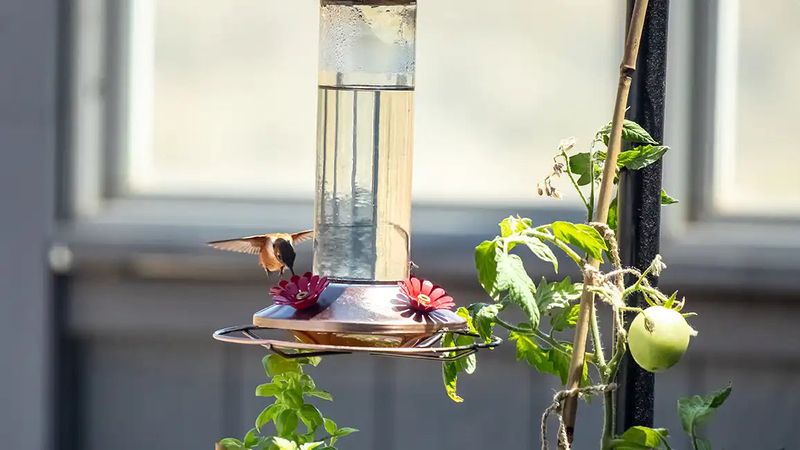
Spread your feeders into separate parts of the yard, block the view between them with shrubs, walls, or corners, and treat any distance as a starting point. Keep the nectar fresh, and the layout has its best chance of working.
Audubon’s guidance backs the same basic idea.
The payoff is modest but real: one bird may find it harder to guard every station. Hummingbirds are still hummingbirds, so some chasing will likely continue.
A bully can rule one feeder, but it has a hard time ruling a yard full of corners.