
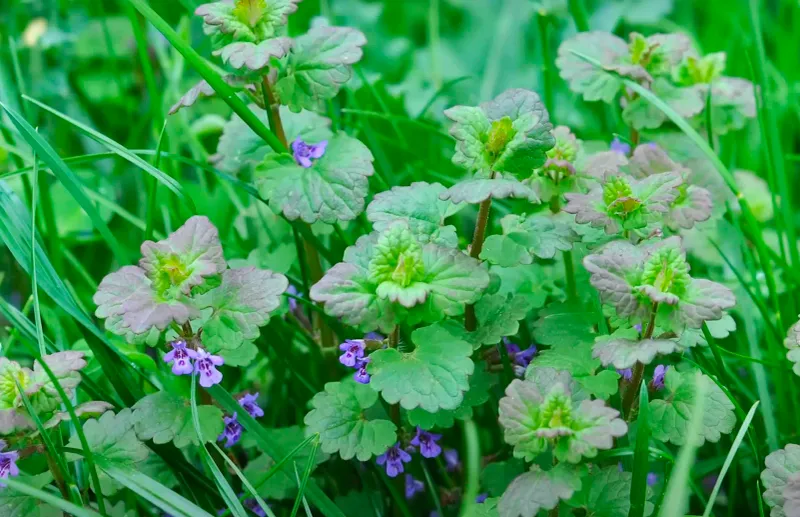
Those purple-topped weeds that suddenly carpet your lawn in spring did not appear overnight. Henbit starts its life months earlier, when the weather cools and the soil is quiet.
Timing a preventive product for that early stage may cut down the number of seedlings, but it is not a magic switch. Here is how to read your local clues, pick a product the right way, and know what to do about the plants you can already see.
Henbit’s spring appearance starts with a winter-annual cycle
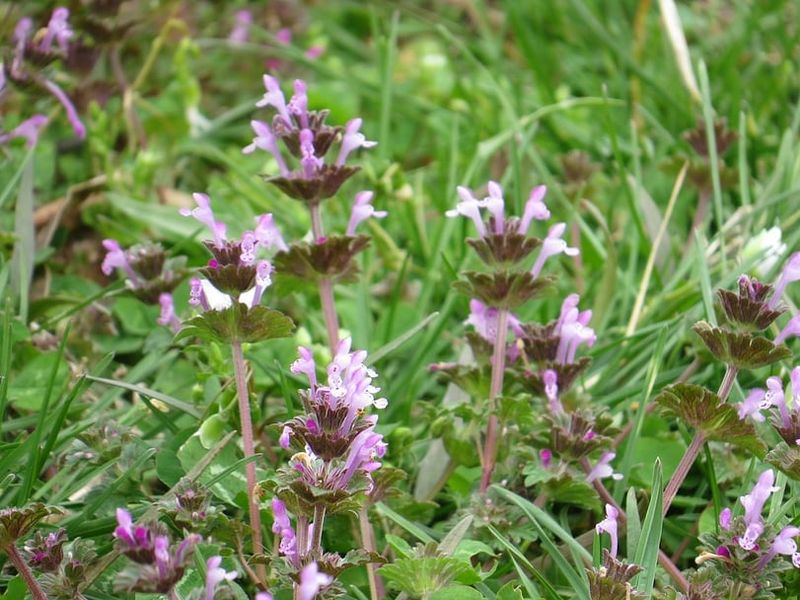
Spring is when henbit gets noticed, but spring is not when its story begins. University of Maryland Extension describes henbit and common chickweed as winter annuals.
That means they typically sprout in early fall or sometimes early spring, grow through the cooler months, and flower in spring.
This explains why your lawn can look clean in autumn and still be crowded by March. The seedlings may be tiny and easy to miss while turf is still green, then they bulk up and bloom when days warm.
By the time the purple flowers show, the germination window has already come and gone.
Texas A&M AgriLife lists a fall preemergence treatment as one option for henbit and chickweed. Keep in mind that local populations do not all follow an identical schedule.
Your neighbor’s yard and yours may sprout a few weeks apart, so watch your own lawn and your own weather.
A missed fall treatment is only one possible contributor
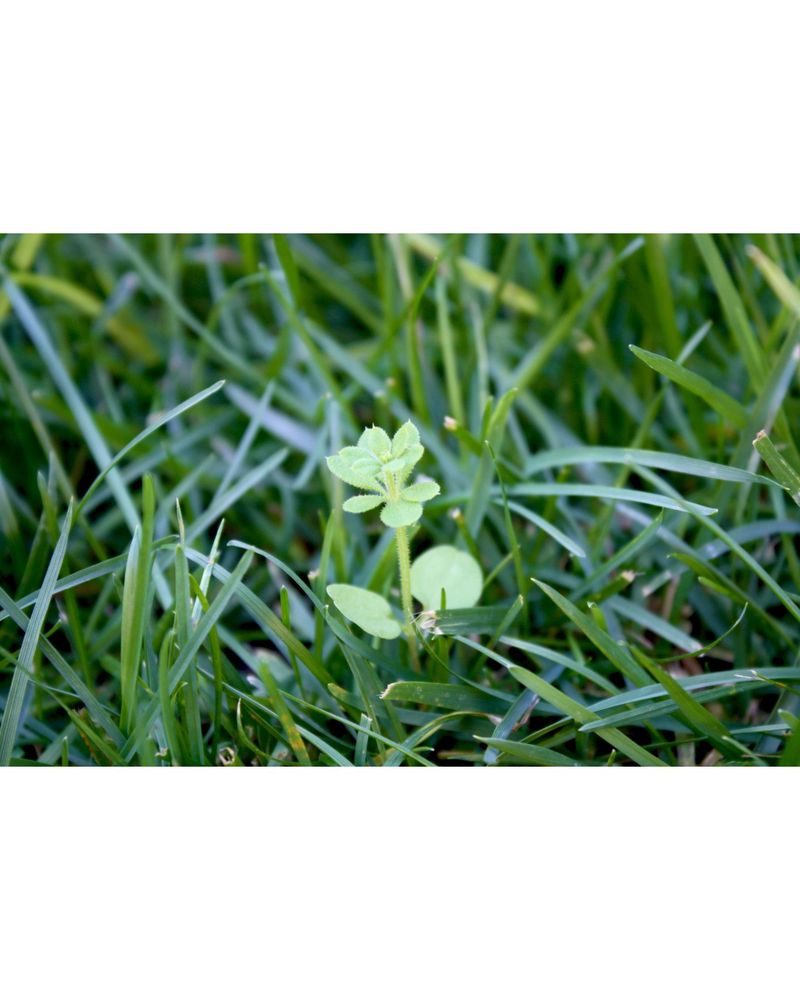
If henbit returns every year, a missed or badly timed fall application may be part of the reason. When prevention fails, a group of seedlings can emerge and grow unchecked all winter.
That is a real possibility, but it is not proof that timing caused every recurring infestation.
Other factors matter too. Henbit that dropped seed last year leaves a supply in the soil, and Iowa State Extension notes that weed seeds can stay viable for years.
It also points out that timing winter annuals is tricky enough that homeowners may not get good control from preemergents.
Turf condition plays a role as well. Maryland Extension says dense turf helps compete against henbit, so thin or stressed grass leaves open space for seedlings.
One well-timed application can reduce a year’s seedlings, but it does not empty the seed bank. Expect improvement over several seasons rather than a single clean sweep.
Use local conditions, not a universal October deadline
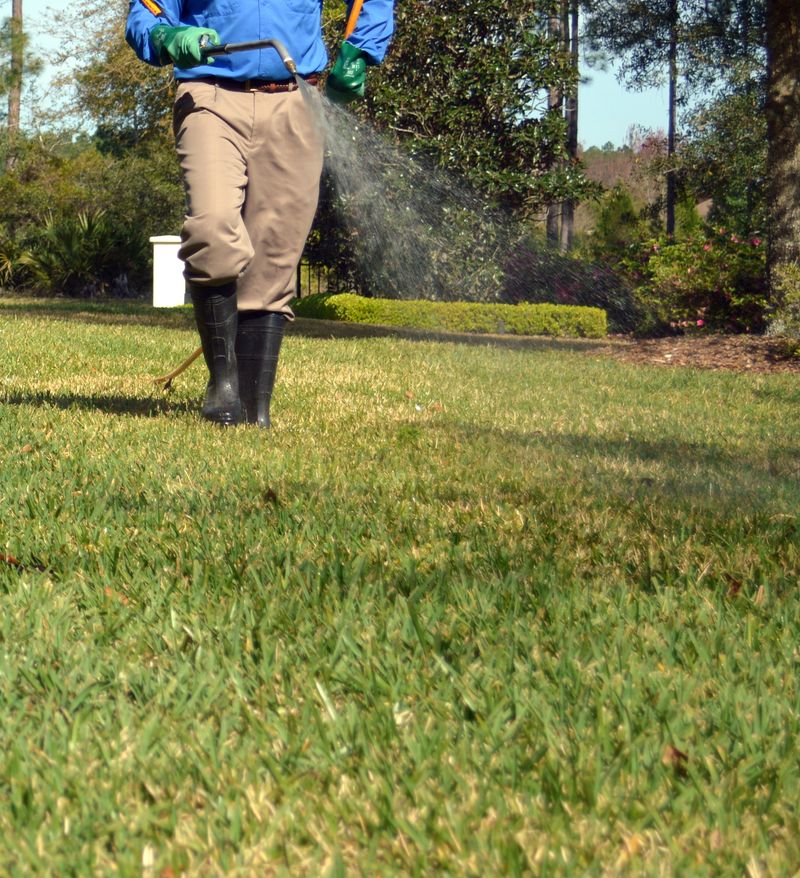
October works as a timing hint in some places, but it is not a deadline for the whole South. UF/IFAS guidance ties winter-weed timing to nighttime temperatures around 55 to 60°F for several nights in a row.
That points to early October in north Florida, and late October to early November in central and south Florida.
Texas works differently. Texas A&M AgriLife gives about 70°F soil temperature as a general guide for fall applications, and says timing shifts by several weeks with region and weather each year.
That 70°F number is based largely on annual bluegrass germination. It is a handy general guide, not a henbit-specific trigger.
So check your county extension office, watch your own nighttime lows or soil temperatures, and plan around this year’s weather instead of the calendar page.
Check the label before choosing or applying a preemergent
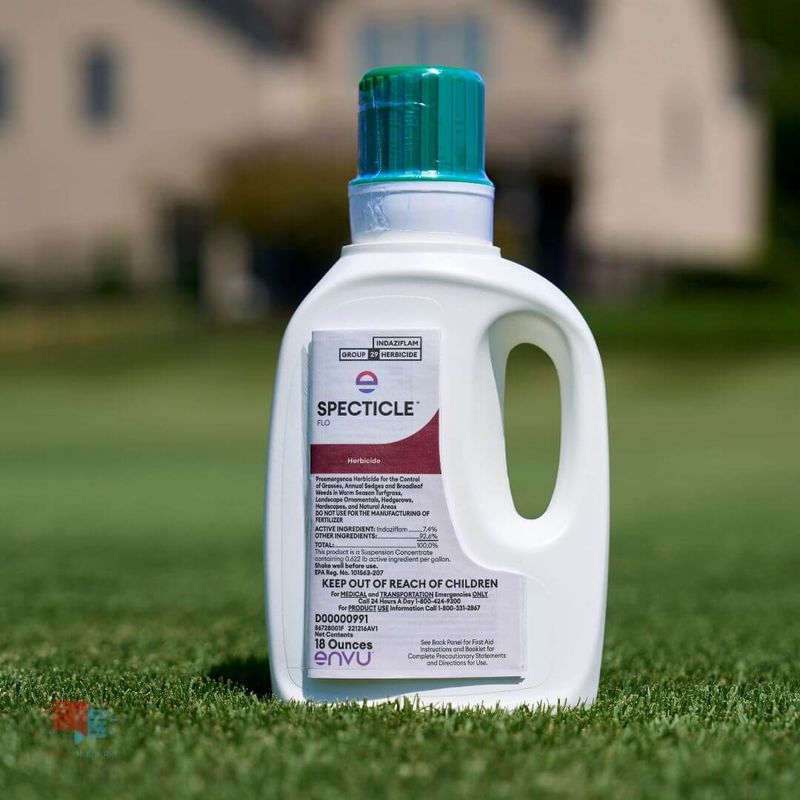
Walking down the garden aisle, you will see many bags promising weed prevention. A label that says preemergent or crabgrass preventer does not mean the product controls henbit.
Read it for henbit or chickweed by name, and confirm that your turf species is listed.
Then look at the rate, the watering directions, and the precautions. UF/IFAS notes that most products need irrigation or moderate rain to activate, and that too little or too much water can reduce performance.
Conditions matter too. Texas A&M says performance varies with timing, rain, and weather.
Its homeowner guide advises against use on moderately to severely stressed turf and asks you to consider soil, slope, and nearby water.
If you plan to seed or overseed, be careful. Preemergents can block lawn seed from sprouting, so follow the waiting period printed on your label.
Treat visible henbit as an emerged weed
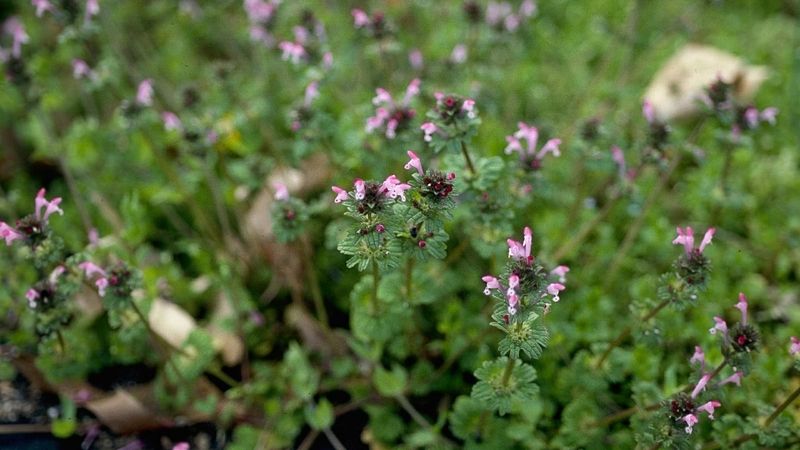
Already seeing henbit? Then prevention has passed for those plants.
Preemergents act on germinating seedlings, and Texas A&M guidance makes clear they do not control weeds that have emerged.
For a small patch, hand removal is a reasonable choice. Maryland Extension lists hand-pulling young plants as an option, and it is easiest after rain softens the soil.
Pull before flowers set seed so you add less to next year’s supply.
For larger areas, you may consider a postemergence product. Choose one labeled for both your lawn grass and for henbit, and follow its rate, timing, and safety directions.
No single ingredient is safe for every Southern lawn, so the label for your turf is the deciding document.
Treating visible weeds is cleanup. Prevention is a separate step for next fall.
Build dense turf and set realistic expectations

Thick grass is a quiet weed barrier. Maryland Extension says dense turf competes against henbit, and cautions that mowing too short and improper fertilization can favor it.
Mow at the height recommended for your grass and feed based on a soil test or local advice.
Here is a simple plan. Check local timing guidance in early fall, choose a labeled product that fits your weed and turf, and apply it as directed to healthy grass.
Then reassess in spring and pull or treat any plants that slip through.
Keep expectations honest. Texas A&M lists fall preemergence as an option, and Iowa State warns control can be imperfect.
Prevention may reduce later emergence but cannot guarantee a henbit-free lawn.
A few stray purple flowers are a sign to adjust next year, not a failure.