
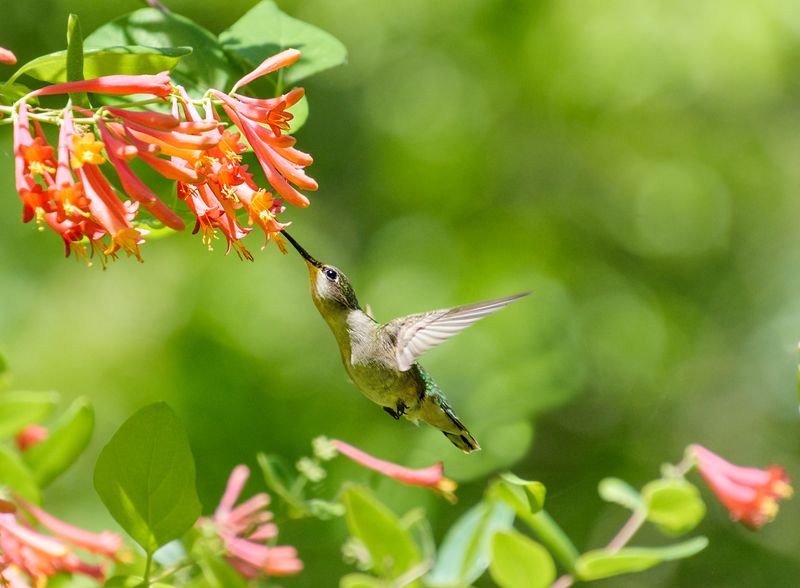
A bare fence can do more than hold up a property line. Coral honeysuckle is a twining vine with red, trumpet-shaped flowers that hummingbirds are known to visit.
Texas gardeners often train it onto a trellis to add color and a little nectar to the yard. Here is how to use it well, and what to expect from it.
A supported vine for a fence or trellis
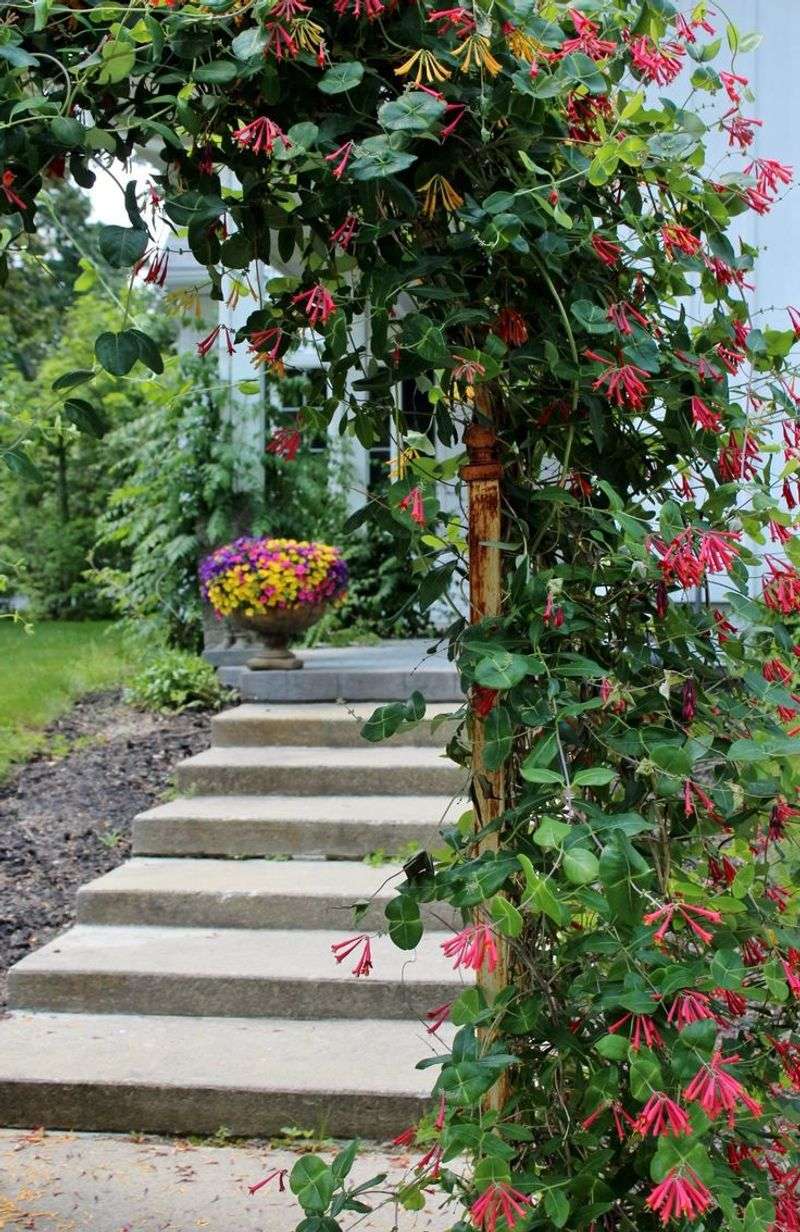
Coral honeysuckle, known by its botanical name Lonicera sempervirens, is a twining vine that wraps its stems around whatever it can reach. That makes it a good match for a fence, a trellis, or an arbor where you want vertical greenery and flowers.
North Carolina State Extension gives a typical height of 10 to 20 feet.
The vine will not hold itself up. Without a structure, it sprawls across the ground or climbs whatever shrub is nearby.
UF/IFAS says the stems may reach about 15 feet and recommends training it on a trellis or arbor.
Plant it with a plan for where it will climb. A wire panel, a lattice, or a set of strings against a fence gives the stems something thin to grab.
Texas is a big state, and this vine is native to parts of it, not necessarily every ecoregion. Texas Parks and Wildlife lists it for the Edwards Plateau, for example.
If you garden somewhere else, check local guidance before you buy.
Do not expect instant coverage. A young vine takes time to fill a structure, and no plant can promise that wildlife will show up.
Think of it as a good start toward a yard that offers more to birds.
Tubular flowers offer seasonal nectar
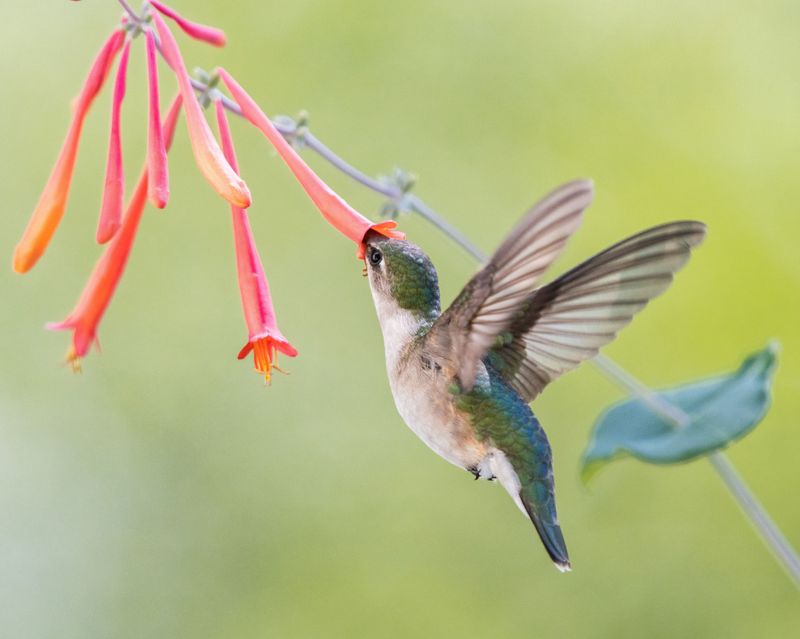
Hummingbirds have long bills and tongues built for reaching deep into narrow blooms. Coral honeysuckle flowers are red, slim, and shaped like little trumpets, which fits that feeding style well.
The color also stands out to birds looking for a nectar stop.
Timing matters, though. UF/IFAS describes bloom from April through summer.
Texas A&M AgriLife notes that the vine reblooms in late spring and summer.
So the main flower show runs from spring into summer, with some repeat color along the way. That is a useful stretch of nectar, but it is not a nonstop supply.
A vine in good sun with decent care will usually flower better than one struggling in shade or poor soil. Even then, hummingbirds decide for themselves where to feed.
Some yards get steady visits, and others see only an occasional bird.
The smart way to think about it is as one possible nectar source. Pair it with other blooms that open at different times, and the yard has more to offer across the season.
Migration timing is not a bloom guarantee
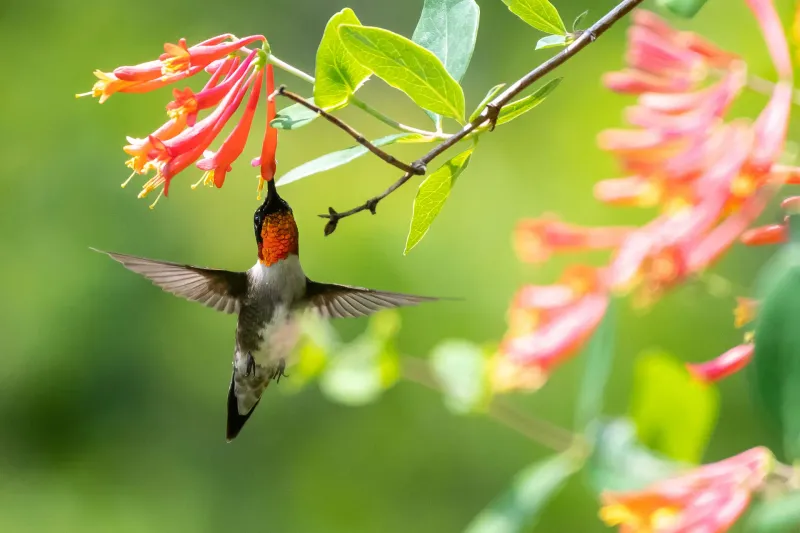
Texas sits on a major flyway, and hummingbirds pass through in spring and again in fall. A Texas Parks and Wildlife article by a regional wildlife biologist lists coral honeysuckle among popular fall hummingbird plants and gives September and April as migration peaks.
Those months are regional context. Birds move on different schedules depending on the species and the part of Texas, so your yard may see its busiest days earlier or later.
Here is the catch. The vine’s documented flowering is mainly spring and summer, and Texas A&M AgriLife reports rebloom in that same window.
A fall listing means the plant is useful to hummingbirds then, not that it blooms nonstop through September.
In practice, watch your own vine. If you notice a few late flowers in fall, that is a bonus.
If you see none, plan other nectar plants that bloom closer to migration time.
Keeping a simple note of when your vine blooms and when birds appear will teach you more about your yard than any general calendar.
Choose a sunny, well-drained site
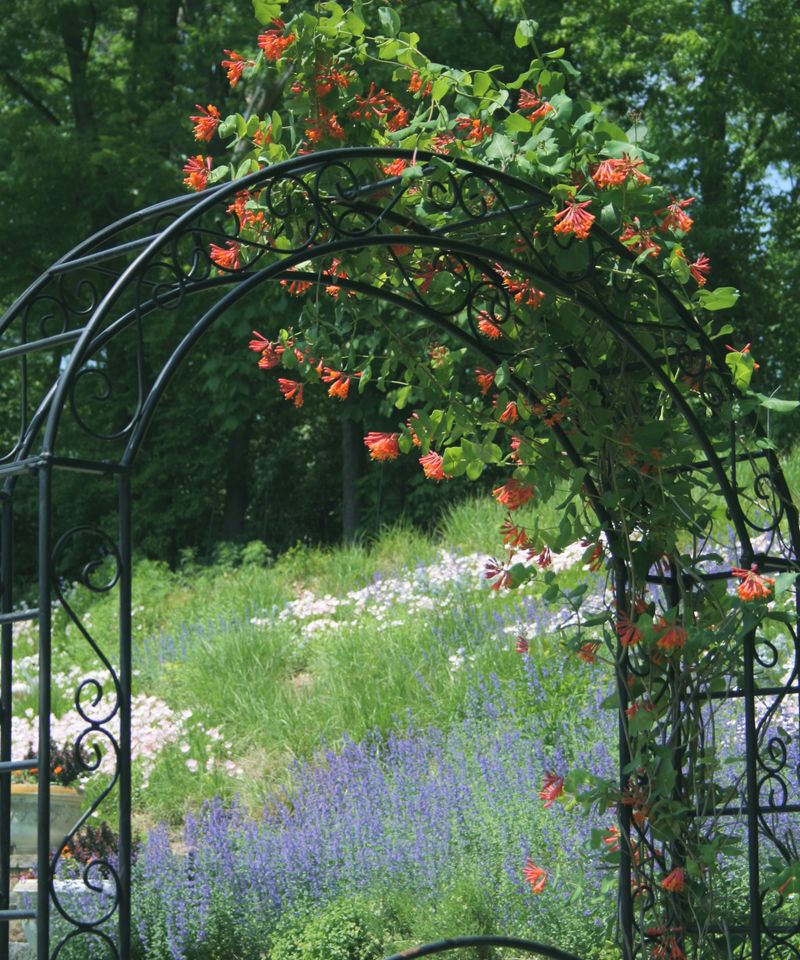
Pick the spot before you pick the plant. Full sun encourages better flowering, and UF/IFAS notes that the vine tolerates partial shade.
A fence that gets six or more hours of light is a strong candidate.
Drainage matters just as much. Soil that stays soggy after rain can stress the roots, so avoid low spots where water pools.
Amending heavy clay or planting on a slight rise can help.
Leave room, too. This is a vigorous, spreading vine, and it can crowd small shrubs or climb into things you did not plan for.
Keep it a good distance from delicate neighbors and gutters.
One more placement point applies to wildfire-prone areas. North Carolina State Extension rates coral honeysuckle as highly flammable and advises against placing it within a home’s defensible space.
If you live in dry brush country or near open wildland, put the trellis well away from the house and follow local fire guidance.
Train the vine and water it as it establishes
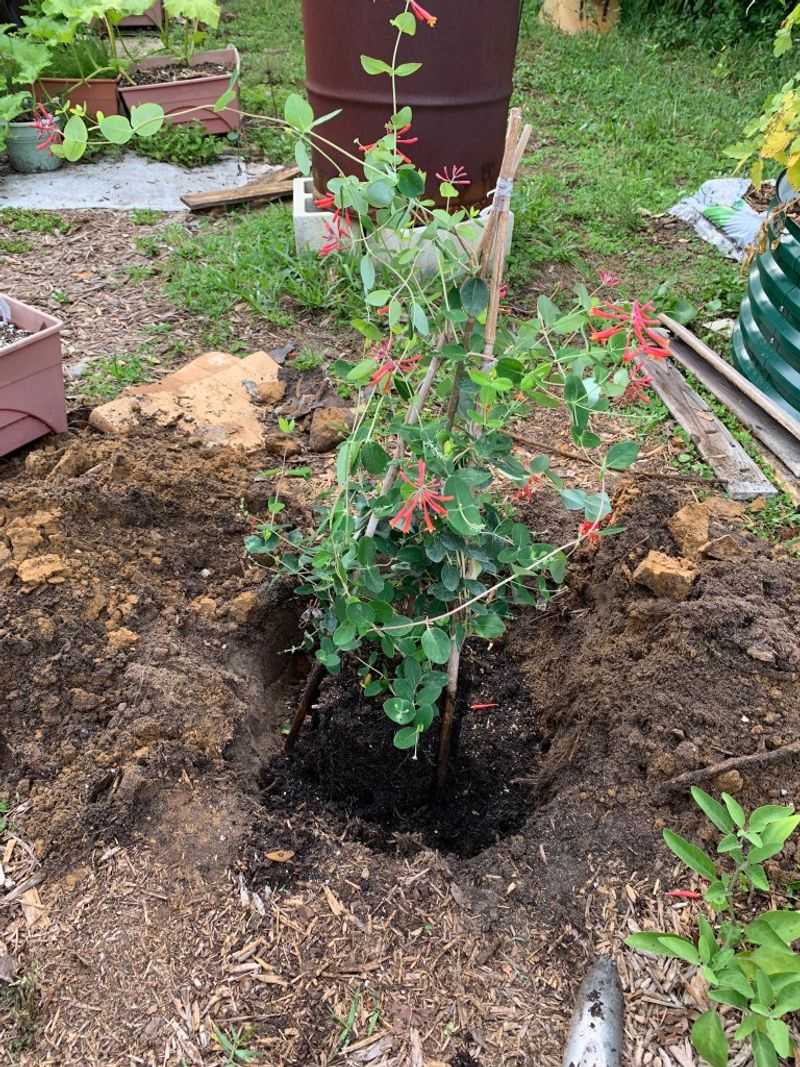
Young stems need a little guidance at the start. Gently point them toward the trellis or fence wires and loosely tie any that wander.
Once the stems find something to grab, they twine on their own.
Check every week or two during the first season. Redirect loose shoots and snip any that head toward places you do not want them.
North Carolina State Extension describes the plant as a twining vine, so thin supports work better than wide boards.
Watering is the other job. A new vine needs steady moisture while its roots settle in, which in a Texas summer can mean deep watering several times a week at first.
Mulch around the base helps hold moisture.
UF/IFAS describes moderate drought tolerance and advises against dry sands. That does not mean the vine is drought-proof or water-free.
After it is established, water during long dry spells, especially in triple-digit heat. Follow any local watering restrictions, and use a slow soak at the roots rather than a quick spray.
Confirm the species and check local guidance
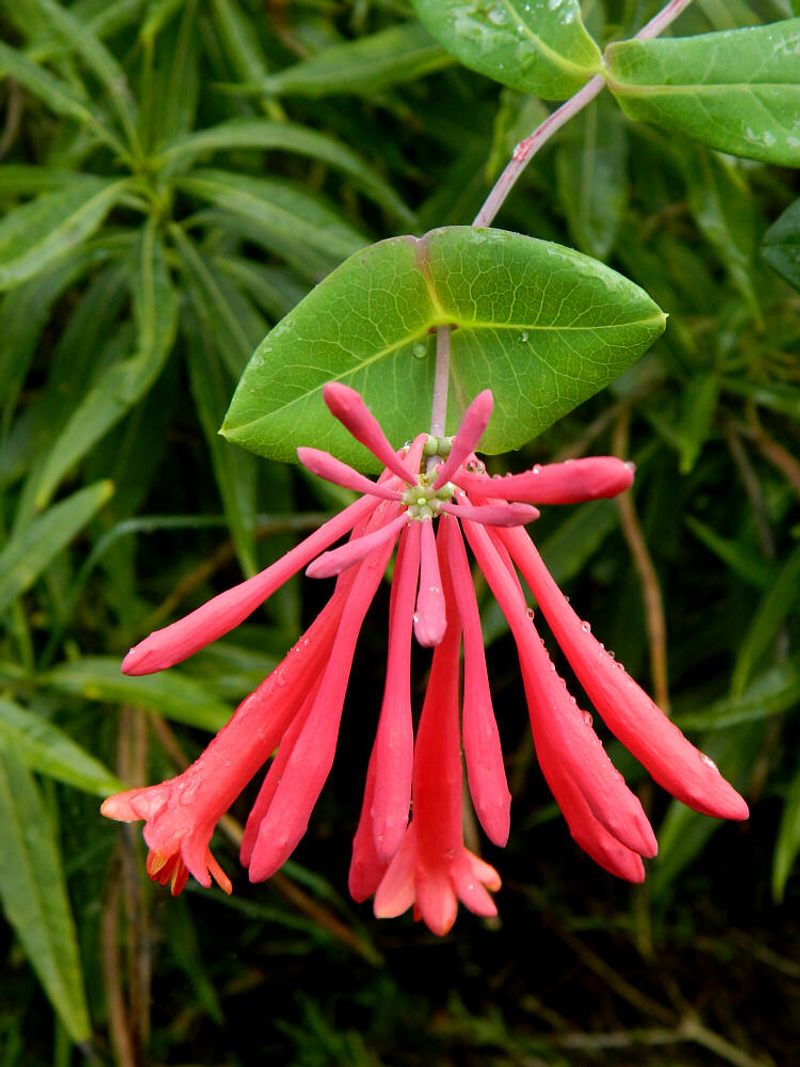
Plant names can be confusing at the nursery, so read the tag. You want Lonicera sempervirens, the coral honeysuckle.
Japanese honeysuckle, Lonicera japonica, is a different species, and UF/IFAS identifies it as invasive while presenting coral honeysuckle as an alternative.
Next, think about where you live. Coral honeysuckle is native to parts of Texas, not every ecoregion.
Texas Parks and Wildlife’s Edwards Plateau guidance is one example of regional help. The Panhandle Plains region page is another place to start.
Ask the nursery where the plants were grown. Locally sourced stock is more likely to suit your area, and a good grower can answer that question.
Finally, set winter expectations. Texas A&M AgriLife describes the vine as evergreen, while UF/IFAS calls it semi-evergreen and warns of dieback after a hard freeze.
Leaves may hang on through a mild winter, but a hard freeze can damage or kill them back. Wait until spring to see what regrows before you cut anything out.
Make the vine one part of a wildlife-friendly yard
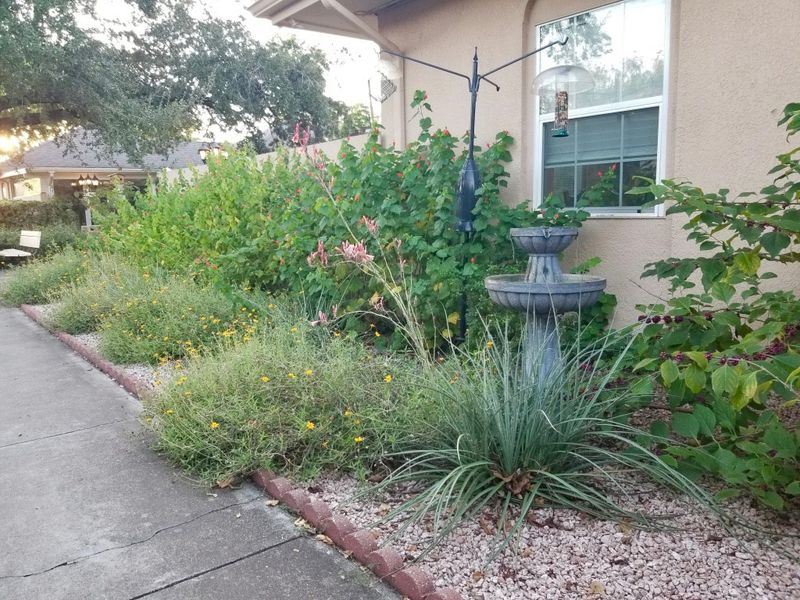
Coral honeysuckle can give your fence supported, seasonal flowers, but one vine is not a full hummingbird habitat. Texas Parks and Wildlife notes that hummingbirds eat insects and spiders as well as nectar, so a yard with native plants and fewer pesticides serves them better.
Confirm the species, choose a sunny, well-drained spot, and keep your hopes realistic about blooms and visits. Some seasons will be busy and others quiet.
A single trellis will not make a hummingbird yard, but it is a sound first row in a longer planting plan.