
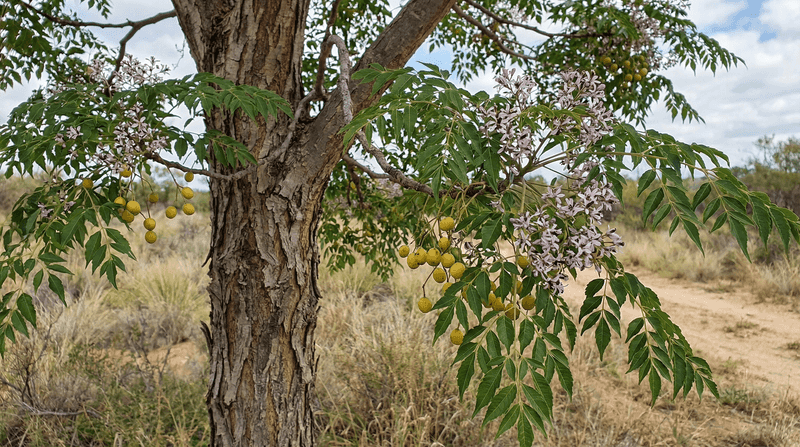
Some of the prettiest plants sold for Southern yards are actually on official noxious or invasive lists in Florida and Texas. They spread into woods, wetlands, and waterways, crowding out native plants that birds, bees, and fireflies depend on.
The tricky part is that many were sold at garden centers for years, so they may still be growing near your porch or fence. Here are nine to check for, plus friendlier plants you can grow instead.
1. Chinese Privet
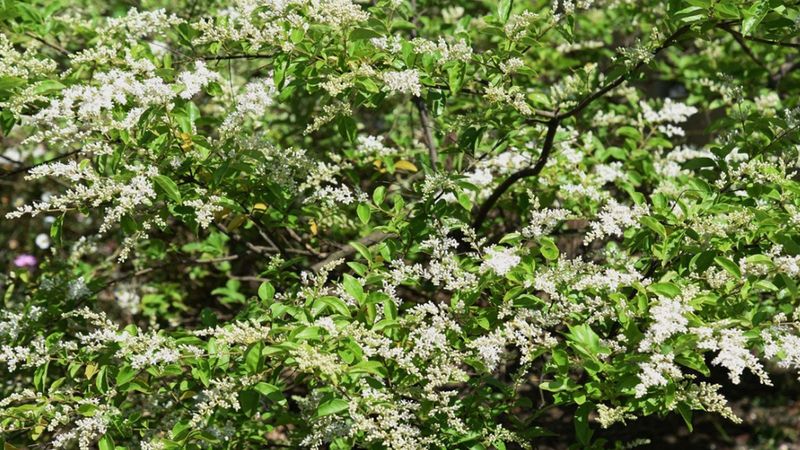
Walk almost any older neighborhood in Houston or Tallahassee and you will spot a tidy green hedge that looks completely harmless. Chances are good it is Chinese privet, a shrub planted by the mile for decades because it grows fast and takes heavy pruning.
The problem starts after it blooms. Birds eat the dark berries and drop seeds into creek bottoms and woodlands, where privet forms thickets so dense that little else can grow.
Florida lists it as a Category I invasive, and Texas includes Ligustrum sinense on its noxious and invasive plant list, which means nurseries there cannot legally sell it.
Not sure what you have? Privet has small, opposite, oval leaves and smelly white flower clusters in spring.
If your hedge matches, you do not need to rip it all out overnight.
A practical plan is to cut it back before it flowers so it cannot set seed, then replace sections over a few seasons. Yaupon holly is a great swap for both states.
It takes shearing just as well, handles heat and drought, and its red berries may help feed native birds through winter without spreading into nearby woods.
2. Chinaberry Tree
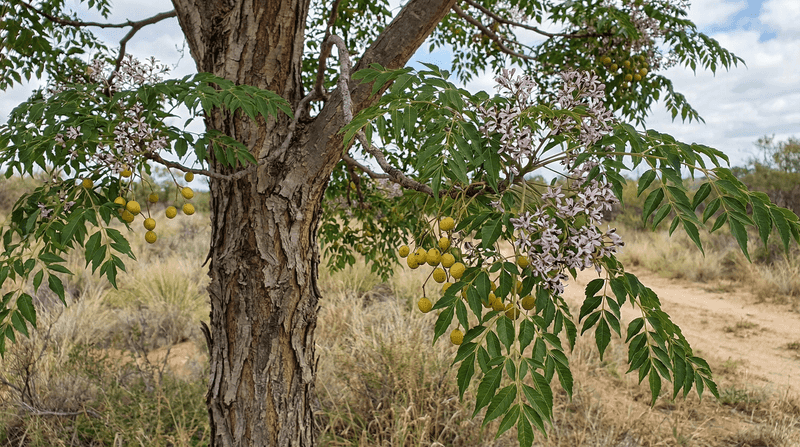
Grandma probably had one. Chinaberry was a favorite shade tree across Southern farmyards, loved for its lilac-scented purple spring flowers and quick growth in tough, sandy soil.
Those golden marble-sized berries are the catch. They are toxic to people, pets, and livestock if eaten in quantity, yet birds still spread the seeds far and wide.
Seedlings pop up in fencerows, pastures, and forest edges, and the trees can resprout eagerly from roots after cutting.
Florida ranks Melia azedarach as a Category I invasive, and Texas lists it among regulated invasive species, so you will not find it for sale in reputable nurseries there. If one already shades your patio, keep an eye out for seedlings and pull them while small.
Removing a mature tree is a bigger decision. Many homeowners cut the trunk and treat the stump right away with an appropriate herbicide to reduce resprouting, or hire an arborist for big specimens.
For a fast replacement with real wildlife value, consider Mexican plum or redbud in Texas, or a Southern red maple in Florida. Each one may give you spring color and shade, minus the poison berries littering the lawn.
3. Lantana camara
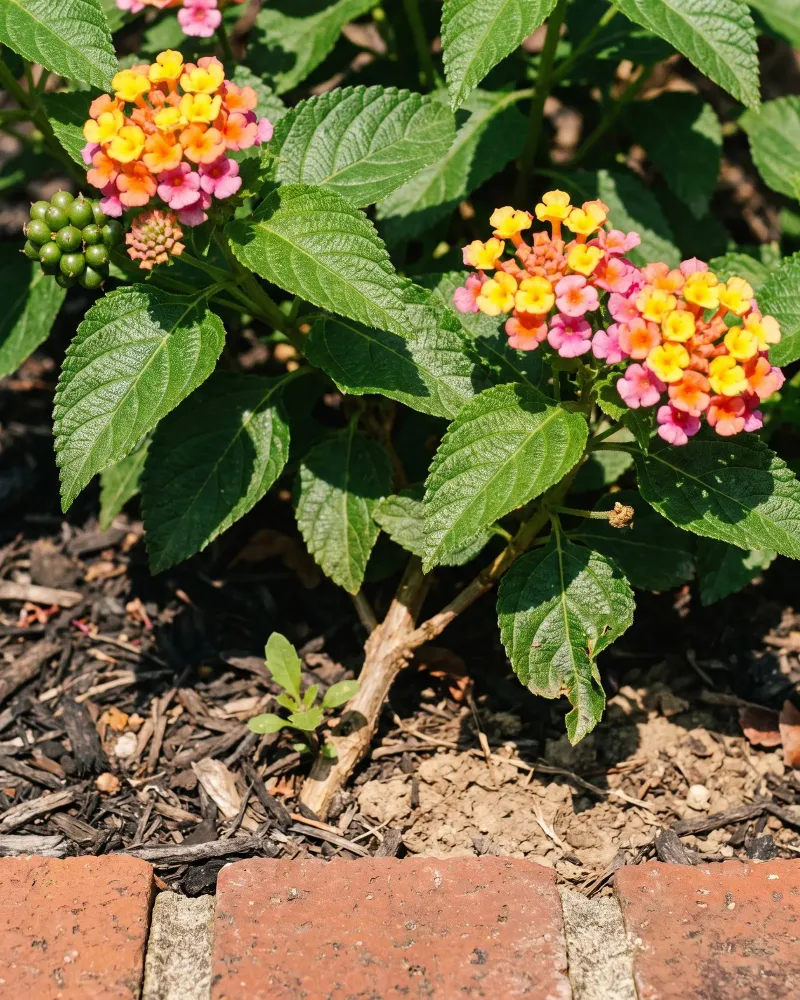
Here is the twist that surprises gardeners: the butterfly-magnet shrub glowing in so many Florida beds is on the state invasive list. Common lantana, Lantana camara, is a Category I invasive in Florida because it spreads into natural areas and can cross with the rare native Lantana depressa.
Texas is different. Lantana is a beloved landscape plant there, and Texas lantana, Lantana urticoides, is actually native.
So this entry mostly matters for Florida readers, though Texas gardeners may still want sterile or native types.
Why the fuss? The shiny black berries are eaten by birds, and the foliage and unripe fruit are toxic to pets and livestock.
In pinelands and coastal scrub, escaped plants can form scratchy tangles.
You do not have to give up the color. Look for sterile cultivars labeled as producing little or no fruit, such as some newer hybrid series, and confirm with your local extension office which ones they recommend.
Even better, try native alternatives. Firebush in South Florida and Texas lantana in the Lone Star State both shrug off brutal summer heat and often draw just as many butterflies and hummingbirds.
4. Nandina (Heavenly Bamboo)
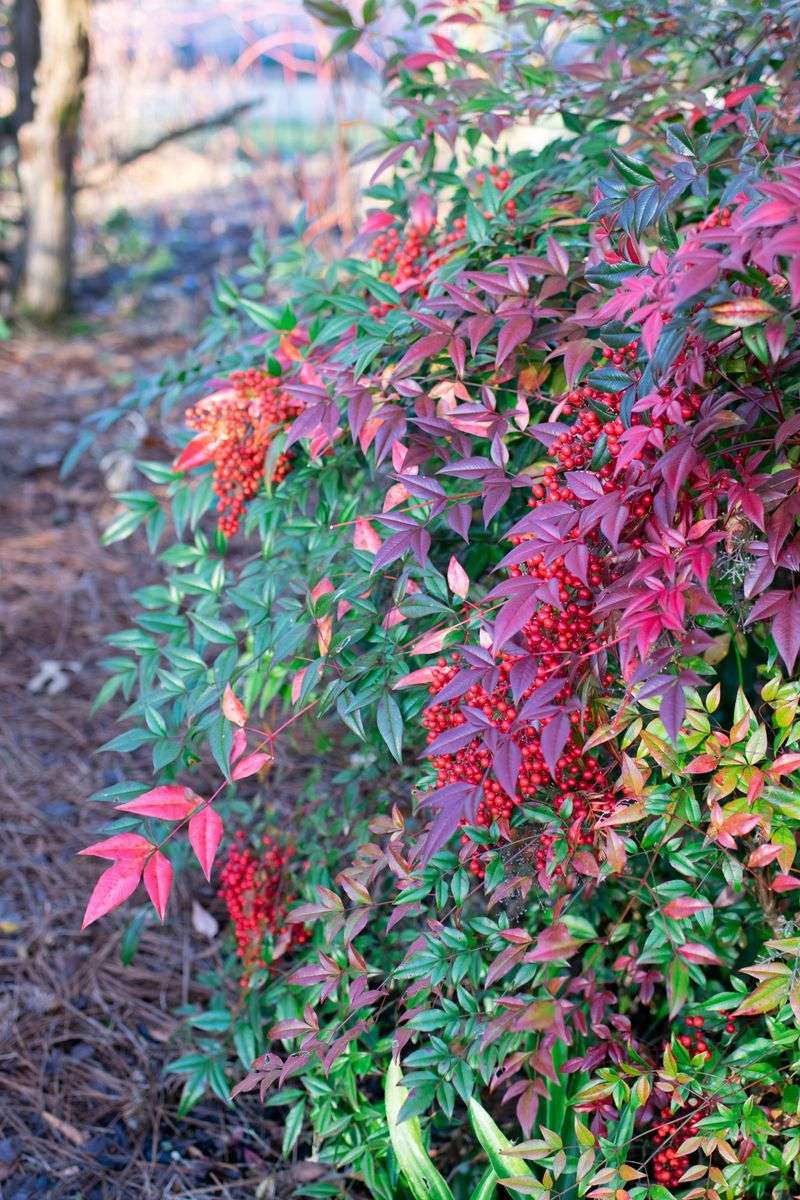
Red berries in December, burgundy leaves, almost zero care. No wonder nandina ended up by thousands of Southern front doors.
Behind that holiday charm sits a real concern. Nandina domestica is listed as a Category I invasive in Florida, where it has spread into northern forests, and Texas experts flag it as an invasive escapee in East Texas woods.
The berries contain compounds that can release cyanide, and they have been linked to the deaths of cedar waxwings that gorge on them in winter.
Check your foundation beds for the classic look: lacy, bamboo-like stems topped with clusters of bright red fruit. If you have a full-size, berry-making type, the quickest fix is snipping off flower and berry clusters before they ripen.
Dwarf varieties like Firepower or Gulf Stream rarely fruit, so many gardeners consider them a lower-risk choice for compact borders. Still, rules can change, so check your county guidance.
Want the same berry show? Coral honeysuckle vines, American beautyberry with its wild purple fruit, or dwarf yaupon may fill the spot nicely.
All three support birds and handle Southern heat without wandering off into the woods.
5. Japanese Honeysuckle
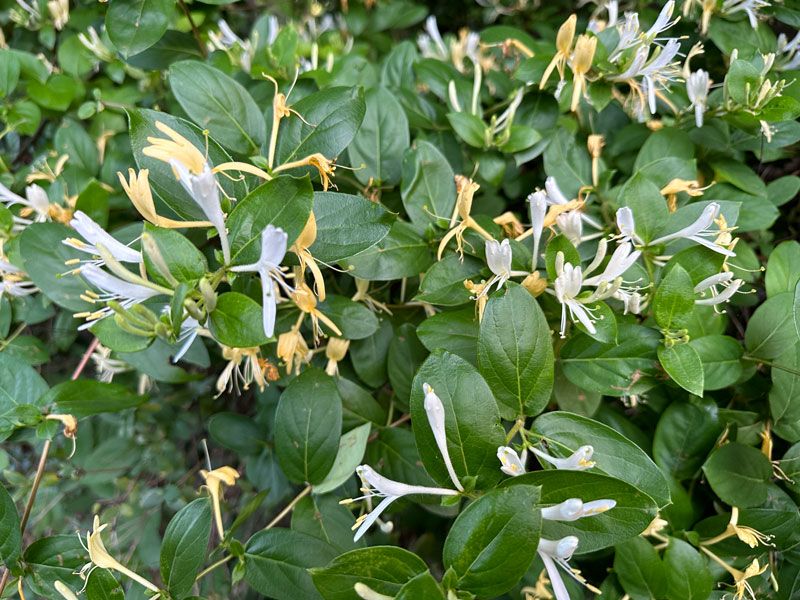
Summer evenings smelled like it. Kids pulled the flowers and sipped the drop of nectar, and the vine climbed every fence in sight.
That sweet memory is exactly why Japanese honeysuckle is hard to spot as a troublemaker. Lonicera japonica twines around young trees, smothers shrubs, and roots wherever stems touch soil.
Florida lists it as a Category I invasive, and Texas includes it on its noxious and invasive plant list, so it cannot be sold there.
Identification is simple. Look for paired white flowers that fade to yellow, opposite oval leaves, and black berries in fall.
Native coral honeysuckle has red tubular blooms and rounded leaves that fuse around the stem near the flowers.
To get rid of it, pull runners after a soaking rain when roots slide out easily, and keep at it. Large mats may need repeated cutting, and spot treatment can help on stubborn patches, though patience usually matters more than any spray.
Then replant with coral honeysuckle, which hummingbirds adore and which stays well behaved on a trellis. You keep the fence-covering charm while giving local pollinators something genuinely useful.
6. Water Hyacinth
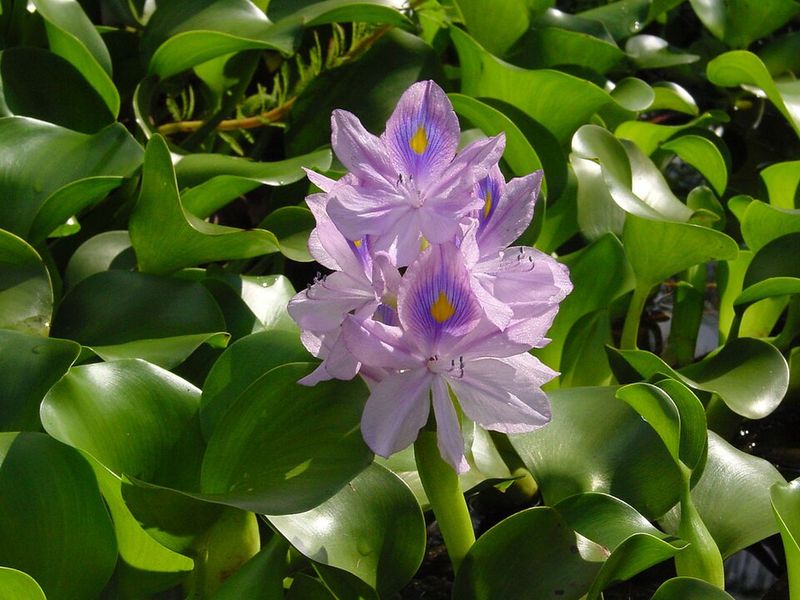
Few plants are as gorgeous or as illegal. Water hyacinth floats on puffy stems and opens lavender flowers that look straight out of a garden magazine, so pond owners naturally want it.
Both states say no. Eichhornia crassipes, now called Pontederia crassipes, is a federally listed noxious weed and is prohibited under Florida and Texas rules. In the wild, it can double its coverage in about two weeks during hot weather, choking lakes, blocking boats, and lowering oxygen for fish.
Florida has spent many millions over the decades keeping it in check, and Texas reservoirs like Lake Conroe have faced similar battles.
If a friend handed you some for your water garden, or it came bundled with a pond kit, remove it carefully. Scoop the plants out, let them dry completely in the sun or bag them for the trash, and never dump them into a ditch or creek.
Good replacements exist. Pickerelweed offers similar purple spikes along pond edges, and native water lilies give floating cover that may help shade water and reduce algae.
Your pond still looks lush, and the local lake stays safe.
7. Chinese Tallow Tree
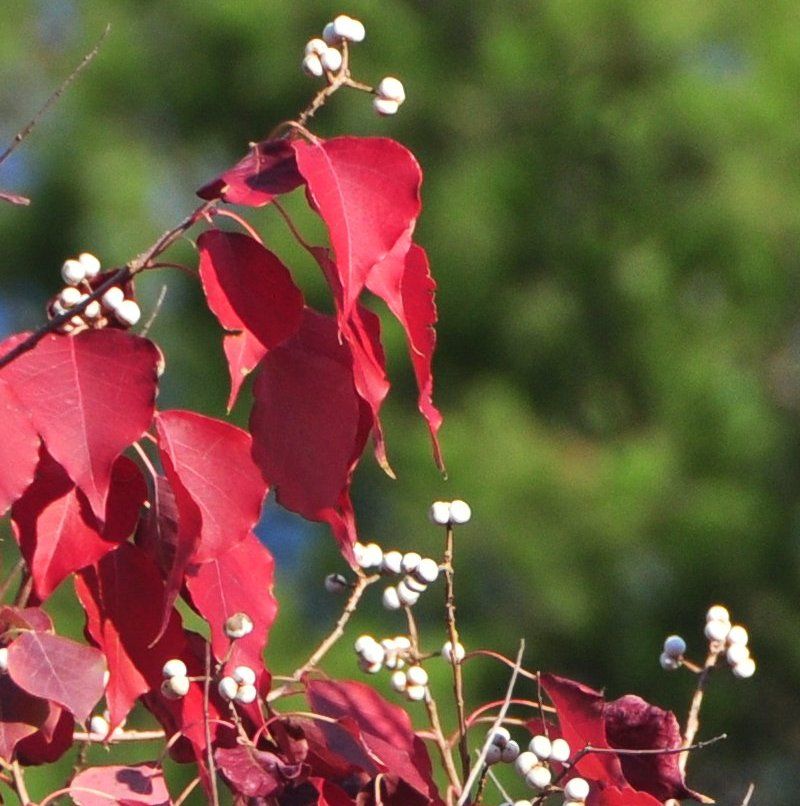
Think of it as the popcorn tree. Its white waxy seeds look like little popped kernels, and in fall its heart-shaped leaves turn red and orange, which is rare color for the Gulf Coast.
Unfortunately, that beauty came at a steep price. Chinese tallow, Triadica sebifera, is one of the most aggressive invaders on the Texas coastal prairie and in Florida wetlands.
A single tree can produce huge numbers of seeds, and birds and water carry them everywhere.
Texas lists it as noxious and Florida classifies it as a prohibited noxious weed, so it is illegal to sell or plant. Studies have also suggested leaf litter can change soil and water chemistry in ways that may harm frogs and aquatic life.
If you inherited one, watch for sprouts in beds and lawn edges. Mature trees are best removed by a pro, with the stump treated promptly to limit resprouting.
For similar fall fireworks, try Shumard oak, cedar elm, or Drummond red maple, depending on your area. They take longer to fill in, but they feed caterpillars and birds and do not invade your neighbor’s yard.
8. Brazilian Pepper
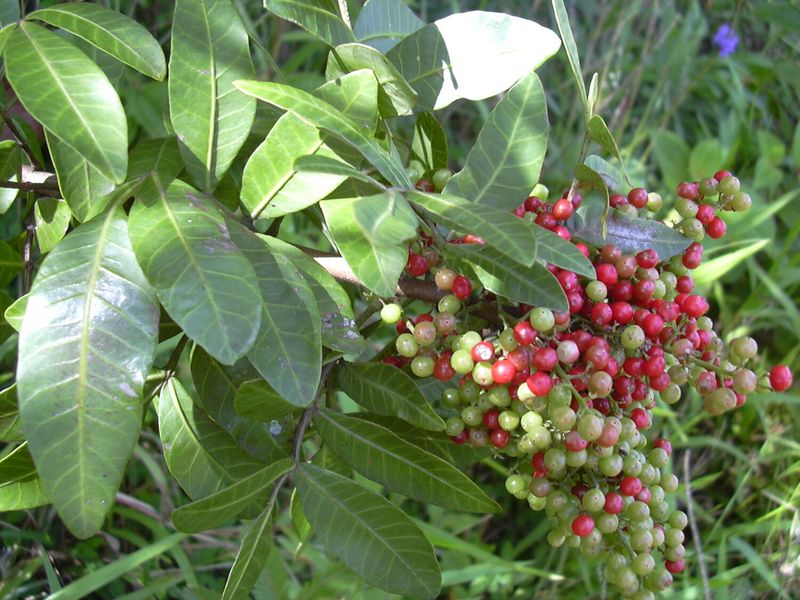
Floridians once called it Florida holly and decorated with its red berries at Christmas. Today it is often described as one of the worst invasive plants in the state.
Brazilian pepper, Schinus terebinthifolia, forms dense thickets that overtake mangroves, hammocks, and the Everglades. It is prohibited in Florida and also on the Texas noxious plant list, where it has spread in the Rio Grande Valley and along the coast.
Gardeners should know it is related to poison ivy. Sap and blooms can cause itchy rashes or breathing irritation in sensitive people, so wear gloves and long sleeves when pruning or removing it.
Spotting it is easy in winter. Look for a sprawling shrub or small tree with glossy compound leaves that smell peppery when crushed, plus heavy clusters of bright red berries.
Seedlings pull out easily when young, so a quick yard check after rainy spells can save you headaches. Bigger plants usually need cutting and stump treatment.
Replace it with native wild coffee, Simpson’s stopper, or yaupon holly, all of which may offer berries for birds and a full, green screen for privacy.
9. Giant Reed (Arundo)
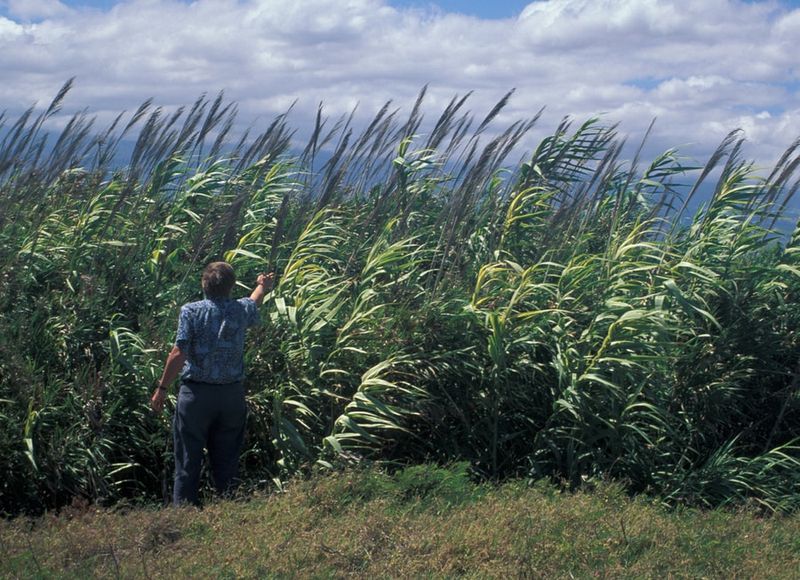
Need a privacy screen in one summer? Someone may have told you to plant giant reed, and it will deliver, reaching 15 to 20 feet tall in a season.
That speed is the whole problem. Arundo donax spreads by thick underground rhizomes, swallows creek banks, guzzles water, and burns hot during wildfires.
Texas lists it as noxious, and Florida restricts its planting, with only certain uses and varieties allowed under strict rules.
Along the Rio Grande, dense stands have soaked up water and made border waterways hard to manage. In a backyard, the clump simply keeps marching outward, often into a neighbor’s fence line or drainage ditch.
It resembles a giant corn plant, with gray-green leaves on hollow canes and feathery plumes in late summer. Do not try tilling it out, since broken rhizome pieces can start new plants.
Removal usually means repeated cutting and careful treatment over a couple of years. For a quick screen that stays put, look at native switchgrass, Gulf muhly for softer borders, or a row of wax myrtle or yaupon.
They may give you privacy, wildlife habitat, and fireflies on summer nights.