
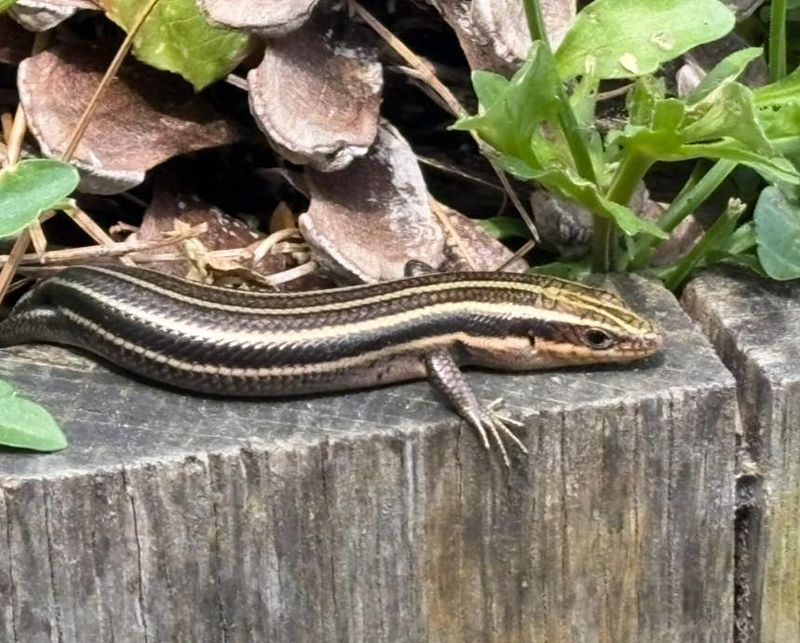
A quick, shiny lizard darts under a flat stone beside your seedlings, and you wonder if it is friend or foe. Western skinks are native California reptiles, and they eat small invertebrates like crickets.
But the popular claim that they are eating your earwigs has no solid backing yet. Here is what a sighting can tell you, what it cannot, and how to handle your beds with care.
A striped lizard in the bed may be a western skink
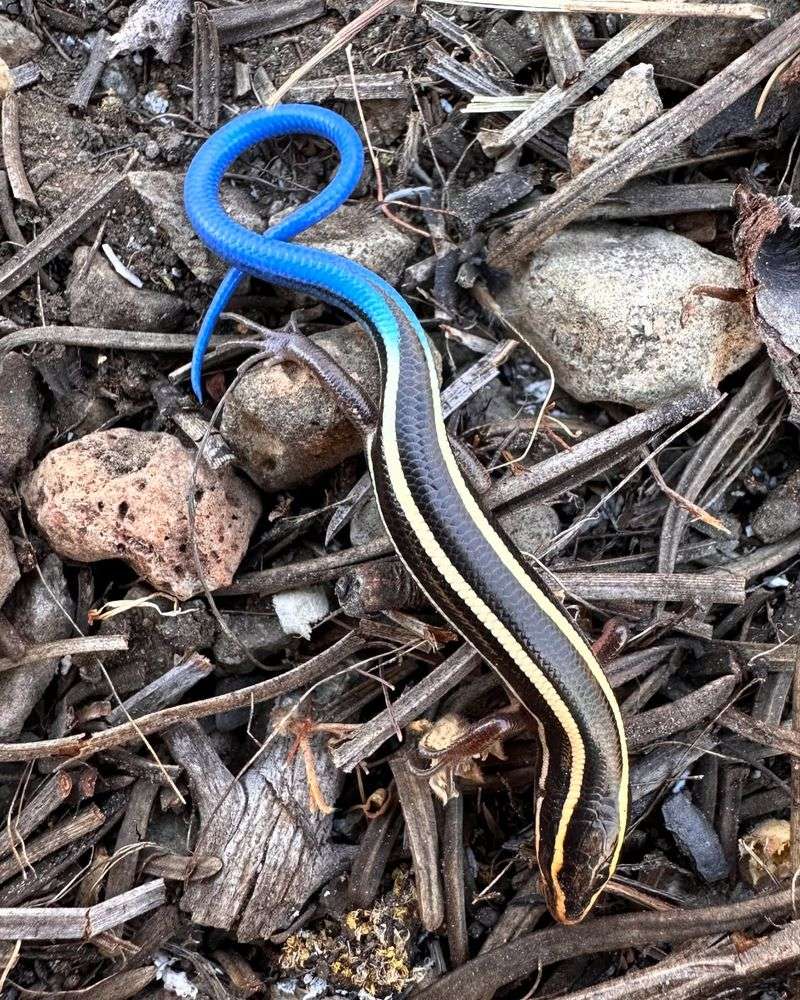
Spotting a slim, glossy lizard with pale stripes near your seedlings is a small thrill. It may well be a western skink, a native California reptile that spends most of its life out of sight.
According to California Department of Fish and Wildlife’s life history account, the species is widespread in northern California and more restricted in central and southern parts of the state.
That range matters. A homeowner in Redding has better odds of hosting a western skink than one in inland San Diego County.
Where you live changes how likely your lizard is to be this species.
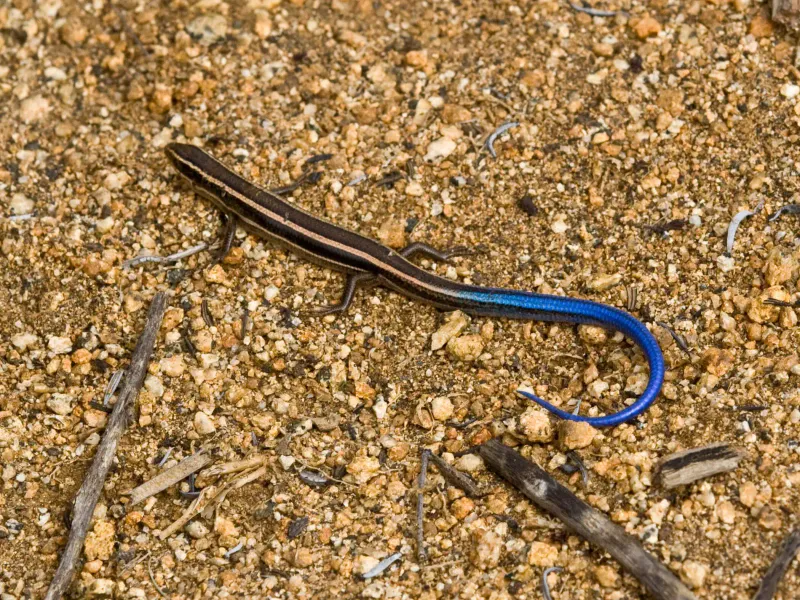
Stripes and a bright blue tail are not a guarantee, either. Other skinks and lizards can look alike, and color and pattern vary from one animal to the next.
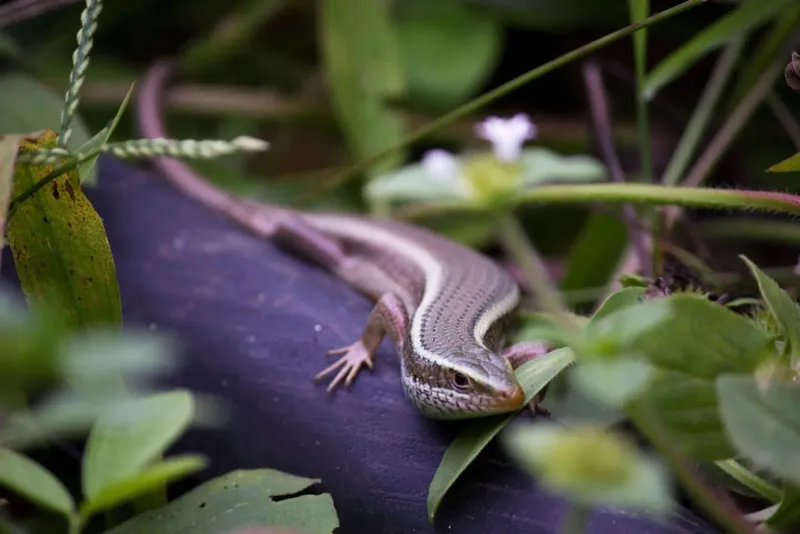
Gilbert’s skink is one lookalike, and young skinks of several kinds can have vivid tails. National Park Service notes on the western skink describe the animal, and California Herps’ skink identification page shows how the California skinks differ.
If knowing the species matters to you, snap a clear photo of the whole body, note your county, and compare it with a reliable regional guide. A local naturalist or herpetology group can help when the photo is still a puzzle.
Getting the name right comes first because everything else, from what the animal eats to what it does in your yard, depends on it. A wrong guess leads to wrong conclusions about your garden.
What the evidence says about a skink’s diet
Western skinks are hunters of small things. They forage through leaf litter and low vegetation, and the state wildlife agency’s food list is long: insect eggs, beetles, caterpillars, moths, grasshoppers, crickets, ants, spiders, centipedes, and sow bugs, all reported in the CDFW life history account.
An older look at the animal’s menu points the same way. Wilmer Tanner’s 1957 study examined stomach contents and found crickets, beetles, moths, grasshoppers, and other arthropods.
Now the part that surprises people. Earwigs do not appear on either list.
That does not prove a skink would never eat one, since earwigs are the right size and live in the same damp, sheltered spots. But nobody has documented it in these sources, so the claim that skinks are eating your earwigs remains unverified.
Both sources also tell us what was eaten, not how often. A skink that ate one cricket in a study tells you nothing about how many crickets or any other bug it eats in your backyard in a season.
So the fair summary is simple. Western skinks are native consumers of many small invertebrates, crickets included.
Whether any of that adds up to a benefit for a particular garden bed is a separate question that these records do not answer.
A skink sighting does not prove seedling protection
Knowing what an animal can eat is different from knowing what it does in your yard. A skink under a board near your lettuce may be there for shade, warmth, or a safe place to rest.
Seeing one does not show that it is feeding in that bed, or that it is eating any particular pest.
Timing adds a wrinkle. UC IPM’s earwig guidance says earwigs feed at night.
Meanwhile, the CDFW account describes western skinks as active by day during warm-season activity.
That mismatch does not rule out a skink finding an earwig tucked into a crevice by day. It simply means you should not assume the two meet on a regular basis.
For that reason, skip the promise that a lizard will save your fall seedlings. No source reviewed shows that skinks reduce earwig or cricket numbers, or measurably cut plant damage, in a home garden.
You can still enjoy the animal. A native lizard living in your yard is a sign of a space with some shelter, and that is a good thing on its own.
Just keep your eye on the seedlings themselves, because the plants will tell you more than the lizard does.
Check seedling damage before treating the bed

Ragged holes in young leaves send many gardeners straight for a spray bottle. Slow down first.
Earwigs can chew seedlings, but they also eat aphids and other insects, so they are not always the villain.
Go out after dark with a flashlight and check the damaged plants. UC IPM recommends confirming the pest this way because earwigs feed at night.
If you see them on the plants, you have your answer. If you see slugs, snails, or nothing at all, earwigs may not be the cause.
When earwig damage is confirmed, UC IPM suggests simple steps. Set out traps, such as rolled newspaper or shallow containers, and empty them each morning.
Cut back excess moisture, since damp soil attracts them, and reduce shelter near affected beds. Insecticides should rarely be needed, and broad spraying can reach harmless creatures too.
Do not blame the skink either. A lizard resting by the bed is not evidence of who ate your seedlings.
Crickets sometimes come up in pest talk. The cited UC IPM page on field crickets in lettuce covers agricultural fields, especially stand establishment in irrigated low-desert plantings.
It does not show that crickets commonly shred seedlings in home gardens, so look for evidence in your own beds before assuming they are the cause.
Retain skink cover only where it is safe
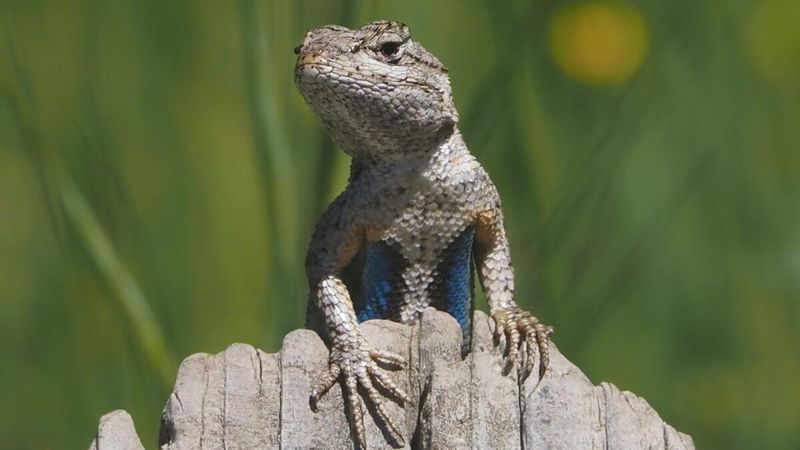
Skinks need places to hide. The CDFW life history account names rotting logs, surface litter, and large flat stones as cover.
Existing cover of this kind may give a skink shelter, but that is habitat, not a pest-control plan.
Fire safety comes first. CAL FIRE’s defensible space guidance calls for a noncombustible zone in the first five feet around structures and removal of dead vegetation and debris in the defensible-space zones beyond.
Local requirements can be stricter, so check with your fire agency.
In practice, that means logs and leaf piles do not belong against the house, under decks, or in a fire-prone yard as a general rule. Flat stones are the easiest choice, since rock does not burn.
A few set in a sunny spot away from structures can offer shelter without adding fuel.
Also think about the beds. A heap of litter right beside tender seedlings can give earwigs and other pests a place to hide, so keep that cover a sensible distance away.
Do not add new piles of debris just to attract lizards, and do not feel you must keep everything already there. Pick the safe, modest options, and let your fire rules decide the rest.
Treat the skink as a neighbor, not a pest-control guarantee
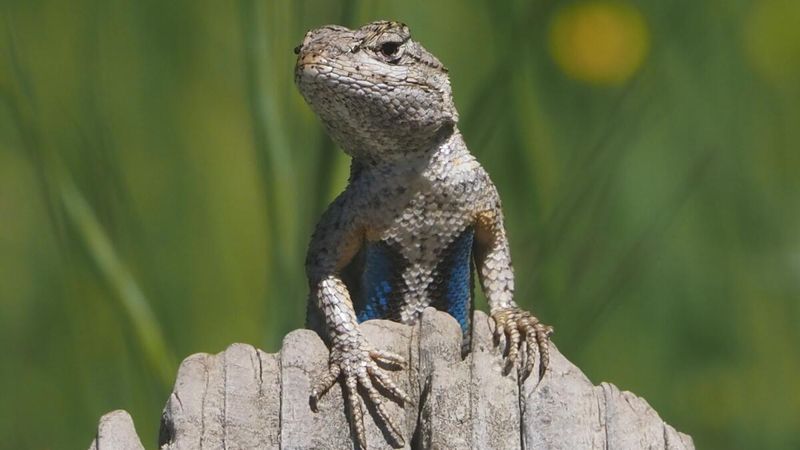
Leave the lizard alone, and do not count on it to clear your beds. Skinks eat small invertebrates, but CDFW’s diet list does not show garden pest control.
Identify the animal, confirm the culprit with a night check, and use UC IPM’s targeted earwig steps only if damage is real.
Keep cover only where CAL FIRE’s defensible space rules allow.
A skink is a native neighbor, and that is reason enough to let it be.