
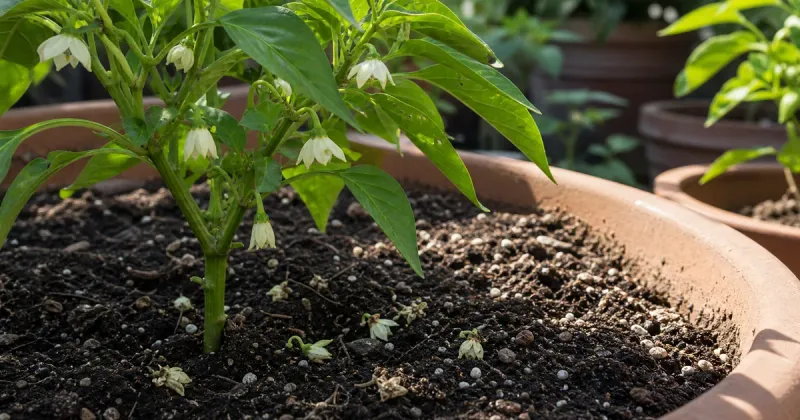
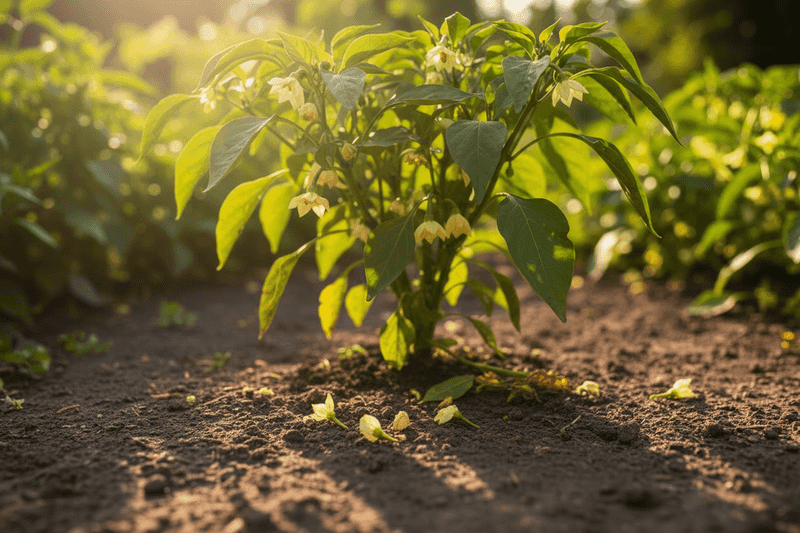
Your pepper plant is covered in blooms, yet the flowers keep falling off and no peppers show up. That is frustrating, especially when fall weather seems like it should help.
Before you grab a fertilizer bag, it pays to look at what the plant is actually dealing with. Here is how to sort out the likely causes and decide what, if anything, to change in your feeding.
Temperature can limit fall pepper fruit set
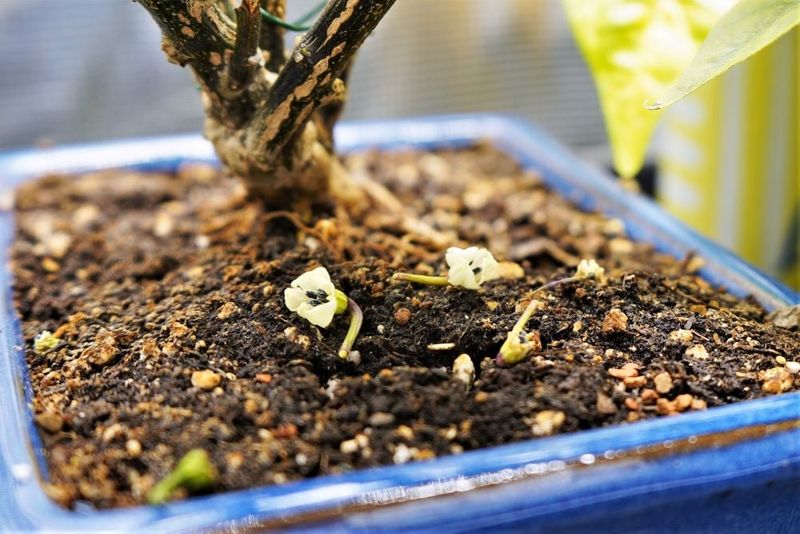
Temperature is one of the biggest reasons pepper flowers or tiny fruit fall off. University of Maryland Extension says nights below 60°F or above 75°F, or days above 95°F, can cause pepper flowers or small fruit to drop.
Texas A&M AgriLife gives a slightly different picture. It points to bloom drop when days climb above 90°F and nights stay above 75°F, and it also notes that extended cool conditions can impair fruit set.
Because the numbers differ, treat them as guidance rather than hard cutoffs. Your garden, your microclimate, and your pepper variety all matter.
Texas A&M notes that some hot peppers handle heat better than bell peppers, so a jalapeno and a bell pepper next to each other may not behave the same way.
Here is a useful clue: a fall calendar date or a cooling trend does not by itself point to a fertilizer problem. Early fall in much of the South can still be hot, and later cool nights can cause trouble from the other direction.
Check your recent overnight lows and daytime highs first, and jot them down for a week.
Check moisture and growing conditions before feeding
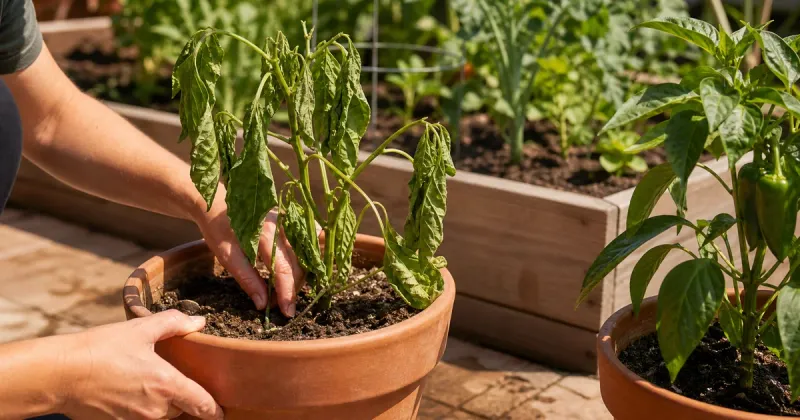
Grab a trowel and dig down a couple of inches beside the plant. Soil that is bone dry, or soggy and heavy, can stress peppers enough to drop blooms.
Maryland Extension lists dry or waterlogged soil among the common triggers.
The goal is consistently moist soil, not flooded roots. Peppers are sensitive to flooding, as New Mexico State University Extension points out in its guide to environmental stress in chile peppers.
Heavy fall downpours in Florida and the Gulf Coast can leave pots and low beds sitting wet for days.
Then look around the plant. Strong wind can knock off blossoms, and heavy shade from a growing tree or fence may reduce fruit set.
Flip a few leaves to check for pests, and note any odd leaf color that might signal a nutrient problem.
Fertilizer pushed on a plant with a watering or pest problem rarely solves anything. Commercial guidance such as UF/IFAS pepper production advice ties fertilizer rates to soil fertility and testing, so extra feeding should not be your default reaction.
Change the feeding routine only when excess nitrogen is likely
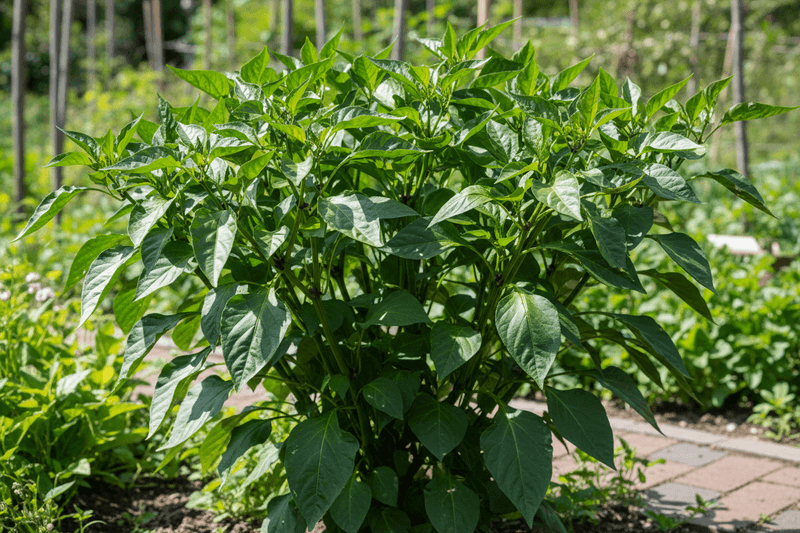
Picture a pepper plant that looks like a leafy shrub, with deep green foliage and barely any fruit. If you have been giving it high-nitrogen feed again and again, extra nitrogen may be part of the story.
New Mexico State University Extension notes that too much nitrogen can push leafy growth at the expense of fruiting.
In that case, the sensible move is to stop adding nitrogen you do not need. This may help the plant shift its energy over time, but it cannot guarantee that flowers will set fruit again.
NC State Extension also lists excess nitrogen among the factors tied to blossom drop.
Skip the urge to reach for a high-phosphorus bloom booster. It is not a general fix for flower drop, and soil tests are the safer guide.
University of Minnesota Extension explains that testing shows what your soil actually needs.
Once you have results, follow the label. Penn State Extension shows how to match recommendations to the fertilizer in your shed.
Fall pepper calendars vary across Florida and Texas
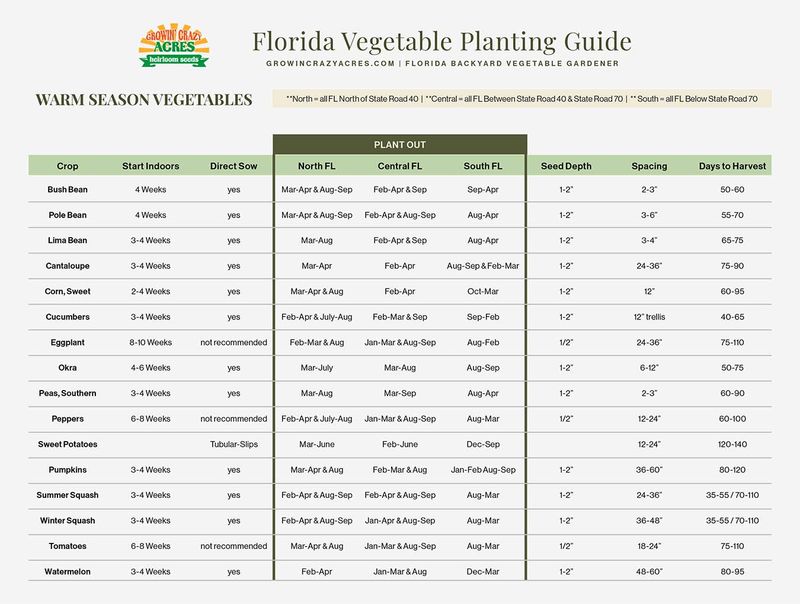
Florida stretches a long way, and its planting windows show it. UF/IFAS lists July to August and February to March for North Florida, August to September and January to March for Central Florida, and August to February for South Florida.
Those are commercial production dates. They are not a promise that a backyard plant already in the ground will set fruit in any given year, and local weather can shift things within each region.
Texas is just as varied. Texas A&M’s fall gardening guide gives pepper planting dates that start as early as June 1 in one region and run to August 1 in another.
For bell peppers, Texas A&M’s bell pepper guide suggests transplanting roughly 90 to 100 days before the average first frost. Count backward from your own area’s frost date to see where your plants stand, and treat advice from another part of the state with caution.
Newly set peppers may need several weeks to mature
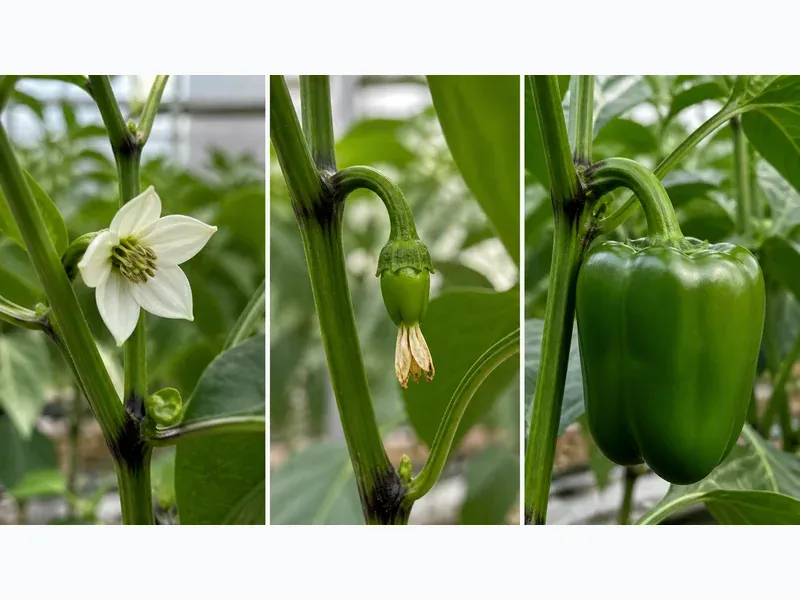
Even if a flower does set, the clock keeps ticking. Utah State University Extension estimates about 35 to 45 days from flowering to full color, depending on temperature and variety.
Cooler weather tends to slow that timeline, so a bloom opening in late October may need more time than a bloom opening in early September. Not every flower will turn into a pepper, either, so count on fewer fruit than the plant has blossoms.
To weigh your odds, count forward from today and compare it with your average first frost date. A pepper set six weeks before frost has a decent window, while one set a week before probably does not.
Fruit does not always need full color to be useful. Many peppers can be picked green once they reach a good size, so a pepper that falls short of ripe red or yellow may still make it to the kitchen.
Match your next step to the likely cause
Start with the weather. Compare your recent highs and lows with the ranges from Maryland Extension and Texas A&M, remembering they are guides and not strict limits.
Next, check moisture, wind, shade, and pests. Fix what you find before touching the fertilizer bag.
Finally, look at your feeding history. If the plant is very leafy and has had repeated high-nitrogen feedings, New Mexico State’s chile guide supports holding back, and a soil test plus Penn State’s label-matching advice can guide any later feeding.
Neither a feeding change nor a cool spell guarantees new fruit if conditions stay unsuitable. Some years, the best harvest comes from peppers already hanging on the plant.