
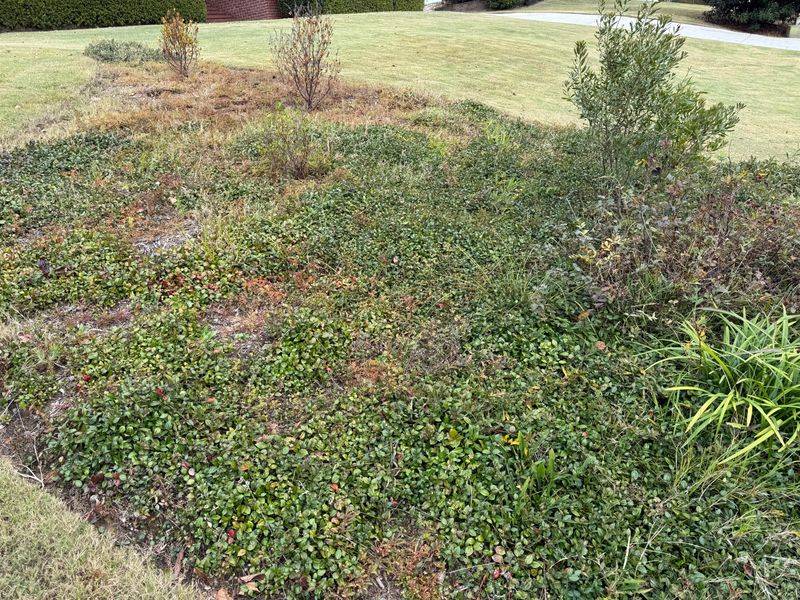
Pulling the same weeds from the same bed every few weeks gets old fast. One way to cut down on that chore is to cover bare soil with a plant that grows thick and low.
The plant most likely behind this idea is Asiatic jasmine, though the original title never names it. Here is how it works, where it fits, and what it will not do for you.
Open soil gives weeds room to return
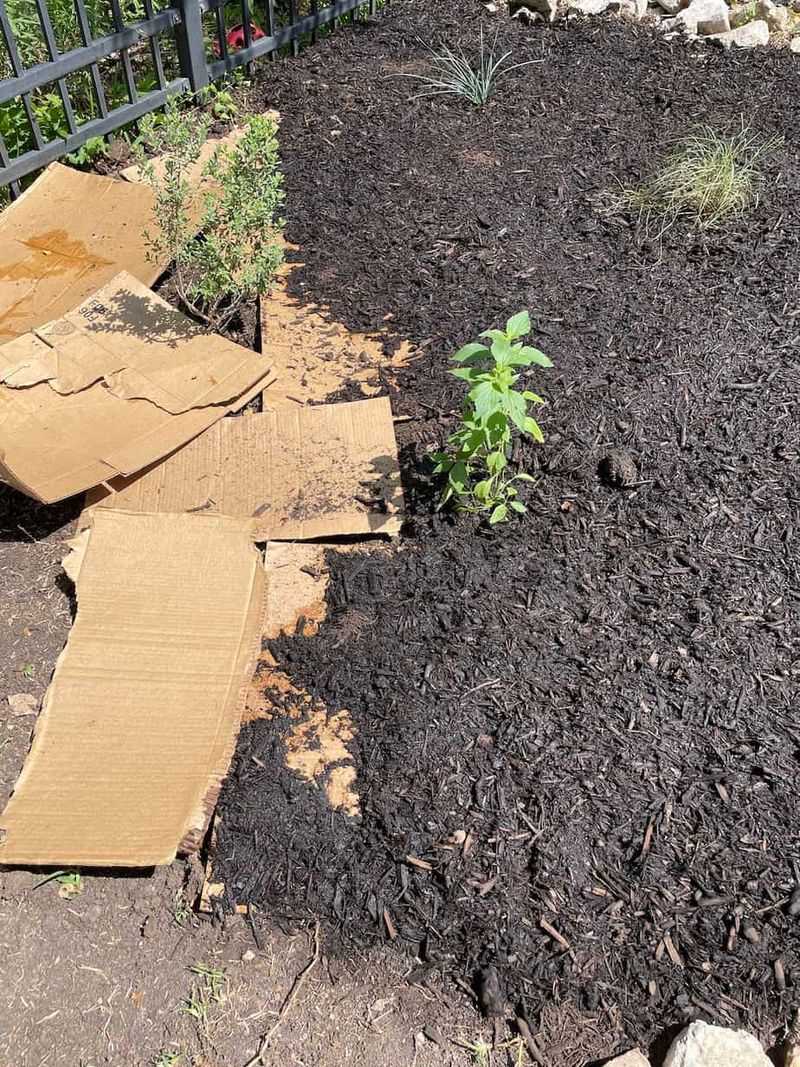
Bare soil is an open invitation. Weeds move into any gap they can find, and a bed with spaces between plants gives them plenty of room to sprout, grow, and set seed.
According to UF/IFAS guidance on weed control in landscape beds, dense-growing plants that suit the site can fill those gaps and shade out some weeds. Groundcovers are one way to suppress weed growth, which is different from wiping out every weed for good.
That difference matters for your expectations. A thick groundcover leaves less light and space for weed seedlings, so you may see fewer of them over time.
Some will still poke through, especially while the planting is young or wherever thin spots show up. Think of groundcover as a helper that lightens the weeding load rather than a permanent cure.
Asiatic jasmine offers foliage, not a flower carpet
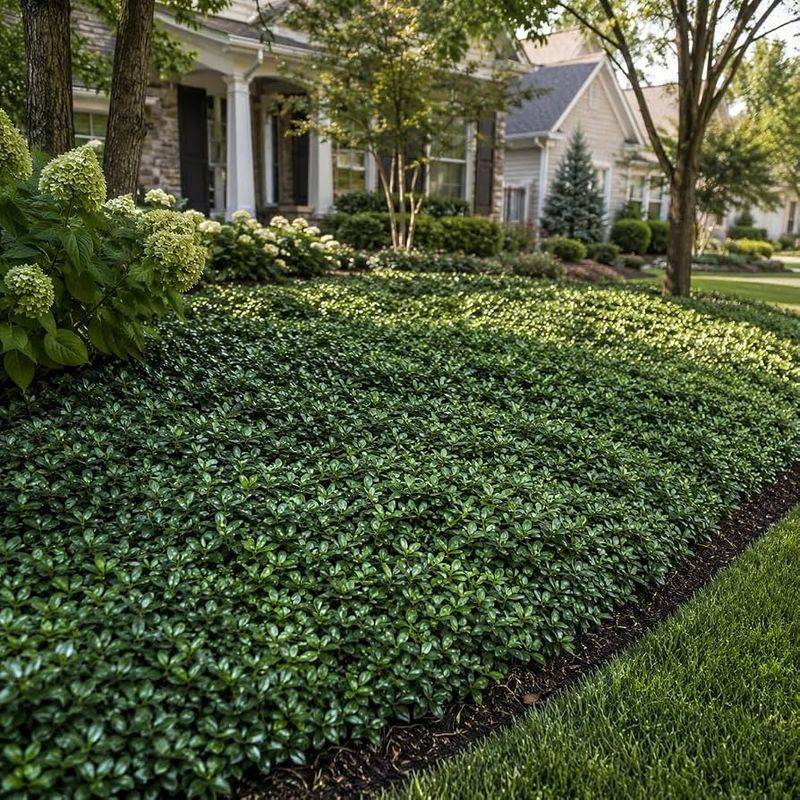
The plant most likely meant here is Asiatic jasmine (Trachelospermum asiaticum), although the supplied title never names it. UF/IFAS describes it as an evergreen, spreading groundcover that suppresses weed growth and holds its appearance year-round in Florida.
Do not assume the same winter look in every part of Texas or elsewhere in the South.
Its main attraction is dark-green foliage. The small yellow flowers are fragrant, but the plant rarely blooms in Florida, so skip any dream of a flower-covered carpet.
The name can mislead, too. As a UF/IFAS Charlotte County article explains, it is not a true jasmine.
It is a nonnative plant from Asia, with Japan and Korea in its native range, not a Southern native.
Check whether it suits your bed
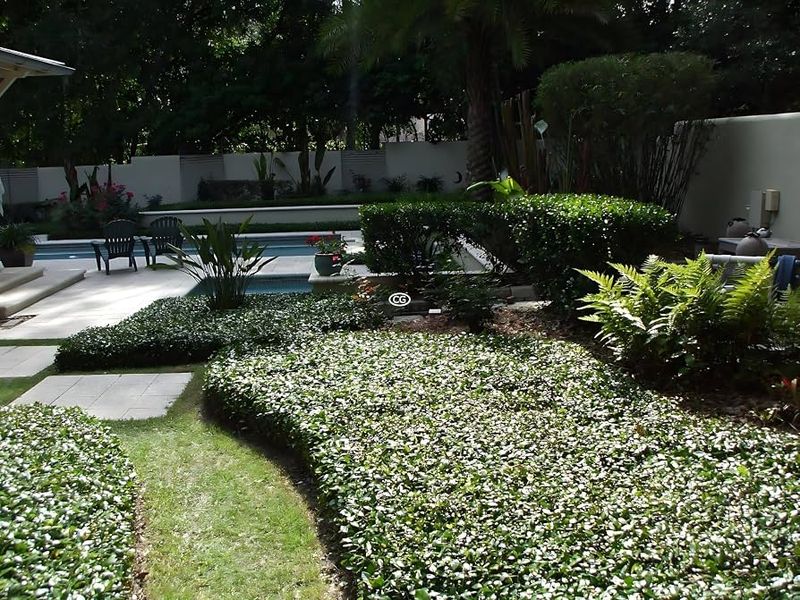
Before buying plants, look at the bed itself. UF/IFAS reports that Asiatic jasmine grows in full sun through dense shade and tolerates heat and cold across Florida.
It is drought tolerant once established, but it prefers well-drained, moist soil while getting started.
Think about traffic as well. It does not stand up to foot traffic well, so it suits a low-traffic bed, not a walkable lawn replacement.
If kids or pets cut across the spot daily, pick another option.
For Florida readers, UF/IFAS’s invasive-species assessment lists it as “Not a problem species (documented)” in North, Central, and South Florida. That finding is specific to those regions, not every state or site.
In Texas, a Texas A&M AgriLife xeriscape publication includes it on a plant list. That does not prove it suits every region or property, so check with your local extension office first.
Give the groundcover time to fill in
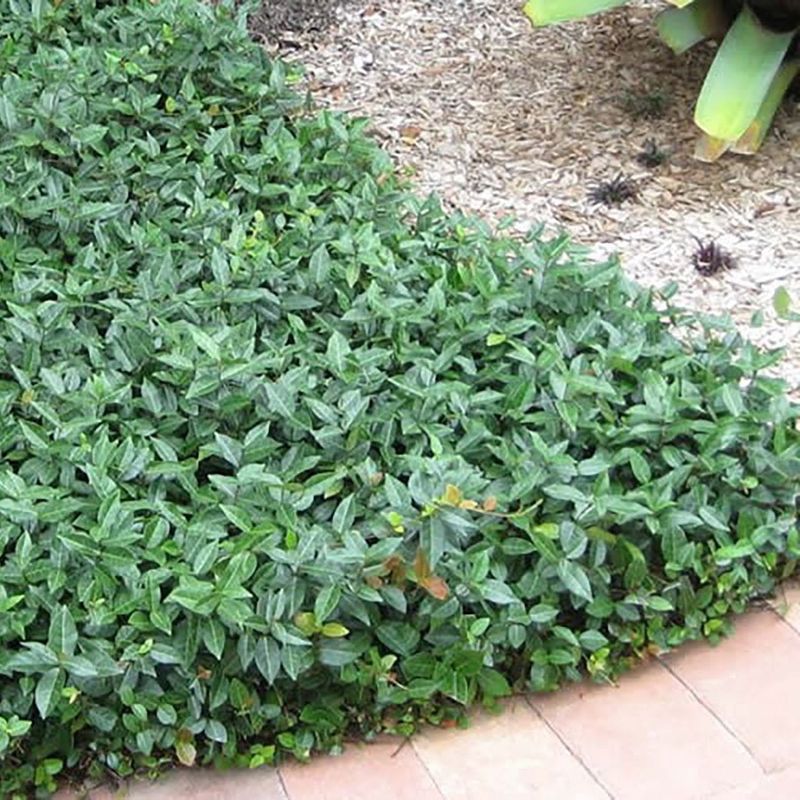
Patience is the price of admission. Start by clearing out every existing weed so the new plants are not competing from day one.
Then set plants about 18 inches apart. UF/IFAS says filling in at that spacing may take two growing seasons, so expect visible gaps for a good while.
For planning, the plant grows roughly 6 to 18 inches tall and at least 3 feet wide. Use those numbers to judge how much room you can give it, not as a promise of fast coverage.
While it settles in, aim for moist, well-drained soil. Soggy ground and bone-dry ground both slow a new planting down, so check the bed during dry spells and water as needed until roots take hold.
Manage weeds in the open gaps

Those first two seasons are when weeds have the most room. Walk the bed regularly and pull new seedlings from any uncovered spots, ideally while they are small and easy to remove.
For soil that stays bare, UF/IFAS recommends coarse organic mulch about 2 to 3 inches deep. The same source describes mulch and hand-pulling as common approaches and notes that any chemical option has to be chosen for the plants present, so there is no one-size herbicide answer.
Keep mulch from piling up against the young stems. As the jasmine spreads and covers the ground, the UF/IFAS plant profile notes it can suppress weed growth, and you will have less bare soil to mulch and weed.
Prune yearly and watch the edges
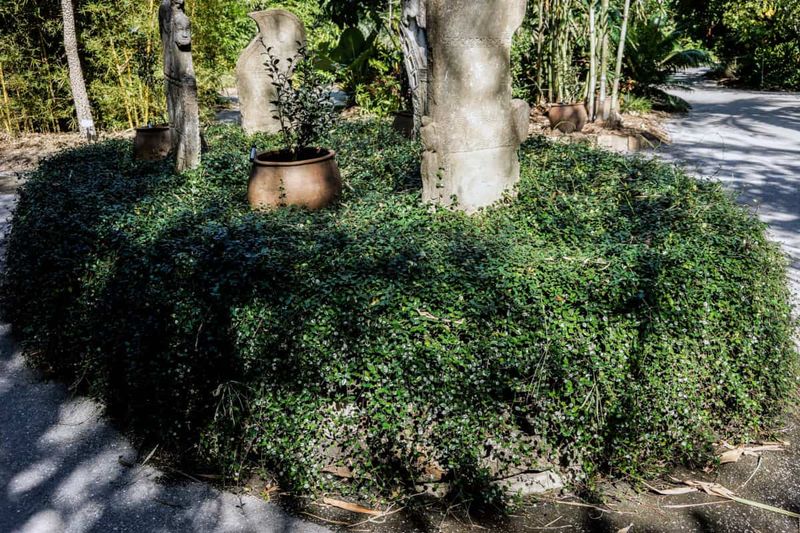
A thick groundcover still needs a caretaker. UF/IFAS recommends pruning or mowing once a year in spring to maintain its appearance and control its spread.
Growth can turn aggressive and unruly with too much water, sun, or fertilizer. If your bed gets frequent irrigation or heavy feeding, expect more runners reaching for walkways, lawns, and neighboring plants.
Make a habit of checking the borders every few weeks. Trim stray runners back to the bed line, and hold off on extra fertilizer unless the plants truly need it.
A little regular attention keeps a tidy groundcover from becoming its own weed problem.
Expect suppression, not a weed-free bed forever
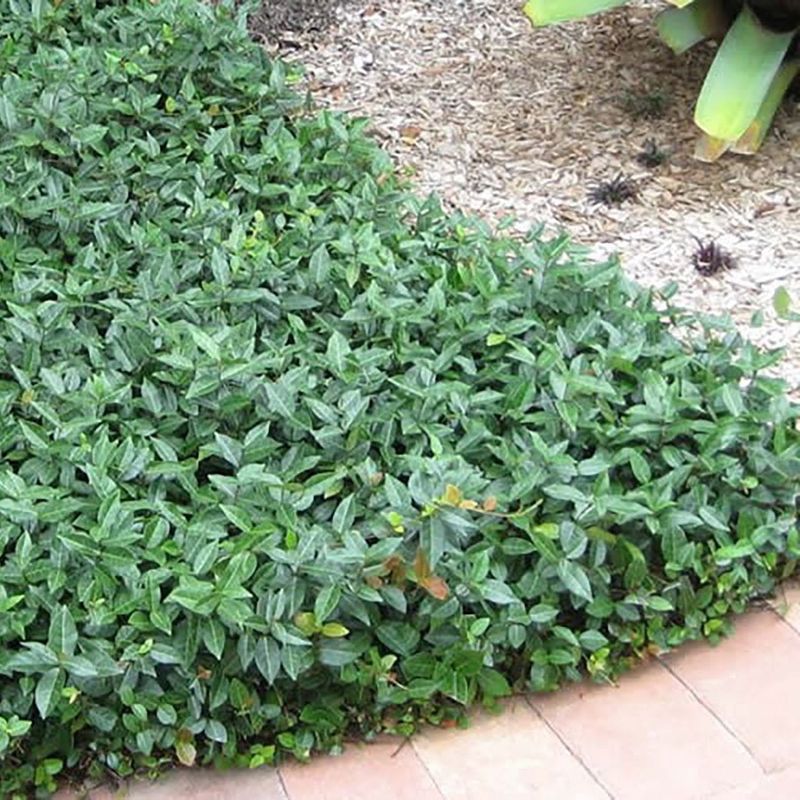
Here is the realistic picture. Once established in a suitable low-traffic bed, Asiatic jasmine can help suppress some weeds by filling the gaps they like to use.
It takes time, though, with up to two growing seasons to fill in, according to UF/IFAS, and it never ends weeding or pruning. If your bed gets little foot traffic and fits its light and soil needs, it is worth a try.
A good groundcover will not stop every weed, but it can keep your weekends from being swallowed by them.