
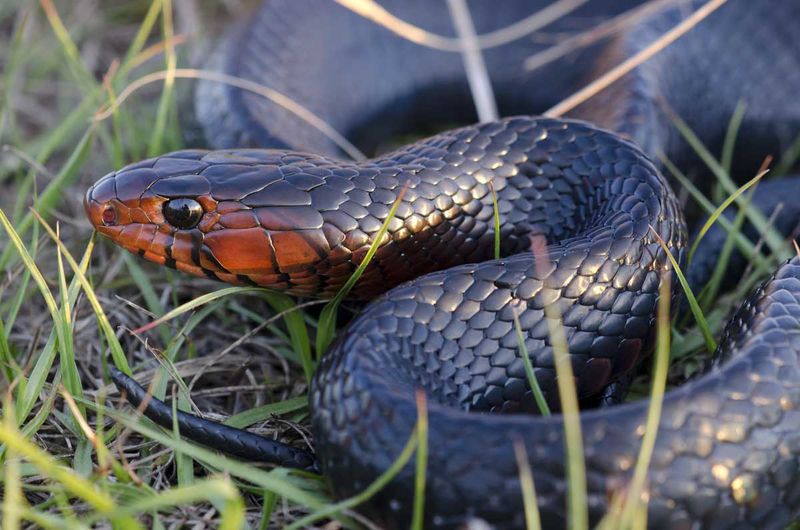
A big, shiny black snake gliding across your Florida lawn can make your heart jump. But if it turns out to be an eastern indigo snake, you just met a rare native that harms no one and deserves respect.
Here is what makes this snake special, what a sighting does and does not mean for your yard, and how to respond safely.
A Protected Native Worth Welcoming
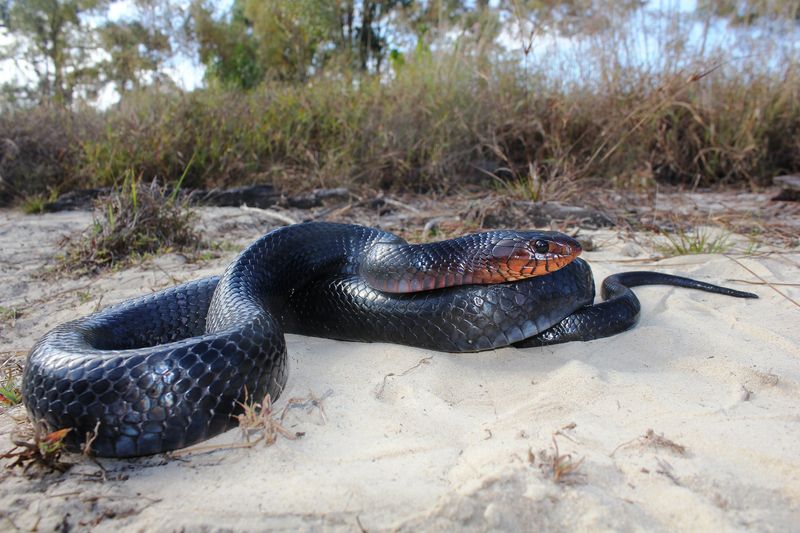
Some wildlife encounters feel like luck, and an eastern indigo snake is one of them. According to the Florida Fish and Wildlife Conservation Commission, this big, nonvenomous snake is a Florida native protected as threatened under both federal and state rules.
That protection exists because the species has lost ground as natural habitat has shrunk.
So the good news is a conservation kind of good news. You are seeing a living piece of Florida’s natural heritage, one that many people never get to see in the wild.
Feeling a little pride and curiosity is a perfectly sensible reaction.
It helps to keep the claim in proportion, though. The indigo is one protected Florida snake, not the only one.
FWC’s overview of amphibians and reptiles lists other protected and threatened reptile species around the state, and they deserve the same respect.
There is also a difference between welcoming a sighting and drawing big conclusions from it. Enjoying the moment is easy.
Deciding what it says about your yard takes a closer look, and we will get to that in a later section.
Its Dark, Glossy Appearance Can Be Easy to Misread
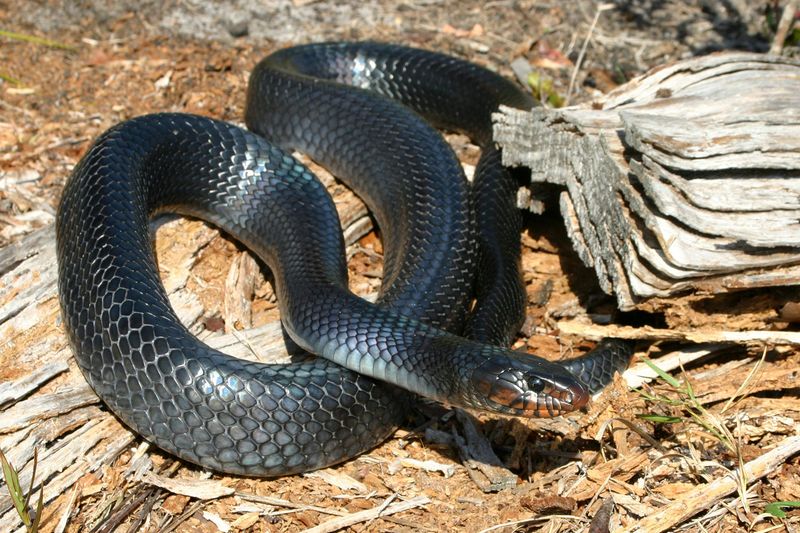
Plenty of Florida snakes are dark, so a quick glance can fool you. The eastern indigo is large and thick-bodied, with smooth scales that look glossy bluish-black, sometimes with blue or purple highlights in bright sun, as the Florida Museum of Natural History describes it.
The chin and throat are often reddish or orange, but FWC notes they can also be cream, white, or dark. Size and color overlap with other dark snakes, so no single feature settles the question.
One common lookalike is the Florida racer. Racers are generally thinner and often show a white chin and throat.
Think of that as a clue, not a verdict.
Here is the rule that matters most: never walk up to a snake, or try to pick one up, to see its chin. Use a phone camera zoom from a safe distance instead.
A blurry photo is a fine result, and a calm exit for you and the snake is a better one.
Its Varied Diet Includes Other Snakes
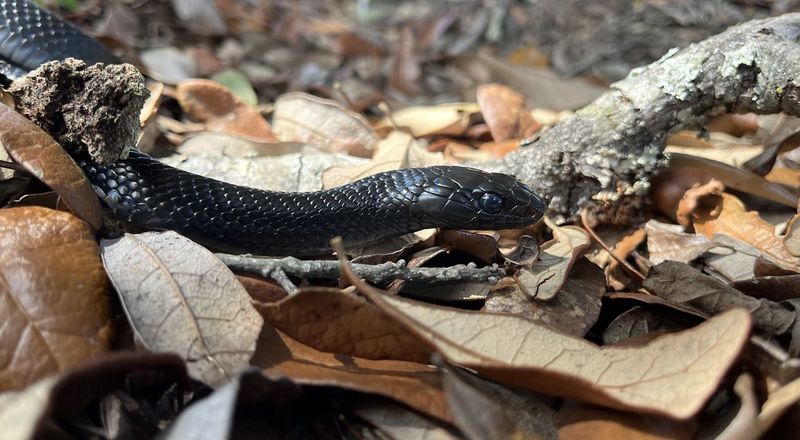
Few things get people talking like a snake that eats other snakes. It is true for the indigo.
The Florida Museum of Natural History documents it eating other snakes, including venomous species.
Snakes are only part of the menu, though. UF/IFAS Extension describes a varied diet that also takes in small mammals and other vertebrates.
In other words, the indigo is a generalist that eats what it can find and overpower.
That variety is why it helps to skip two popular myths. First, the indigo is not a specialized hunter that targets rattlesnakes.
Venomous snakes are simply one kind of prey among many.
Second, it is not a pest-control service. Yes, small mammals such as rodents can be on the menu.
But one passing snake will not clear a shed, garage, or garden of mice or rats, so keep up with normal measures like sealing gaps and securing pet food and trash.
What you can say with confidence is simple: it is a harmless native predator doing what wild predators do.
What a Yard Visit Can—and Cannot—Tell You
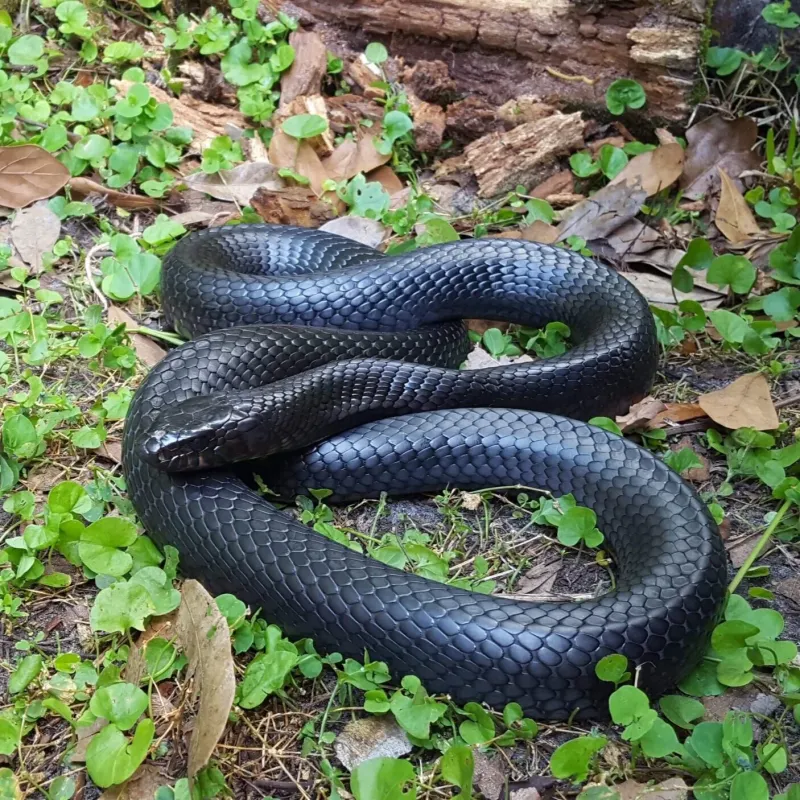
Picture a big snake crossing your driveway at noon. It might live nearby, or it might be halfway through a long trip.
UF/IFAS Extension explains that indigos use multiple habitats and can travel across broad areas, so one sighting does not show that the snake lives there permanently.
It also does not prove a breeding population or exceptionally healthy yard habitat. Those are bigger questions that a single glimpse cannot answer.
Where you live matters too. Indigos are not equally likely everywhere in Florida, and UF/IFAS reports they are very rare or possibly absent in parts of the Panhandle, while populations remain in parts of south-central Florida.
Shelter is another piece. Gopher tortoise burrows are important refuges in parts of the range, especially farther north.
But a USGS-published study in peninsular Florida found indigos used a variety of shelters and depended less on tortoise burrows.
Now the rodent question. Small mammals are part of the diet, but the sources cited here do not show that a visiting indigo will reduce rodents around your home.
FWC’s living with snakes guidance says frequent snake sightings near buildings may point to rodents. That advice covers snakes in general, not indigos specifically.
So take the sighting as a treat, and if rodents are a worry, deal with them directly.
Give It Space and Report the Sighting Safely
If you think you have spotted an indigo, the best move is almost no move. Stay back, keep kids and pets inside or well away, and let the snake continue on its way.
Do not touch it, corner it, or chase it.
It is also against the rules to handle one casually. U.S.
Fish and Wildlife Service guidance says only authorized, permitted individuals may handle an eastern indigo snake. Catching or relocating a suspected indigo is not something a homeowner should try.
If you would like to help scientists, you can. FWC accepts indigo snake sighting reports, and a photo can help with identification.
Take it from a safe distance, using your zoom, and note the date and where you saw it.
Reporting never requires getting closer. A distant, slightly fuzzy picture and a clear location are plenty of information.
Once you have it, step away and let the snake finish its walk.
A Welcome Visitor, Best Left Undisturbed
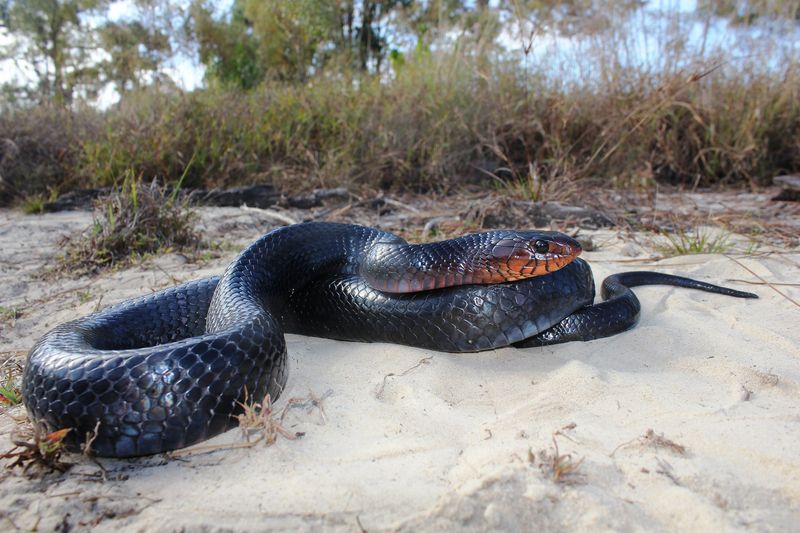
An indigo sighting is a chance to appreciate a protected native, as FWC’s species profile makes clear. It is not a guarantee of rodent control or proof of a healthy yard.
Give the snake room, follow the federal handling rule, and send a report through FWC’s indigo page if you like.
Some of the best wildlife moments last only a minute, and this one is worth a quiet smile.