
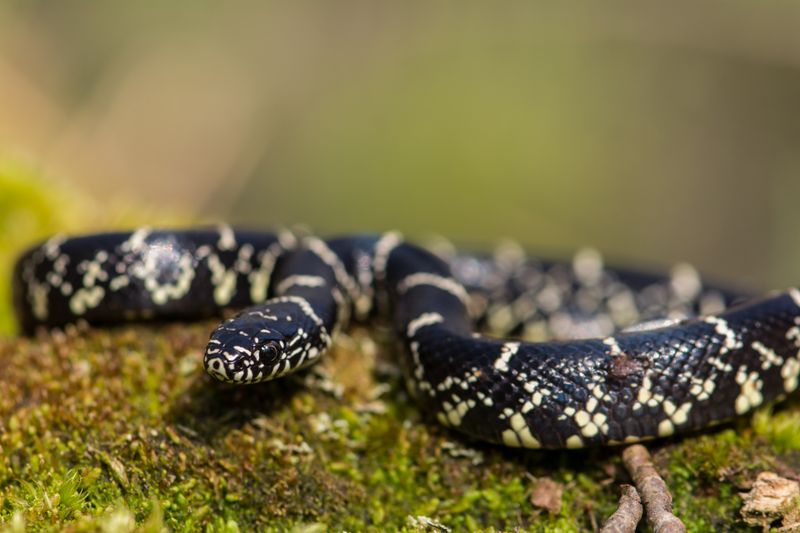
A glossy black snake slides along your garden edge, and your heart skips. In North Carolina, that visitor might be an Eastern Kingsnake, a native and nonvenomous species.
Knowing what a sighting means, and what it does not, helps you keep kids and pets safe while sharing space with wildlife.
Identify the snake cautiously
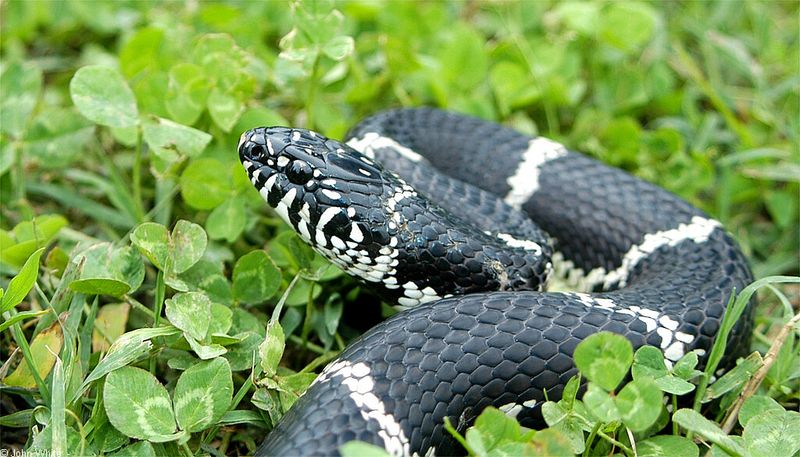
Eastern Kingsnakes are native to North Carolina, and they are nonvenomous constrictors. They kill prey by squeezing rather than biting with venom.
According to the North Carolina Wildlife Resources Commission, they live in many settings, including farms and suburban areas, so a visit to an ordinary yard is not unusual.
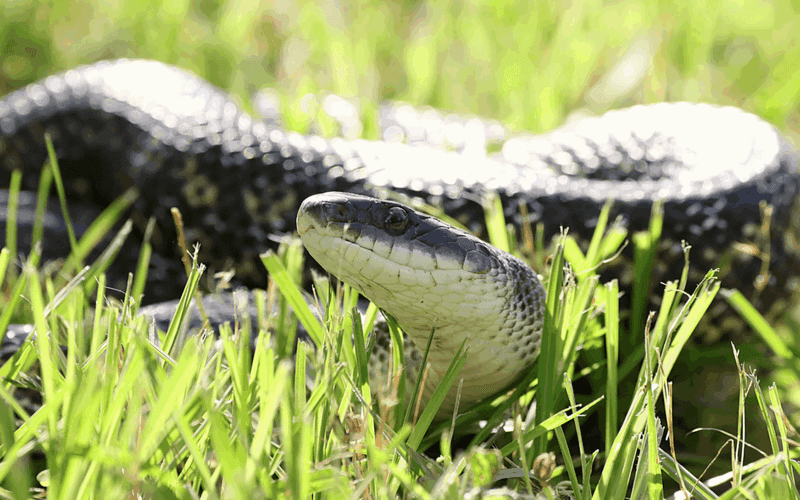
The typical look is a dark, often black back marked with pale, chain-like bars. Those markings are clues, and nothing more.
Snakes vary in color and pattern, and a quick glimpse in tall grass or dim light can fool even careful observers.
Many harmless snakes can resemble one another at a glance, and venomous species live in the state too. A brief look is rarely enough to name a snake with confidence.
Guessing wrong in either direction can lead to risky choices, like walking too close to a snake you assumed was harmless.
If you are unsure what you saw, stay back and keep a comfortable distance. A photo taken from several steps away, using zoom, can help.
Send it to a local wildlife official, extension office, or snake expert for identification instead of relying on a guess.
Until you know what the snake is, treat it with the same respect you would give any wild animal. Call children and pets away, and let the snake go on its way.
Understand its diet and the predator-prey relationship
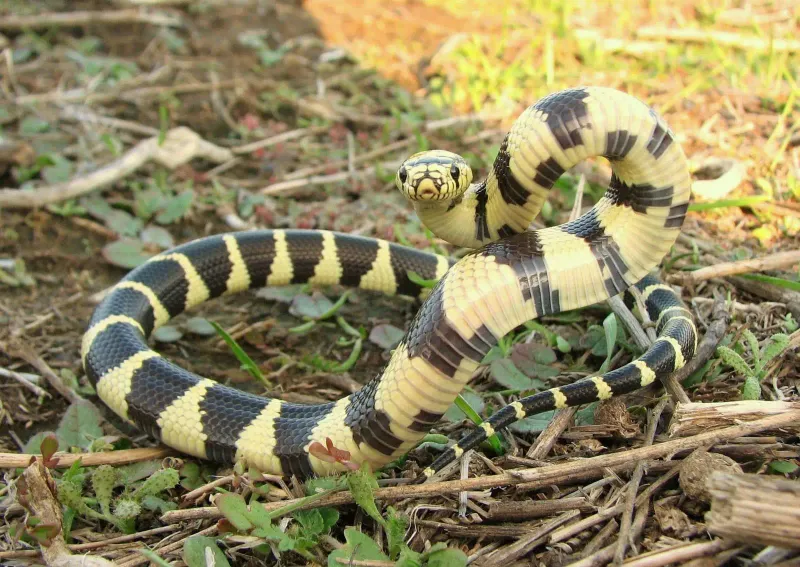
Dinner for an Eastern Kingsnake can be surprisingly varied. NCWRC lists rodents, eggs, amphibians, and reptiles among the foods it eats.
That means a kingsnake may take a mouse when the chance comes up.
A varied menu is not the same as a rodent control service, though. A snake eats what it finds, when it finds it, and it may travel on to the next yard.
Seeing one does not tell you how many rodents live nearby or whether the snake will stay.
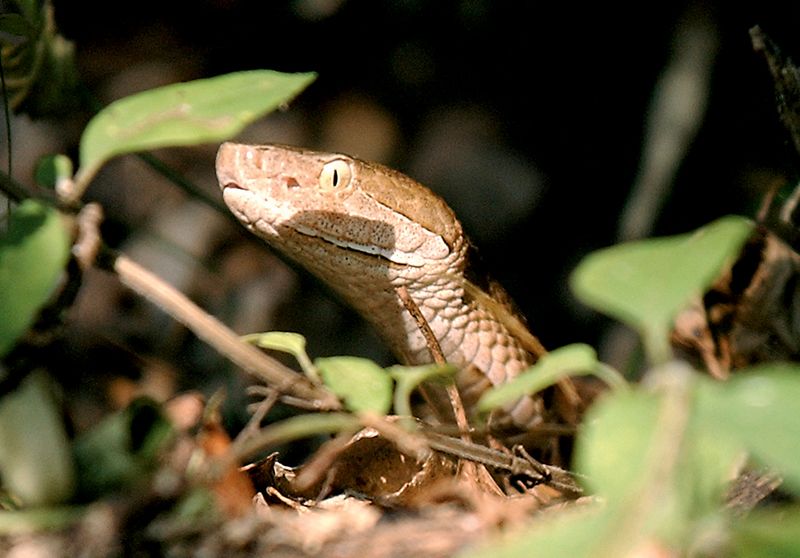
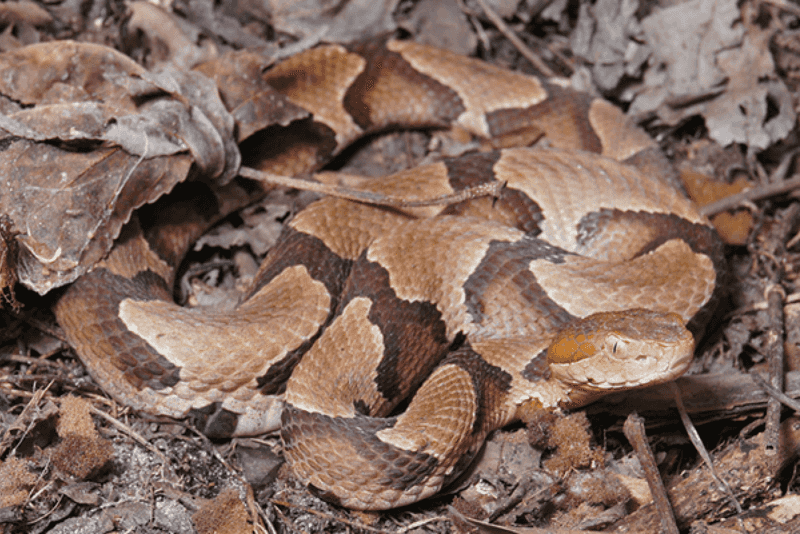
Now for a detail that often gets flipped around. The same NCWRC profile names copperheads among the predators of the Eastern Kingsnake.
In other words, the copperhead appears on the list of animals that can threaten the kingsnake, not on the list of foods the kingsnake is known for removing.
So the tidy story of a heroic kingsnake clearing out dangerous snakes does not match what the agency reports. The better picture is a native, nonvenomous snake that fills its own place in the neighborhood food web.
It eats a mix of small animals and is itself eaten by others.
That is still a good reason to appreciate it. A kingsnake is part of the local wildlife, and it poses no venom risk to your family.
Respect, not hype, is the sensible response.
What the regional abundance study found
Researchers in the southeastern United States looked at snake trapping data from many sites. A U.S.
Forest Service summary of the work reports that kingsnakes and copperheads tended to be less abundant in the same trapping areas. Where one was common, the other was often less so.
The pattern held even after the scientists accounted for some habitat features. That makes it more interesting than a simple coincidence of landscape.
Still, it is a pattern in numbers, not a demonstration of cause and effect.
Two details matter a great deal. First, the study pooled data from several kingsnake species, so its finding cannot be pinned on Eastern Kingsnakes alone.
Second, the full paper describes its result as correlative, meaning the two snake groups moved in opposite directions without proof that one caused the other to decline.
Many things could produce a link like that. Habitat, climate, and other animals in the area may all play a part.
The authors also raised concerns about moving kingsnakes around, noting that relocation may add to kingsnake deaths.
For a homeowner, the takeaway is modest. Across wide regions, these snake groups often show up in a see-saw pattern.
That finding does not say an Eastern Kingsnake eats copperheads, and it does not say one will guard your property.
A kingsnake sighting cannot predict copperhead activity
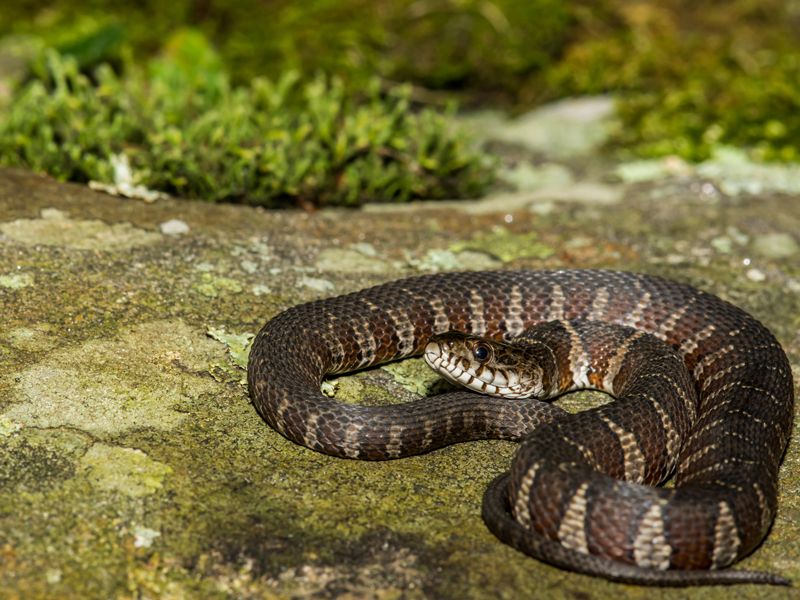
Picture two yards on the same street. One had a kingsnake pass through last week, and the other did not.
Can you say which has fewer copperheads? No, and the research explains why.
The regional work compared trapping areas across a broad landscape. As described in the published paper, it did not test whether a particular kingsnake changes copperhead numbers at an individual home.
A single sighting is one moment in one place.
That means a kingsnake sighting does not prove copperheads are absent. It does not show they will avoid your property, and it does not tell you how many rodents are around.
It also does not predict whether the kingsnake will linger or leave tomorrow.
You may come across lab findings that sound more encouraging. In one laboratory study, pit vipers showed defensive responses to kingsnake chemical cues.
Those were controlled tests, and they do not show that copperheads reliably leave or avoid a real yard where a kingsnake has been seen.
A practical way to handle this is to keep your usual caution no matter what you spot. Watch where you step, check before reaching into woodpiles, and wear closed shoes outdoors.
A kingsnake visit is a nice bit of local wildlife, not a safety signal.
Give snakes space and know how to respond
When a snake turns up, the best first move is to step back. Keep children and pets away, and resist any urge to handle or capture it.
NCWRC notes that most snakes will move on if they are left undisturbed.
Sometimes a snake picks an awkward spot, like a doorstep or driveway. In that case, the agency’s advice is to gently spray it with a garden hose from a safe distance.
The water nudges it along without you getting close.
Do not try to pick it up, pin it, or carry it elsewhere. Most bites happen when people try to handle or kill snakes.
Giving distance protects you and the animal.
If someone is bitten by a suspected venomous snake, get medical help promptly. Call emergency services or head to the nearest hospital.
CDC guidance advises against cutting the wound, sucking out venom, applying ice, or using a tourniquet.
Also, do not try to catch the snake to bring along. Chasing it risks a second bite and wastes precious time.
If you can, note what it looked like from a safe distance and share that with medical staff.
Before the next sighting, talk with kids about the plan. Tell them to stay back, never touch a snake, and call an adult right away.
A calm routine makes the moment far less scary.
Reduce hiding places without promising a snake-free yard
Snakes look for cover, and a few weekend chores can cut down on the spots they like. NCWRC suggests clearing clutter such as stick and rock piles, mowing the lawn, and sealing gaps in siding, foundations, doors, windows, and around pipes.
Walk your property with a short checklist. Look along fences, under decks, behind sheds, and near the foundation.
Tidy what you can, and patch openings where small animals could slip inside.
These steps can reduce hiding places and lower the chance of surprise encounters. They cannot guarantee that no snake will ever visit.
Snakes cross yards while hunting or traveling, and that is normal wildlife behavior.
Fewer hiding spots may also mean fewer places for mice to nest, though that is a side benefit and not a promise. Keep in mind that a tidy yard still deserves watchful habits, especially in warm months when snakes are active.
Back to the question that started all this. A confirmed Eastern Kingsnake is a nonvenomous native animal, and NCWRC’s profile lists copperheads among its predators.
Even the regional study shows only a broad pattern, so it is no proof that copperheads have left your yard.
A kingsnake is a neighbor worth leaving alone, and a good reminder to keep your yard in order.