
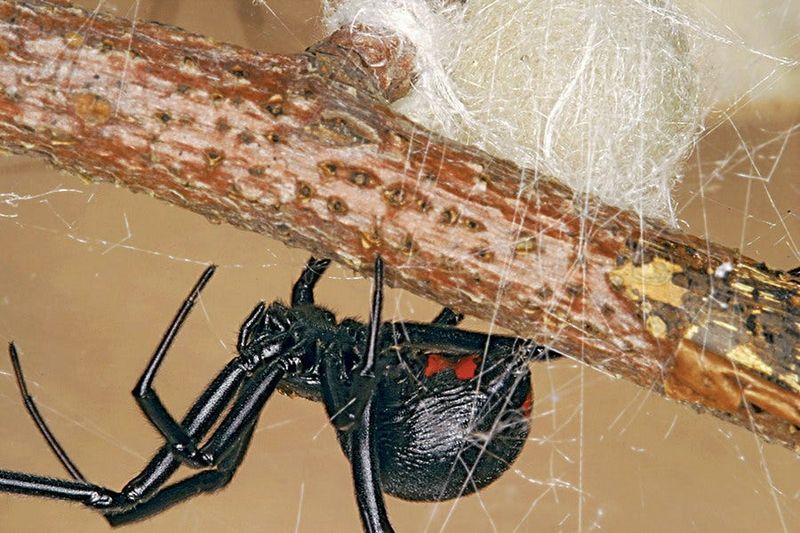
You reach for a log and spot a shiny black spider tucked into the stack. Your first thought may be to worry about your family and your yard.
A black widow sighting can feel scary, but it tells you less than you might think. Here is what it does say, what it does not, and how to handle firewood with more confidence.
A woodpile can offer a widow shelter
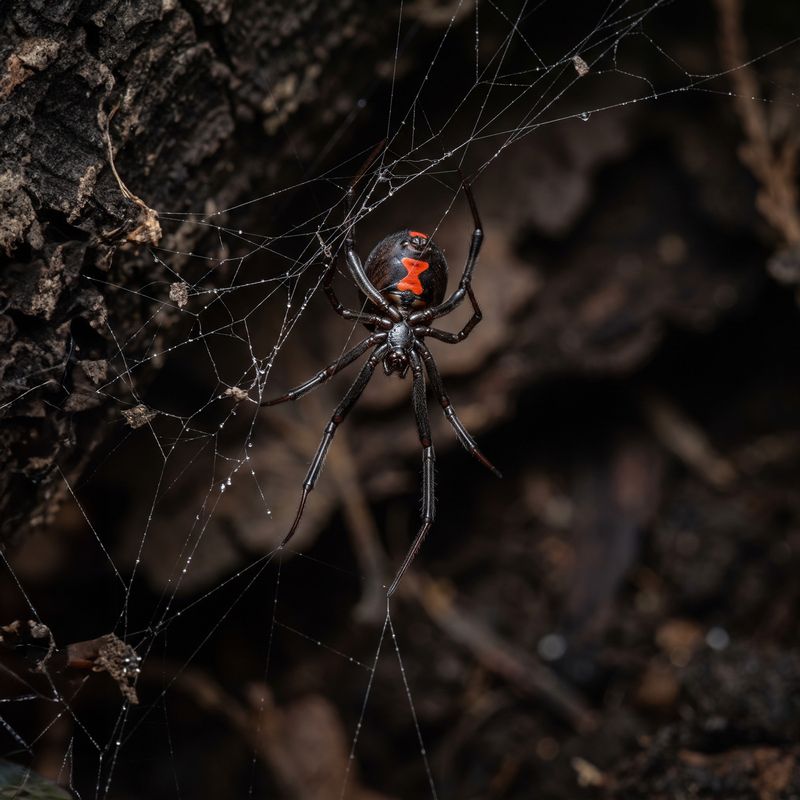
Stack a few dozen split logs together and you create something spiders love: dark gaps, steady cover, and very little disturbance. NC State Extension lists protected spots such as wooden boards, rocks, and dense growth as places black widows favor.
A woodpile fits that description well, especially one that sits untouched for weeks at a time.
A female black widow builds a tangled, messy-looking web in those gaps. The web catches insects that wander by, and sometimes it catches other spiders too.
She usually stays close to her web, which is why a sheltered corner can hold the same spider for a long time.
So when you find one, the most direct message is simple. That stack offers cover where a spider can hide and set up a web.
It does not mean your pile is unusually productive, and it does not mean the whole yard is unsafe.
Think of it the way you might think of a bird nesting in a porch light fixture. The spot happened to suit the animal.
Wood stacked tight against a fence, a shed wall, or a thick patch of brush gives even more of the quiet, tucked-away space these spiders look for.
The practical takeaway is about the pile itself, not about your yard as a whole. The more tightly packed and long-untouched a stack is, the more hiding places it offers.
That is worth keeping in mind each time you reach in for firewood.
Fall is context, not a North Carolina forecast
Late summer and fall come up often in spider talk, and there is a reason. Alabama Cooperative Extension describes adult southern black widows as most prevalent in late summer and fall across the southeastern United States.
That is regional background, and it is not a promise about your North Carolina yard.
Nothing in that guidance shows a predictable jump in numbers around North Carolina woodpiles each fall. It also does not show that widows move indoors every autumn.
Black widows live across the state, and NC State notes that encounters with people are relatively rare.
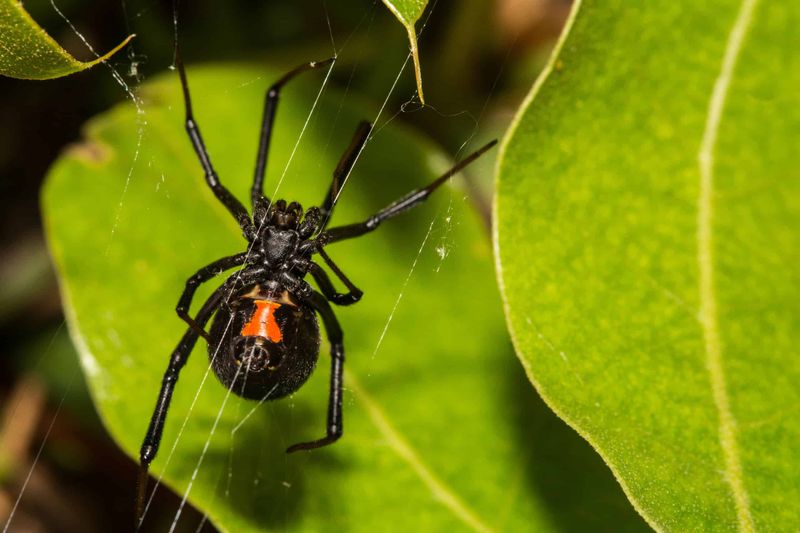
Identification is the other catch. Adult female southern black widows are shiny and often show a red or orange mark on the underside.
Young spiders, though, can be pale or striped, and North Carolina also has the northern black widow, whose hourglass may be split or incomplete, as noted in NC State’s spider guide.
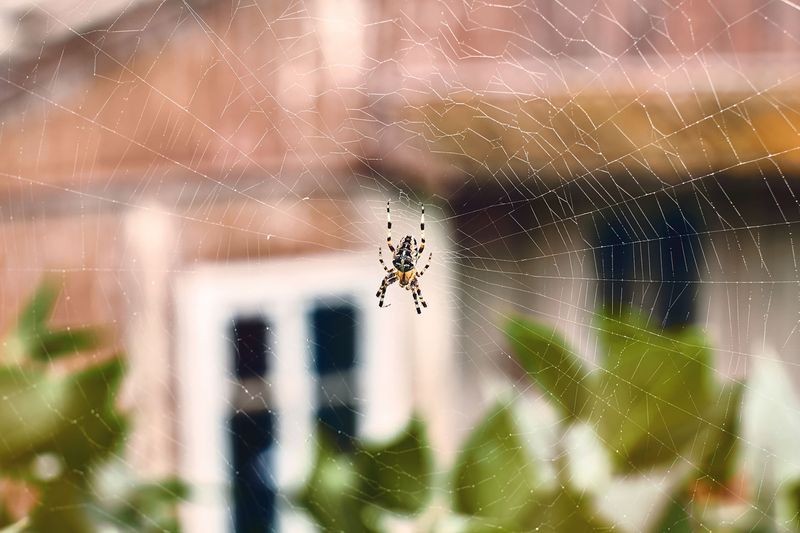
A dark spider with some red on it is not automatically an adult female black widow. A big, bold spider in an open garden web in October is more likely a yellow garden spider, which NC State gives as a common fall sight.
If you cannot tell, treat it with the same distance and care you would give a widow, and do not try to catch it.
One sighting does not diagnose your yard
Spiders tend to turn up where insects are plentiful, and NC State Extension mentions woodpiles among those places. That is a general pattern.
One widow in one stack is not a reliable count of the bugs around you.
A single spider also does not prove an infestation, a dirty yard, or a neglected property. Tidy yards have widows too, because a stack of wood gives them what they need no matter how well the lawn is kept.
Judging your yard by one sighting would only lead to worry that is not backed up.
Spiders are also useful predators, and NC State says outdoor pesticide applications aimed at spiders are largely unnecessary and should be avoided. Spraying the yard can also hit insects and other wildlife you would rather keep around.
For ordinary control, removing webs is often enough. Wear gloves, use a long stick or broom handle, and knock down webs around the pile, the shed, or the porch rail.
Check back now and then, since widows often rebuild in a favorite spot.
If widows keep showing up in the same places, ask a licensed pest professional for targeted advice that follows the product label. That is a better next step than a broad yard treatment.
Handle firewood with care
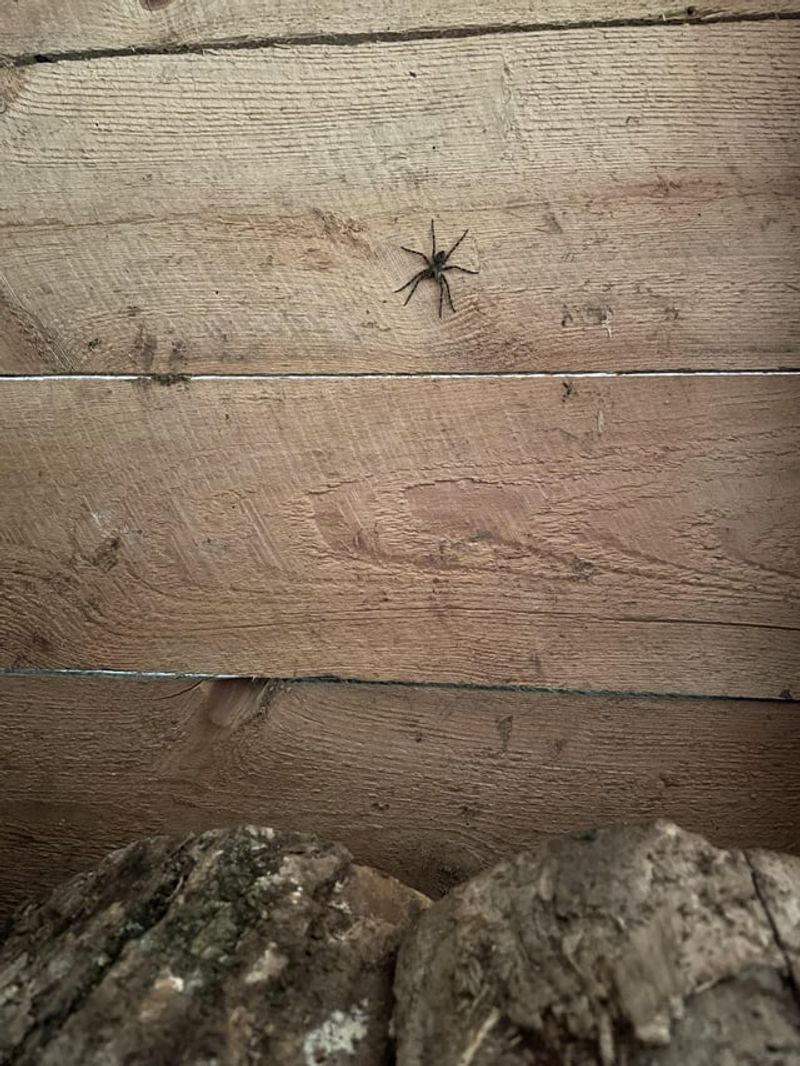
Most bites happen when a spider gets touched or trapped, so the goal is to avoid surprising one. CDC and NIOSH say spiders are usually not aggressive, and they recommend gloves and protective clothing around stacked or undisturbed materials.
Start with sturdy work gloves every time you handle firewood. Before you reach into a gap, look first, and use a flashlight if the stack is dim.
Never reach blindly into the pile, and never try to grab or capture a spider with bare hands.
Clothing and shoes matter too. Boots, gloves, or jackets left unused in a shed or on the porch can make a quiet hiding place, so shake them out before you put them on.
Where you put the pile helps as well. UC IPM suggests stacking wood away from the house, which also cuts the chance of carrying a spider indoors.
Bring in only what you will burn soon, and give each log a quick look and a gentle knock before it crosses the door.
None of this guarantees a stack will be spider-free. These are simple habits that lower the odds of accidental contact, and they take only a few extra seconds per armload.
Respond promptly to a suspected bite
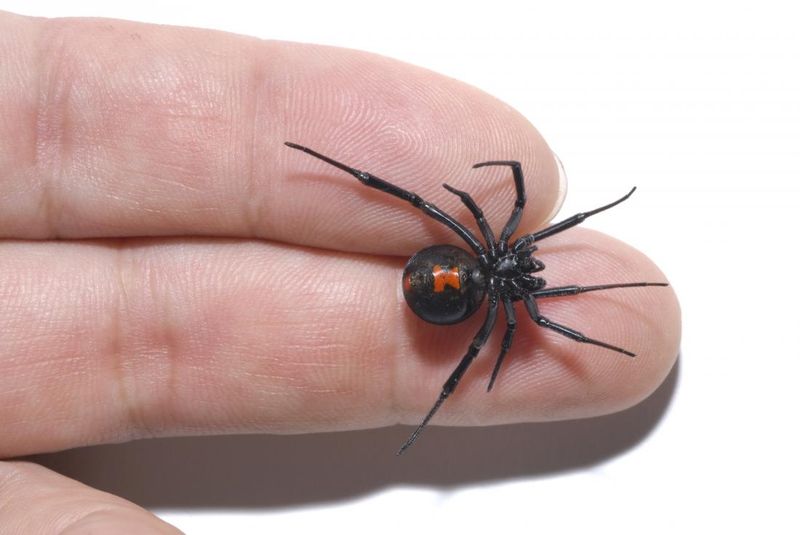
A black widow bite can be medically significant. According to NC Poison Control, a bite may cause pain and, in more serious cases, muscle cramping, nausea, weakness, or breathing difficulty.
Because a spider can be hard to identify, you do not need to be certain it was a widow before taking sensible steps.
Start by washing the area with soap and water. Then call NC Poison Control at 1-800-222-1222 for guidance.
The line is there for exactly this kind of question, and the staff can help you decide what to do next.
Seek medical attention for severe muscle pain, excessive nausea or vomiting, weakness, or difficulty breathing. Do not wait to see whether those symptoms pass, and do not downplay them, especially in children or older adults.
Keep the risk in proportion, too. NC State reports that encounters with people are relatively rare, as described in its guide to spiders after storms.
Poison Control also says death after a black widow bite is very rare.
That balance is the point. A bite deserves a prompt, calm response and a call for advice, and a sighting on its own is not a reason to panic.
Treat a sighting as a cue for care, not alarm
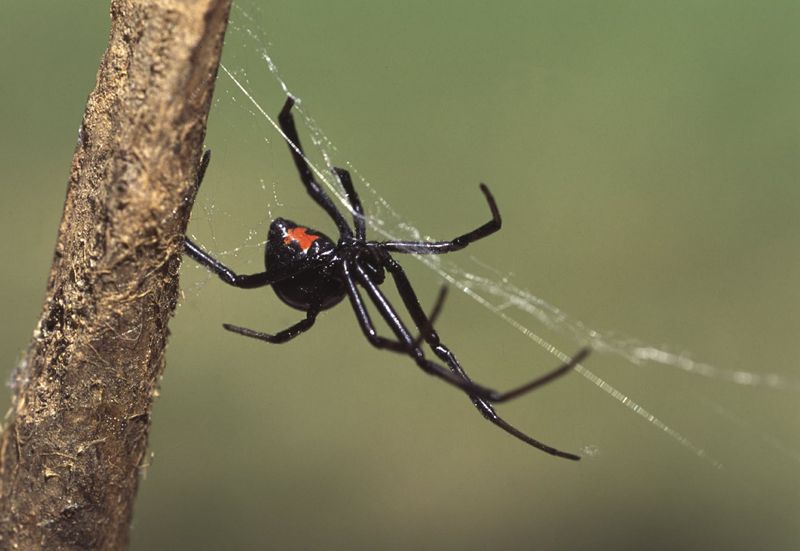
A black widow near your woodpile mostly says that the stack offers shelter. It does not point to a yard-wide problem, and NC State favors simple steps over broad spraying.
Gloves, a quick look, and a bit of distance from the house go a long way.
If you ever suspect a bite, call NC Poison Control at 1-800-222-1222.
A stack of logs can hold a small surprise, and a pair of gloves handles most of it.