
Pine straw looks tidy until a hard Florida rain sends it across the lawn. Living groundcovers can fill bare soil instead, giving beds color and helping slow erosion.
The right pick depends on your sun, shade, and how wet the ground gets. Here are seven Florida natives that can make storm cleanup easier once they are established.
1. Sunshine Mimosa
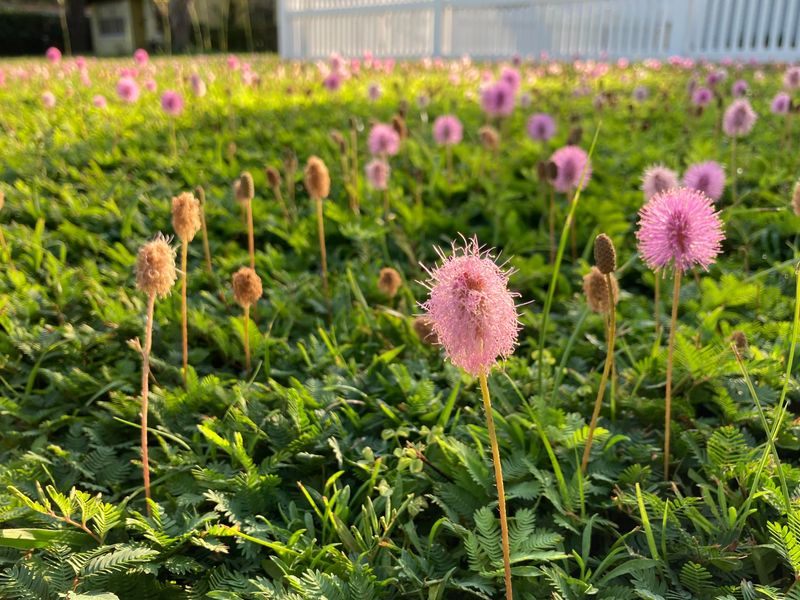
A pink puffball flower popping up beside the walkway is a cheerful upgrade from scattered pine straw. Sunshine mimosa spreads along the ground on creeping stems and makes a low, leafy cover for sunny Florida yards.
It is especially useful where a traditional lawn struggles but people still need occasional access across the space.
Give it full sun and well-drained soil, including the sandy ground common in much of Florida. Space starter plants so their stems have room to spread, and water them regularly until new growth takes hold.
Once established, sunshine mimosa tolerates dry spells and can handle light foot traffic, though a daily shortcut is better served by stepping stones.
Its stems root as they travel, helping the planting hold its place better than loose mulch during ordinary heavy rain. The flowers also offer food for visiting pollinators.
Keep an edge along sidewalks or beds if you want a neat outline, and pull weeds while the cover is filling in. No living plant is storm-proof, especially before its roots develop, but an established patch leaves far less loose material to rake back into place.
2. Frogfruit
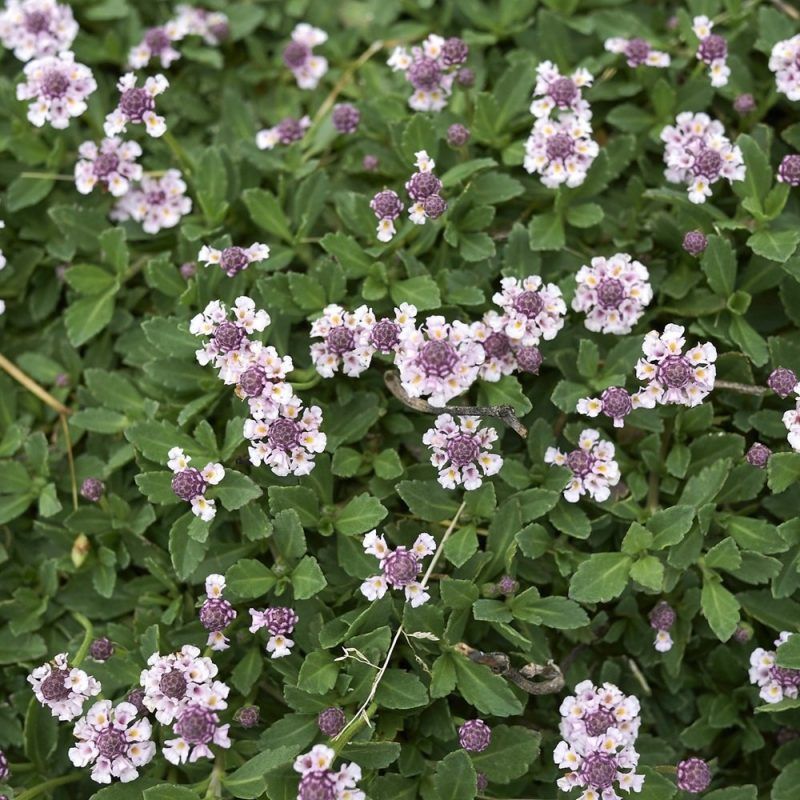
Butterflies can turn a plain strip of ground into the most watched part of the yard. Frogfruit earns its spot by staying low, spreading into open spaces, and producing small flowers that attract pollinators.
For a sunny bed where pine straw keeps washing toward the driveway, it offers a living surface instead of another layer to replace.
Plant frogfruit in sun to part shade and give it water while it establishes. It grows in a range of Florida soils and can cope with periodic wet conditions better than some dry-site groundcovers, making it worth considering near a rain garden or a low part of the yard.
It is not a fix for standing water that never drains, so watch the site after a storm before planting.
Frogfruit spreads readily, which is helpful for coverage but calls for a little boundary work. Trim runners away from paths and young plants you do not want it to overtake.
You can mow a large patch occasionally if you prefer a shorter, tidier look, but leaving some flowers supports visiting insects. As its rooted stems knit across the soil, there is less bare ground for rain to splash and fewer loose pieces to blow around.
3. Dune Sunflower
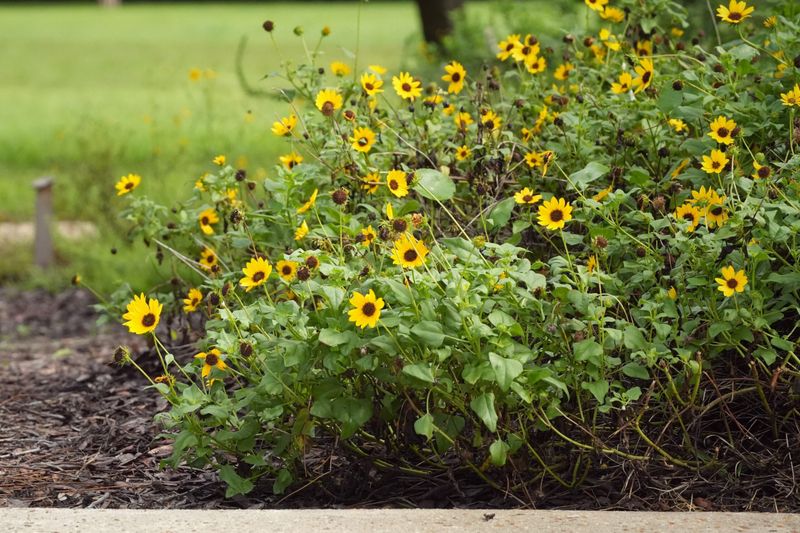
Some beds bake in the sun all afternoon and never seem to keep their mulch. Dune sunflower is made for bright, sandy places, where its spreading stems and golden flowers can soften a bare stretch near a driveway or coastal home.
Compared with a quiet green groundcover, it brings a bold, informal look that is easy to spot from the street.
Choose a well-drained spot with plenty of sun. Dune sunflower is well suited to dry, sandy conditions once established and is a natural fit for many coastal landscapes.
Water new plants until their roots settle in, then avoid treating the bed like a moisture-loving flower border. Rich soil, heavy watering, and deep shade are not the route to a sturdy planting.
Expect it to spread beyond a small, sharply edged space. Give it room, or cut stems back when they reach a path or block a low window.
Its flowers can draw bees and butterflies, while the leafy growth covers soil that would otherwise be exposed to wind and rain. In a severe storm, stems and blooms can be battered, but established plants can regrow.
Use it for sunny ground coverage, not as a promise that every flower will look untouched afterward.
4. Railroad Vine
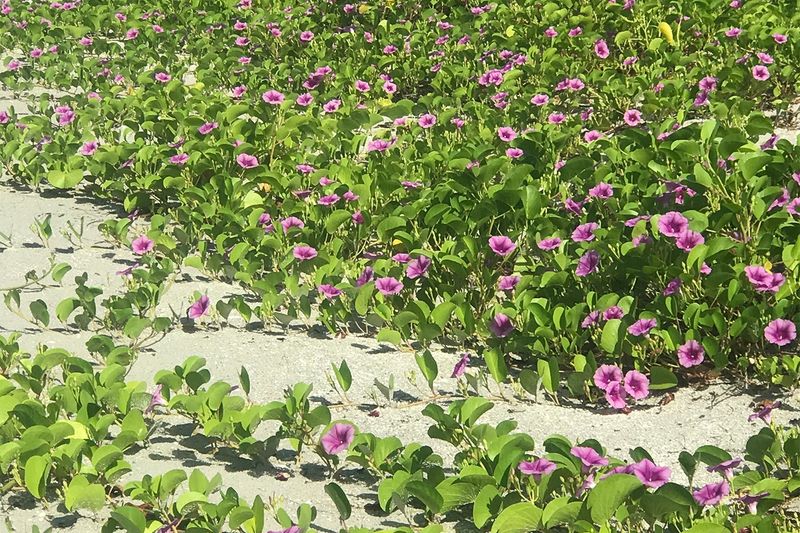
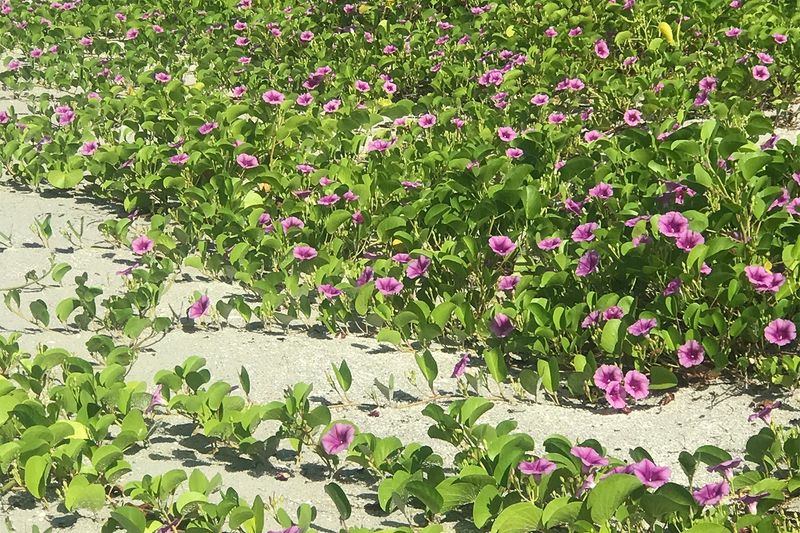
On a windy coastal lot, a light blanket of pine straw can disappear in one rough afternoon. Railroad vine answers with long, ground-hugging stems that root as they spread through sand.
Its rounded leaves and pink-purple flowers give an open, beachside planting color without asking loose mulch to do the job of a rooted plant.
Reserve this vigorous native for a roomy, sunny, sandy site, especially one near the coast. It tolerates salt spray and is known for growing on dunes, where its spreading habit helps stabilize sand.
Set young plants where their vines can travel without swallowing a sidewalk, driveway edge, or smaller garden favorites. Water during establishment, and keep people from repeatedly walking across new growth.
Railroad vine is the pick for scale, not for a tiny formal bed. Check its reach now and then, and redirect or prune stems that head somewhere inconvenient.
Do not plant it on a protected dune without checking local rules or disturbing existing vegetation. Even this tough vine cannot guarantee that sand stays put in a hurricane or storm surge, but in an appropriate coastal yard, its rooted growth is far better suited to exposed ground than a fresh layer of pine straw.
5. Twinflower
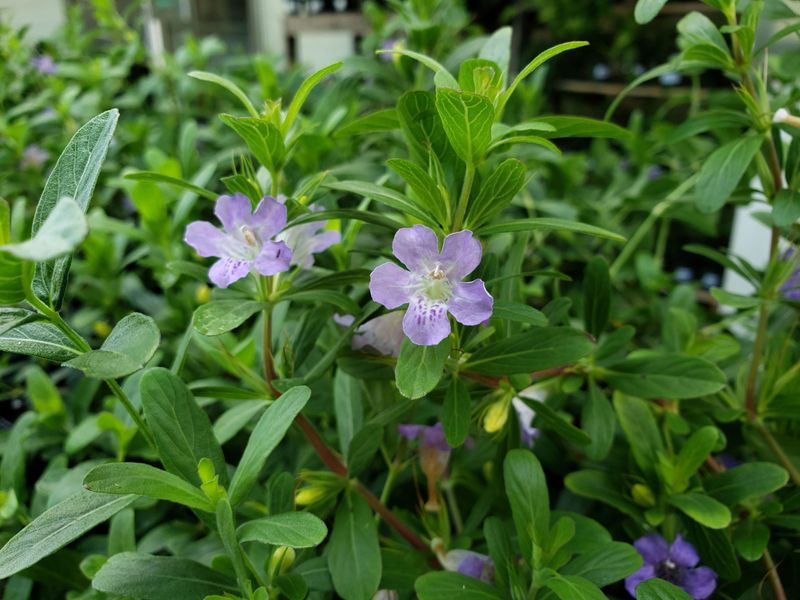
Under a tree, the problem is often the opposite of a sun-baked bed: too little light for the showy groundcovers. Twinflower fills that gap with low green growth and small lavender blooms.
It gives a shaded or partly shaded Florida border a planted look without piling pine straw against trunks or watching it drift after rain.
Try twinflower beneath open tree canopies or along a bed that gets gentle morning sun. It prefers reasonably well-drained ground, so check whether tree roots or a nearby downspout leave the soil unusually wet.
Clear weeds before planting, space plants for gradual coverage, and water them through establishment. A thin layer of mulch between new plants is fine at first; as twinflower spreads, you should need less of it.
Its appeal is restraint. Twinflower stays lower and looks softer than the large, fast-moving vines that suit coastal sand, making it easier to work into a front-yard planting.
Trim edges when needed and avoid raking hard through the patch after a storm. Rooted plants can help protect soil from rain splash, though heavy runoff from a roof may still require a drainage fix.
Choose this native when shade, rather than wind or salt, is the reason your old mulch bed never looks finished.
6. Creeping Sage
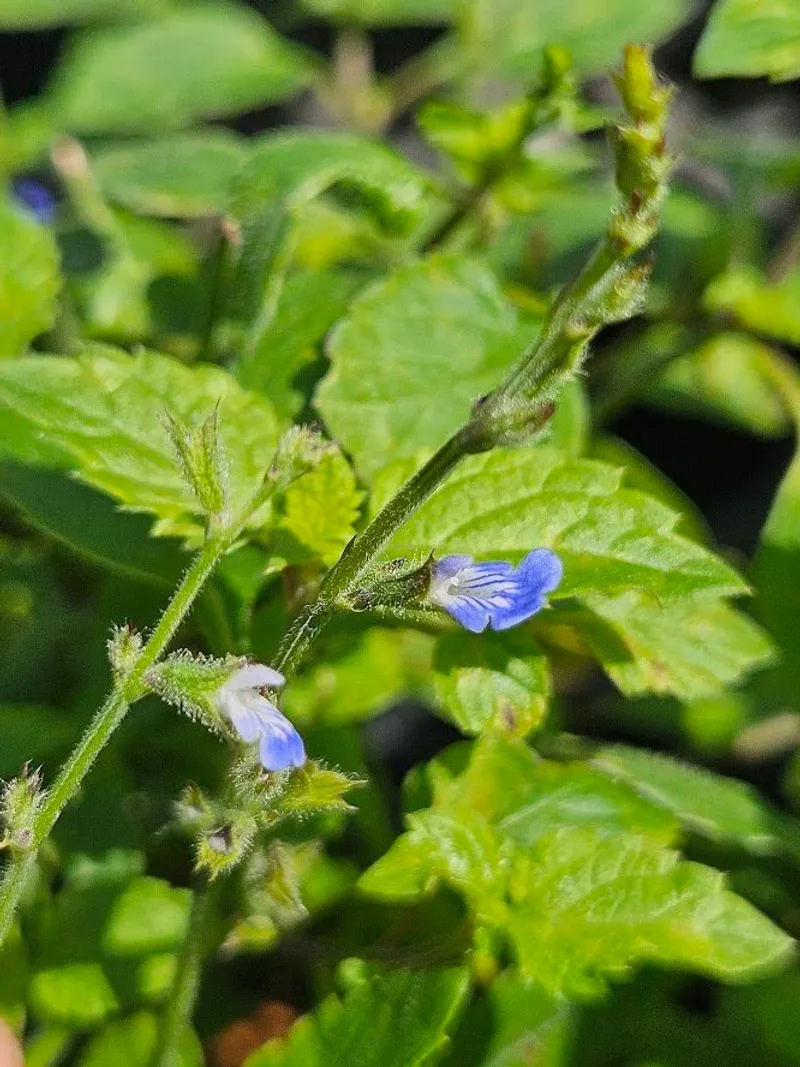
A shady corner does not have to be a permanent patch of bare dirt and soggy pine straw. Creeping sage is a low Florida native with small blue flowers that can bring life to a sheltered bed.
It is a particularly useful choice where filtered light reaches the ground but full-sun plants thin out or fail to bloom.
Give it shade to part shade and soil that holds some moisture without remaining flooded. That makes it a different tool from dune sunflower or railroad vine, which belong in much sandier, sunnier settings.
If your soil dries quickly under tree roots, water new plants regularly and check them during extended dry spells. Weed around them gently until their spreading stems have enough room to fill the gaps.
Place creeping sage where its small-scale details can be enjoyed, perhaps beside a shaded path or near a porch. Its flowers can serve visiting pollinators, while its foliage helps cover the soil that rain would otherwise hit directly.
Keep it out of the strongest runoff channel; rooted groundcover is not a substitute for fixing a downspout that dumps water into a bed. For a protected, lightly moist corner, though, it offers color and coverage without the routine of sweeping mulch off the walk.
7. Coontie
Want the bed beside your front steps to look planted even when nothing is blooming? Coontie brings year-round structure with dark green, fernlike leaves.
It is a low-growing cycad rather than a spreading carpet, so its job is to fill a foundation bed with durable clumps instead of creeping across every inch of soil.
Plant several coonties in a group, allowing for their mature width, if you want to replace most of the visible pine straw. They suit sun to shade and prefer good drainage, which makes them useful in many Florida sandy-soil landscapes.
Water young plants until established, then let their slow, steady growth do the work. You may still need a little mulch or low companion planting in the gaps while the group fills out.
Coontie is the host plant for the atala butterfly, adding a wildlife benefit to a tidy entry planting. Keep it back from narrow walks so mature leaves do not crowd people passing by.
Its roots stay in place when loose pine straw blows away, although storms can still damage foliage or bring down branches above it. All parts of coontie are toxic if eaten, so choose another plant where pets or children are likely to chew it.
For a neat, lasting bed, its sturdy shape is the draw.