
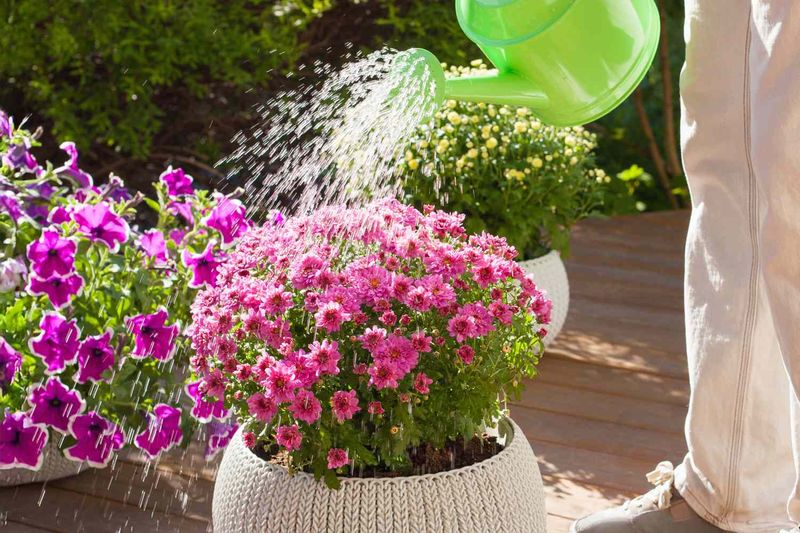
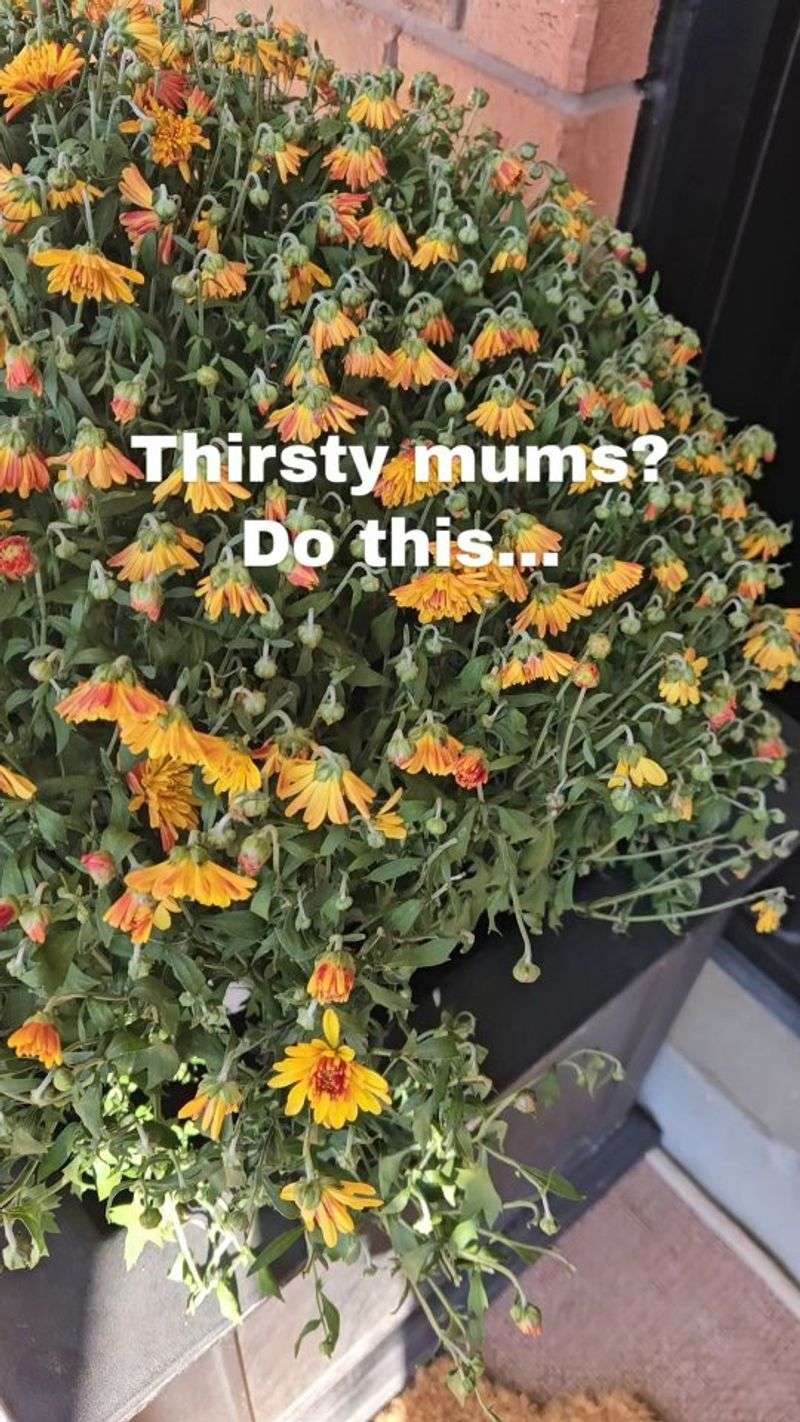
You bring home a mum covered in blooms, water it well, and a few days later the whole plant droops. It is easy to think the plant just needs more water.
Sometimes the problem is hiding inside the pot, where water can slip past a very dry root ball. A quick check of the mix can tell you what your mum really needs.
Why can a mum wilt after water runs out of the pot?
Picture pouring water on a dry sponge that has turned hard. Much of it rolls off instead of soaking in.
Very dry potting mix can act the same way, and UC Cooperative Extension explains that water can run down the pot wall or through channels while the center stays dry.
That means water draining from the bottom does not prove the whole root ball got wet. A mum can still be short on moisture even after you watered it.
Rootbound nursery plants may be especially prone to this pattern, since the tight roots and compact mix leave little room for water to spread. Still, rootbound and water-repellent are not the same thing.
Dried peat-containing potting mix can resist re-wetting even when roots are not crowded.
Neither condition tells you why your particular mum wilted. A dry root ball is one possible explanation, and Iowa State guidance notes that small containers leave little margin when watering is missed.
Heat, wind, and soggy mix can cause drooping too.
Check the mix before you reach for the watering can
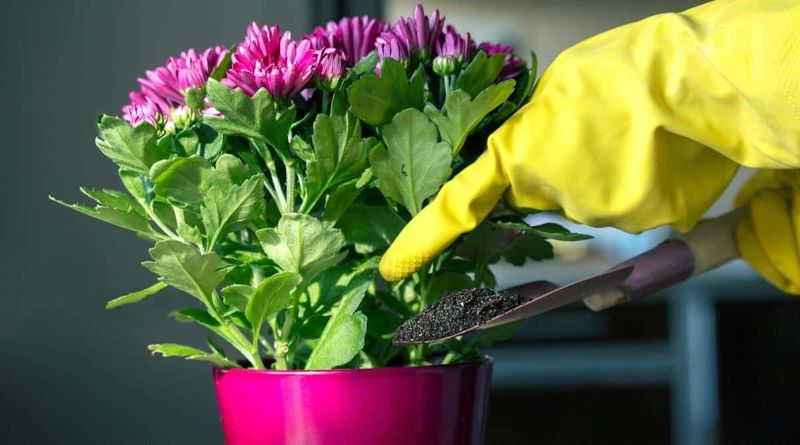
Before you water a drooping mum, give it a quick hands-on test. Push a finger about two inches into the mix near the plant, then lift the pot to feel how heavy it is.
A dry pot feels surprisingly light, and a well-watered one feels hefty.
Dry, crumbly mix that has pulled away from the pot edge fits the dry-root-ball explanation. In that case, the plant may need a slow, careful re-wetting, which comes next.
UC guidance is a good reference for spotting this.
If the mix is damp or soggy, hold off. Iowa State Extension and Virginia Cooperative Extension both note that overwatering can cause wilting too.
Yellow, soft, or mushy leaves paired with wet mix point away from simple thirst.
Wilt is a symptom, not a diagnosis. The mix tells you the rest of the story.
Re-wet a very dry root ball gradually
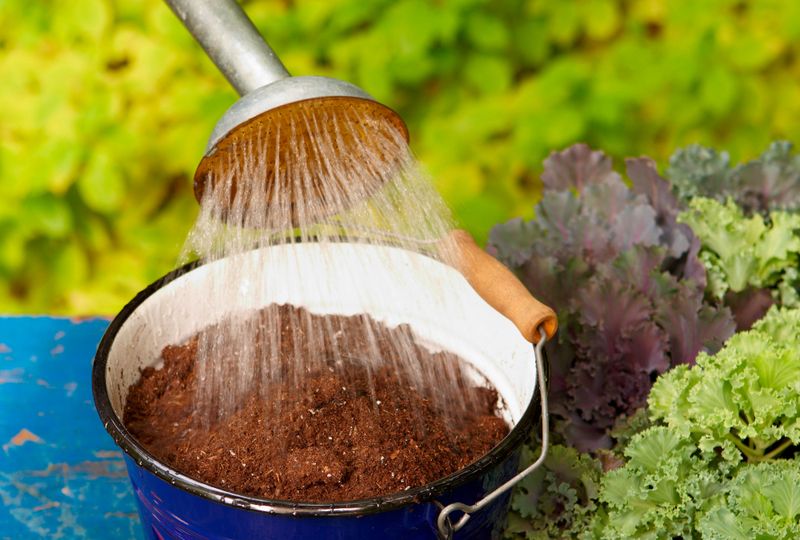
Once you know the mix is bone dry and repelling water, patience works better than force. One option is several slow rounds of watering, letting each one soak in before the next.
Another is a slow trickle at the base so water has time to creep into the mix.
You can also set the pot in a basin of water briefly so the mix absorbs moisture from below. Iowa State gives about 30 minutes as a soak for soil that has pulled away from the pot sides.
Do not leave the pot sitting there all day. UC guidance says to remove it once the mix is hydrated rather than letting it soak continuously.
Afterward, lift the pot and feel the weight, then press the mix with a finger. It should feel evenly damp, not dusty in the center.
This step is for rescue only, not a routine.
Make checking—not the calendar—your watering habit
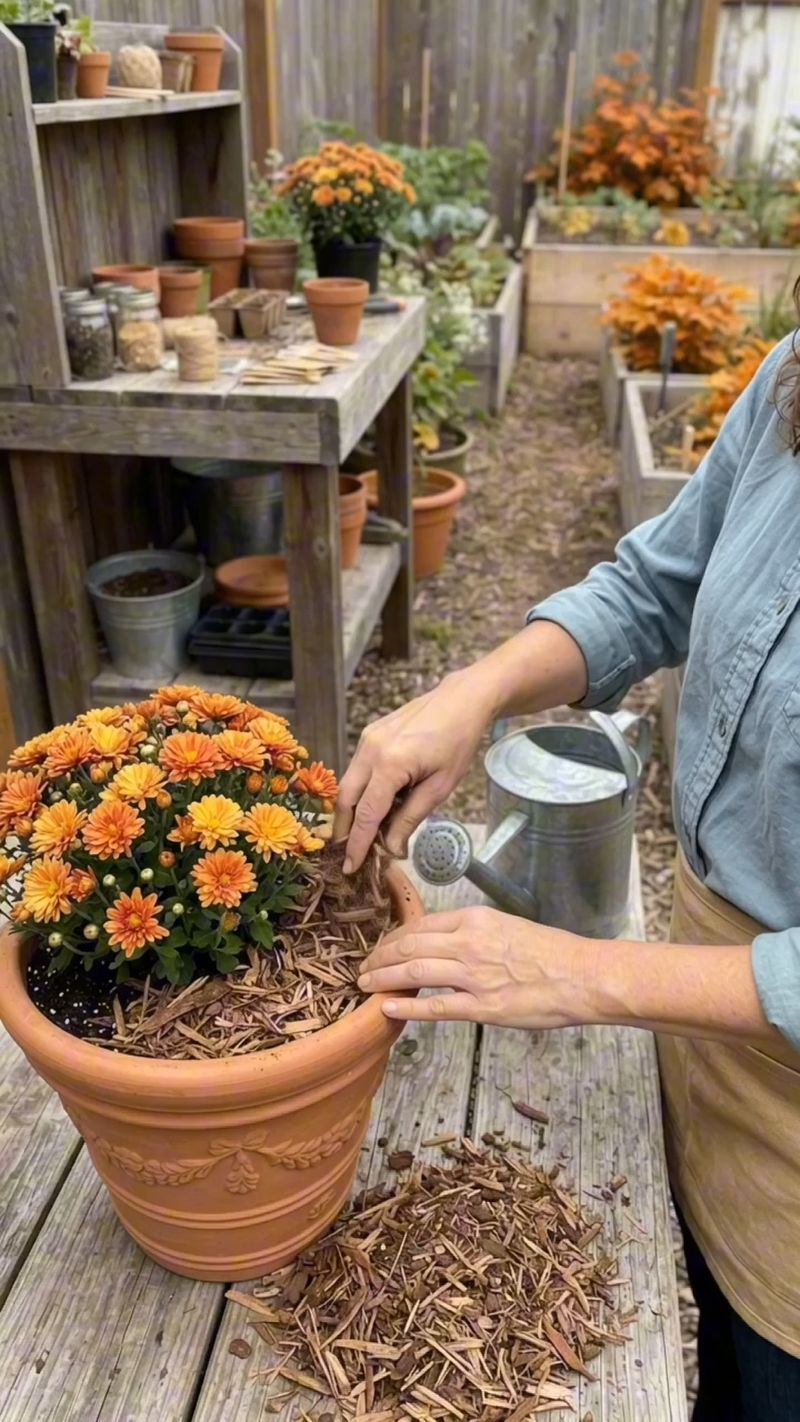
Hot, windy porches can dry a container fast, while a cloudy stretch may keep it damp for days. That is why a fixed schedule often fails.
Make a quick finger check part of your morning, and water only when the mix is dry.
When it is dry, pour water at the soil near the plant until the excess drains from the bottom. Mississippi State Extension advises keeping fall mums consistently watered and warns that a water-stressed mum may stop flowering.
In a Florida or Texas stretch of heat and wind, containers may need daily checks, and sometimes more frequent watering. Iowa State notes that container size, wind, heat, and mix all change how often a pot needs water.
Consistent does not mean constant. It means the mix never gets bone dry and never stays soaked.
Keep drainage open after the root ball gets wet
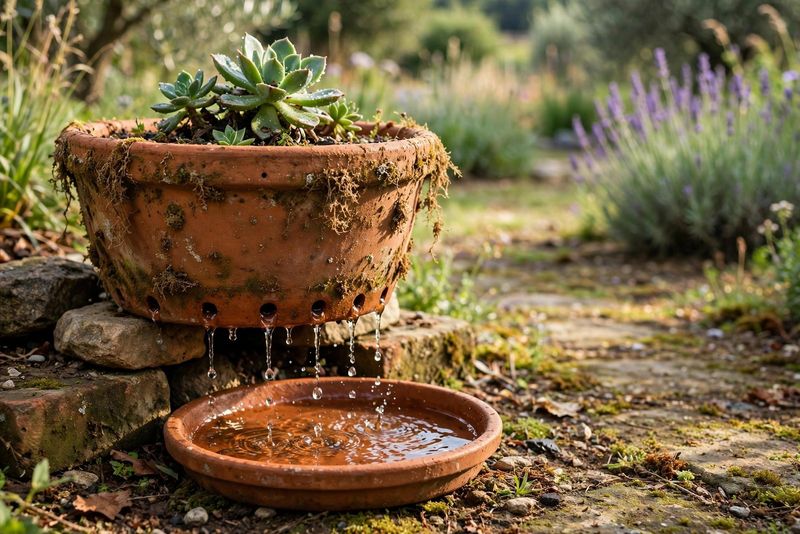
A rescue soak can backfire if water has nowhere to go. Make sure the drainage holes are clear of roots, debris, or a decorative cachepot that traps water.
Tip out any water sitting in the saucer soon after watering.
Roots need air as well as moisture. Iowa State Extension explains that saturated mix reduces the oxygen available to roots, and Virginia Cooperative Extension notes that prolonged wetness can damage roots and cause wilting.
So if your mum droops a day after a soak, resist the urge to repeat it. Check the mix first.
Heavy, wet mix means the plant is likely not thirsty.
After heavy rain, move the pot under cover or tilt it to shed extra water.
Better watering cannot promise weeks of flowers
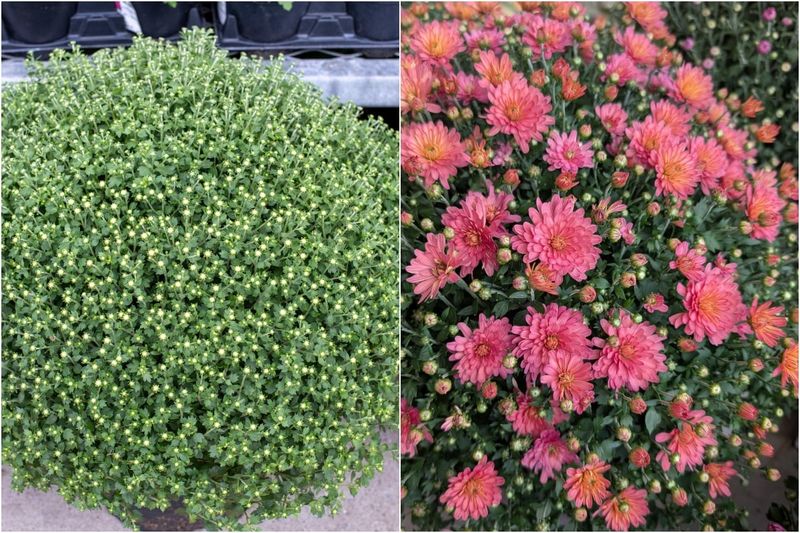
Good watering helps a mum avoid water stress, but it cannot set a bloom timer or bring back flowers that have faded. Display time depends heavily on how far along the blooms already are.
Missouri Extension says mum blooms can provide color for weeks, with cooler weather tending to help flowers last and heavy frost fading the color. Plants with tight buds have more unopened bloom left than plants already in full flower.
If you want a longer show, shop for mums just starting to show color. Mississippi State Extension offers similar advice for fall mums.
Check the mix, water thoroughly when it is dry, and let the weather do the rest. A mum is a short, bright guest, and a little attention helps it stay longer.