
Every yard seems to have one spot where water sits after a storm and the grass turns to brown mush. Most folks plug in liriope and hope for the best, but that Asian import can spread into nearby woods and does little for local wildlife.
North Carolina has its own plants that actually love wet feet, stay tidy, and feed birds, butterflies, and bees. Here are nine natives that can turn that soggy low spot into the best-looking corner of your yard.
1. Swamp Milkweed (Asclepias incarnata)
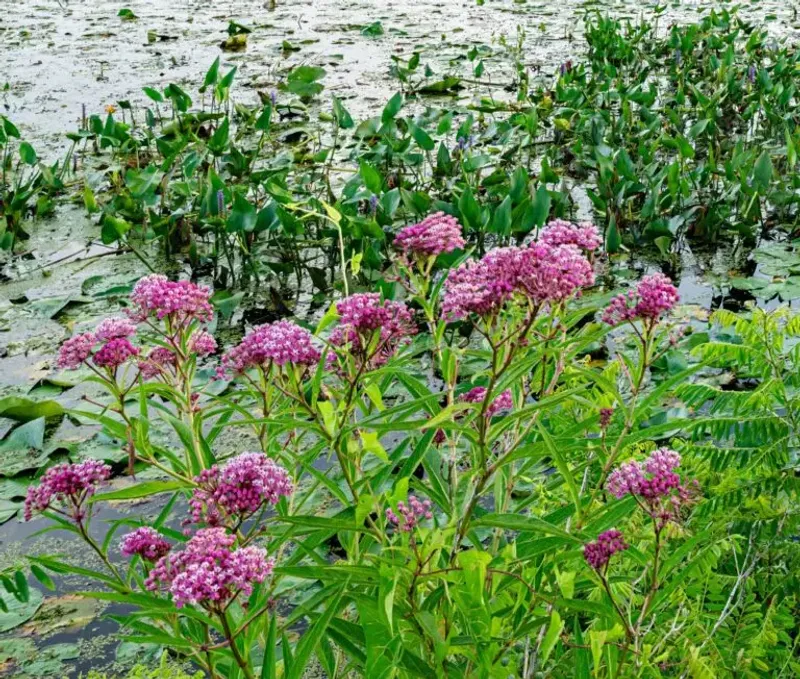
Monarchs know exactly where to find this plant, even when you swear nobody told them. Swamp milkweed is one of the few milkweeds that thrives in wet clay, which makes it a natural fit for that puddle-prone dip in your lawn.
Clusters of dusty pink flowers open in early summer and smell faintly of vanilla. The plant grows 3 to 5 feet tall and dies back in winter, so plan to pair it with something evergreen nearby.
Unlike liriope, which offers almost nothing to native insects, swamp milkweed serves as a host plant for monarch caterpillars. Expect a few chewed leaves.
Those holes mean the plant is doing its job.
2. Cardinal Flower (Lobelia cardinalis)
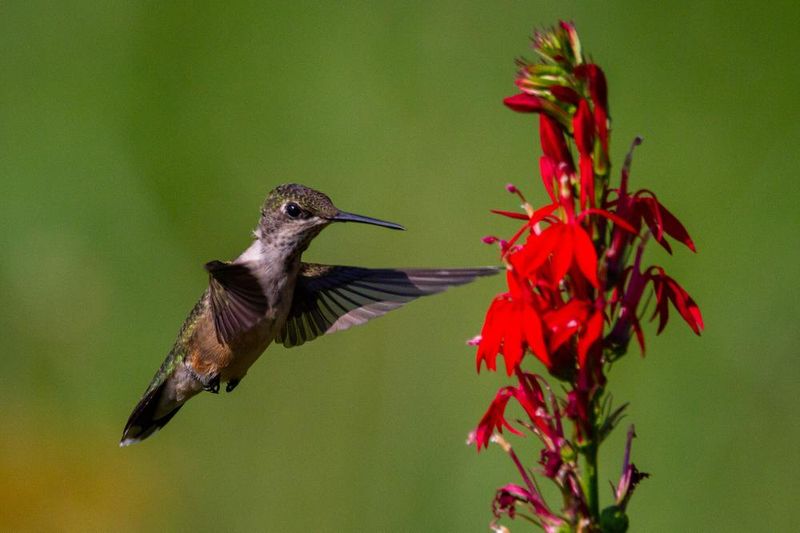
Picture a hummingbird zipping straight to a spike of red so bright it almost glows. That is what cardinal flower brings to a wet corner in late summer, right when many gardens look tired.
It grows naturally along NC creek banks from the mountains to the coast. Give it constantly moist soil and some afternoon shade, and it rewards you with 2 to 4 foot flower spikes.
Plants can be short-lived, but they often reseed in damp bare soil. Leave a little open ground around them and new rosettes may pop up each spring.
3. Soft Rush (Juncus effusus)
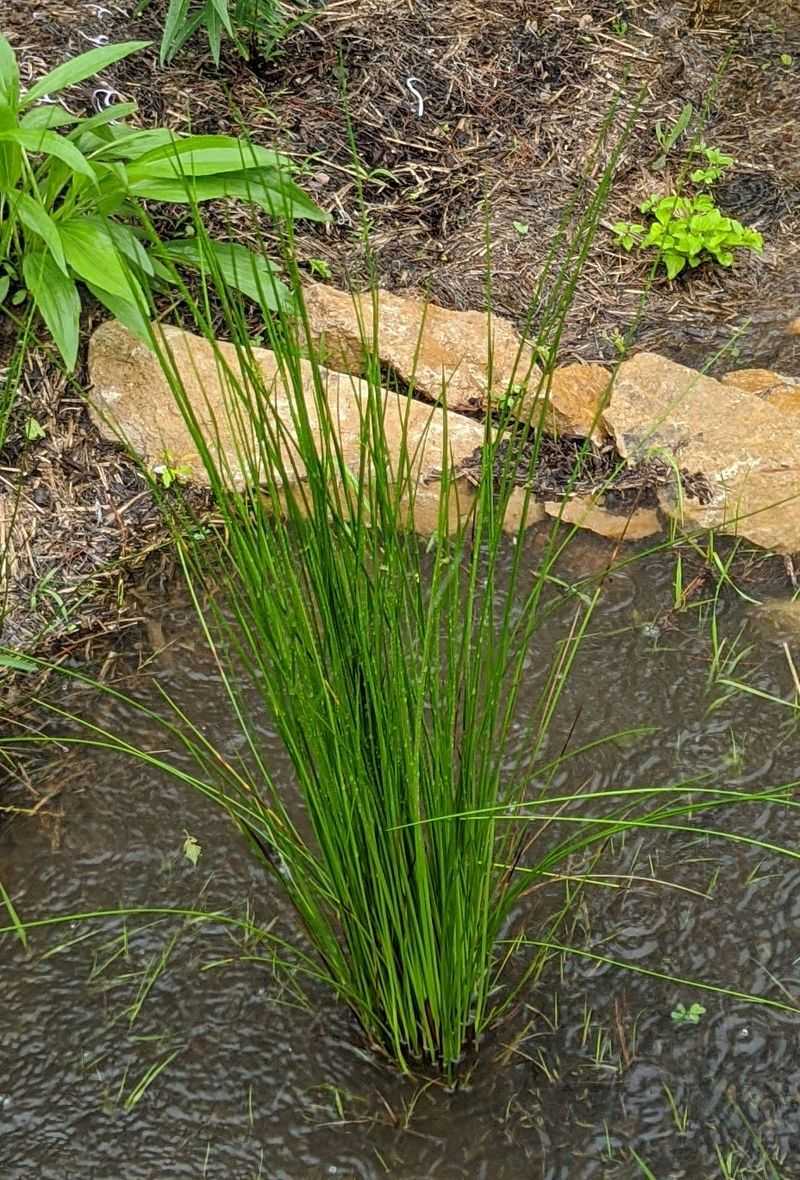
If your low spot holds standing water for days, start here. Soft rush handles conditions that would drown almost anything else, including the turf you keep replacing.
Its upright green stems form neat fountain-shaped clumps about 2 to 3 feet tall. The look is clean and modern, a lot like ornamental grass, with zero mowing.
Birds shelter in the clumps, and the dense roots help slow runoff and hold soil in place. For a planting you set once and mostly forget, few natives compete.
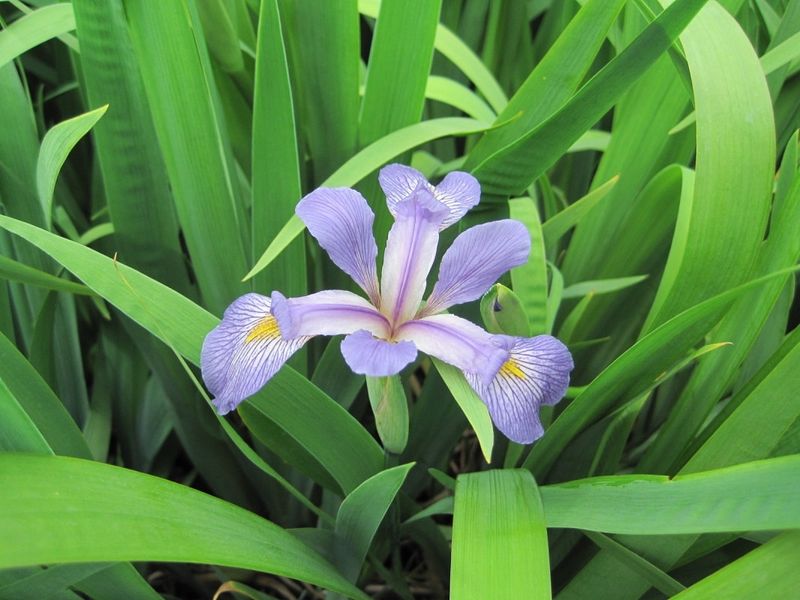
4. Blue Flag Iris (Iris virginica)
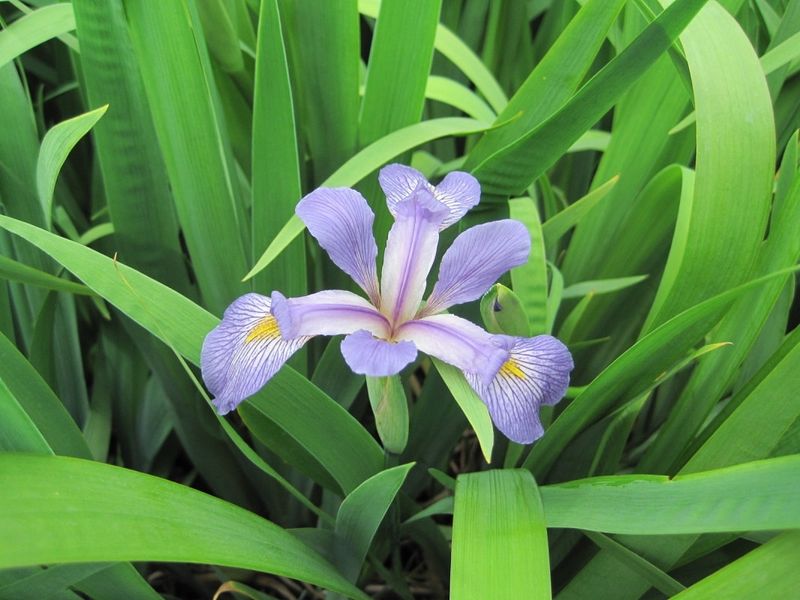
Old-timers in eastern North Carolina sometimes called it the wild flag, and once you see it blooming in a roadside ditch, you understand why people stop and stare. Southern blue flag carries big violet blooms with yellow throats in spring.
Sword-shaped leaves stay attractive long after flowering ends. That structure gives your wet spot a planned, finished look through most of the growing season.
It tolerates shallow standing water and heavy clay alike. Bumblebees work the blooms, and the clumps spread slowly, so you will not be fighting it the way some gardeners fight runaway liriope.
5. Joe Pye Weed (Eutrochium fistulosum)
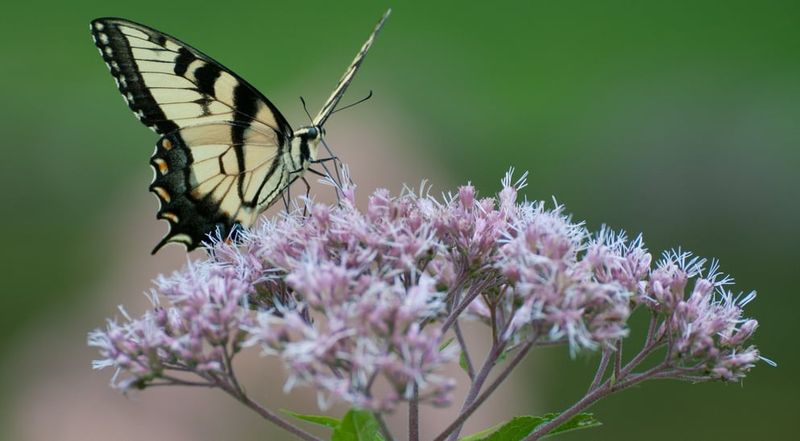
Big, bold, and a little untamed. Joe Pye weed can top 6 feet, and its dome-shaped mauve flower heads act like a butterfly landing strip from July into September.
Swallowtails especially seem to crowd onto it. On a busy afternoon you might count a dozen at once.
Use it at the back of a wet area or along a fence where height is welcome. If it gets too tall, cut it back by a third in early June for a shorter, bushier plant.
6. Fox Sedge (Carex vulpinoidea)
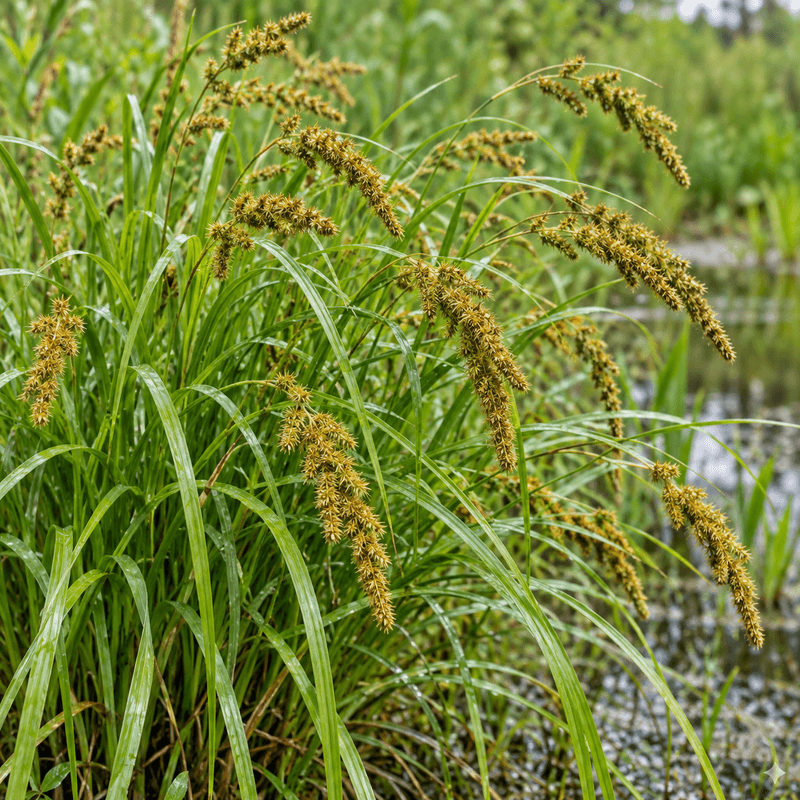
Want the soft, grassy look you lost when the lawn rotted? Fox sedge is probably the closest swap.
It forms tidy green tufts about 2 feet tall with bristly seed heads that resemble a fox tail. Plant several in a group and the low spot reads as a meadow patch instead of a mud hole.
Sedges are host plants for several skipper butterflies, and the seeds feed sparrows and other songbirds in fall. It also handles both wet springs and dry summer spells, which matters in the Piedmont.
7. Virginia Sweetspire (Itea virginica)
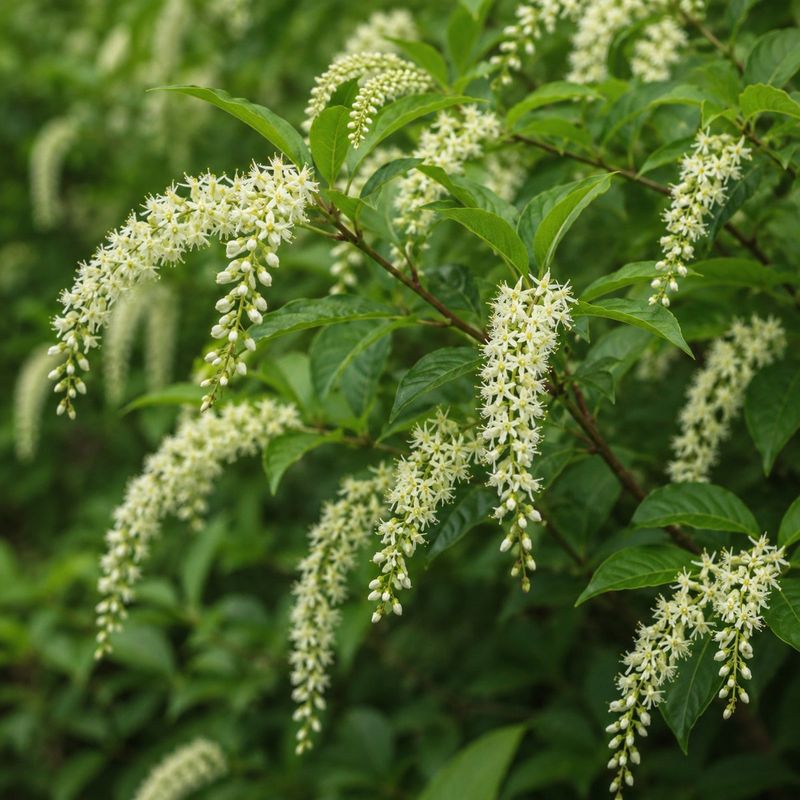
Sometimes a wet spot needs a shrub, not just flowers. Virginia sweetspire fills that role beautifully, with arching branches and fragrant white flower tails in late spring.
The real show comes in fall, when leaves turn wine red and often hang on well into winter. That gives you color long after the perennials have faded.
It spreads gently by suckers, which can help knit soil together in an area prone to erosion. Plant one or three at the edge of your low spot to frame the whole planting.
8. Golden Ragwort (Packera aurea)
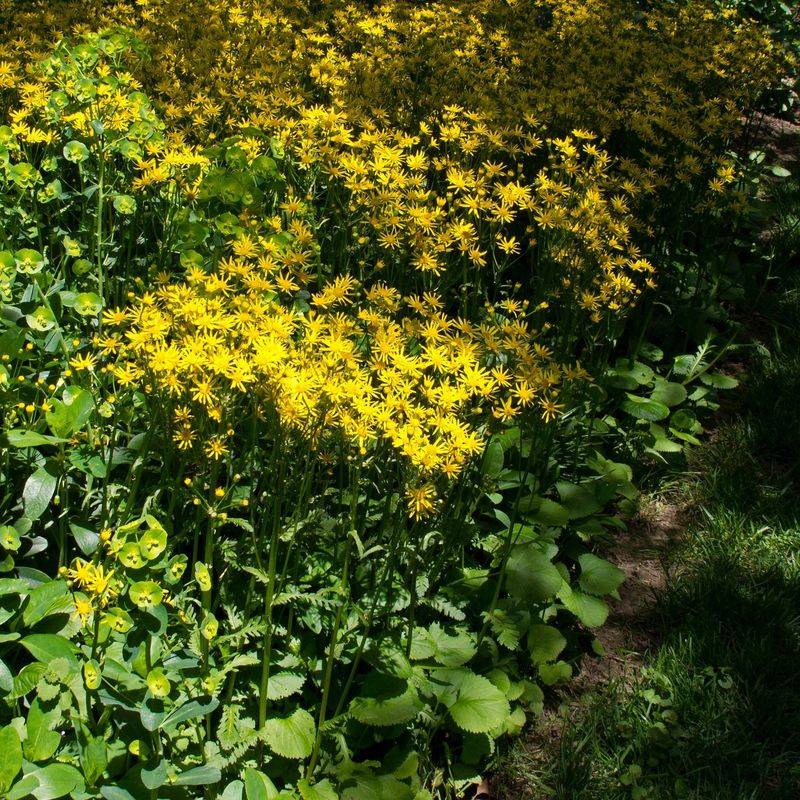
Here is the most direct liriope replacement on the list. Golden ragwort makes a low, mostly evergreen carpet of rounded leaves that stays green through much of a mild NC winter.
In early spring it sends up masses of cheerful yellow daisies, offering food to early bees when little else is blooming. It spreads to cover bare mud, but stays easy to pull where you do not want it.
It does especially well in damp shade under trees, where grass never had a chance. A note of caution: the foliage is toxic if eaten, so skip it where pets or livestock graze.
9. Buttonbush (Cephalanthus occidentalis)
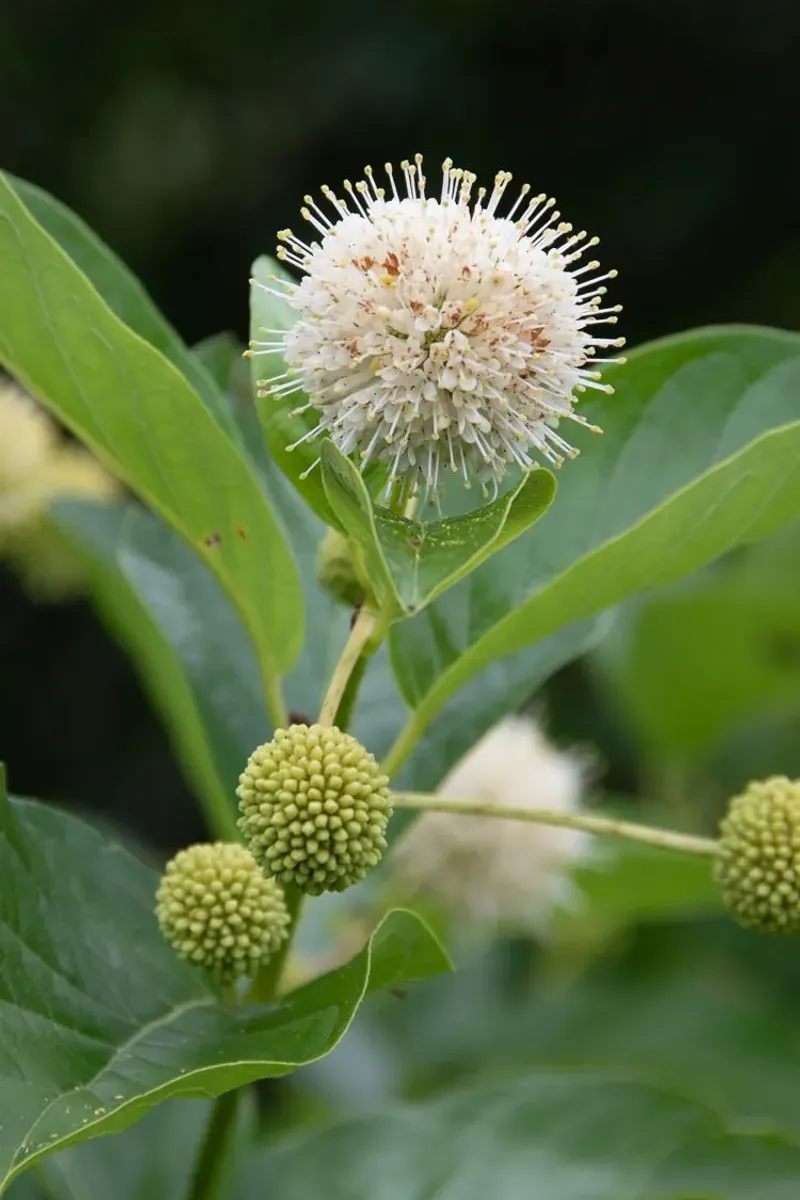
Round white flowers that look like tiny space satellites. Kids love them, and so do pollinators.
Buttonbush grows wild along ponds and swamps across North Carolina, so it shrugs off flooding. In summer the blooms draw bees, butterflies, and even hummingbirds, and ducks and songbirds may eat the seeds later.
It can grow 6 to 10 feet, so give it the wettest, roomiest part of the yard. Pairing it with a few of the shorter plants above can turn a problem drainage spot into a habitat corner that also may help attract dragonflies, which eat mosquitoes.
Closing takeaway: start with one shrub, one grassy plant, and one flowering perennial this season, and let your wet spot work for you instead of against you.