
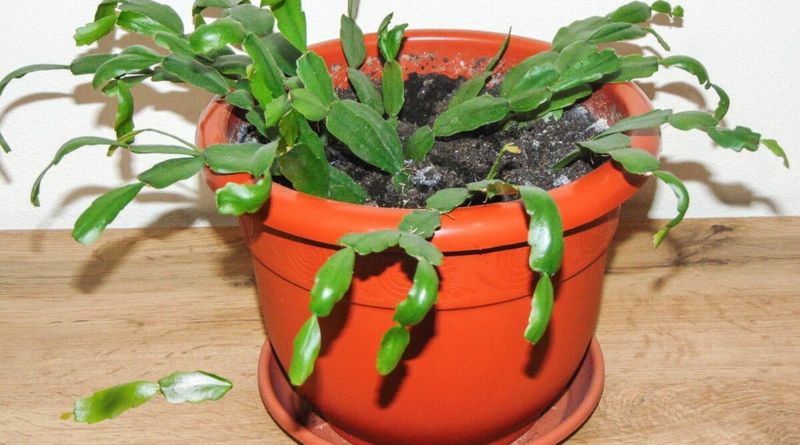
Finding green segments scattered under your Christmas cactus is enough to make any plant owner nervous. Those falling pieces are a warning, but they do not point to just one cause.
Adding water on instinct can sometimes make things worse. A few simple checks can help you figure out what the plant is trying to tell you before bloom season arrives.
A fallen segment is a clue, not a diagnosis
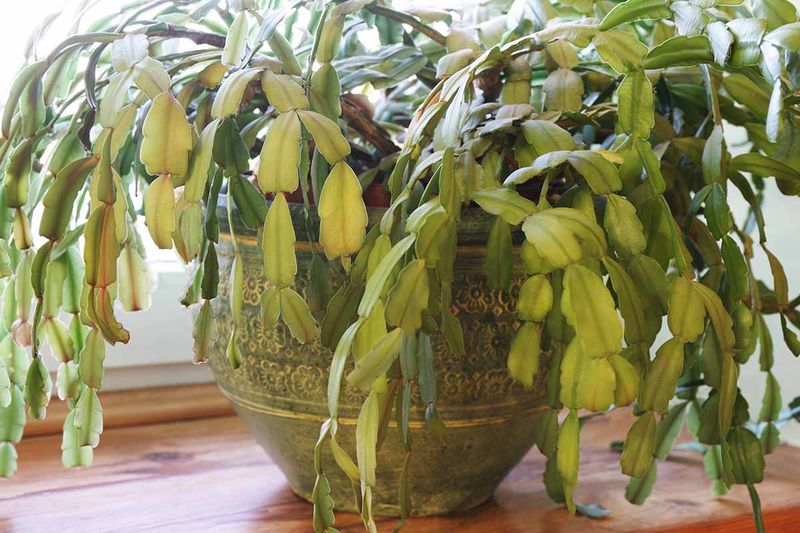
Seeing whole segments drop off a plant you have cared for is upsetting, and worrying about it is completely reasonable. The trouble is that a fallen segment does not tell you why it fell.
It is a warning sign, and the cause still has to be found.
Several things can be behind it. University of Minnesota Extension notes that wet, slimy fungal or bacterial problems can lead to branch loss, and that a large, heavy plant can also shed branches simply because of its size.
Iowa State Extension also points to environmental stress and watering mistakes, which can mean too much moisture or too little.
One quick note on names. Many plants sold as Christmas cactus are really Thanksgiving cactus or hybrids, but these related holiday cacti have similar care needs.
So the first job is not to guess a cure. It is to check the potting mix and drainage before touching the watering can.
Start with the soil, not the watering can
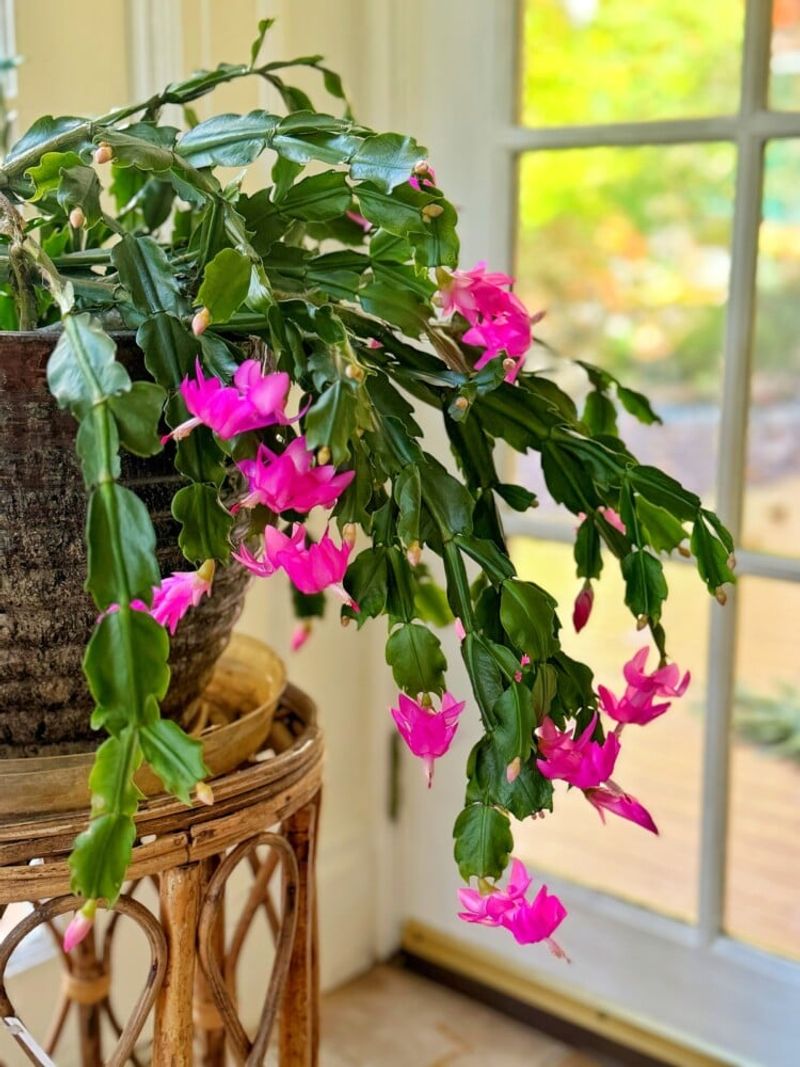
Before you pour anything, press a finger into the potting mix. UF/IFAS suggests watering when the upper inch feels dry, which gives you a simple, practical test that works in any room.
Next, look at the pot itself. It needs drainage holes, and it should not sit in drained water in a saucer or decorative cover.
These cacti are rainforest plants, not desert ones, so they want mix that stays airy and drains freely. UNH Extension also advises watering when the mix is dry to the touch and letting extra water drain away.
A fixed weekly schedule can mislead you here. How fast the mix dries depends on the pot, the mix, the light, and room temperature, and those shift from home to home.
Treat this finger check as your decision point. Wet mix leads to one response, dry mix to another, and the next two sections cover each.
When the mix is wet, stop adding water
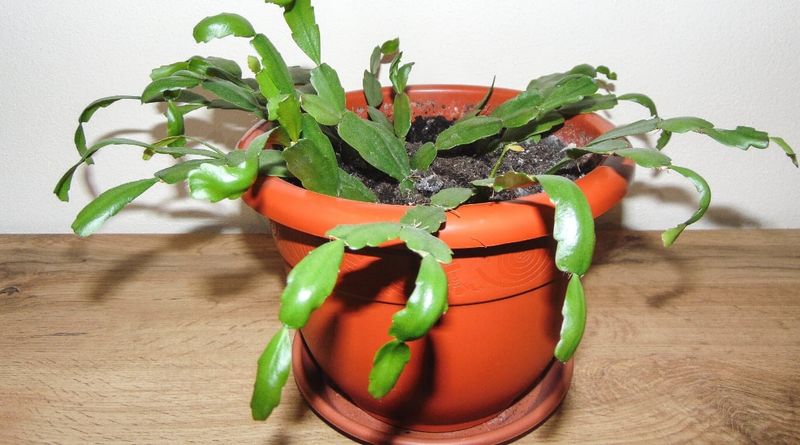
If the mix still feels wet, especially when the plant looks limp, put the watering can away. Then make sure excess water can actually leave the pot.
Tip out any standing water and confirm the holes are not blocked.
Some clues are consistent with root rot, though fallen segments alone do not prove it. University of Minnesota Extension links persistently wet soil to root problems.
University of Wisconsin Extension describes soft, brown roots and sometimes an unpleasant smell as signs to look for. Healthy roots are usually firmer and lighter in color.
Be realistic about the outcome. A mild case may settle once the mix dries and drainage improves, but a severe case may not be savable, and discarding the parent plant can sometimes be the practical choice.
Routine fungicide is not a supported home rescue for houseplant root rot, so skip the sprays and focus on moisture and drainage.
When the mix is dry, rewater without flooding it
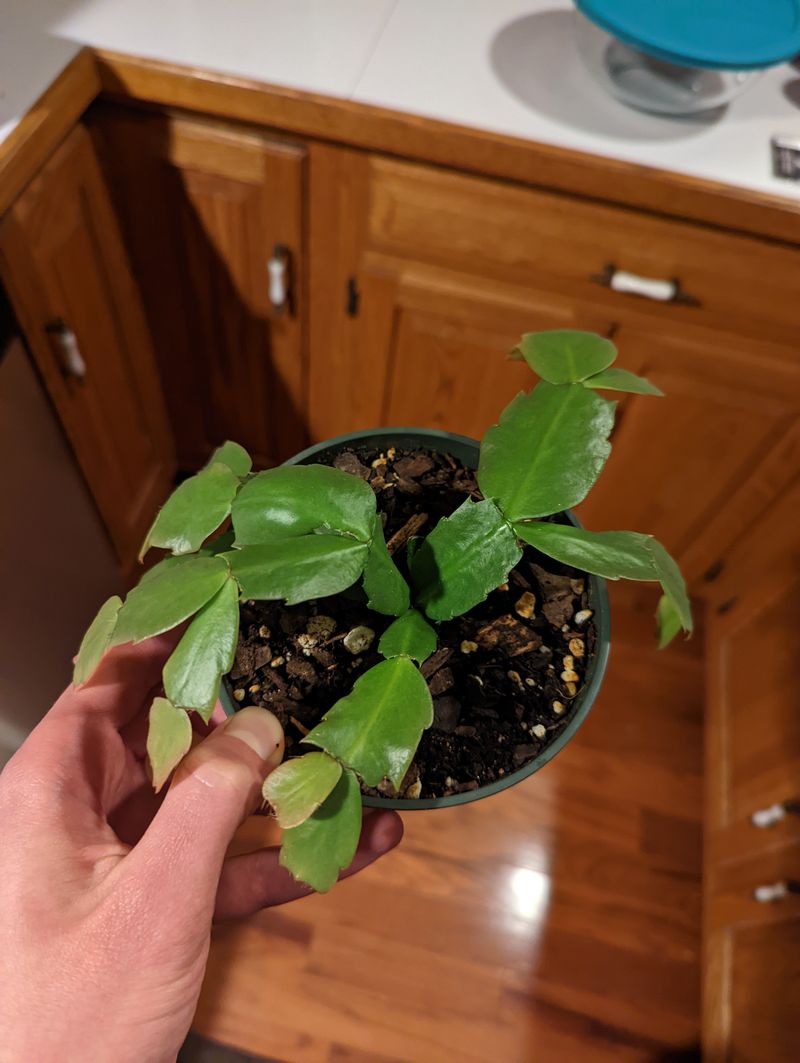
Dry mix tells a different story. The plant may simply have gone too long without a drink, and segments can drop when that happens.
Here, watering is the right move, as long as you do it with care.
Water enough to moisten the whole mix, then let the extra drain away, as UNH Extension advises. Empty the saucer afterward so the pot is not left sitting in water.
Resist the urge to make up for lost time with repeated soakings. UConn’s Home and Garden Education Center cautions that roots damaged by drought may not take up a deluge well, which can leave the remaining roots open to rot.
After this, go back to the soil check each time rather than adopting a set number of days. The mix, not the calendar, should decide when the next watering happens.
A better potting setup can reduce moisture-related risk
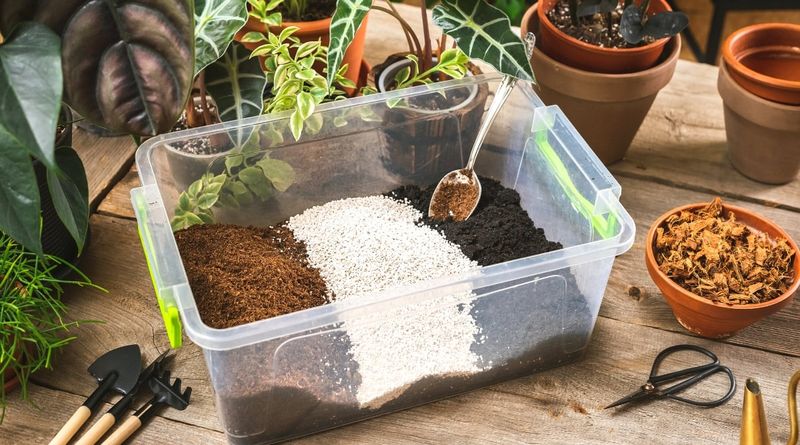
Once you know what the mix is doing, look at the setup. A well-draining, aerated commercial potting mix in a container with drainage holes is the base.
Garden soil is too dense and tends to hold water. University of Minnesota Extension stresses that these plants need a loose, well-drained mix.
Good drainage can reduce moisture-related risk, but it will not stop every cause of segment loss. Disease, plant size, and stress can still play a part.
Hold off on repotting just because a plant looks unhappy. Iowa State Extension says holiday cacti tend to prefer being slightly pot-bound.
Repot when the plant has truly outgrown its container, ideally in spring or early summer when it is not blooming.
Always keep the pot out of standing water, whatever mix you use.
Steady conditions help reduce stress before bloom season
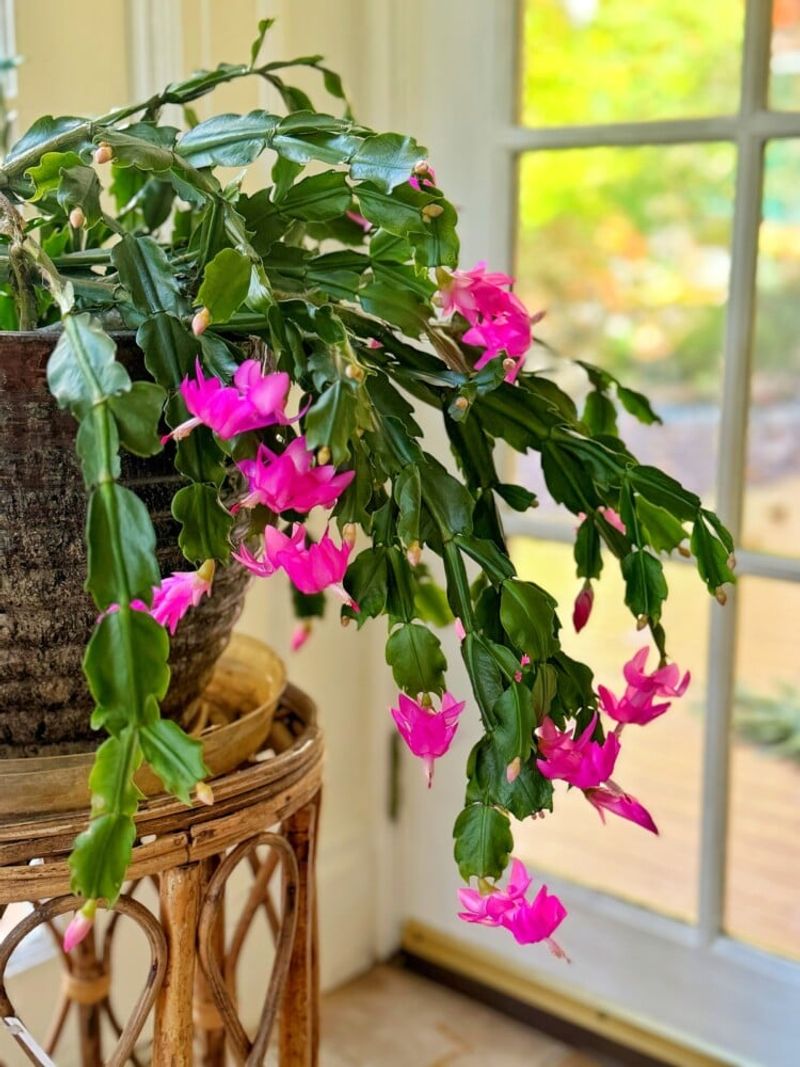
Plants heading toward bloom season do best when little changes around them. Bright, indirect light is a good fit, and UF/IFAS advises avoiding extreme environmental changes.
In Florida and Texas homes, that can mean keeping the pot clear of hot windows, air conditioning vents, and cold drafts.
Iowa State Extension lists sudden shifts, drafts, and heat sources among the things that can stress holiday cacti and their buds. A plant that gets moved around a lot may be reacting to that, not just to its watering.
These steps lower stress, but they will not guarantee blooms or explain every lost segment. Keep checking the mix before you water, too.
Needs can change as the plant moves through budding and flowering, so no single watering rule fits every phase.
Healthy fallen segments offer a backup, not a cure
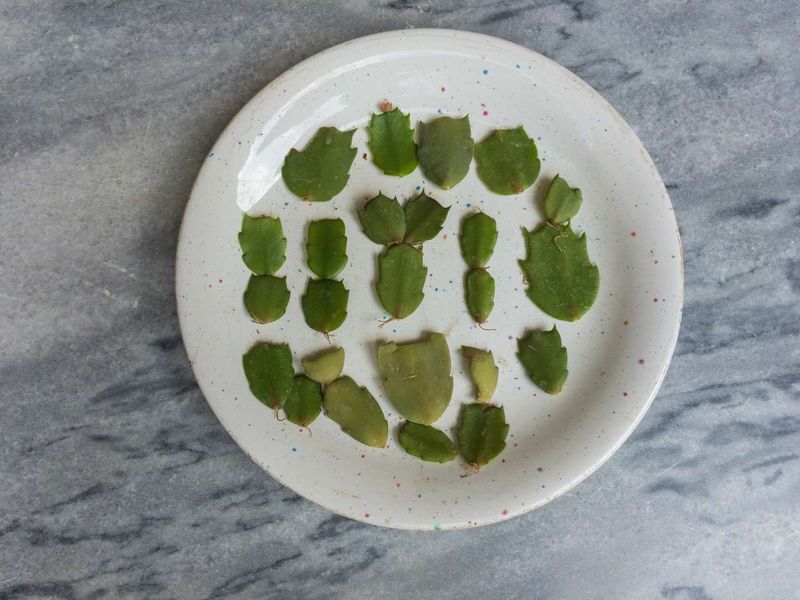
Keep working on the parent plant first. Rooting fallen pieces is a backup plan, and it does not prove the parent is healthy.
Choose healthy segments, let the ends callus overnight, then set two to five of them in moist perlite or coarse sand, as Iowa State Extension describes. Neither the cuttings nor the parent plant is guaranteed to recover.
Sometimes the best news from a falling segment is a few new starts.