
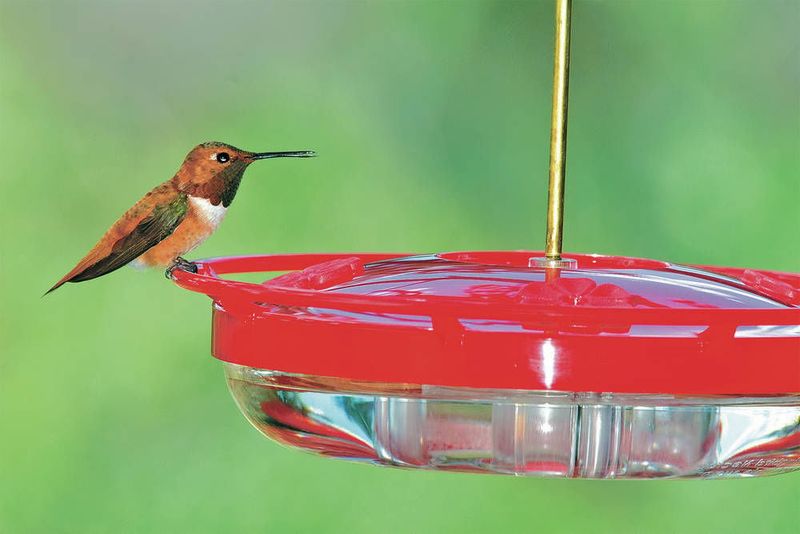
Hummingbirds seem to vanish from North Carolina yards all at once, but the real story is messier. Some birds leave in September, while a few stragglers keep showing up well into fall.
A single calendar date can lead you to pull a feeder too soon or leave a dirty one hanging too long. Here is how to read your own yard and decide when the time is right.
October is not a statewide hummingbird cutoff
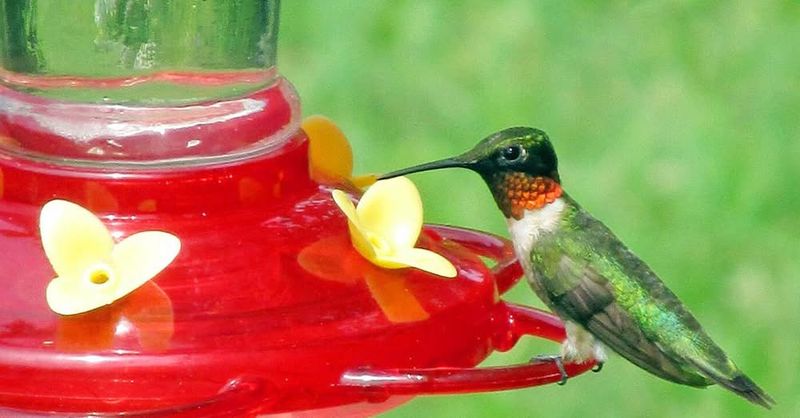
The Ruby-throated Hummingbird is the only hummingbird species that breeds in North Carolina, so the birds at your feeder all summer are almost certainly this one. According to N.C.
Cooperative Extension, most of them leave the state by mid-October. That sounds tidy, but it describes the crowd, not every single bird.
Records from the Central Carolinas tell a slightly different story. A Carolina Bird Club account reports that females and young birds can linger into late October or early November.
Adult males tend to head out earlier, so a yard that goes quiet in September may simply have lost its males first.
That gap is why a fixed date in early October is too blunt. In a mountain yard, cooler nights may push birds south sooner.
In a warmer Piedmont or coastal neighborhood, a young bird fattening up for the long trip may show up well after your neighbor has stored the feeder.
None of this means every yard will have late visitors. Plenty of homeowners will see their last hummingbird in September and never see another.
The point is that your own sightings tell you more than any statewide date, and the next sections show how to use them.
A feeder does not delay migration or guarantee a bird’s food supply
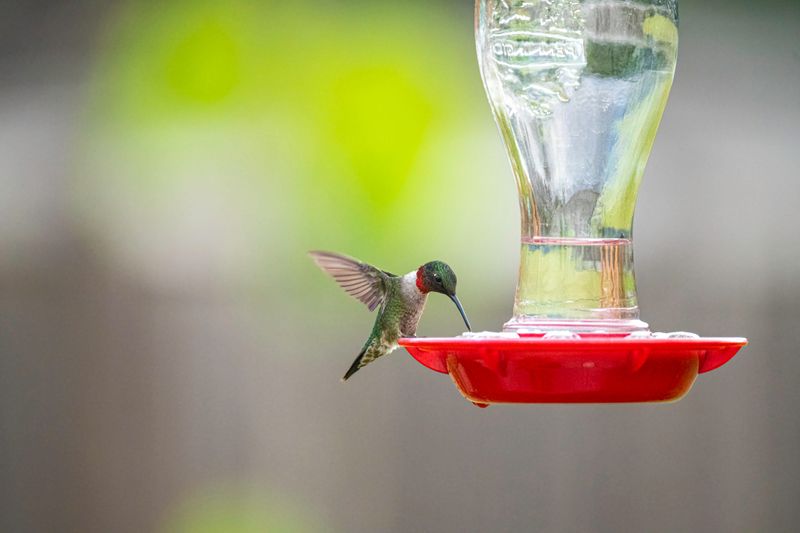
Many people worry that a full feeder will tempt hummingbirds to stay too long and miss their trip south. Cornell Lab calls that a myth.
As explained in its All About Birds guidance, keeping a feeder up does not prevent migration. Birds leave when changing day length and their own internal clocks tell them to go.
So you can stop worrying that your feeder is holding anyone back. A bird that is ready to leave will leave, nectar or no nectar.
The flip side deserves the same honesty. A feeder is a supplemental food stop, one of several places a hummingbird can find energy.
Wild birds also use flower nectar and tiny insects, and there is no solid evidence that pulling one feeder strands a bird or leaves it without options.
What a feeder can do is add a convenient refueling spot while birds are passing through. That is a modest, real benefit, and it is reason enough to keep one available a little longer if birds are still visiting.
Think of it as a helpful extra rather than a lifeline. You are not responsible for any bird’s survival, but you can offer a clean, easy meal during a busy stretch of the year.
Let feeder visits guide when you take it down
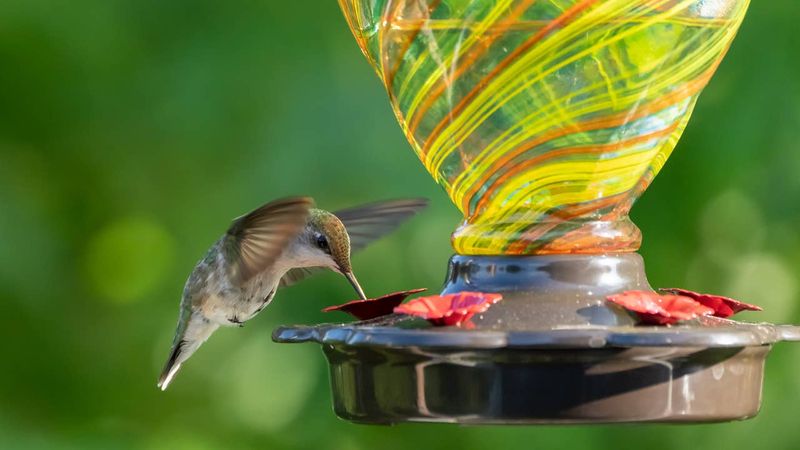
Here is a rule that works in the mountains, the Piedmont, and the coast. Keep the feeder up while hummingbirds are visiting.
Then, following Audubon’s recommendation, leave it up for about two weeks after the last bird uses it.
The key phrase is the last time a bird actually feeds. A quick glimpse of a hummingbird zipping past the garden does not count the same way.
Jot the date on a calendar each time you see one at the feeder, and the count starts to take care of itself.
Treat the two weeks as practical guidance, not a guarantee. It gives a buffer for slower travelers without asking you to run a feeder all winter.
Cornell Lab gives similar advice in different words. It suggests leaving feeders up for several weeks after the last hummingbird sighting.
That is a separate recommendation, so if you want to be extra generous, you can lean toward the longer window.
Compare that to picking October 1 because it feels right. A fixed date ignores your yard entirely.
If birds are still coming on October 5, the calendar is wrong. If your last visit was in mid-September, you may be ready to take the feeder down by early October without any guilt.
Keep late-season nectar fresh and safe
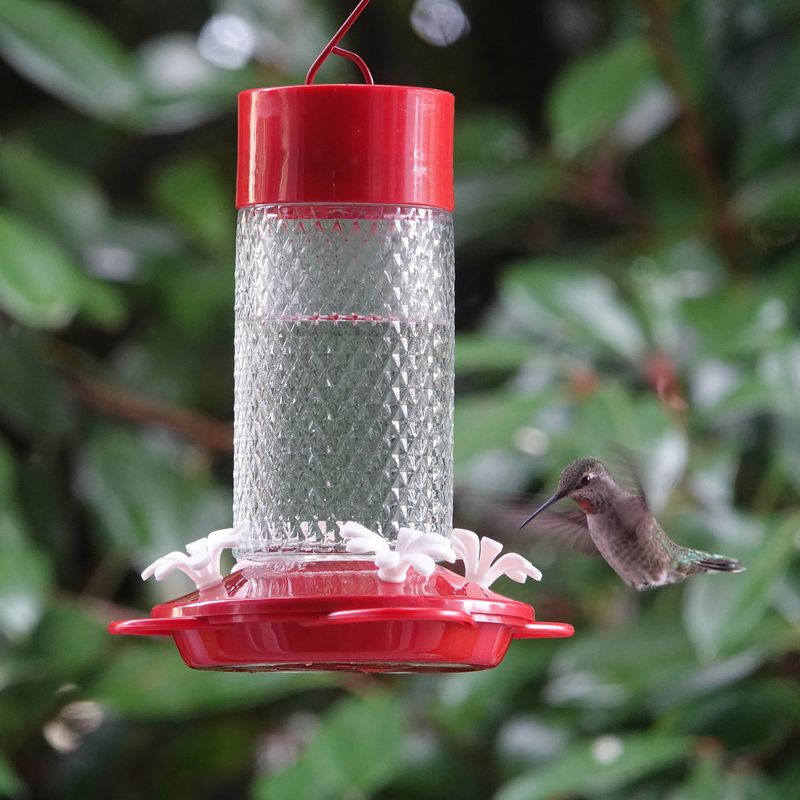
Cooler fall weather can make you relax about feeder care, but nectar still spoils. Mix four parts water to one part ordinary white sugar.
Stir until the sugar dissolves, let it cool, and fill the feeder.
Skip the shortcuts. Do not use honey, artificial sweeteners, or red dye.
N.C. Cooperative Extension and Audubon’s feeding FAQs both steer people away from them.
Plain sugar water is all a hummingbird needs, and most feeders already have red parts to attract birds.
Extension advises replacing the nectar every three to five days. Before each refill, clean the feeder instead of just topping it off.
A bottle brush and hot water reach the corners where cloudy residue hides.
Shade helps too. A feeder hung under a porch roof or tree branch stays cooler, so the nectar stays fresher longer.
Warm October afternoons in the Piedmont and coastal plain can still speed up spoilage.
If traffic has slowed to one visitor a day, fill the feeder with smaller amounts. You will waste less sugar water, and the feeder stays inviting every time a bird drops by.
Winter Rufous Hummingbirds are a separate possibility
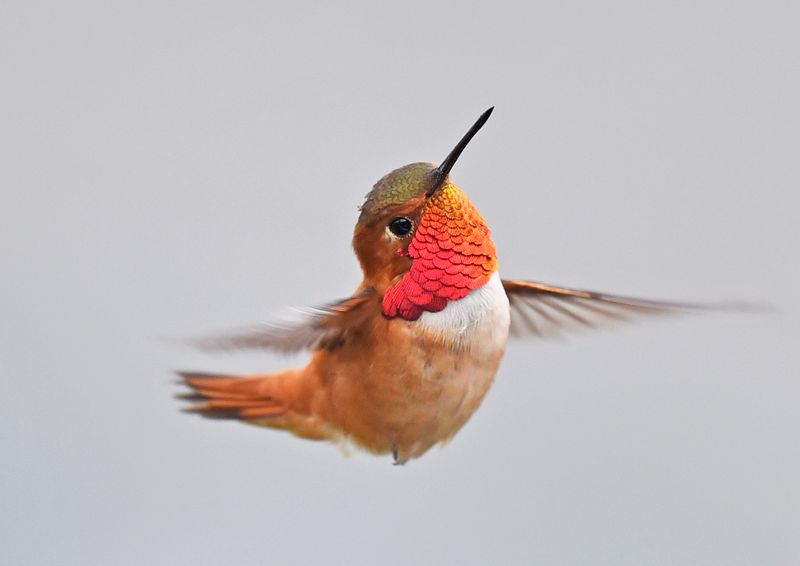
If a hummingbird shows up in December or January, it is not just a Ruby-throated that migrated late. It may be a Rufous Hummingbird, a western species that appears in the East as a vagrant.
The Carolina Bird Club classifies it as a rare winter vagrant statewide.
Reports are more regular around the Charlotte region, where some banded birds have come back to feeders in more than one winter. The club also notes that most Rufous reports in its region arrive after Thanksgiving, well after Ruby-throated birds have gone.
That is one reason some homeowners leave a feeder up longer. It is a separate, later-season possibility, not a sign that you must keep nectar out all winter.
Be careful with identification. Females and young birds are hard to tell apart, and some winter sightings can only be called a Selasphorus-type hummingbird without banding.
A bird that looks rusty at your feeder may not be provably a Rufous.
If you do get a winter visitor, take clear photos and share them with local birders or the Carolina Bird Club. Keep the nectar fresh, since freezing nights may require swapping it more often.
Follow local visits, not a calendar cutoff
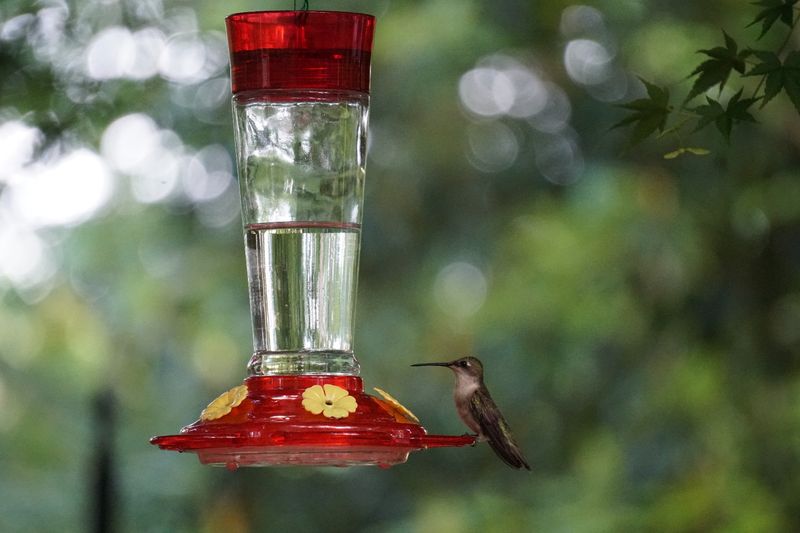
Watch your own yard. Keep the feeder clean and filled while birds are coming, and follow Audubon’s advice to leave it up for about two weeks after the last visit.
A feeder is a helpful extra, not a promise of a full belly, and not every yard needs one through winter.
The best calendar is the one your hummingbirds write for you.