
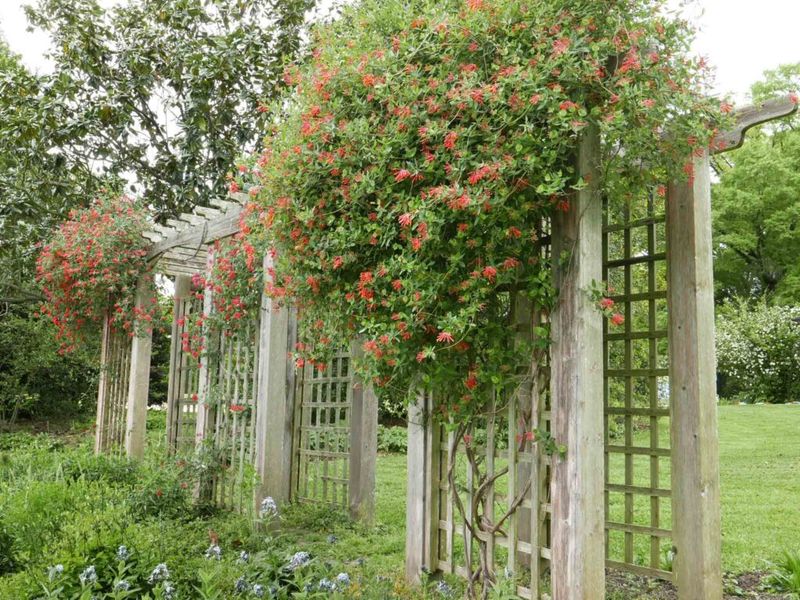
Wooden trellises in Florida yards often look tired after a few wet seasons, with gray boards, soft spots, and leaning frames. Coral honeysuckle is a native vine with red tube-shaped flowers that hummingbirds may visit.
It will not replace your trellis, but it can cover a good one with color. Here is what to know before you plant it.
What makes a wooden trellis deteriorate?
Blaming Florida humidity alone is too simple. According to the USDA Forest Products Laboratory, humid air by itself does not wet wood enough to support significant decay.
Wood breaks down when it stays wet for long stretches and has little chance to dry out.
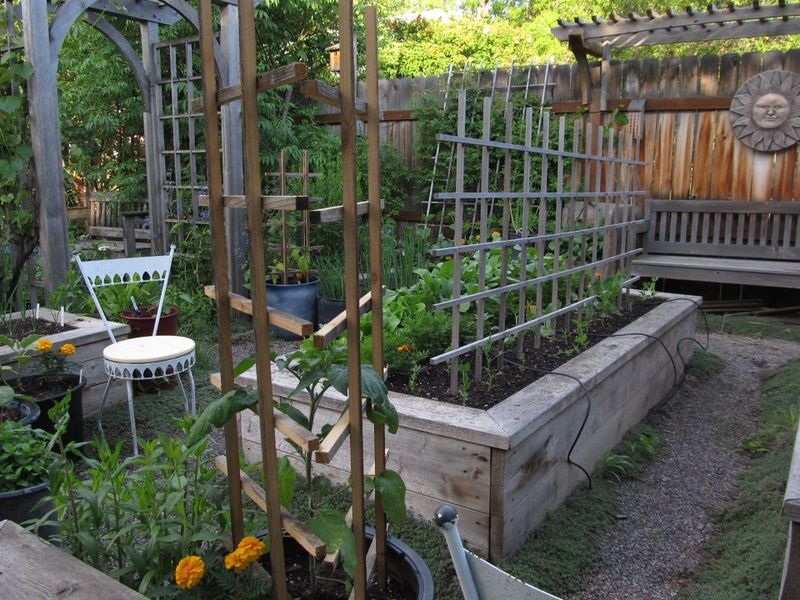
That points to the spots on your trellis worth checking. Look at the posts touching soil, the joints where water can sit, and the shady corners where leaves and damp air linger.
A frame that dries quickly after a storm is in a very different situation from one that stays soggy.
Warping is a separate problem with a related cause. As explained by Oregon State University Extension, wood changes in size as its moisture content changes, and that movement can twist or bend boards over time.
Florida’s cycle of heavy rain followed by hot sun can contribute to that movement.
So the goal is realistic. A flowering vine can dress up a support that is already in decent shape, but it will not remove the need for a sturdy frame.
Start by inspecting what you have, then choose a plant to cover it.
Coral honeysuckle still needs a trellis
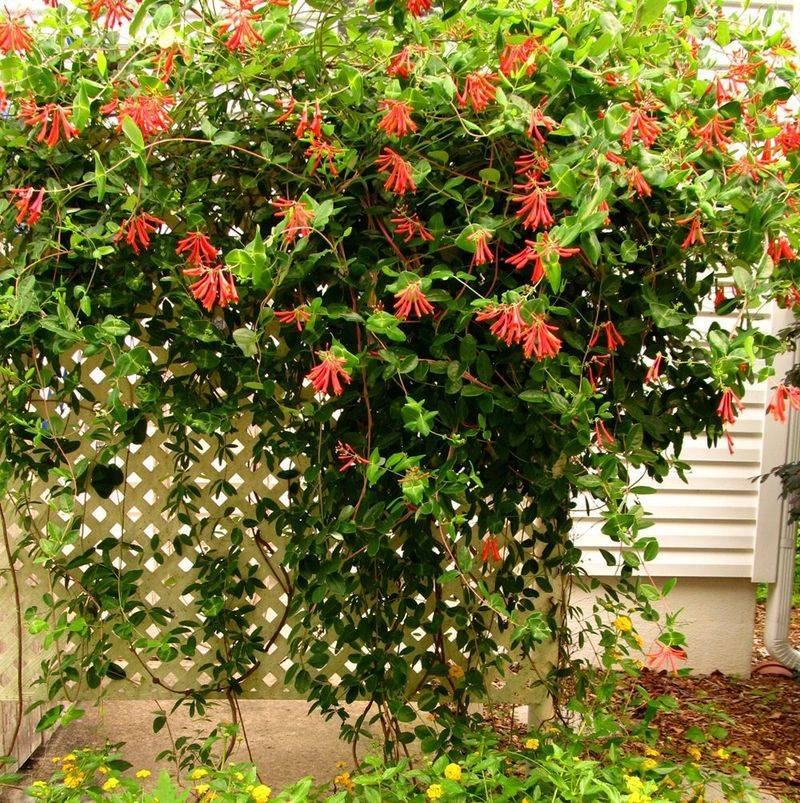
Coral honeysuckle is a twining vine, which means its stems wrap around something upright to climb. UF/IFAS Gardening Solutions describes it as a good fit for trellises and fences, with stems reaching about 15 feet long.
That is a plant using a frame, not building one.
Covering a frame and carrying its weight are two different jobs. The vine can hide the wood and soften the lines of a fence.
It does not turn into a load-bearing structure, and nothing in the research suggests it lasts longer than wood or makes a trellis unnecessary.
Think of the trellis as the skeleton and the vine as the clothing. If the skeleton leans, cracks, or rots at the base, the vine goes down with it.
A heavy, leafy tangle can even hold moisture against the wood, so a weak frame deserves repair before planting.
The UF/IFAS vines guide also notes that vines need a support suited to how they climb. For coral honeysuckle, slender slats, wires, or lattice that stems can wrap around work well.
Pick something upright, solid, and easy to reach.
Where does coral honeysuckle fit in a Florida yard?
Start with geography. The University of Florida plant directory places this vine as native from the northern counties through the central peninsula.
It is not native to every part of the state, especially South Florida, so a native label applies to part of Florida only.
Native range and garden suitability are not the same thing, though. A gardener outside that range might still try it, but should treat it as a cultivated plant and watch how it performs.
Light matters next. UF/IFAS says it blooms best in full sun and tolerates partial shade, so a fence with six or more hours of sun is a smart spot.
Shadier sites may give you leaves with fewer flowers.
Soil is where sources differ. The UF/IFAS plant page warns that the vine does not tolerate dry sands, while a separate UF/IFAS fact sheet lists sand among its soil tolerances and rates drought tolerance as moderate.
In a fast-draining sandy yard, improve the planting area with compost, mulch the root zone, and water during establishment. Do not count on it thriving in every sandy site.
Guide young stems onto a sound frame
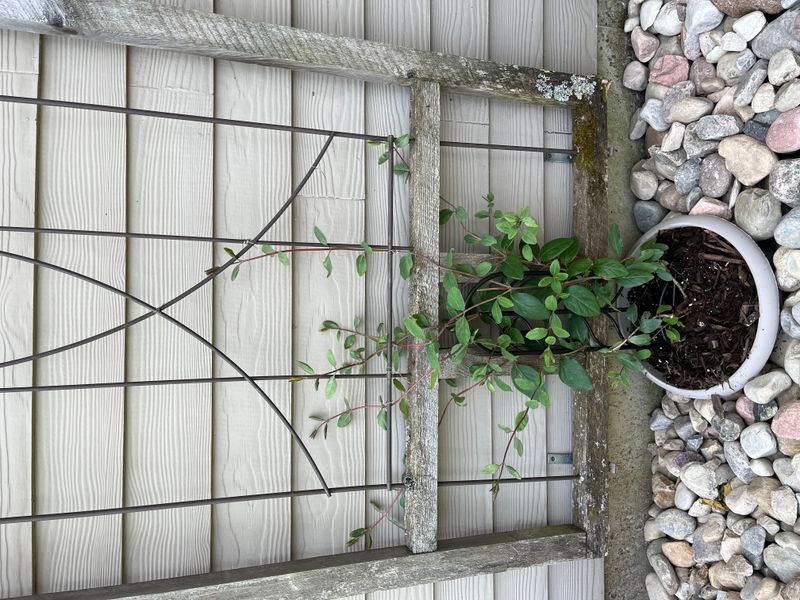
Planting day is easier when the support is already in place. Set an upright trellis, fence section, or similar frame near the plant, and make sure it is sturdy enough for stems that can reach 15 feet.
Fix any loose joints first, since reaching a repair later means working through foliage.
Young stems do not always find the support on their own. As the UF/IFAS vines guide suggests, guide or weave new growth onto the frame early.
Loosely tie wandering shoots with soft garden twine, then check them every week or two while the plant is getting started.
Pruning is part of the deal too. UF/IFAS says training and pruning can direct stems and improve form.
Trim stray shoots reaching for gutters, screens, or nearby shrubs, and thin out tangled growth so light and air reach the center.
The same source calls the plant generally low-maintenance once established, and that is fair. Just do not treat it as set-and-forget.
Expect an occasional walk-by with pruners, especially after a storm pulls stems loose.
Its hummingbird flowers bloom in spring and summer
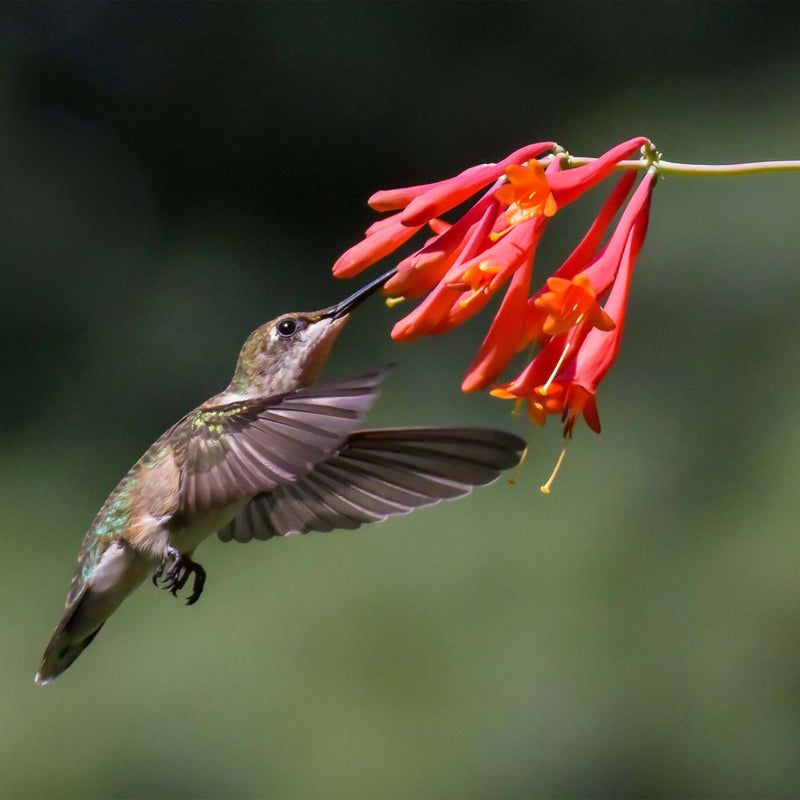
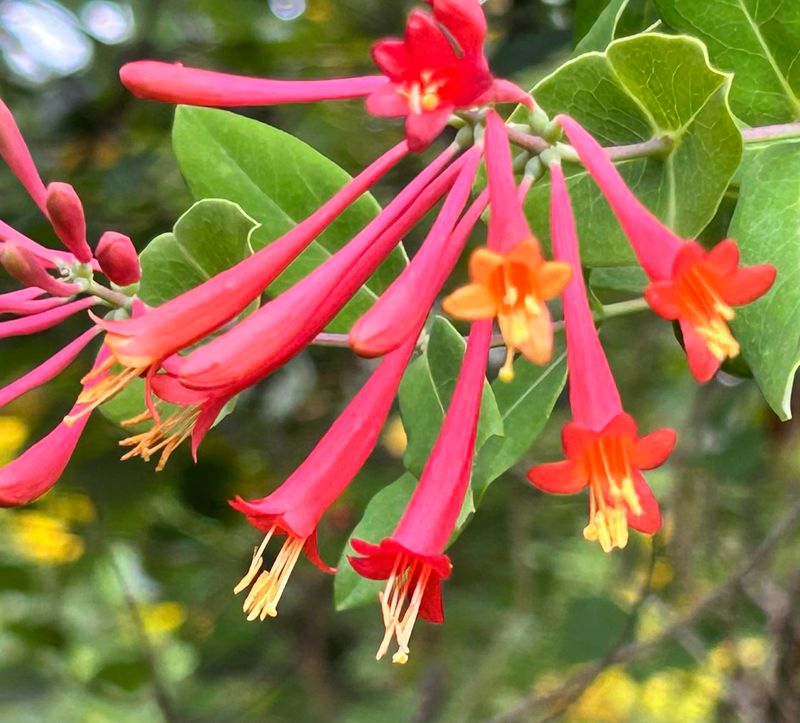
The flowers are the reason many gardeners plant this vine. They are red to orange-red on the outside, narrow and tube-shaped, a style that suits hummingbird beaks.
UF/IFAS hummingbird garden guidance includes coral honeysuckle among native plants for hummingbirds, and notes that its berries draw songbirds.
Timing is the key detail. The UF/IFAS nectar plants list and the coral honeysuckle page place its bloom in spring and summer.
Expect color and nectar during those months, not all year.
Attracting hummingbirds is a possible benefit, not a promise. Whether birds stop by depends on what else is blooming nearby, the season, your location, and the habitat around your yard.
A single vine on a fence is a good start, but it works best as part of a planting with several nectar sources.
For the best show, put the vine where you can watch it from a window or patio. Red blooms against a sunny fence are easy to spot, and so is any visitor that comes to sip.
Do its flowers align with fall hummingbird migration?
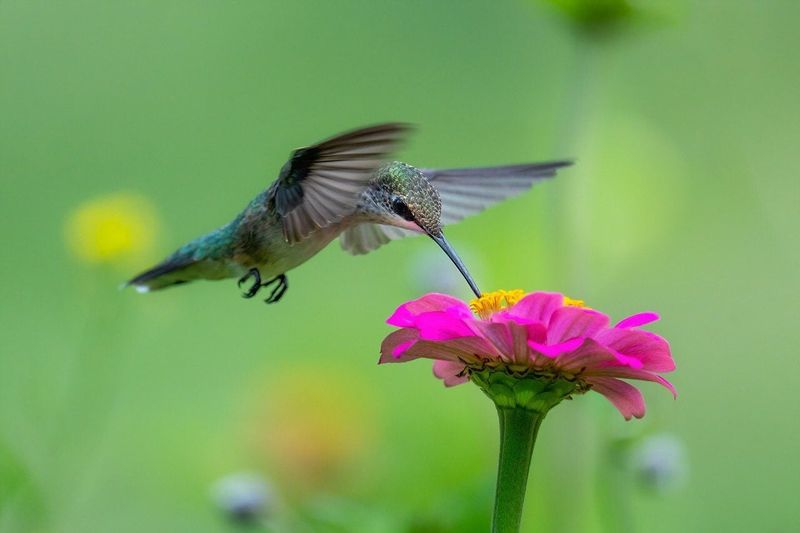
Here the story gets less tidy. Audubon describes an influx of migrating ruby-throated hummingbirds in Florida during August and September.
Meanwhile, UF/IFAS lists this vine’s bloom season as spring and summer.
Those two facts overlap only loosely, and neither source says when the vine will flower in your yard. Weather, plant age, and local conditions can shift bloom timing.
So you cannot count on coral honeysuckle as dependable fall fuel for migrating birds.
The better plan is variety. The UF/IFAS nectar plants guidance recommends a mix of nectar plants in bloom, and the hummingbird garden page takes the same approach.
Pair the vine with other nectar plants that flower later in the season, and check your own yard in late summer to see what is open.
Plant it for the spring and summer show, and let other flowers carry the fall.