
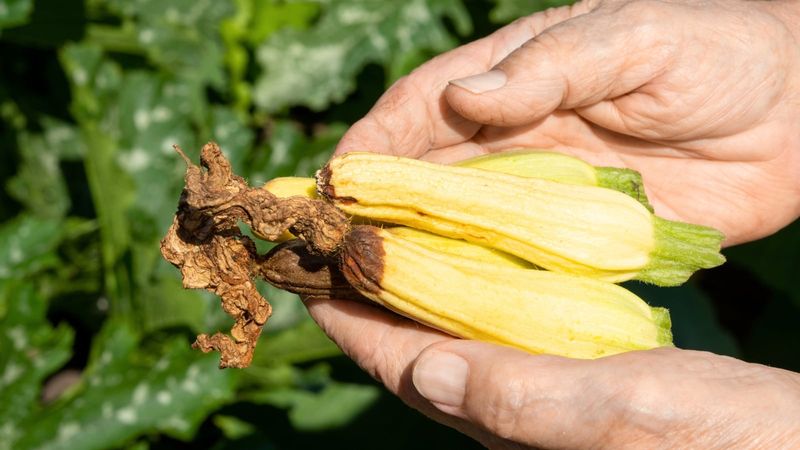
You check your fall squash every morning, and the plants are covered in yellow blooms. Then the tiny fruits at the base of some flowers turn yellow, shrivel, and fall off.
Poor pollination is one common reason this happens, but it is not the only one. Here is how to sort out what is going on, with a simple morning test you can try this week.
Shriveling baby squash can point to poor pollination
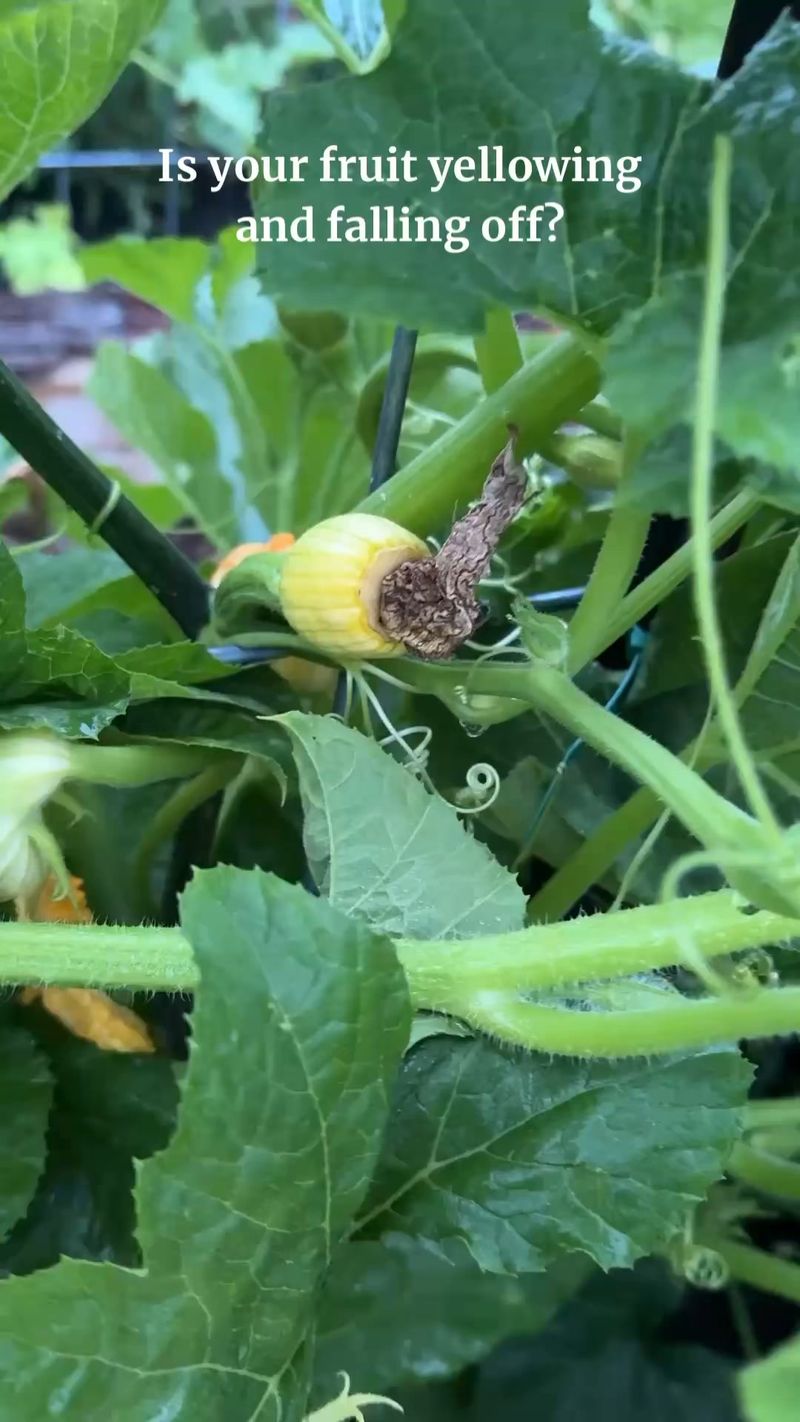
Few things feel more frustrating than a squash plant full of flowers that never turns into dinner. When a baby fruit starts yellowing at the tip, shrinking, and then dropping off the vine, poor pollination is a well-supported suspect.
UC Extension describes this symptom pattern in summer squash, which includes yellow squash and pattypans.
The key word is suspect. Yellowing, shriveling, and dropping fruit is consistent with poor pollination, but it does not prove it.
Squash needs pollen moved from a male flower to a female flower before a fruit can develop, as UF/IFAS explains for Florida squash crops. Other stresses can produce a similar look, so one symptom alone cannot settle the question.
A good plan has three parts. First, look closely at your flowers and learn which are male and which are female.
Second, try hand-pollinating a few female blooms in the morning and watch what happens. Third, check the plant’s growing conditions, including water, weather, spacing, and soil.
Together, these steps can help you narrow down the cause instead of guessing.
Female flowers need pollen to produce squash
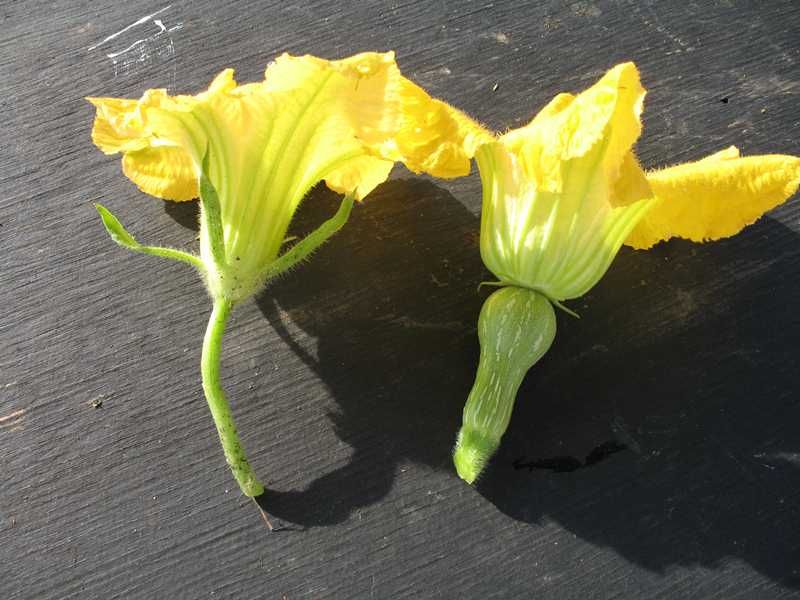
Squash plants grow separate male and female flowers on the same vine. The female flower has a tiny squash-shaped swelling right under the petals, which is the ovary and the future fruit.
The male flower sits on a thin, narrow stem and has a pollen-covered anther in the center, as described in UF/IFAS squash pollination guidance.
Only female flowers can turn into squash, and each one needs pollen from a male flower to do it. Both kinds open for just a few morning hours, often closing around midday, according to University of New Hampshire Extension.
If no male flower is open when a female one is, pollen may never get delivered.
Here is a clue that saves a lot of worry. Male blossoms naturally wither and drop after flowering, and they never become squash, a point covered in Mississippi State Extension notes on unpollinated squash.
Fallen male flowers are normal. The fruit that shrivels with a swollen base is the one worth investigating.
Fall days affect flowering, but do not prove bees are scarce
It is easy to assume that shorter fall days mean fewer bees, but that has not been shown. What UF/IFAS does say is that day length, temperature, and rainfall can change the ratio of male to female flowers on a squash plant.
Varieties differ too, so some plants may produce fewer female flowers at certain times.
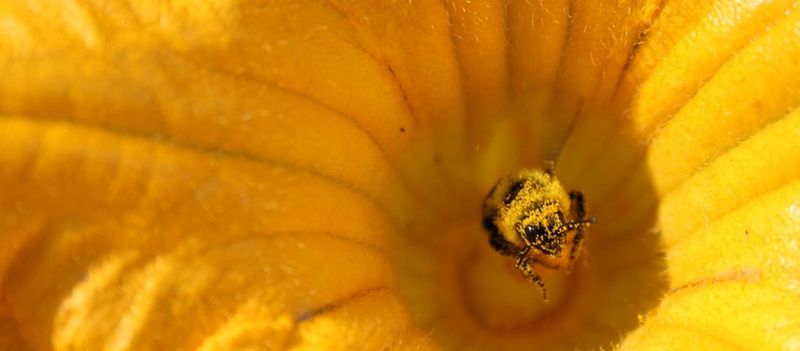
For bees, there is one local clue. In a UF/IFAS observation of a fall squash crop on a farm near Gainesville, honey bees were the main visitors, and sweat bees showed up as well.
That is one farm in one place, so it does not tell you what is happening in your yard. It does show that bees can visit fall squash blooms in Florida.
So skip the guesswork and watch your own garden. Spend a few minutes in the morning and see whether bees are landing on your flowers.
Also check whether male and female blooms are open on the same day, since weather can interfere with pollinator activity and pollen. What you see will be more useful than any general rule.
Hand-pollinate a fresh female flower in the morning
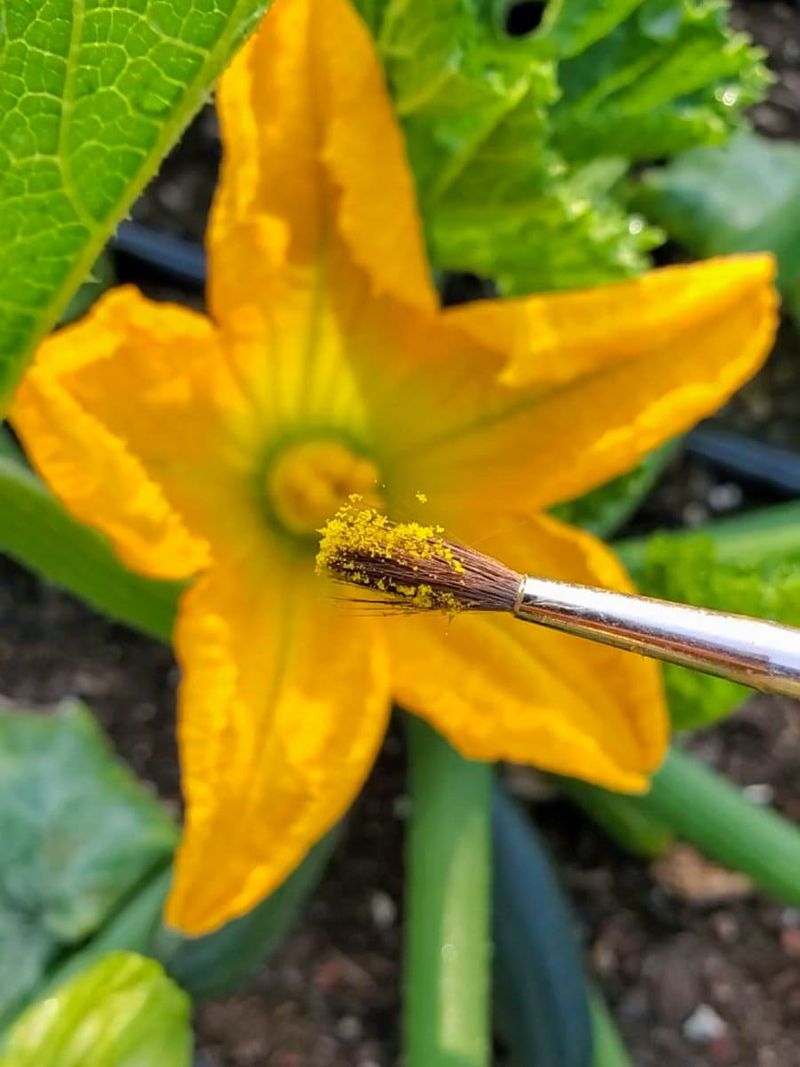
Timing matters, because squash flowers are open only for a short window in the morning. Head out early and look for a freshly opened female flower, the one with the baby squash beneath it.
Then find a fresh male flower that is open and showing yellow pollen on its anther.
You can pick the male flower, peel back its petals, and gently dab the anther against the center of the female flower, which is the stigma. A small clean brush works too.
UF/IFAS advises using freshly opened flowers, and the same approach appears in University of New Hampshire guidance.
Try it on several female flowers over a few mornings. Within a few days you may be able to tell whether the attempt worked, since a pollinated fruit often keeps swelling and staying green or golden.
Treat this as a test, not a cure. If the fruit still shrivels, that result is useful too, because it points you toward other causes.
Check plant stress before blaming every dropped fruit on pollen
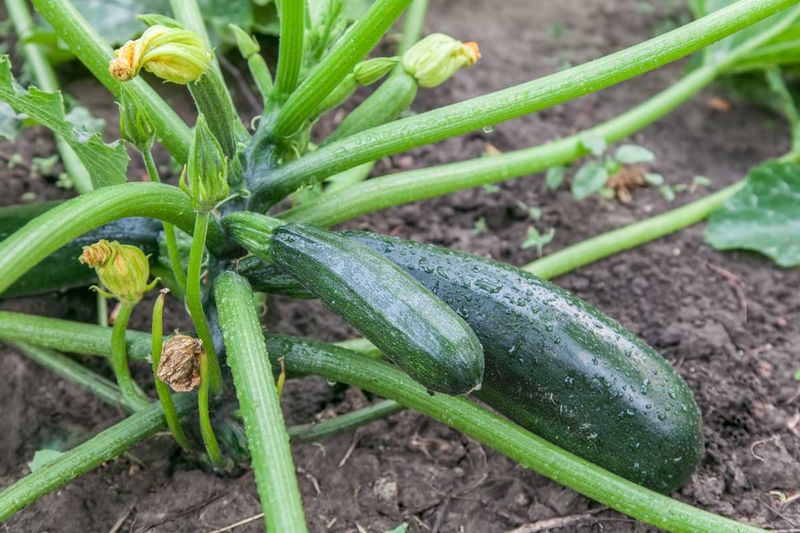
Sometimes the pollen is fine and the plant is simply having a rough time. University of Maryland Extension lists heat stress, low pollinator activity, crowding, and poor soil among the reasons squash may produce poorly.
Any of these could be at work in a given bed, though none can be confirmed from a photo of one dropped fruit.
Water is a good first check. University of Delaware Extension notes that water stress, along with hot or unusually cool conditions, can contribute to squash fruiting disorders.
Early fall in the South can still bring heat spikes, then a sudden cool snap.
Walk through a quick list. Push a finger into the soil to see if it is staying evenly moist rather than swinging between soggy and bone dry.
Look at spacing and ask whether leaves are crowding each other. Think about soil quality, such as compacted or poor ground.
If several of these look off, fixing them may help the plant hold fruit, alongside your pollination test.
Protect pollinators while squash flowers are open
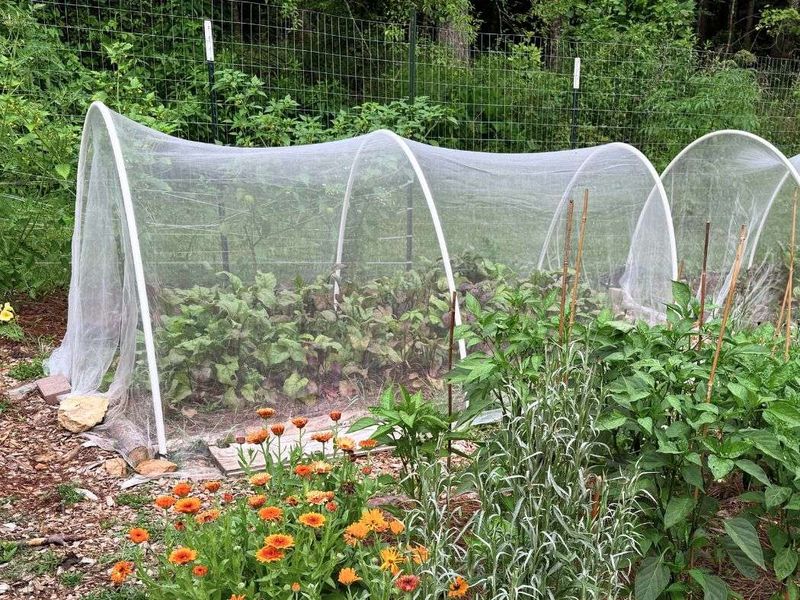
Bees and other visitors do much of the pollination work for free, so keep them safe. UF/IFAS advises avoiding insecticide sprays on plants in bloom.
Blooming squash is not the place for a casual spray.
If you decide a pest problem truly needs a pesticide, read and follow the product label. Choose timing that lowers bee exposure, and UF/IFAS suggests applying in the evening, after the day’s flowers have closed.
Never spray open flowers.
When you are back in the garden, check for new male and female blooms each morning. Try the hand-pollination test on fresh female flowers, and watch for bees using the same flowers, as seen in UF/IFAS observations of fall squash visitors.
Keep an eye on moisture and plant conditions too. None of this guarantees a harvest, but each step rules something in or out.
A shriveled baby squash is a clue, not a verdict.