
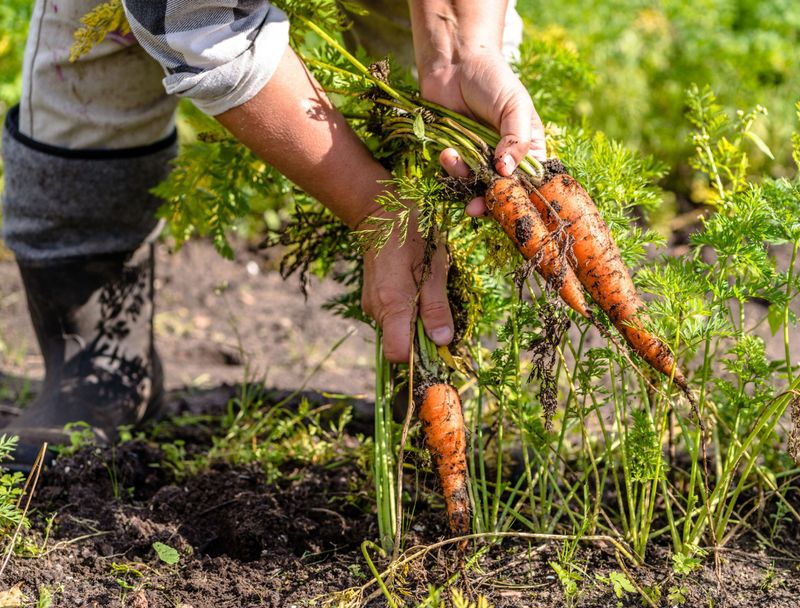
Pulling carrots the moment the tops look big can feel like the smart move, but the roots underground tell a better story. As the weather cools, carrots may build up more sugar, and a short wait could change how they taste.
The trick is knowing what to check first and when waiting stops paying off. Here is how to read your carrot bed before you grab the fork.
Cool conditions may help, but frost is no guarantee
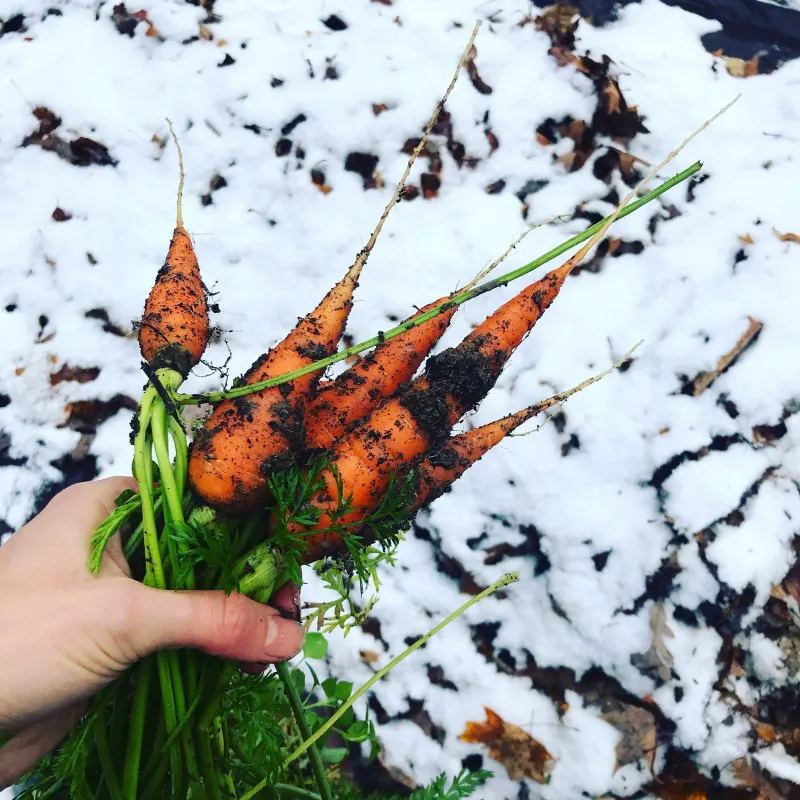
Cooler growing temperatures can affect how sweet carrots taste. In one controlled study, researchers found lower growing temperatures heightened perceived sweetness.
That does not mean every cool snap will turn your carrots into candy.
University of Georgia guidance says that once carrots reach the size you want, a delay of about 7 to 10 days in mild conditions may increase sugar content. Think of it as an option, not a countdown.
Field results are mixed. In a study of two carrot varieties, sugars often rose later in the harvest period, but the pattern changed by year and location.
In one season, frost injury was linked to lower sugar.
So frost is not a requirement or a reliable trigger. Nothing here sets a firm frost rule for Southern backyards, and a sweeter taste is a possibility, not a promise.
Check the root, not the foliage
Tall, lush tops can fool you. Yellowing or wilting leaves are not a dependable sign either, so skip guessing from above.
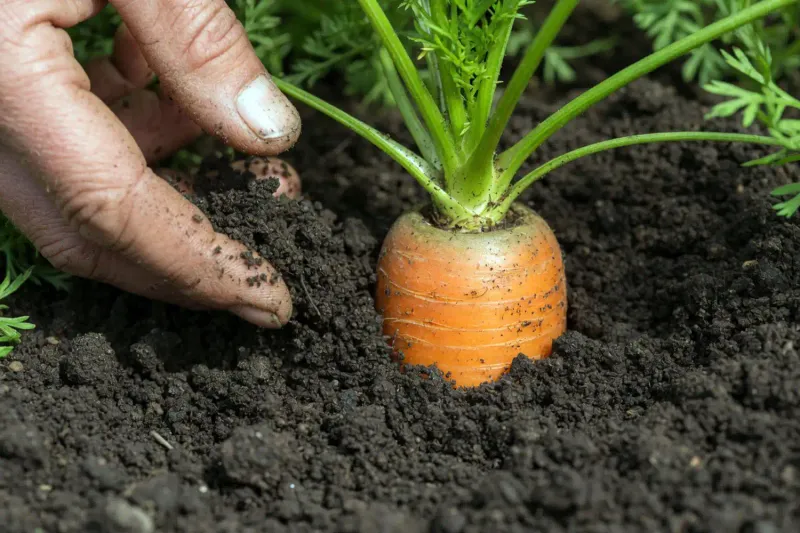
Instead, gently brush the soil away from the shoulder of one carrot and look at its width. Illinois Extension points to about three-quarters of an inch across as a useful benchmark for many standard varieties.
It is a guide, not a universal minimum.
Pull one sample carrot if you want a closer look. Taste it, and note its size, color, and any cracks.
Seed packet days to maturity are only estimates, and weather can speed them up or slow them down. Some varieties run slim, while others bulk up.
Your own preference matters too, since some cooks like small, tender roots and others want fat ones for roasting.
If the sample is ready, consider a brief wait
Say your sample carrot has reached the size you want and the forecast looks mild. Now you have a choice.
Georgia guidance describes waiting roughly 7 to 10 days as a way that may raise sugar content in suitable conditions.
That wait is optional. If a cold spell is coming or the roots look past their prime, harvesting now is perfectly sound.
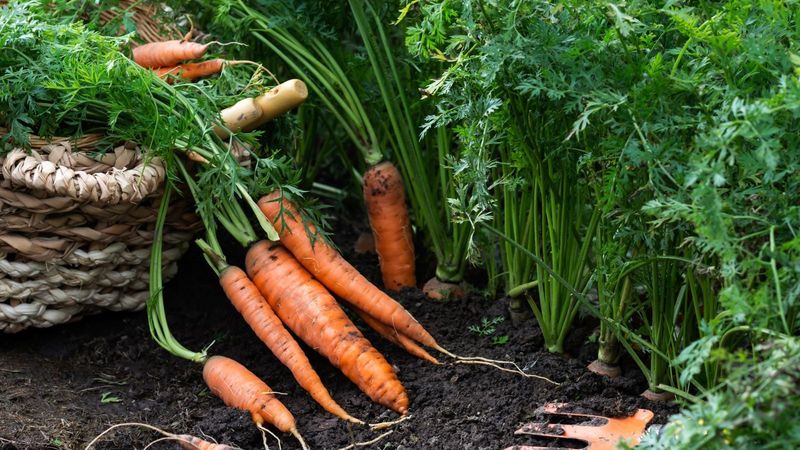
You also do not have to pull the whole bed at once. Carrots can be harvested as they reach usable size, so you can lift a few for dinner and leave the rest.
After about a week, dig another sample and compare. Keep an eye out for cracking, soft spots, or a tough texture.
Keep moisture reasonably consistent
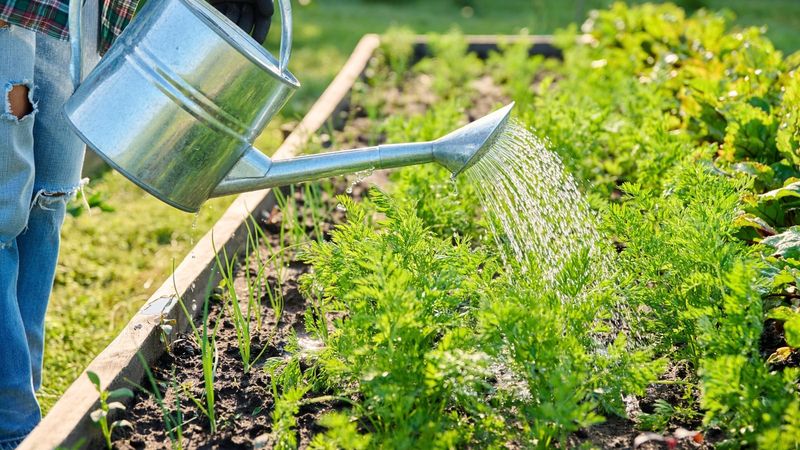
Carrots grow best with steady moisture. UC IPM guidance links drought or uneven watering to cracked, bitter, or fibrous roots.
Hot weather can also lower quality.
A dry spell followed by a soaking rain is a classic setup for splits. Cracking comes from that swing in moisture, not from leaving carrots in the ground a few extra days.
Check the soil a couple of inches down. If it is dry, water slowly and deeply.
A layer of mulch can help hold moisture.
Good watering supports root quality, but it will not guarantee a sweeter carrot. Treat it as the foundation, then let your sample digs guide the timing.
Root condition and cold risk can change the decision
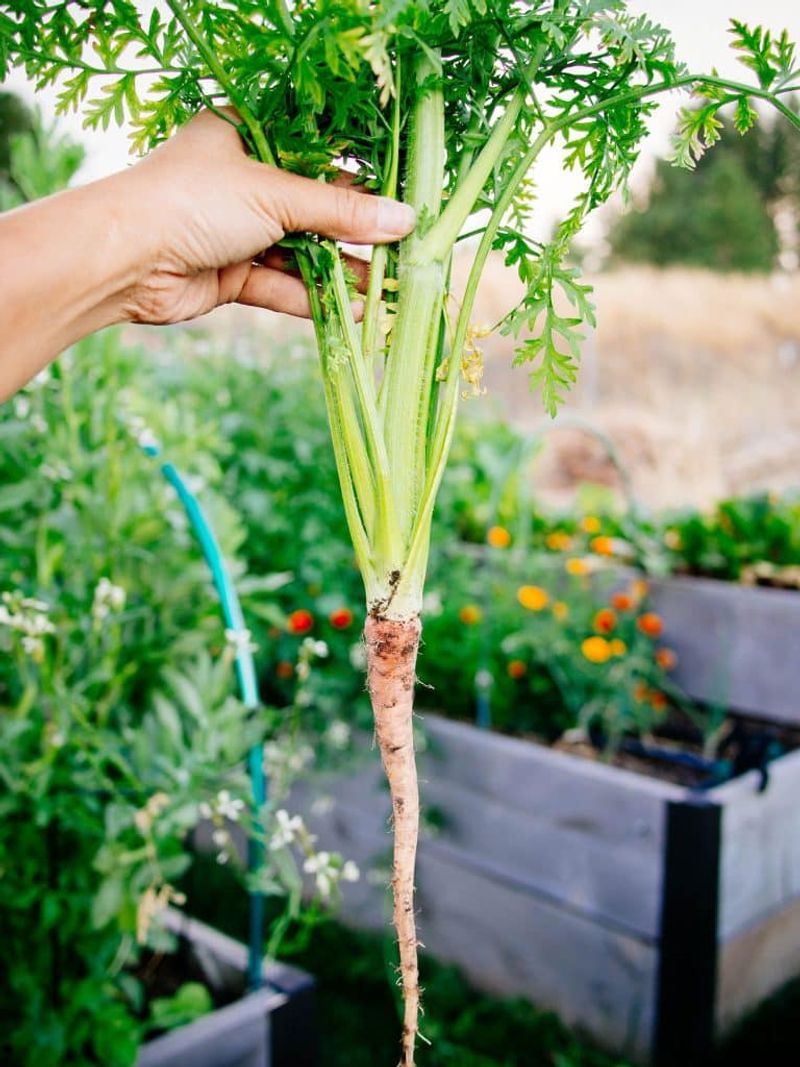
Waiting has limits. Georgia guidance warns that over-mature roots can develop woody centers.
It also notes that roots under 1 inch and later plantings are more prone to cold injury.
So a thin carrot from a late sowing is a poor candidate for sitting out a cold night. Check the forecast, and lift roots if a hard freeze looks likely.
Frost alone does not sweeten or damage every carrot. Snap a sample in half and look at the core.
If it is tough or pale, harvest the rest.
If you spot cracks, remember that uneven moisture is a common cause. Cracked roots are still edible, but use them soon.
Do not leave carrots in the ground indefinitely and hope for the best.
Loosen the soil before lifting
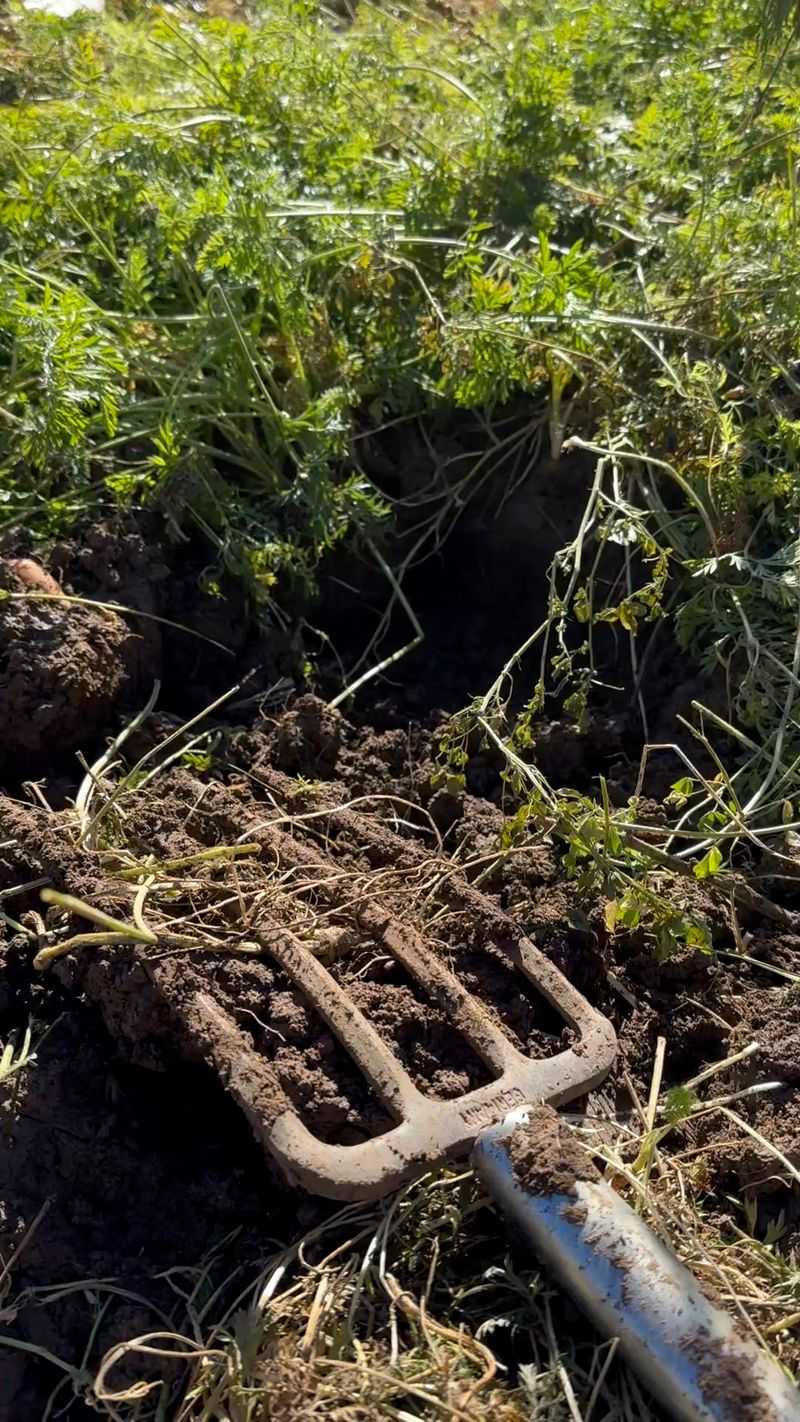
Even the sweetest carrot is a letdown if it snaps in half. Harvest technique matters here.
When you can, water the day before, or pick a day after rain. Moist soil keeps roots hydrated and makes them easier to remove.
Push a garden fork or trowel into the soil a few inches to the side of the row. Rock it back and forth to loosen the ground around the root.
Then grip the carrot near the shoulder and lift it up. Pulling hard on the tops often tears them off and leaves the root stuck below.
Brush off the soil, trim the tops, and keep the roots out of hot sun so they stay crisp.
Southern planting and harvest windows vary by region
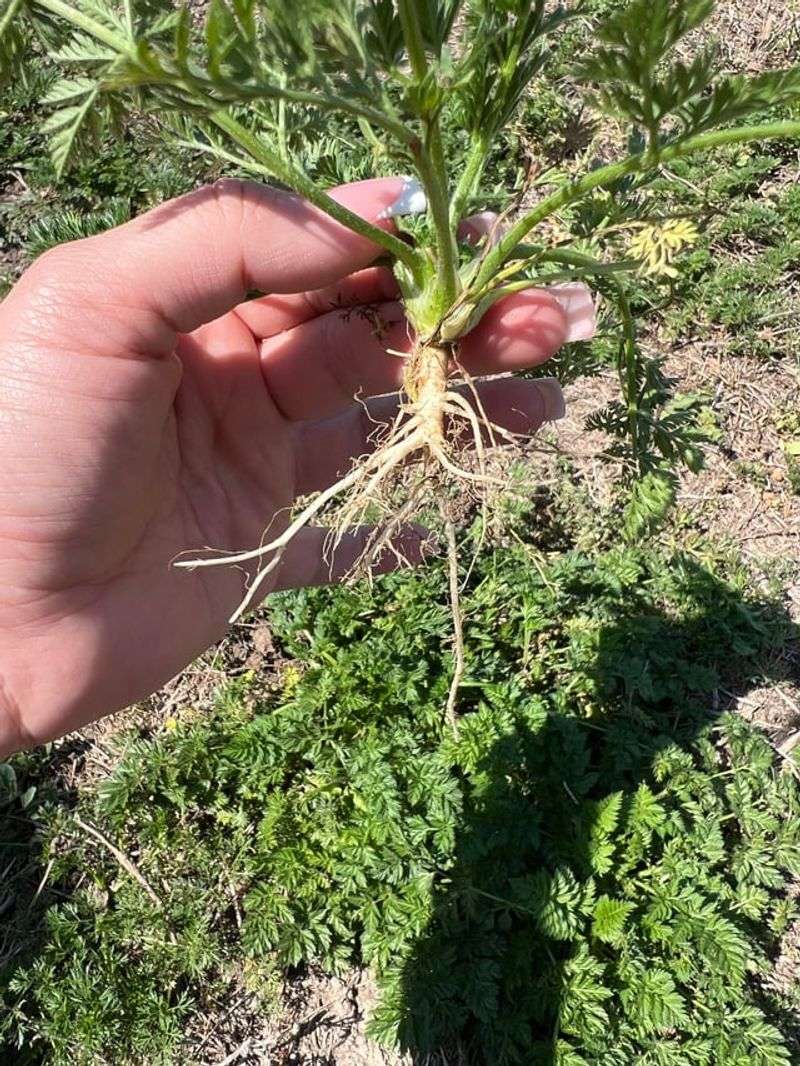
The South does not run on one calendar. Georgia guidance describes fall sowing with winter-to-spring harvest.
Florida varies too. UF/IFAS planting windows differ across North, Central, and South Florida.
For general context, Illinois Extension gives roughly 60 to 70 days to reach three-quarters of an inch. That is not a Southern schedule.
Use these dates for planning, then let your own bed decide. Sow time, soil temperature, and variety all shift readiness.
The carrot in your hand beats any calendar.