
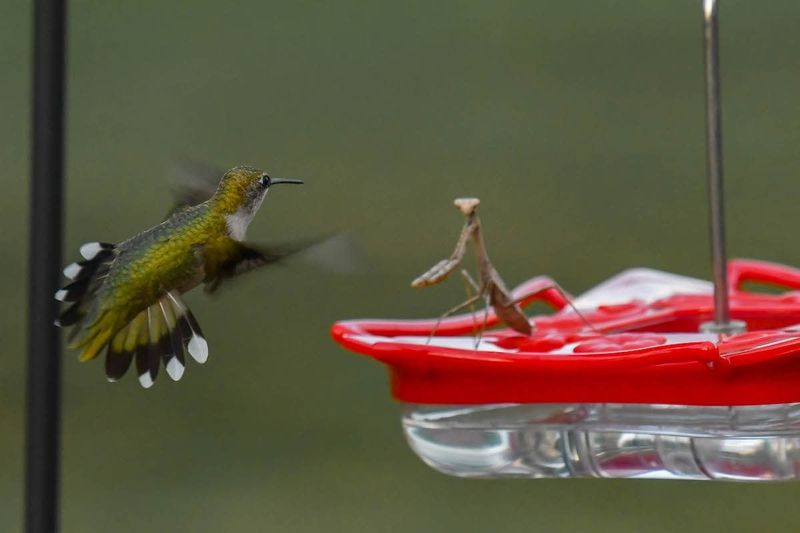
Most gardeners welcome a praying mantis, so it is a shock to learn that one can catch a hummingbird. Scientists and extension experts have recorded it happening at feeders and flowers.
It is a real hazard, but a rare one, and a few calm steps are all most yards need. Here is what the records show and what you can do about it.
The danger is documented, but uncommon
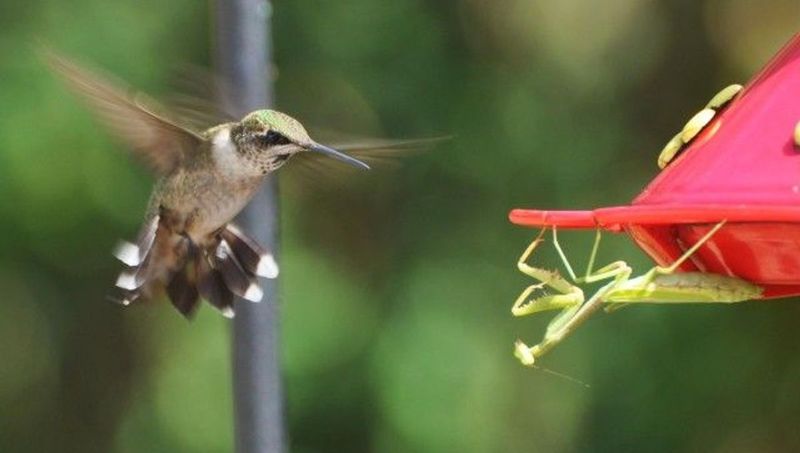
Yes, mantises have captured and killed hummingbirds, including at feeders. A peer-reviewed review of bird predation by mantises gathered 147 reported incidents worldwide, and many U.S. reports involved hummingbirds at feeders or nectar plants.
That number is a collection of documented observations. It does not tell us how often a feeder visit ends badly, and it does not show that feeders routinely endanger hummingbirds.
The same review found that 78% of captured birds were killed, but that describes what happened in the reported capture cases, not the chance that any hummingbird gets caught.
So a mantis on your feeder does not mean the feeder has become a trap. UF/IFAS Extension describes the chance of an attack as very low, while still advising gardeners to move the mantis.
Think of it as a small chore, not an emergency.
Feeders are not the only ambush sites
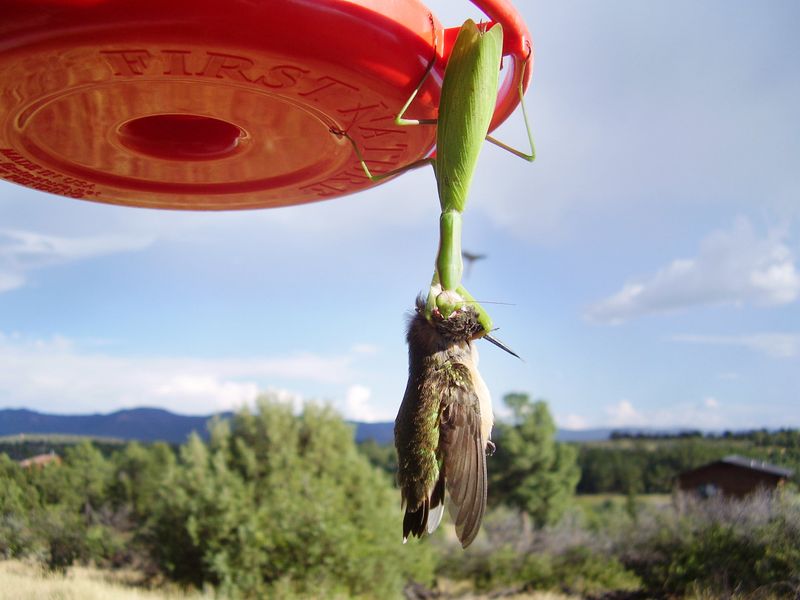
Mantises hunt wherever insects and small prey show up, and flowers are part of that picture. The same review documents mantises taking hummingbirds at nectar plants as well as at feeders.
That does not make every blossom a hazard. The records are scattered reports from many places, and they do not show that a flower bed or a feeder makes an attack likely on any given day.
A practical way to use this: when you walk past your salvia, firebush, or trumpet vine, glance at the stems as you would check for aphids. If you spot a large mantis near a spot hummingbirds visit often, you can simply nudge it elsewhere.
The point is awareness, not worry, and nothing here calls for ripping out the plants that draw birds to your yard in the first place.
Does fall bring more attacks?
Timing is where the story gets tempting to exaggerate. Texas A&M’s insect guide says female mantises lay eggs in fall, and the Texas Breeding Bird Atlas reports Ruby-throated Hummingbirds leaving from late July to mid-November.
Those windows overlap, so it is plausible that mantises and migrating hummingbirds share your yard in autumn. Overlap is not proof, though.
Nothing in these sources shows that attacks peak or even rise in fall.
Keep the calendar local, too. Texas timing is not a Southern calendar for everyone.
In Florida, UF/IFAS notes that some Ruby-throated Hummingbirds may remain in south Florida and the Keys, so feeders there may see birds well past the dates Texas gardeners watch.
Move the mantis off the feeder
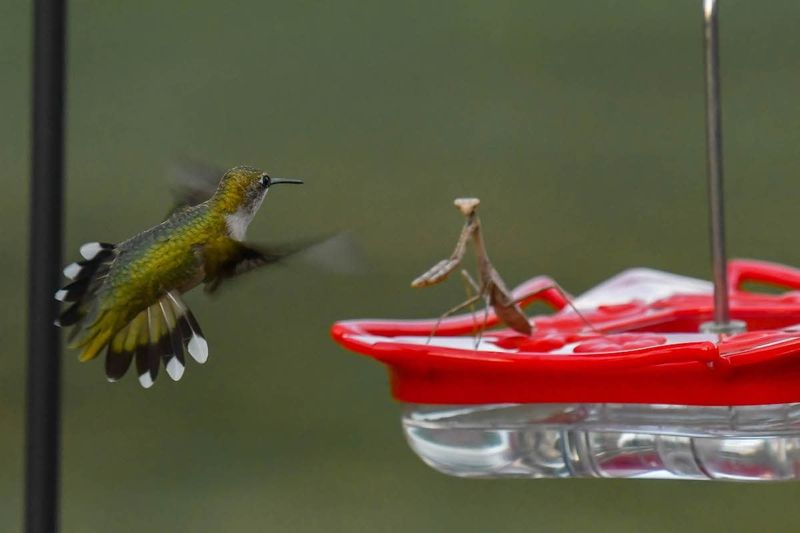
Found one sitting on the perch or port? Coax it onto a stick and set it down on vegetation away from the feeder.
UF/IFAS Extension gives this advice, and Texas A&M AgriLife Extension likewise suggests moving a mantis found on a hummingbird feeder.
Go slowly, since mantises can grab at fingers and may flick away if rushed. Neither source gives a tested distance, so there is no magic number of feet.
Choose a spot in the garden where it can keep hunting insects.
This is a sensible precaution, not a guarantee. A mantis can wander back or a different one can show up.
There is also no reason to kill it. Checking the feeder when you refill it is an easy habit that covers most of what you need.
Change feeder placement without stripping the garden
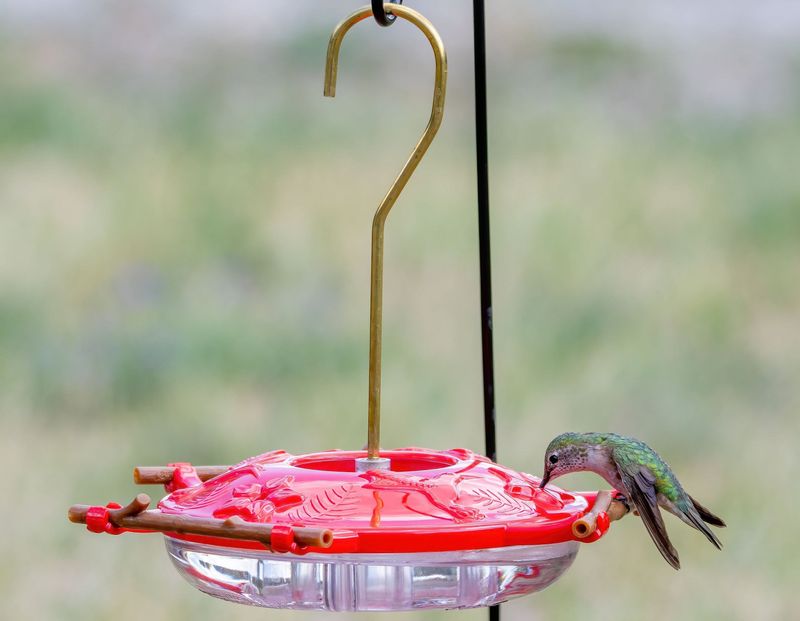
If mantises keep turning up, you can consider hanging the feeder somewhere more open. UF/IFAS suggests moving feeders away from shrubs and trees where mantises may be living.
Treat that as a precaution. No tested safe distance exists, so skip any advice that promises an exact number of feet.
Moving a feeder may help, but it cannot be counted on to stop an attack.
Moving the feeder is also very different from clearing the garden. Because mantises hunt at nectar plants too, as the bird predation review shows, some gardeners think plants are the problem.
The evidence does not support stripping habitat, and those shrubs and flowers feed and shelter wildlife you want around.
A simple shift, such as swinging a feeder out from a dense hedge onto a pole or open hook, keeps the planting and changes only the feeder spot.
Keep pesticides away from hummingbird feeders
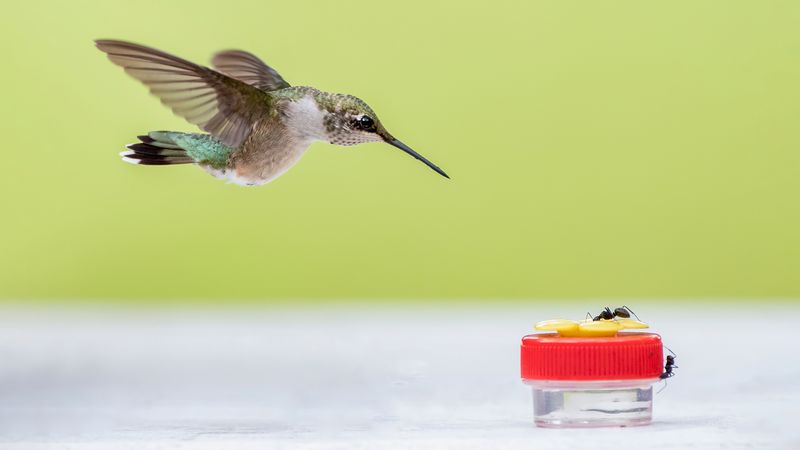
Spraying is the one fix to skip entirely. University of Maine Cooperative Extension warns against using pesticides on insects at feeders because they can harm hummingbirds.
That same logic rules out spraying to get rid of a mantis near the feeder.
Hummingbirds eat tiny insects and sip nectar, so anything sprayed nearby can reach them. Moving a mantis by hand is safer and takes seconds.
Do not count on mantises as garden pest control either. Texas A&M’s field guide calls them generalist predators that eat pest and beneficial insects alike, and says they are not effective controls for aphids, mites, or caterpillars.
They are interesting garden residents, not a pest plan, so judge them on that basis.
A small, careful response is enough
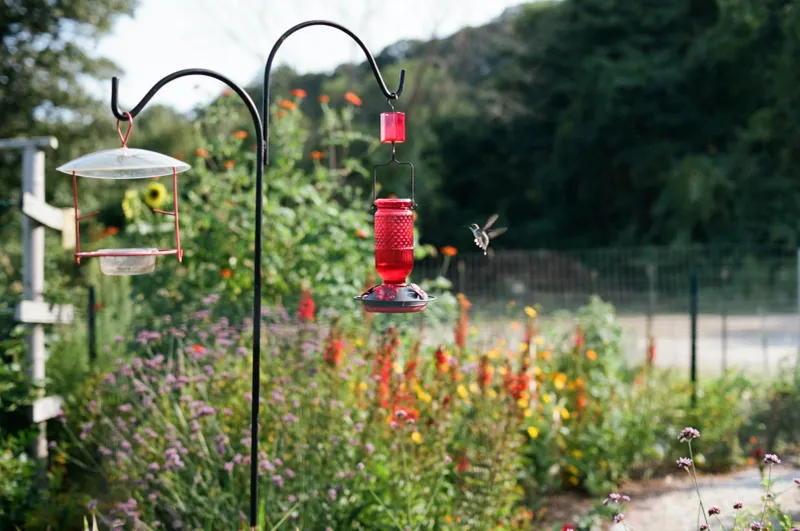
Move a mantis you find on the feeder, think about a more open spot for the feeder, keep the plants, and leave the sprays in the shed. UF/IFAS and Maine Extension back these cautious steps.
A rare risk deserves a quick glance, not a garden overhaul.