
Every fall, North Carolina porches fill with silver dusty miller that gets tossed when frost hits. There is a native plant with woolly gray-green leaves that grows right here in our state and lives for many years.
It looks different from dusty miller, and it has its own needs in a pot. Here is how to decide if plantain-leaved pussytoes belongs in your fall containers.
Meet North Carolina’s silver-leaved perennial
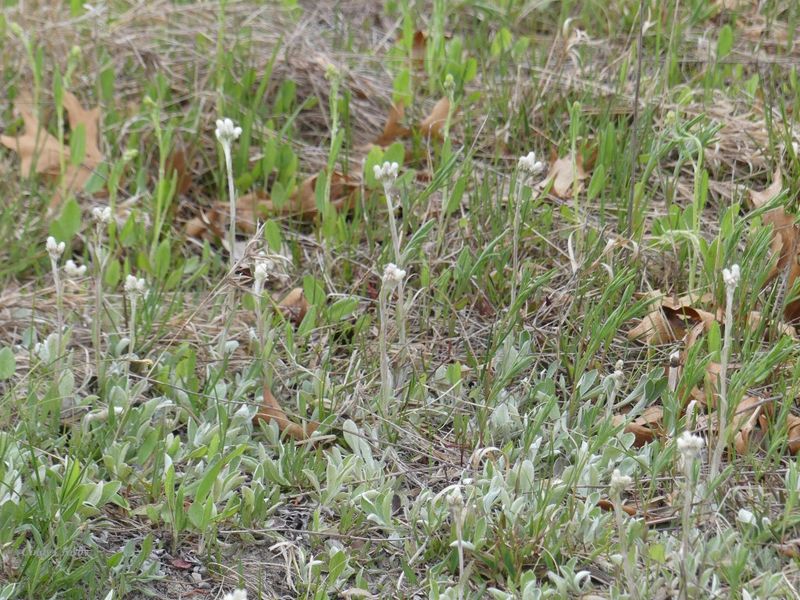
Plantain-leaved pussytoes, Antennaria plantaginifolia, is a small native perennial that grows wild across North Carolina. The state flora records it in the Coastal Plain, Piedmont, and Mountains, usually in dry to moderately moist habitats like open woods and clearings.
Because it is perennial, the plant lives for many years instead of one season. It builds its clumps slowly and sends out short runners called stolons to fill in nearby ground.
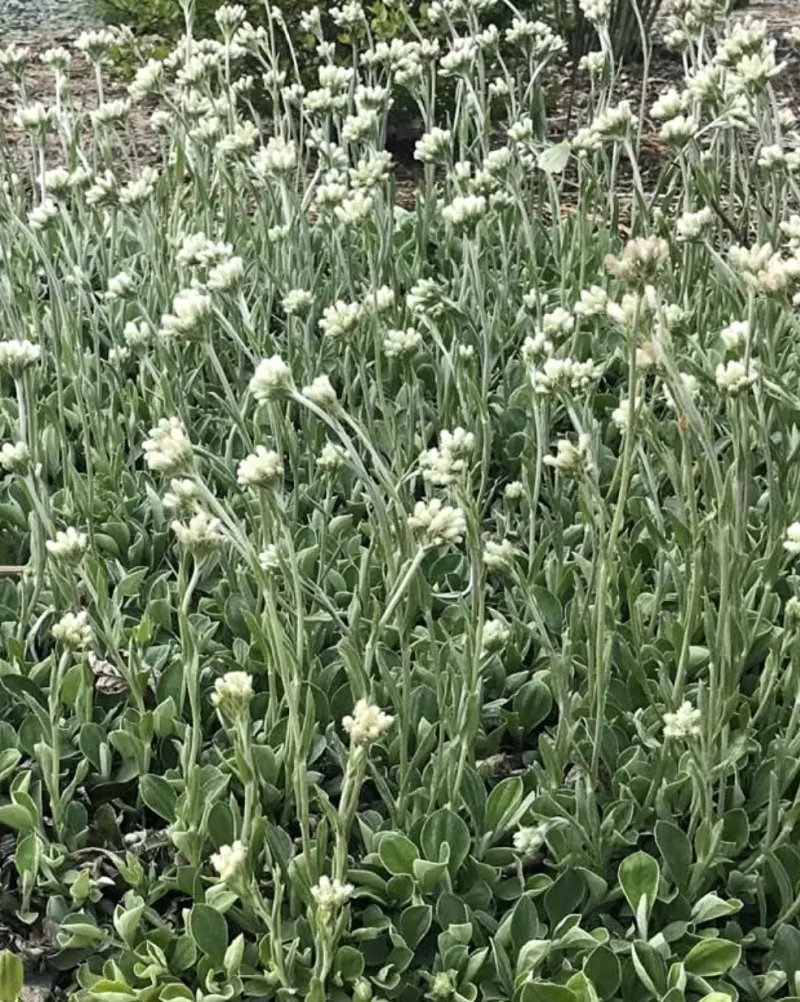
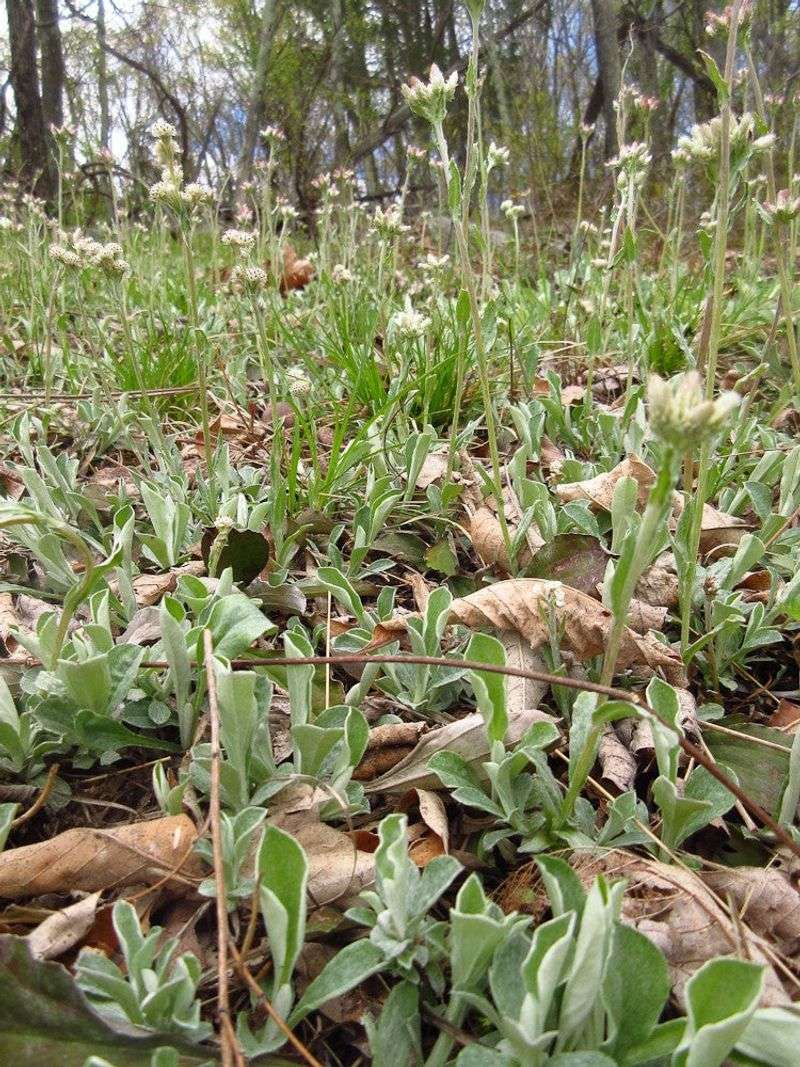
Look for a flat rosette of leaves close to the soil. NC State Extension describes the foliage as woolly gray-green, and its plant record also lists gray and silver as leaf colors.
The leaves are broad and rounded, with a soft, fuzzy feel and a few visible veins, which is where the name plantain-leaved comes from.
In spring, short stalks rise with small, fluffy white flower clusters. Those blooms are the reason for the odd common name, since they resemble tiny cat paws.
Silver is a handy shorthand, but gray-green is more accurate. In shade or on a damp day, the leaves can look greener than the bright silver of a nursery tray of dusty miller.
Think of it as a quiet, textured native accent rather than a flashy silver showpiece. That honesty helps you decide whether it fits your porch.
It is a groundcover, not a dusty-miller twin
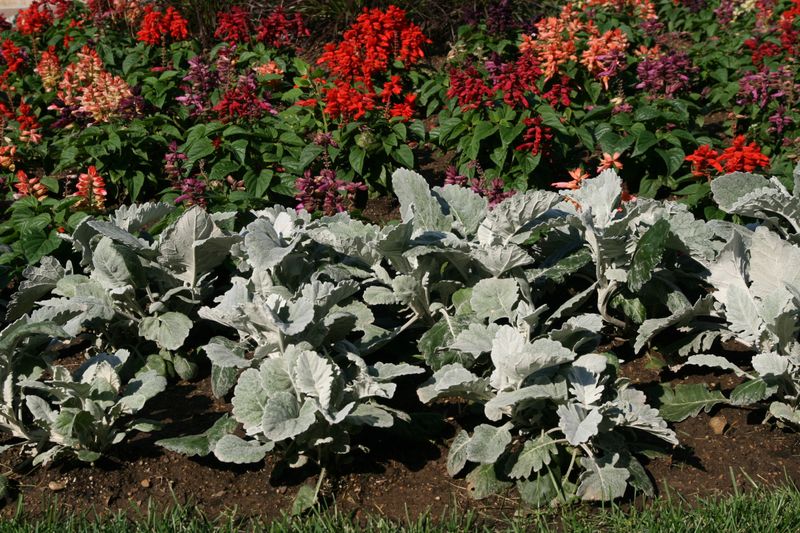
Dusty miller is the fall pot staple for good reason. UF/IFAS describes it as a silver foliage plant widely used in containers, and it forms a compact, upright mound of finely cut leaves.
Most gardeners treat it as an annual. Wisconsin Extension explains that the commonly grown plant, Jacobaea maritima, is actually a tender perennial from the Mediterranean that is typically grown as an annual.
Its leaves die back when temperatures stay below freezing.
Pussytoes plays a different role. NC State Extension lists it at about 4 to 6 inches tall, spreading roughly 1 to 2 feet.
It forms a short mat of basal leaves, not a lacy mound.
That means shared silver coloring does not add up to the same look. Pussytoes has broad, fuzzy, rounded leaves, sits low, and will not fill the middle of a pot with height or fine texture.
A practical way to picture it: dusty miller is the filler in the center, while pussytoes is more like a rug at the base. If you want that tall, feathery effect, keep buying dusty miller.
If you want a low native accent that spills a little and may return, pussytoes is worth a try.
Where will pussytoes thrive?
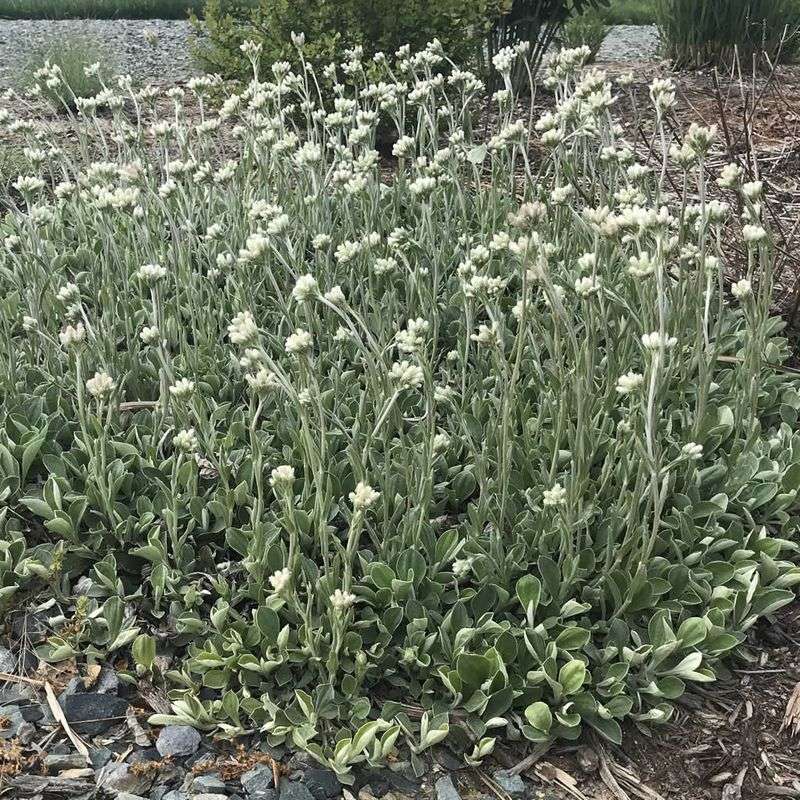
Sun and sharp drainage matter most. NC State Extension lists full sun to part shade and lean, dry, well-drained soil.
It also warns that the plant can struggle in rich or poorly drained soil.
That fits where it grows in the wild. The state flora records it from dry to mesic habitats, which means dry to moderately moist, not soggy.
Here is a quick diagnostic. If water puddles on your porch after a summer thunderstorm, or if a pot sits in a saucer of standing water, that spot is a poor match.
Heavy red clay in a Piedmont bed also needs work before pussytoes would be happy there.
Rich potting mix loaded with fertilizer is another trap. A leaner, fast-draining mix suits it better than the lush blend you might use for annual flowers.
Native status does not make a plant right for every yard. Treat pussytoes as a good fit for sunny to lightly shaded spots with quick drainage, and skip it where soil stays wet or heavy.
If your porch gets morning sun and afternoon shade and the pot drains freely, you are in the right neighborhood.
Give its low growth room in a container
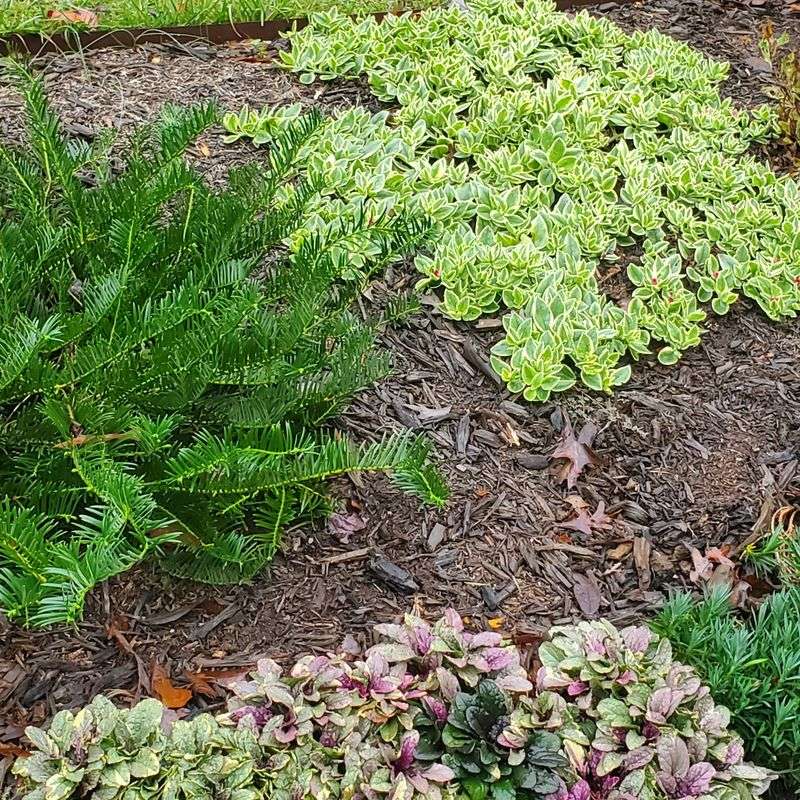
Think wide and shallow rather than tall and dramatic. With a height near 4 to 6 inches and a spread of 1 to 2 feet, per NC State Extension, pussytoes suits a broad bowl or trough where its mat can creep toward the rim.
It works best as a low accent or groundcover at the base of a design. Native Plant Trust documents it mainly for groundcover use, so a tall centerpiece is not its job.
For companions, pick plants with similar lean-soil, sun-loving habits and let them provide the height. A small native grass or a compact upright perennial can stand in the middle while pussytoes fills the edges.
Avoid pairing it with thirsty annuals that need constant watering.
Drainage is the key container decision. NC State’s container guidance stresses vessels and mixes that drain well.
Choose a pot with holes, use a gritty, free-draining mix, and keep the soil from staying wet.
No single design is guaranteed to succeed. Try it, watch how the mat behaves through the season, and adjust next year if the roots stay too damp or the plant gets crowded.
Will it return after winter?
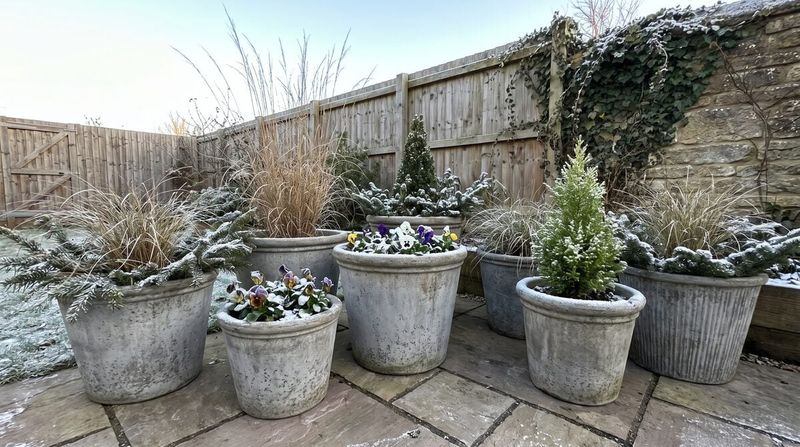
Perennial describes the plant’s life cycle, not a promise about your pot. In the ground, roots have the insulation of soil.
In a container above ground, they are exposed to cold air on every side.
NC State’s container guidance says cold-hardy plants may be overwintered outside, but some pots need insulation to protect roots from freezing. That is the real risk for a fall-planted pot.
Protection can be simple. Move the pot against a house wall, group it with other pots, or wrap the container with burlap or similar material.
Some gardeners sink the whole pot into a bed or surround it with mulch.
Keep winter moisture in check too. A pot that drains well is safer than one that stays soggy, since NC State Extension notes the plant dislikes poorly drained soil.
Mountain gardeners face colder nights than folks on the coast, so they have the most reason to insulate. Even in milder areas, a hard freeze can catch a small pot off guard.
If you want to improve the odds, plant the clump in the ground in spring after it has been enjoyed in the pot. Treat any return as a bonus, not a certainty.
A modest container can still support native insects
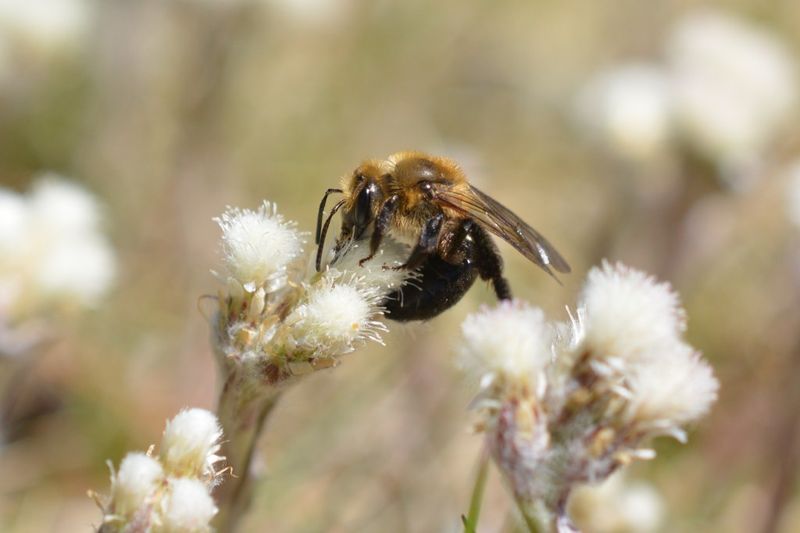
Pussytoes has a documented link to a native butterfly. NC State Extension identifies it as a host plant for American lady butterfly larvae and says it attracts pollinators.
Native Plant Trust also lists it as a host plant and notes that bees visit its spring flowers. So the leaves can feed caterpillars, and the blooms can offer nectar and pollen early in the year.
Keep expectations realistic. One pot will not transform your neighborhood’s insect numbers, and no source shows it will repel ticks or mosquitoes.
It is a small, real contribution, not a pest control tool.
If you want to make the most of it, avoid spraying insecticides on the plant. Caterpillar nibbling on the leaves is part of how a host plant does its job, so a few chewed leaves are a good sign.
Pair it with other native plants nearby, and the effect grows. A porch pot beside a bed of native flowers gives insects a few more places to land.
Choose it for the right role in your fall pot
Pick pussytoes if you want a low, woolly gray-green native accent and can give it a sunny to lightly shaded spot, a fast-draining mix, and some winter root protection. Choose it as a groundcover at the pot’s edge, not as the star.
If you want an upright, lacy silver mound, pussytoes will not deliver that look, and dusty miller remains the better pick. NC State Extension and its container guidance are good places to check before you plant.
Think of it as a native that may greet you in spring, not one that promises to.