
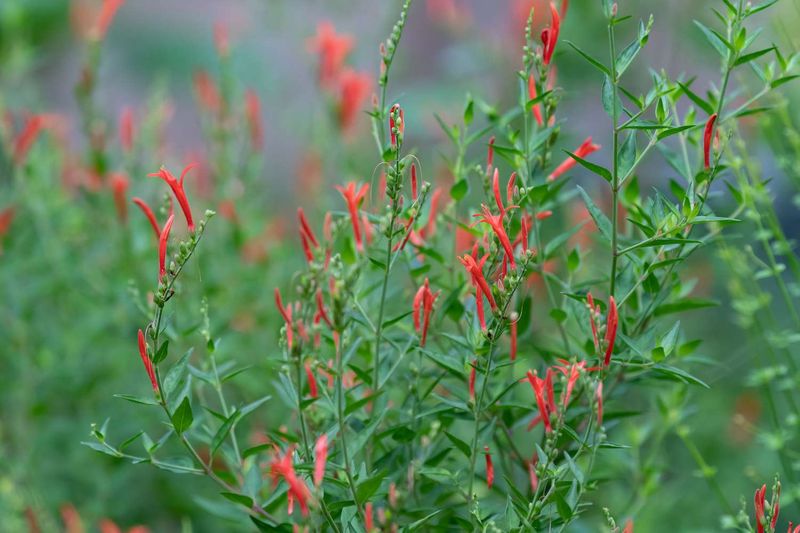
If your feeders go quiet by September, the problem may not be the birds at all. Hummingbirds heading south in fall need lots of nectar to fuel the trip, and many Southern gardens simply stop blooming right when they need it most.
The good news is that a handful of tough, heat-loving plants keep flowering deep into fall in Texas, Florida, and across the South. Plant a few of these, and your yard can become a reliable rest stop instead of a place hummingbirds skip.
1. Mexican Bush Sage (Salvia leucantha)
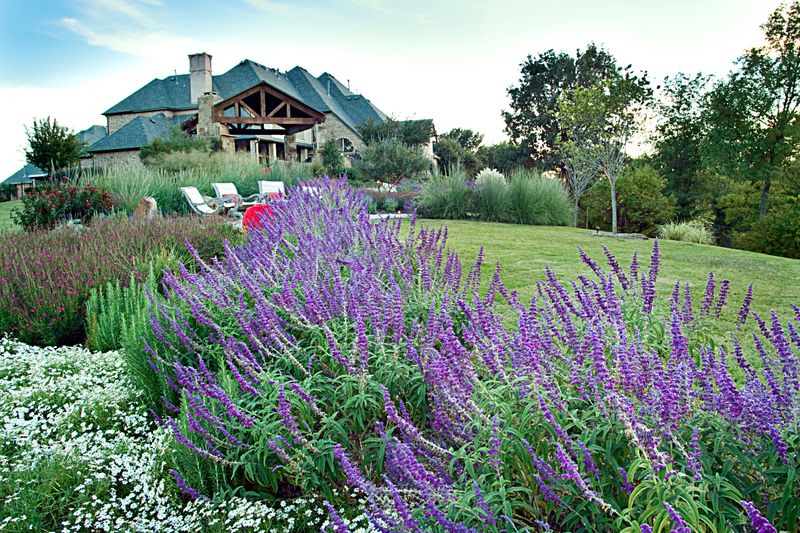
Late September in a Texas yard often looks tired, but Mexican bush sage is just getting started. Its velvety purple spikes appear as summer heat breaks and can keep going until the first frost.
Hummingbirds tend to visit the small tubular flowers tucked inside those fuzzy sleeves, especially during fall migration. The plant handles drought well once established, which makes it a smart pick for gardeners tired of babysitting thirsty beds in August.
Give it full sun and well-drained soil. Heavy clay can cause root rot, so mix in compost or plant on a slight mound if your ground stays soggy after rain.
A common mistake is letting it sprawl and flop by fall. Cutting the stems back by about a third in early summer usually produces a bushier plant with more bloom spikes later, which means more fuel for passing birds.
Plants often reach three to four feet tall and wide, so leave room along a fence line or back border. In zones 8 through 10, it typically returns from the roots each spring after winter dieback.
Farther north in the South, a thick layer of mulch may help it survive a cold snap.
2. Firebush (Hamelia patens)
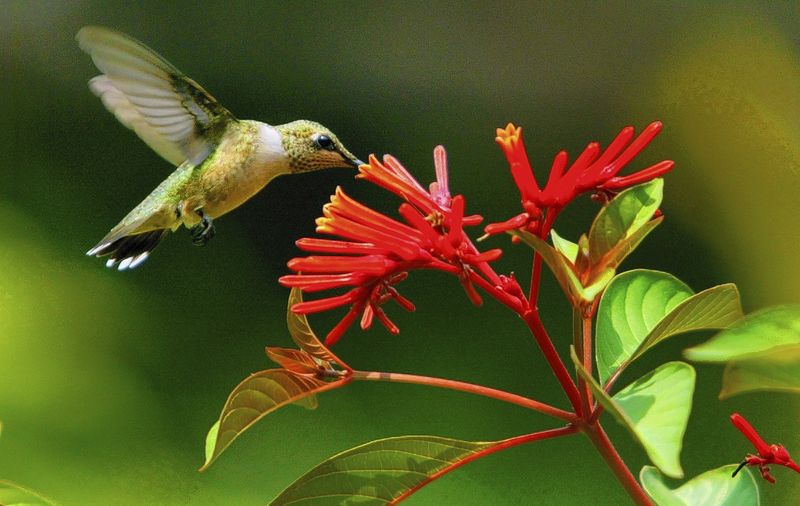
Ask Florida gardeners which plant hummingbirds fight over, and firebush comes up again and again. The clusters of orange-red tubes look almost custom-built for a hummingbird beak.
What earns it a spot here is staying power. In South and Central Florida, firebush may bloom nearly year-round, and in North Florida and coastal Texas it usually flowers from late spring until cold weather arrives.
It shrugs off heat and humidity that knock out many ornamentals. Full sun gives the heaviest flowering, though it tolerates some afternoon shade.
Buy the native form when you can. Some nursery types, often sold as compact or dwarf firebush, are different plants that may produce fewer flowers and less nectar.
If frost nips it in zone 8 or 9a, don’t panic. Plants often resprout from the base once soil warms, and you can trim dead stems in early spring.
Bonus: the small berries feed songbirds, and the leaves turn reddish in cooler months. One shrub can quietly support wildlife in several seasons while barely asking for anything beyond occasional deep watering during its first summer.
3. Turk’s Cap (Malvaviscus arboreus var. drummondii)
Shady yard? You haven’t been left out.
Turk’s cap is one of the few hummingbird favorites that blooms reliably in partial shade, which makes it a rescue plant for spots under oaks and along north-facing walls.
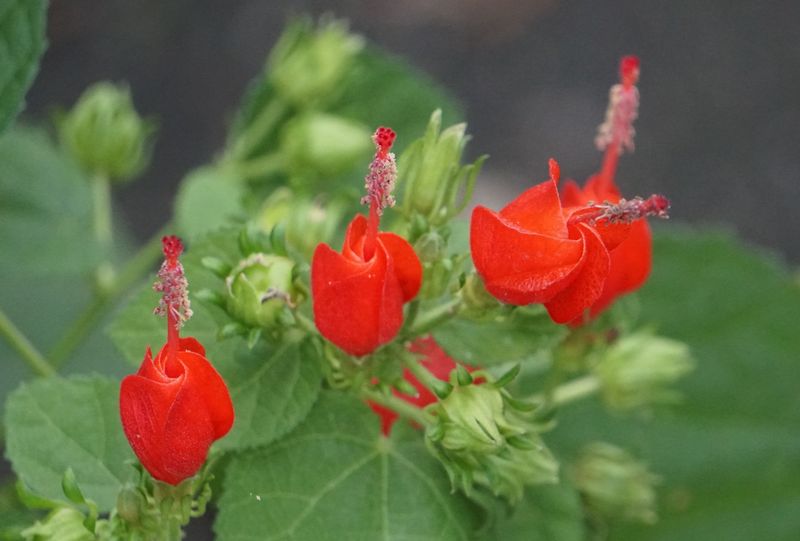
The red flowers never fully open. Instead, the petals stay swirled like a tiny turban, and hummingbirds slip right in for nectar while many bees can’t reach it easily.
Native to Texas and parts of the Gulf Coast, it handles heat, drought, and poor soil with almost stubborn cheerfulness. Blooms often run from early summer through fall, so it covers the late gap many gardens suffer.
Plants can spread by roots and form a loose colony over time. If that sounds messy, plant it where it can fill in, or pull extra shoots each spring.
Cut it back hard in late winter after the foliage dies down. Fresh growth tends to bloom heavily the following season.
Fun fact: the small red fruits are edible and taste a bit like a mild apple. Kids often enjoy finding them, and birds and small wildlife will happily clean up whatever you leave behind.
4. Cigar Plant (Cuphea ignea)
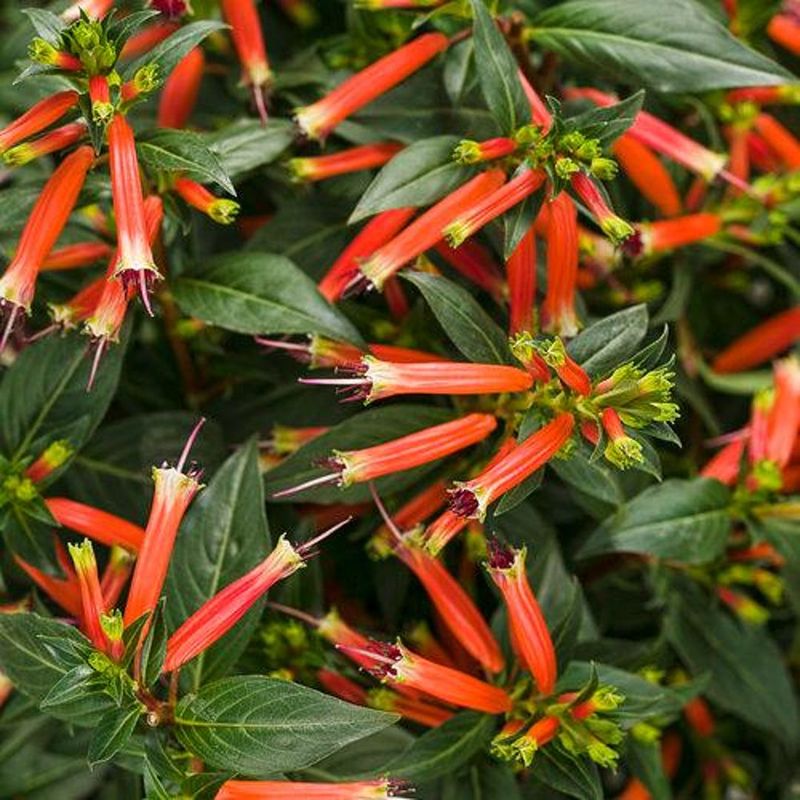
Small flowers, big results. Cigar plant produces hundreds of slim orange-red tubes tipped in white and dark purple, each one shaped like a tiny lit cigar.
Its real talent is container work. If your hummingbirds disappear because your porch pots fizzle by August, cuphea can step in and keep blooming through the heat and well into fall.
Pots on a sunny porch or patio also bring birds right where you can watch them. Many gardeners report hummingbirds checking these plants daily once they find them.
Water whenever the top inch of soil dries, since containers dry quickly in Southern summers. A light feeding with a balanced fertilizer every few weeks may help keep flowers coming.
In zones 9 and 10, cigar plant often acts as a perennial in the ground. In cooler parts of the South, treat it as an annual or bring the pot into a bright garage during freezes.
Pinching stem tips in midsummer can encourage branching. More branches usually mean more blooms when migrating birds pass through in September and October, which is exactly the window you want to cover.
5. Pineapple Sage (Salvia elegans)
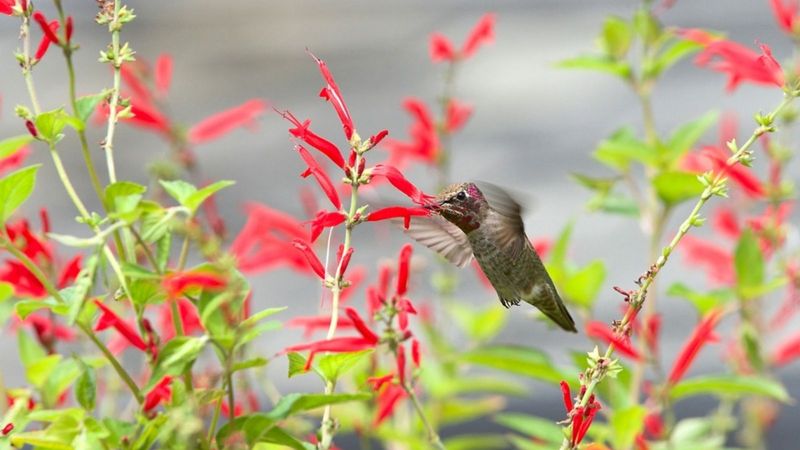
Brush against the leaves and you’ll smell ripe pineapple. Then wait until October, when this sage finally erupts in scarlet spikes just as many other plants quit.
That late timing is the whole point. Pineapple sage responds to shorter days, so it often saves its big show for fall, lining up neatly with peak hummingbird migration across the Gulf states.
For a garden that goes quiet after Labor Day, few plants fill the hole as directly. It’s like scheduling a nectar buffet for the exact week the guests arrive.
Plant it in sun to light shade with regular moisture. Unlike tougher salvias, it may wilt during long dry spells, so a weekly soaking in summer helps it reach fall in good shape.
It can grow three to five feet tall by autumn. Give it space toward the back of a bed.
The flowers and leaves are edible, too. Toss a few blooms into a salad or steep leaves for tea.
In warmer parts of Florida and Texas, it frequently returns each year, while gardeners in colder pockets may want to root cuttings in late summer as backup.
6. Coral Honeysuckle (Lonicera sempervirens)
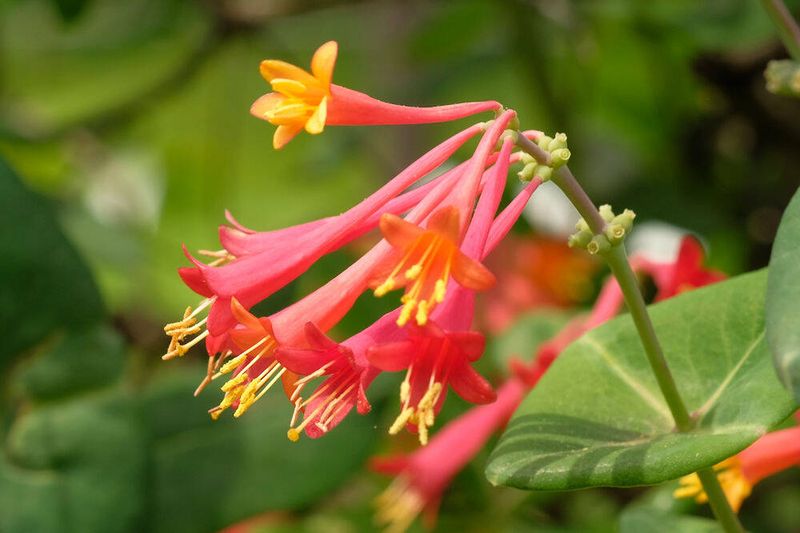
Here’s the well-behaved cousin of the honeysuckle that took over your neighbor’s fence. Coral honeysuckle is native across the Southeast and doesn’t spread aggressively like Japanese honeysuckle.
It earns a place by working vertically. A trellis, mailbox post, or chain-link fence can turn into a hummingbird feeding station without using up precious bed space.
The heaviest flush comes in spring, often greeting early arriving hummingbirds. Yet many plants keep putting out scattered clusters through summer and into fall, especially with some sun and occasional watering.
Those later blooms matter. Even a few red tubes can catch the attention of a migrating bird scanning for food, and the vine pairs nicely with fall-heavy bloomers on this list.
Plant it where it gets at least six hours of sun for best flowering. In deep shade, it tends to grow leaves but few blooms.
Aphids sometimes cluster on new tips in spring. A strong spray of water often knocks them back without chemicals that could harm visiting birds.
Light pruning right after the spring flush may also encourage fresh growth that supports more flowers later in the season.
7. Red Shrimp Plant (Justicia brandegeeana)
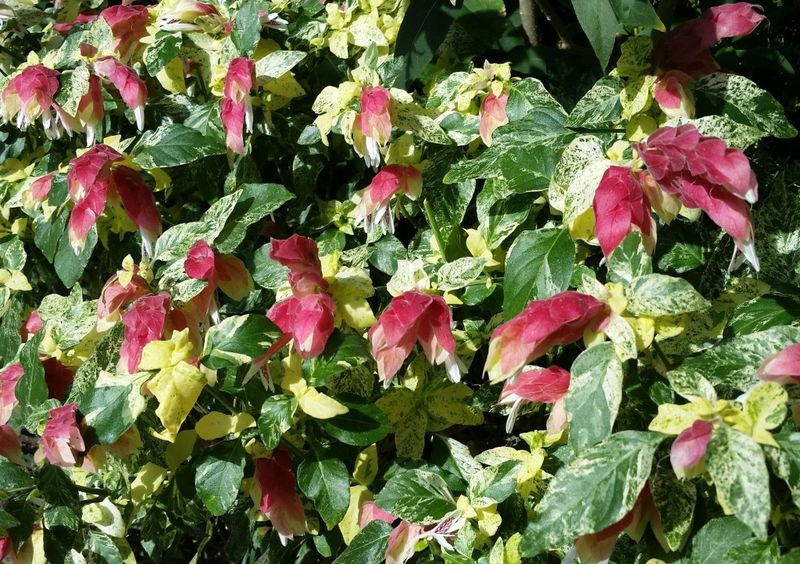
Picture a little cooked shrimp dangling from every stem. That’s roughly what shrimp plant looks like, and hummingbirds seem to find it irresistible.
The colorful curved parts are actually bracts. Small white tubular flowers peek out from between them, and those are where the nectar hides.
Why include it? Shrimp plant is a steady, low-drama bloomer that thrives in the partial shade and humidity of Florida and coastal Texas.
In warm zones, it can flower almost continuously from spring through late fall.
It fills the awkward spots that defeat sun-loving salvias, like beds by the house that only get morning light. Planted in a group, it creates a soft wave of color that birds can work through easily.
Keep the soil evenly moist but not soggy. If stems get leggy, trim them by half and new shoots usually follow within weeks.
In zone 8, frost may kill the tops. Mulch the base and it often regrows in spring.
Gardeners farther north can grow it in pots and move it indoors to a sunny window over winter, keeping a familiar nectar source ready for next season.
8. Flame Acanthus (Anisacanthus quadrifidus var. wrightii)
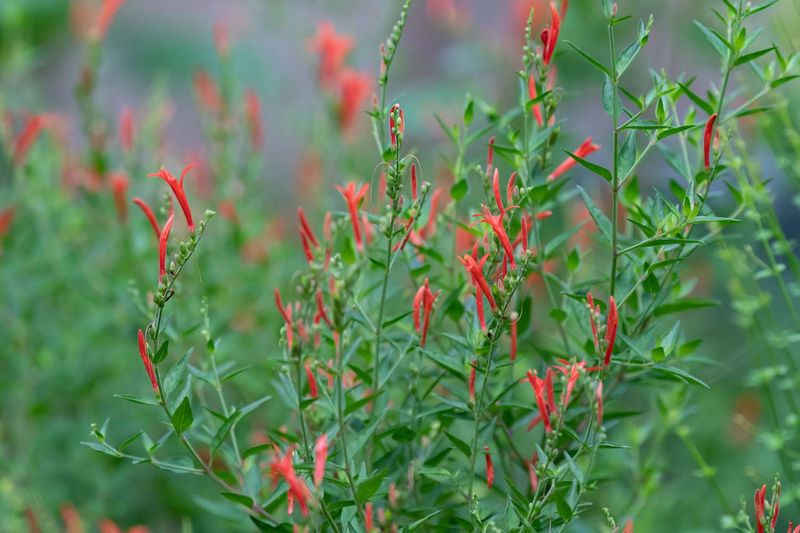
Drought-proof and hummingbird-approved, flame acanthus is the plant for gardeners who’d rather not drag a hose around in August. It hails from Texas and northern Mexico and seems to thrive on neglect.
Bright orange tubular flowers cover the shrub from midsummer through fall. Some Texas gardeners even call it hummingbird bush because the birds visit so often.
It’s especially useful in Central and West Texas, rocky soil, and xeriscape beds where lush plants struggle. Once roots settle in, it generally needs water only during extended dry spells.
Here’s the catch: too much water and rich soil can make it floppy with fewer flowers. Lean conditions tend to produce a tidier, more floriferous shrub.
Expect a size of about three to four feet. Prune it back to a foot or so in late winter, and it often returns with a dense, rounded shape.
Because it blooms during the hottest, driest stretch of the year and keeps going into autumn, flame acanthus helps bridge the dangerous gap when many gardens go brown. Pair it with salvias, and you’ve built a lasting nectar corridor.
9. Firecracker Plant (Russelia equisetiformis)
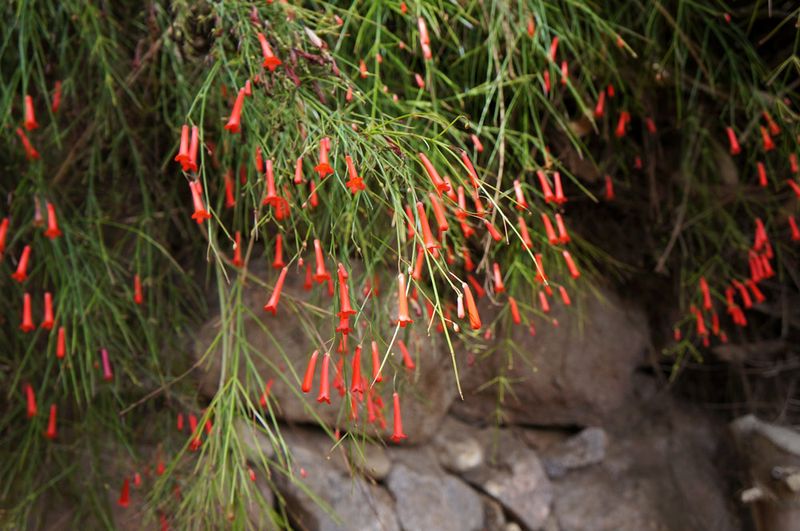
Cascading green stems spill over walls and pot edges like a fountain, studded with skinny red tubes. Firecracker plant brings movement to the garden that most hummingbird flowers don’t.
Its fountain shape makes it the finishing touch for raised beds, retaining walls, and large containers. Where other plants sit upright, this one drapes, giving birds an easy perch-and-sip setup at different heights.
In Florida and South Texas, it may bloom most of the year. Even in zone 9, flowering often continues well into fall, covering migration season with steady color.
It tolerates salt spray, sandy soil, and heat, which makes it a strong choice for coastal yards. Full sun brings the most flowers, though light shade is fine.
Once established, it handles dry spells with surprising grace. Overwatering is a more common problem than drought, so let soil dry slightly between drinks.
Closing tip for the whole list: aim for overlap. Mix a few spring starters, steady summer bloomers, and fall-heavy picks like pineapple sage.
When something is always flowering, hummingbirds are far more likely to linger, refuel, and return next year.