
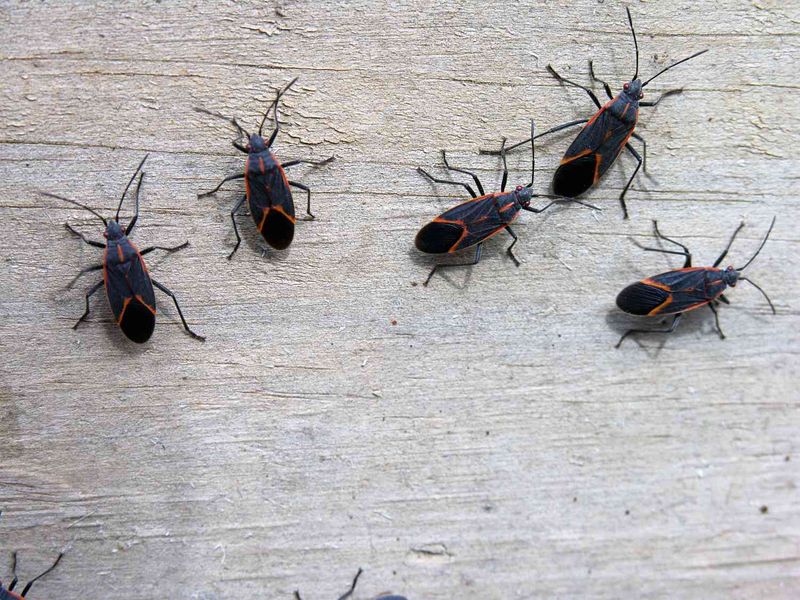
Red and black bugs clustered on a warm wall can make anyone nervous about what comes next. Boxelder bugs are a common fall sight in some places, and homeowners often wonder if they will end up inside.
The good news is that they are a nuisance, not a danger to your house. A few simple repairs and habits can cut down on how many get indoors.
Why boxelder bugs may gather on sunny walls in fall
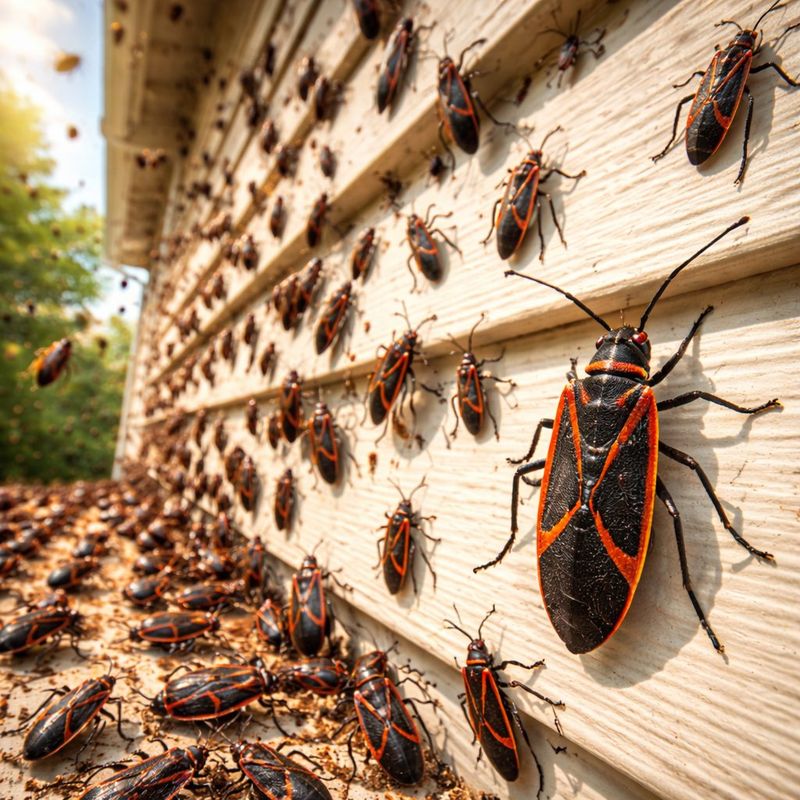
Come fall, boxelder bugs commonly gather on sunny building exteriors while they look for protected places to spend the winter, as University of Minnesota Extension describes. Warm, sun-facing siding, window frames, and door trim are typical spots.
Some bugs slip in through gaps or damaged screens and may wander around indoors during warm spells.
They are a nuisance pest, not a threat to your home. Virginia Cooperative Extension notes that they do not reproduce indoors and do not damage the structure.
Their droppings can stain surfaces, though, and they can smell if crushed.
Southern readers should keep one caution in mind. USDA Forest Service lists boxelder trees as far south as central Florida and southern Texas.
That shows the trees can be present there, but it does not mean the bugs are equally common, or gather on the same fall schedule, in every Florida or Texas neighborhood. Some homes will see plenty, and others may see few or none.
Check the markings and nearby host trees
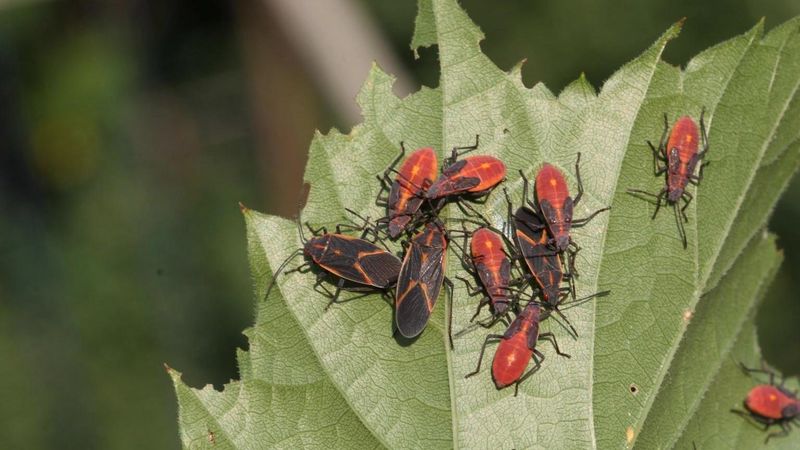
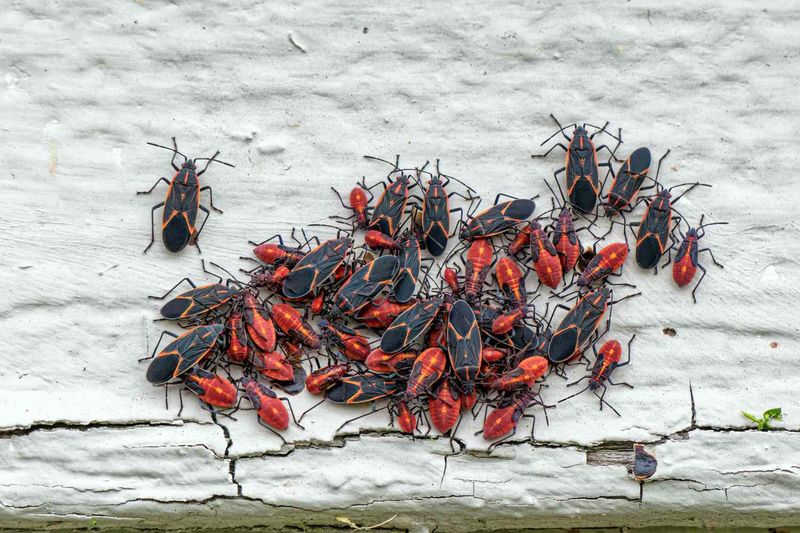
Not every red and black insect on your siding is a boxelder bug, so a closer look helps. Adults are about half an inch long and black with red or orange markings, according to University of Minnesota Extension.
Young nymphs are bright red and gradually become red and black as they grow.
If the bugs you see are shaped or marked differently, they may be another species, so compare before you act.
Boxelder trees are the preferred hosts, especially seed-bearing female trees, and Virginia Cooperative Extension says they can also feed on some maples and ash. A host tree nearby can help explain why your yard sees activity.
Still, UC IPM points out that adults can travel from other places, so a lack of nearby trees does not rule them out.
Seal likely entry points before fall activity
Blocking the way in is your best prevention step, and timing matters. Do your repairs before bugs start showing up where you live, since local fall activity can begin at different times.
University of Minnesota Extension recommends this kind of exclusion work.
Start with screens. Patch or replace any that are torn, and make sure they sit snugly in their frames.
Then check weatherstripping and door sweeps for worn or missing spots, especially on doors that get afternoon sun.
Next, walk the outside of the house and look for gaps. Seal appropriate openings around windows, doors, vents, and utility lines, plus joints where siding or other building materials meet.
A flashlight and a tube of exterior-grade caulk go a long way.
These steps can reduce how many bugs get inside. They will not guarantee a bug-free house, so expect an occasional straggler and plan to handle it calmly.
Use outdoor cleanup for limited, temporary relief
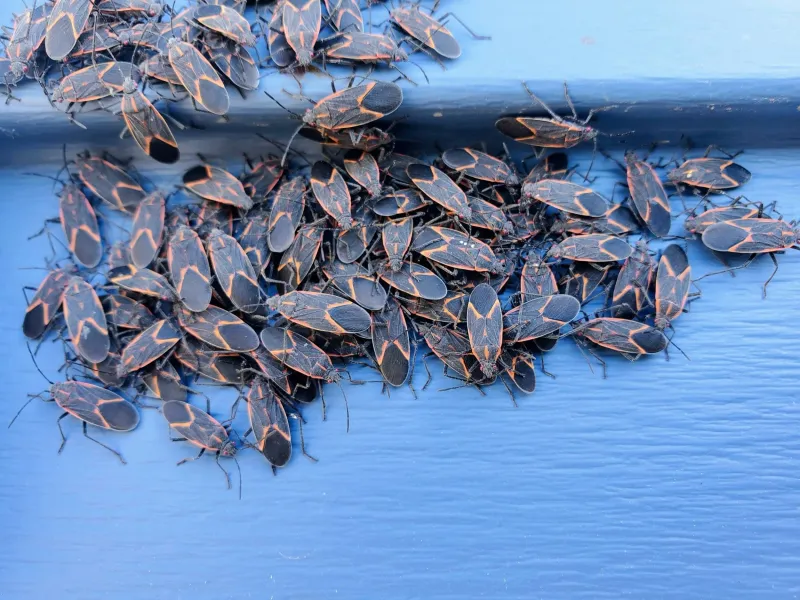
When bugs pile up on a wall or patio, a broom or a strong spray from the hose can knock them off quickly. UC IPM describes this kind of direct removal on hard surfaces as a simple option.
Treat it as short-term relief, since more bugs may return to the same warm spot.
Tidying the yard can help in a modest way. Clear piles of leaves, loose boards, stacked rocks, and other debris near the foundation, because those can give bugs sheltered places to hide.
Virginia Cooperative Extension includes this kind of cleanup in its advice.
Keep the roles straight. Cleanup does not close any gaps, so it will not stop bugs from finding a way indoors, and it will not end a swarm on its own.
Think of it as a helpful sidekick to the sealing work you already did.
Remove indoor bugs without crushing them
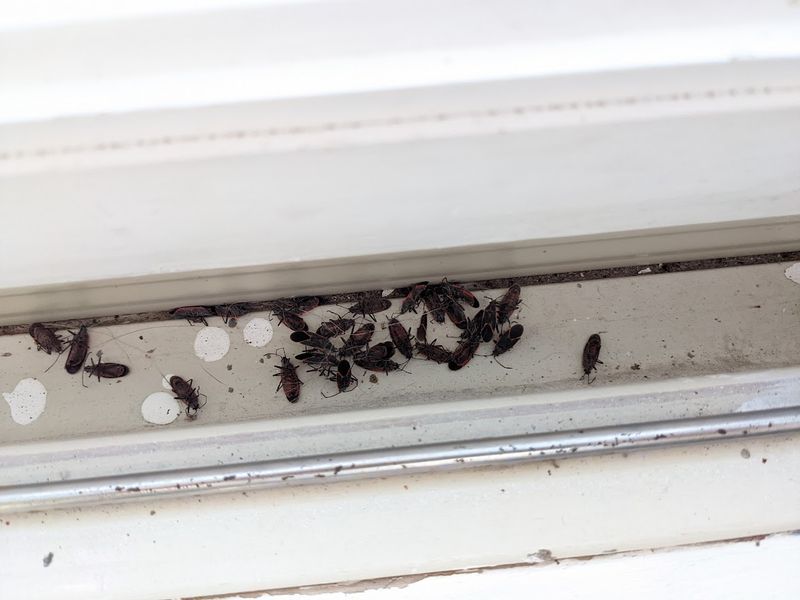
A bug on the windowsill on a warm winter afternoon is usually just a wandering straggler. Sweep it into a dustpan or run a vacuum over it, then empty the vacuum soon afterward so the bugs do not linger inside.
Virginia Cooperative Extension suggests this approach.
Try not to squash them. Crushed boxelder bugs can stain curtains, walls, and fabrics, and they may leave an odor behind.
Physical removal is the practical answer to indoor sightings, as University of Minnesota Extension explains. Spraying indoors is not a good fix, and UC IPM advises against using sprays for boxelder bugs inside the house.
Treating wall voids is not a lasting solution either.
Avoid treating tree removal or routine spraying as a sure fix
It can be tempting to cut down the nearest tree or reach for a spray bottle. Removing a nearby female boxelder may reduce a local source, but UC IPM warns that removal on one property may not solve the problem, since bugs can arrive from elsewhere.
Virginia Cooperative Extension says tree removal is generally not necessary.
Routine insecticide use is not a recommended first response. University of Maryland Extension says insecticide is not necessary or recommended.
If you ever consider a product, the label controls where and how it may be used, and the EPA says use that goes against the label is unlawful.
Soap solutions are sometimes mentioned. Colorado State University Extension and a Maryland Extension expert response treat them as contact treatments.
They only affect bugs they reach, may need repeating, and can harm plants. They do not repel bugs or prevent future visits.
Do not spray indoors or into wall voids. Sealing and sweeping do more with less fuss.