
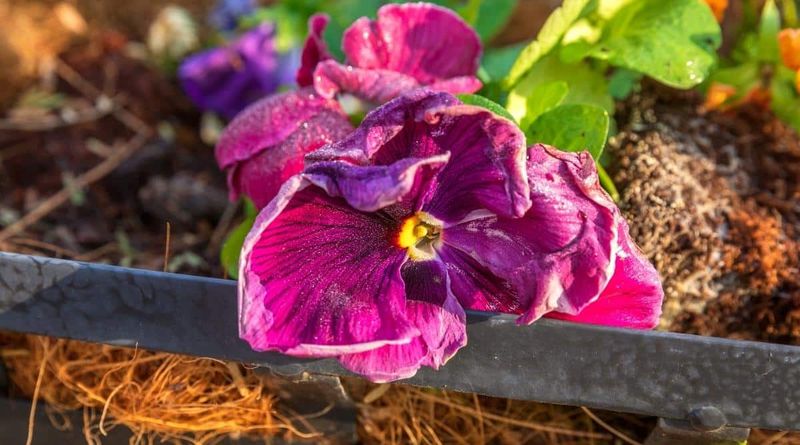
A droopy pansy in a fall container can make you grab the watering can fast. But wilting is a symptom, and the cause is not always a thirsty plant.
Sometimes the mix is bone dry below a damp-looking surface, and sometimes the roots are already too wet. A quick check under the surface can tell you which problem you have before you add a drop of water.
Wilting after sunny weather does not identify the cause
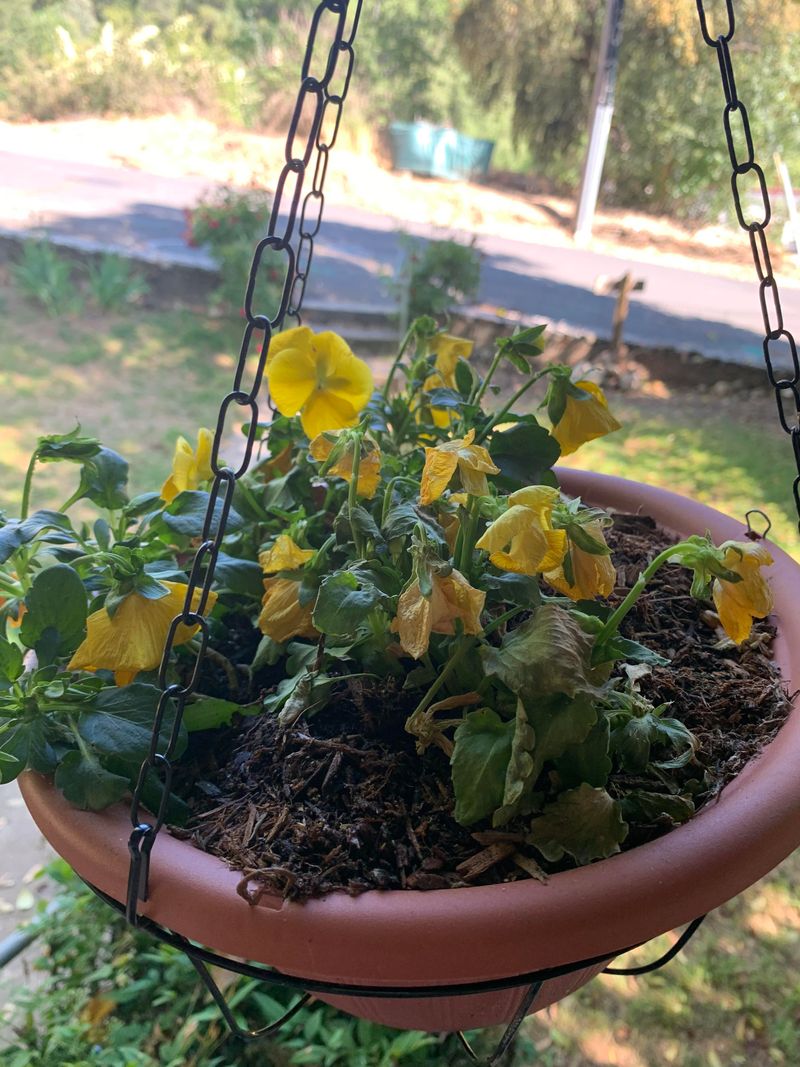
A pansy that droops after a few bright days may have a dry root zone. It may also be dealing with something else entirely.
Wilting by itself cannot tell you which one.
Pansies are cool-season plants. UF/IFAS container trials in central Florida found they do best in mild spring and fall weather and need protection from intense heat.
In the South, a warm spell in early fall can stress them even when the pot holds plenty of moisture.
Roots kept too wet can also cause drooping. Plants can wilt when the mix is too dry or too soggy, as University of Maryland Extension explains for container plants.
UF/IFAS also notes that pansy root and crown rots show up in warm, wet conditions.
So treat sunny weather as a reason to look closer, not as proof that the plant needs more water. Check the mix first, then decide what to do.
Adding water to a pot that is already wet can make the problem worse.
Very dry mix can let water bypass the roots
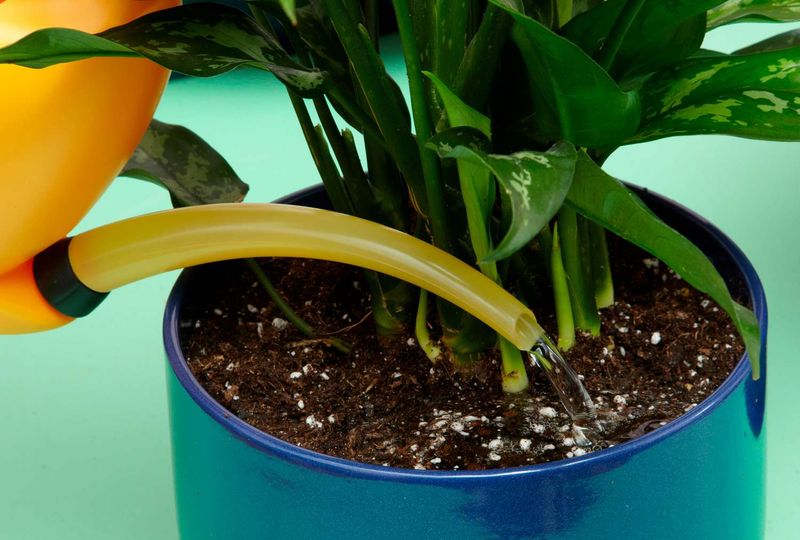
Potting mix that dries out completely can shrink away from the pot wall and become water-repellent. Water then runs down the gap or beads on the surface and drains out the bottom.
The root zone stays dry even though water clearly came out of the pot.
This is the situation UC Master Gardeners describe for hydrophobic soil. It happens when mix is very dry, shrunken, or repellent.
It is not what happens every time you water a pansy.
A crowded root ball is a different issue. Oklahoma State Extension says severely root-bound plants can be slower to establish, but that is a separate diagnosis from dry mix.
Nothing here means nursery pansies usually arrive root-bound. A pot with a pulled-away edge and light, dusty mix is a clue worth checking, and the next section shows how.
Check moisture below the surface before watering
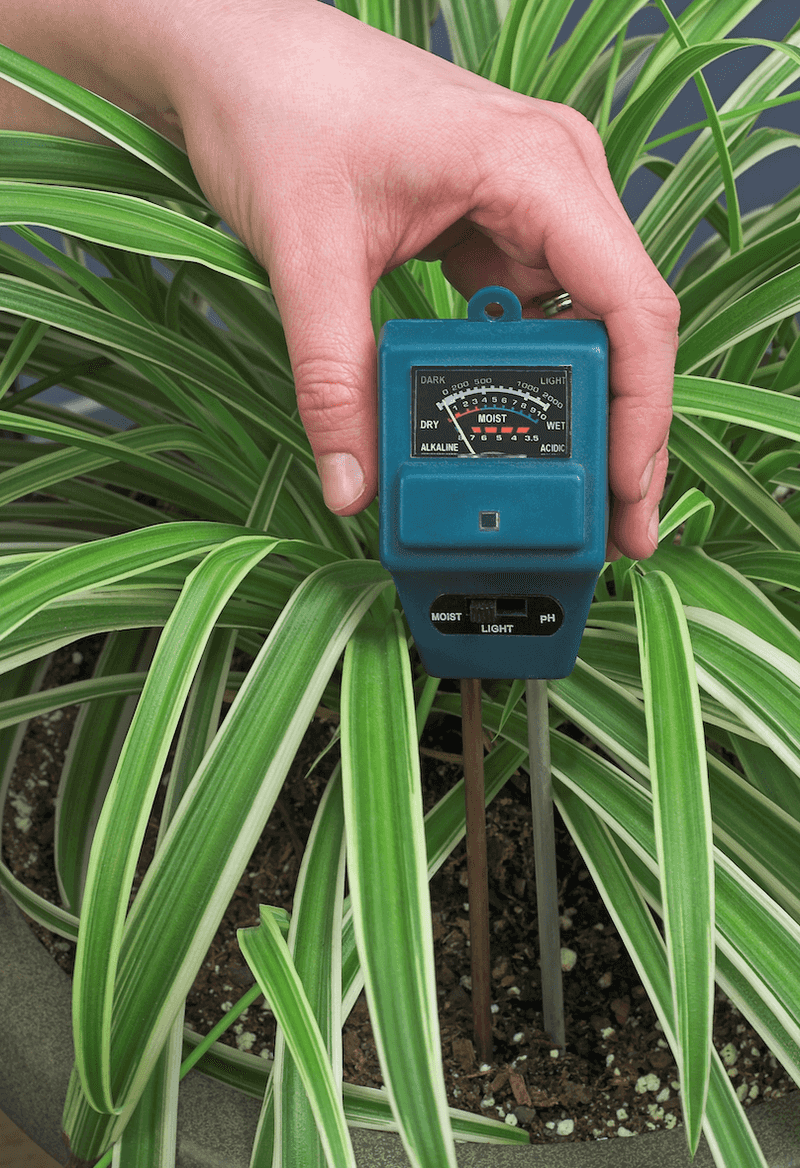
The top of the mix can fool you. A wet-looking surface does not prove the root zone is moist, and a dry crust does not prove it is dry.
The answer is a little deeper.
Push a finger into the mix about 1 to 2 inches down, near the plant but not through the roots. Iowa State Extension recommends this kind of check for containers.
University of Maryland Extension also advises feeling the mix instead of following a fixed schedule.
If it feels dry and dusty, the roots likely need water. If it feels cool and damp, hold off, since the wilting may come from heat or from too much moisture.
Lifting the pot can help too, because a dry pot feels much lighter.
Let what you find decide the next step. Dry means water, damp means wait and give the plant some shade, and soggy means let it drain and dry out.
Rewet very dry mix slowly and drain the pot
Once you know the mix is truly dry, go slowly. Pour water gently and let it soak in rather than rushing through.
Watch whether it wets the mix or races down the sides and out the bottom.
If water keeps running past, pause and try again in a few minutes. Several slow rounds often work better than one big pour, a method that fits the advice from UC Master Gardeners on water-repellent soil.
For a small pot with very dry mix, Iowa State Extension suggests soaking the container in water for 20 to 30 minutes to re-moisten it.
Afterward, lift the pot out and let it drain fully. Do not leave it sitting in standing water, since that can set up the soggy, warm conditions that lead to root problems.
Check the mix again in a day to see how it is holding moisture.
Check more often as conditions change
A small clay pot in full sun and wind can dry out in a day. A large glazed pot in part shade may stay damp for much longer.
Mix type, weather, and pot size all change how fast moisture disappears.
In hot weather, daily checks are a useful starting point, according to Iowa State Extension. They are not a watering schedule.
Water only when the mix below the surface tells you it is needed.
Southern warmth adds another layer. UF/IFAS says pansies prefer mild conditions, and Texas A&M’s seasonal color guidance places fall pansy planting as temperatures cool in late September and October.
A warm stretch can stress them, though that alone does not explain any one wilted plant.
Keep notes for a week. You will learn which pots dry fastest, and those are the ones to check first.
Select pansies with healthy, developed roots
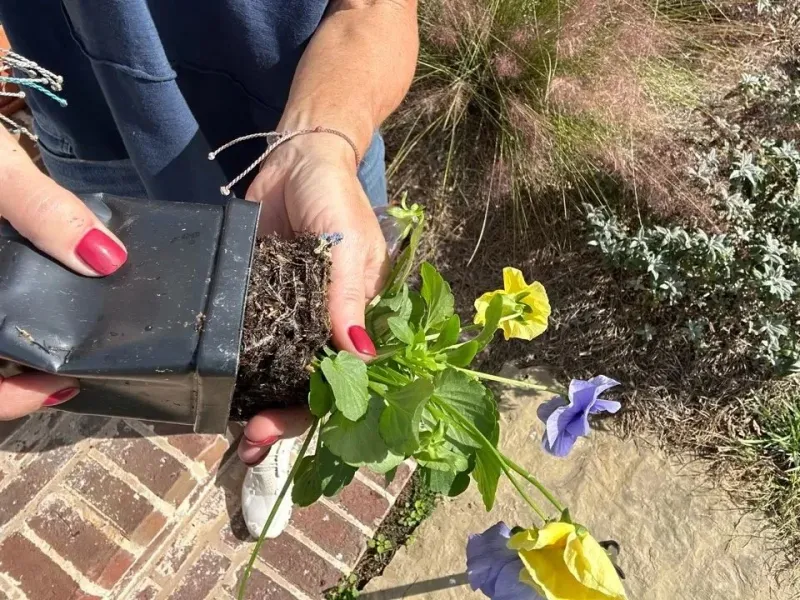
Good results start at the nursery. Look for compact, healthy plants with a well-developed root ball.
Oklahoma State Extension suggests avoiding plants with a dense mass of tightly circling roots, since severely root-bound plants can be slower to establish.
If the seller allows it, slide one plant out of its cell and look. Healthy roots are mostly pale and fill the soil without wrapping around it in a thick tangle.
Skip plants that look leggy, yellow, or wilted in the tray.
Texas A&M AgriLife notes in its pansy planting guide that fall is the time to set them out as weather cools, so shop when stock is fresh.
Treat this as a screening tip only. Most pansies you find will be fine, and a crowded root ball does not prove the mix is dry.
Roots tell you where a plant started, and moisture checks tell you how it is doing now.