
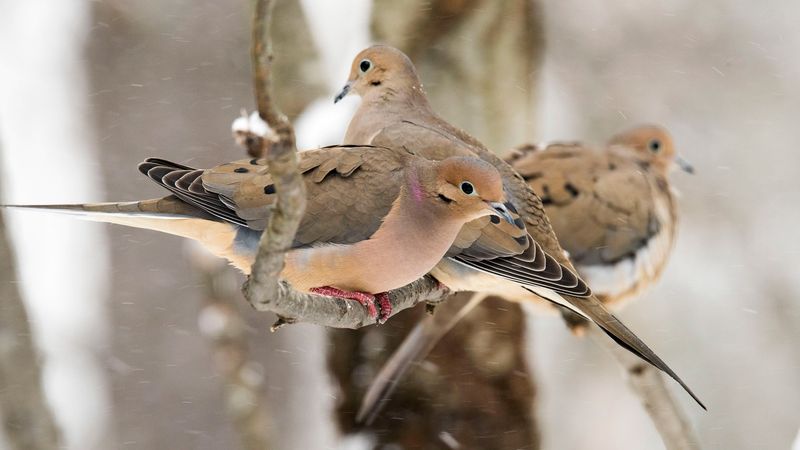
That soft, rolling coo drifting across your yard at sunrise is one of the most familiar sounds in Texas. Many people hear a message in it, like calm, comfort, or a sign that the yard is doing well.
The real story is more specific and, in its own way, more interesting. Here is what scientists actually know about the call, and what it can and cannot tell you.
The coo is a call, not a verdict
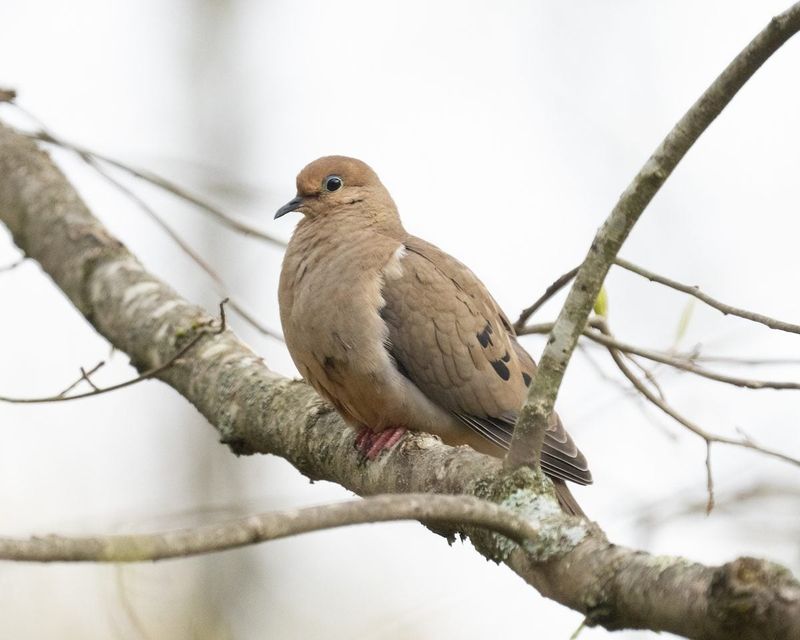
Mourning doves do not have just one sound. They use different calls in different situations, and the one most people notice is the long, mournful, rolling coo from a bird sitting in plain view.
Cornell Lab of Ornithology explains that this conspicuous perch-coo is given mainly by unmated males. It may relate to attracting a mate or defending a favorite perch.
Those are the documented possibilities, and that is as far as the evidence goes.
Other calls exist too. Paired males use a different nest call while building, and females sometimes call from the nest.
So one bird making one sound on one morning does not carry a single fixed meaning.
Here is the part that surprises people. You cannot tell a particular bird’s status or intent just by listening from your patio.
A coo does not reveal whether that dove is unmated, paired, or defending anything. It also does not tell you how the bird feels.
Calling it happy, peaceful, or content is a human story laid over a bird call.
What you can say is simple and still satisfying. A mourning dove is out there making a real, documented bird sound, and there is a fair amount of bird behavior behind it.
Noticing that is a good reason to step outside with your coffee and look up.
Which dove is making that sound?
Before reading meaning into a sound, it helps to confirm who is making it. Texas has several dove species, and plenty of dove-like coos float through a neighborhood.
Owls, collared doves, and other birds can sound similar from a distance, especially at dawn.
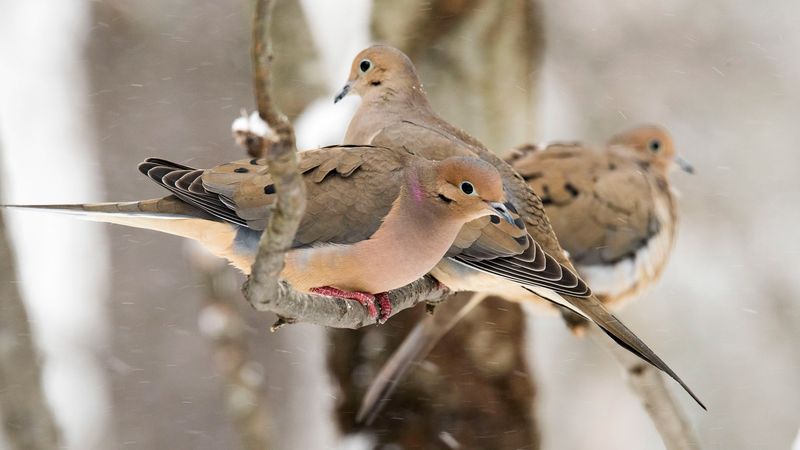
If you can spot the bird, the clues are easy to learn. Cornell’s identification guide for the mourning dove points to a long, pointed tail and black spots on the wings.
The body is slim and soft tan-gray, with a small head.
Try this next time you hear the call. Look at wires, fence tops, and bare branches, since a calling dove often sits in the open.
Check the tail shape first. A long, tapered tail is your best quick clue, and the wing spots are a good second check.
Recognizing the species and understanding its call are two separate jobs. Seeing a mourning dove tells you what bird you are watching.
It does not tell you why that bird is calling, and it does not turn the sound into a message about your yard.
If you cannot see the caller, it is perfectly fine to say you heard a dove-like call and leave it there.
A dove’s presence points to usable habitat, not a perfect yard
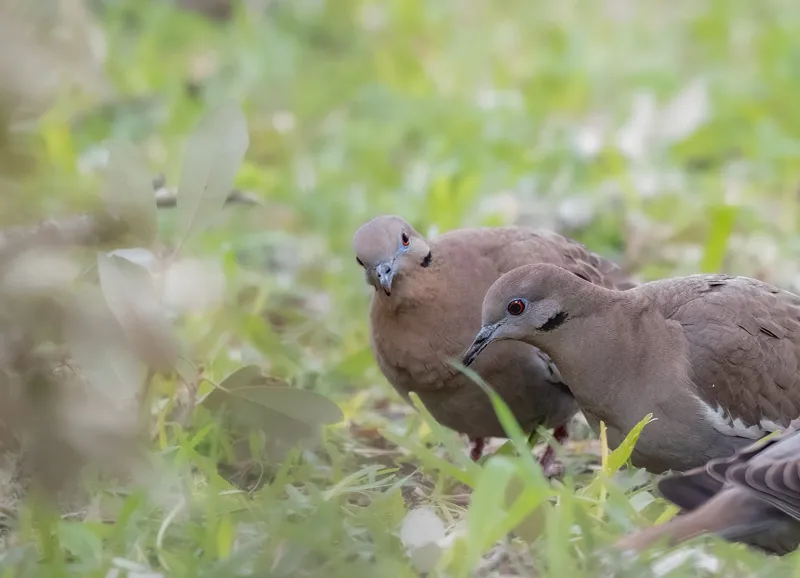
Mourning doves are not picky about scenery. According to Cornell’s life history notes, they use open and semi-open places, including suburbs, and feed mainly on seeds, often on the ground.
That fits a lot of Central Texas yards. A bare patch under a tree, a gravel edge, or a spot where seed heads have fallen can all give a dove something to use.
A wire, fence, or high branch gives it a place to sit and call.
Trees matter too. A Texas Parks and Wildlife habitat guide lists live oak, post oak, mesquite, hackberry, huisache, and juniper among trees doves use for nests.
That is a good reason to keep healthy, safe trees you already have. It is not a promise that any one tree will attract a dove.
Now the limit. Doves are generalists that also use ordinary developed landscapes, as Oklahoma State Extension notes.
And a continental study of dove reproduction found that responses to land cover varied by region, so a single backyard bird is no yard-quality score.
A calling dove shows it is using something nearby. It does not prove it nests in your yard, and it does not measure how healthy your yard is.
Does a fall morning change the message?
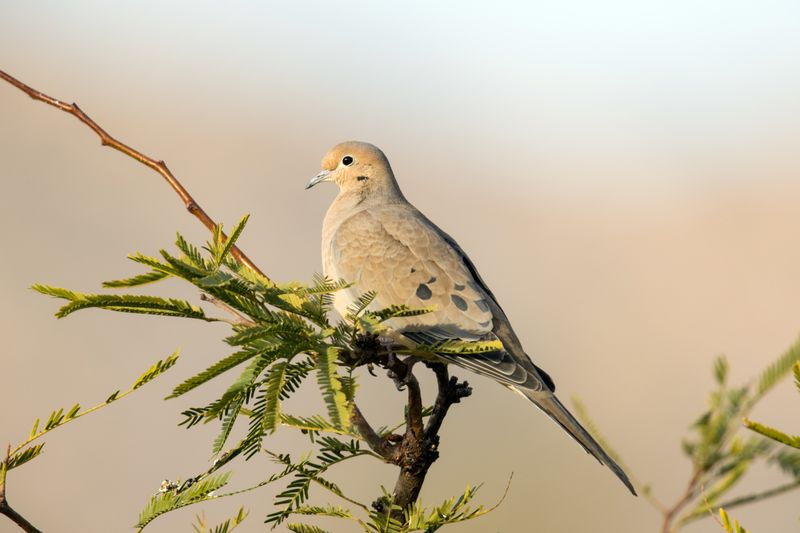
Fall mornings feel special, so it is tempting to think the season changes what a coo means. The honest answer is that one fall call does not establish a seasonal message.
It does not show that a nest is active, and it does not show that a special behavior is underway.
Nesting timing is a good example of why. Texas Parks and Wildlife describes mourning dove nesting in the Texas Panhandle as running from March through September.
That is a regional description from a different part of the state.
Meanwhile, Audubon’s field guide notes that pairs in the South can raise multiple broods. Put those two facts side by side and you get a general picture, not a calendar.
Neither gives you exact dates for Central Texas.
So a practical approach works best. Treat the season as background and watch the bird itself.
Does it sit in the same spot? Do you see it carrying twigs or sitting on a nest?
Those observations tell you far more than the month does.
Without that kind of evidence, a fall coo is simply a dove calling on a fall morning.
Make the yard safer for the birds using it
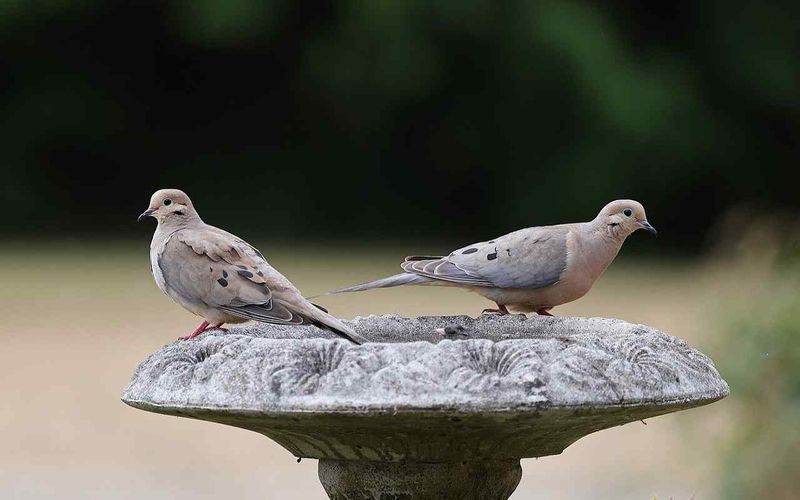
If you want your yard to work a little better for doves, think small and cautious. Keep safe, mature trees and shrubs that offer perching and nesting cover.
Consider letting some seed-producing plants stay in place, since doves eat seeds and forage on the ground, as Cornell’s life history page describes. These steps may help, but no habitat feature guarantees a visit.
If you decide to offer food or water, placement matters. The TPWD habitat guide advises setting them where birds can see approaching predators.
Keep them away from picture windows, since nearby sites can invite collisions. Avoid crowding many birds into one small spot.
A few easy ideas. Put a feeder or bath in the open with a clear view all around.
Space stations apart rather than bunching them. Add window decals or screens to large panes of glass.
Cats deserve a special mention. Cornell’s mourning dove overview flags ground-feeding doves as vulnerable to prowling cats.
Keeping cats indoors, or otherwise preventing them from hunting birds, is one of the most useful things you can do.
For more planting ideas, Cornell also offers a guide on providing seeds and shelter for backyard birds.
An active nest calls for distance
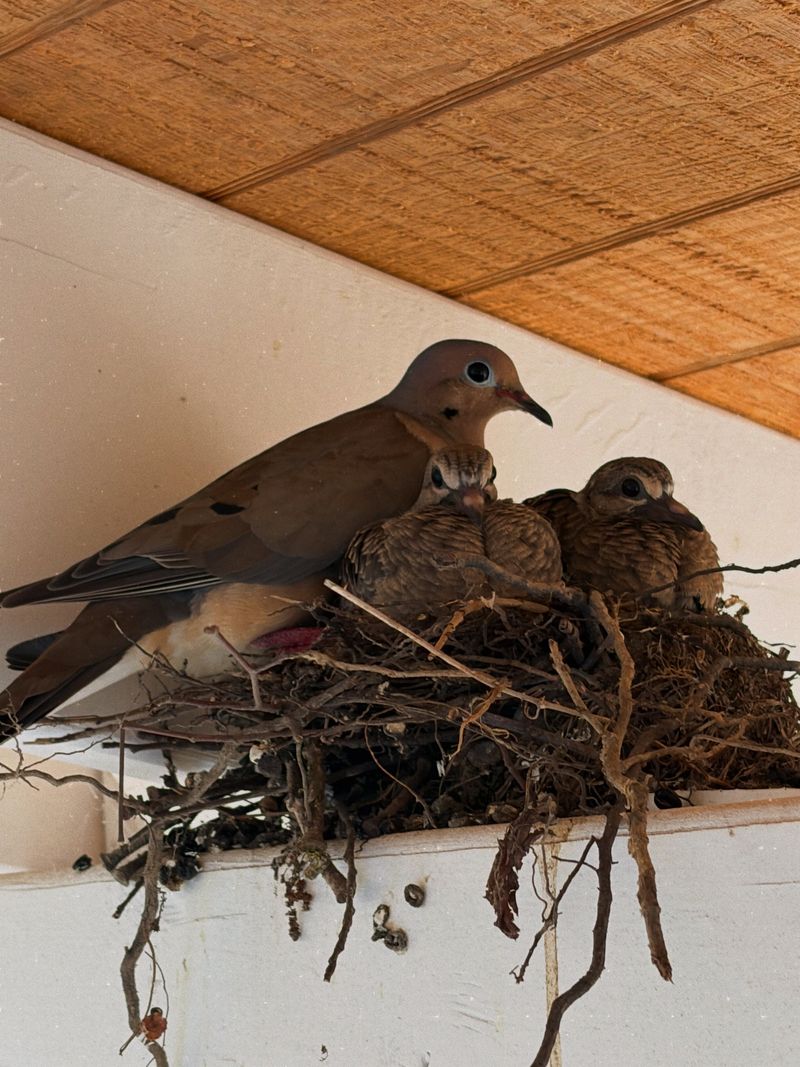
Dove nests look messy. A small platform of loose twigs in a shrub, a tree fork, or on a ledge can seem too flimsy to matter.
Even so, a nest with eggs or chicks is in use, and the best response is to leave it be.
The U.S. Fish and Wildlife Service explains that active nests and dependent young have federal protection.
That means you should avoid disturbing a nest while it holds eggs or chicks, or while young birds still depend on it.
Here is how that plays out at home. Hold off on trimming the shrub or tree where you suspect a nest.
Do not remove or move the nest. Keep pets and children back, and watch from a distance with binoculars or a phone zoom.
What if the nest sits somewhere that creates an immediate safety problem or a building maintenance issue? Do not handle it yourself.
Contact your state wildlife authority, such as Texas Parks and Wildlife, or a licensed wildlife professional for guidance.
Most of the time, the kindest plan is also the simplest. Give the birds space and let them finish.
The useful takeaway is modest
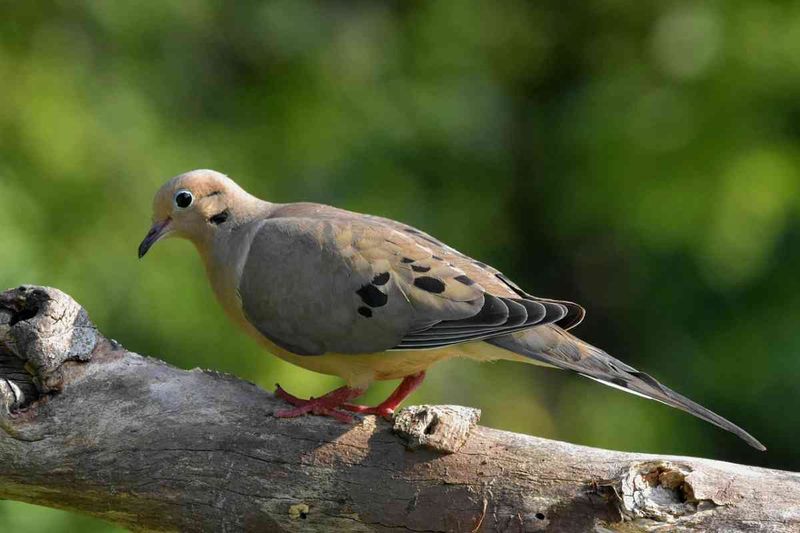
Put the pieces together and the picture is clear. A coo is a real bird call with documented social and nesting contexts.
A dove in your yard is using some perch or food source nearby, in line with how these adaptable seed-eaters live.
Neither fact makes one morning’s sound a score for your yard, proof of nesting, or a statement about the bird’s feelings.
So enjoy it for what it is. Next time you hear that coo, look up and find the long tail.