
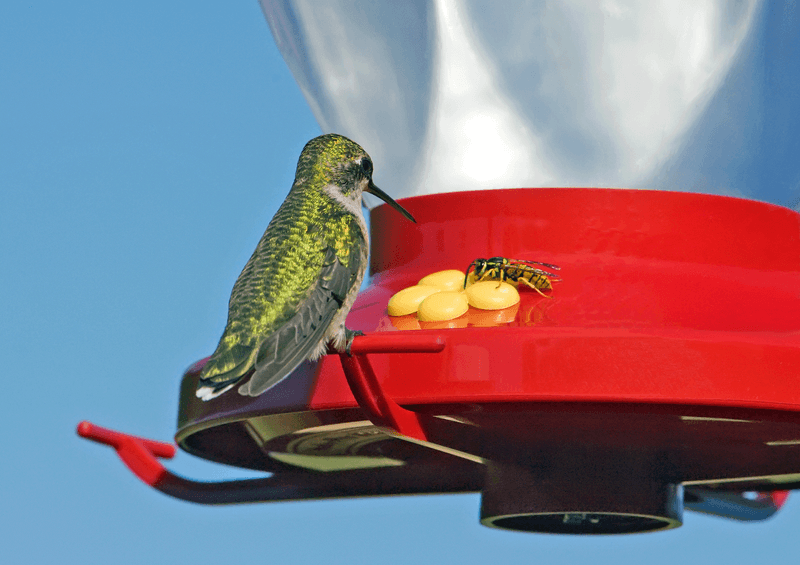
A feeder full of buzzing, stinging visitors can make a backyard feel off limits to the hummingbirds you hoped to watch. Bees and wasps love sugar water just as much as hummingbirds do, and a crowd at the ports may keep the birds from settling in.
One feeder change may make the nectar harder for insects to reach. Here is how to try it, plus a few checks that help it work better.
Why bees and wasps gather at hummingbird feeders
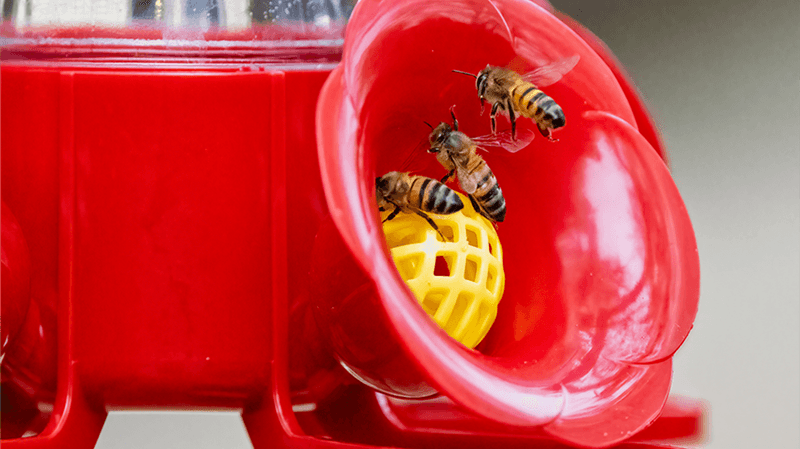
Sugar water is the whole reason for the crowd. University of Florida IFAS notes that bees are drawn to hummingbird nectar, and that hummingbirds may sometimes feed right alongside them.
Still, a cluster of buzzing insects can make a feeder less inviting. Cornell Cooperative Extension guidance describes insects as a common feeder pest that can discourage the birds you want to see.
Results vary from yard to yard, so a crowd does not always mean the hummingbirds stay away.
Before you act, take a closer look at who is visiting. Honey bees, yellowjackets, and hornets are not the same, and they may behave differently.
An Oregon State Extension response advises confirming what is on the feeder before deciding how to handle it.
Once you know the visitor, feeder design is a sensible first step. It will not guarantee an insect-free feeder, but it can change how easily they reach the nectar.
A saucer feeder may limit insects’ access to nectar
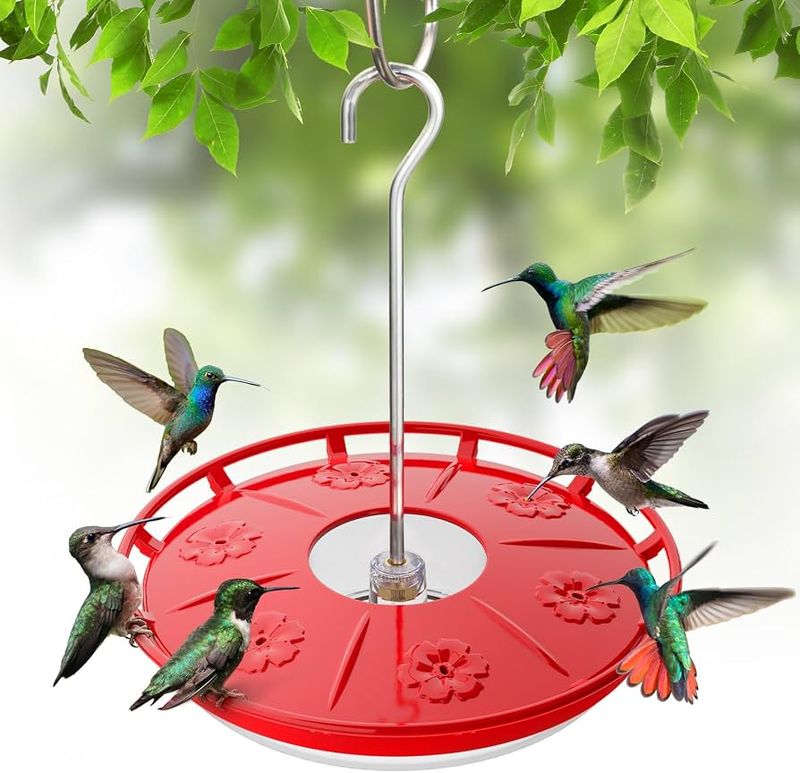
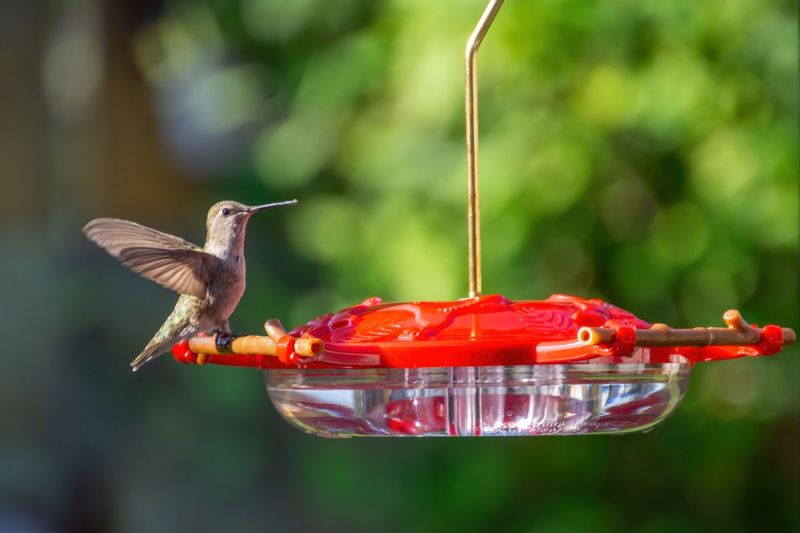
Here is the swap: replace a leaking or insect-friendly bottle-style feeder with a saucer-style one. Hummingbirds drink through ports that sit above a shallow reservoir.
According to Cornell Cooperative Extension, the nectar in this design is generally too far below the ports for bees and wasps to reach. A hummingbird’s long tongue can get down to it.
That difference in nectar access is why the swap may help. It is practical extension advice rather than a controlled test, so think of it as a reasonable deterrent and not a promise that insects will leave.
Bottle-style feeders often put nectar right at the feeding opening, and Florida IFAS says upside-down jar-and-tube types tend to leak. A saucer feeder removes some of those weak spots.
Leaks, residue, and very persistent insects can still cause trouble, so the next steps matter too.
Check for leaks and sticky residue
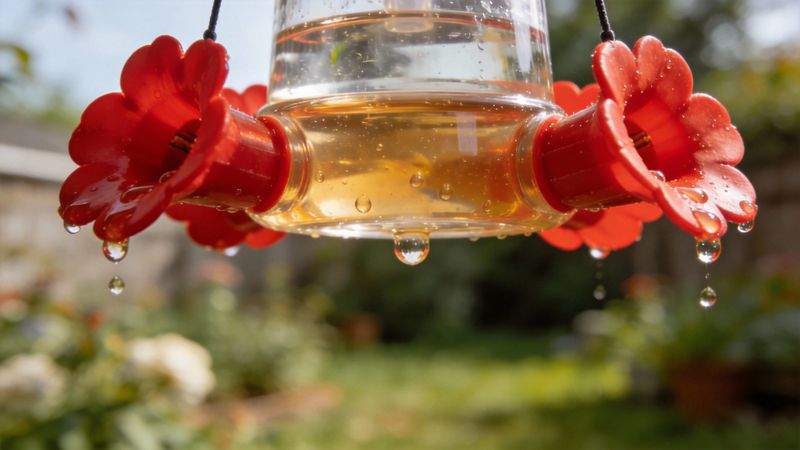
Walk out to the feeder with a damp cloth and look closely. Check the ports, the seams, the hanger, and the surface below for drips, wet spots, or a sticky film.
Warm sun can make trouble. Cornell notes that bottle-style feeders can leak as they warm in direct sun, and Florida IFAS says upside-down jar-and-tube feeders tend to leak as well.
Even a tiny bead of nectar can act like a signpost for insects. Wipe the feeder, the ports, and any nearby railing or post until nothing feels tacky.
Make this a routine, not a one-time fix. Look over any feeder you own after filling it, and again on a hot afternoon.
A new saucer feeder helps, but spills around it can still pull insects in.
Keep nectar safe while you troubleshoot
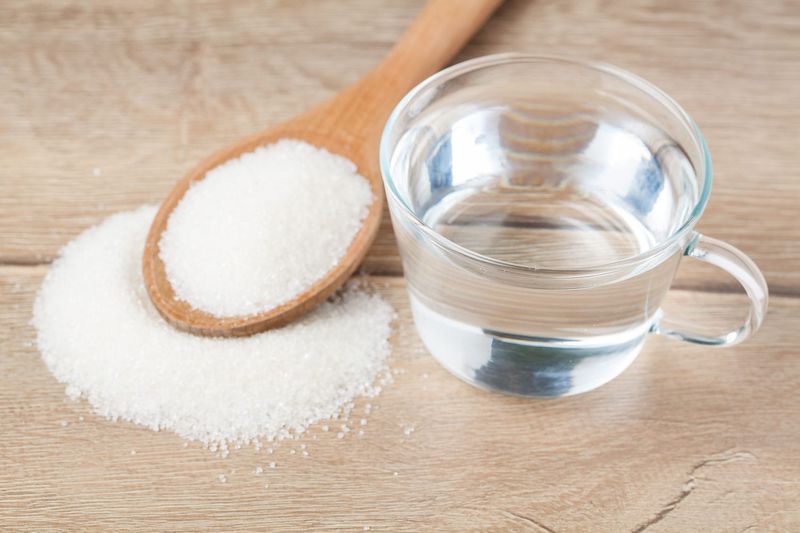
Plain, clear nectar is the safe choice. Audubon recommends one part refined white sugar to four parts water.
Texas Parks and Wildlife gives the same ratio and advises against food coloring.
Skip red dye, honey, and sugar substitutes. Changing the ratio is not a proven way to turn insects away, so stick with the standard mix.
Hot weather asks for more cleaning. Audubon suggests changing nectar every day or every other day in heat, while the Smithsonian’s National Zoo recommends thorough cleaning every other day and at least twice a week in hot weather.
Treat those as guides, not a single rule for every yard. If the nectar looks cloudy or the feeder feels slimy, clean it sooner.
If insects persist, move or pause the feeder
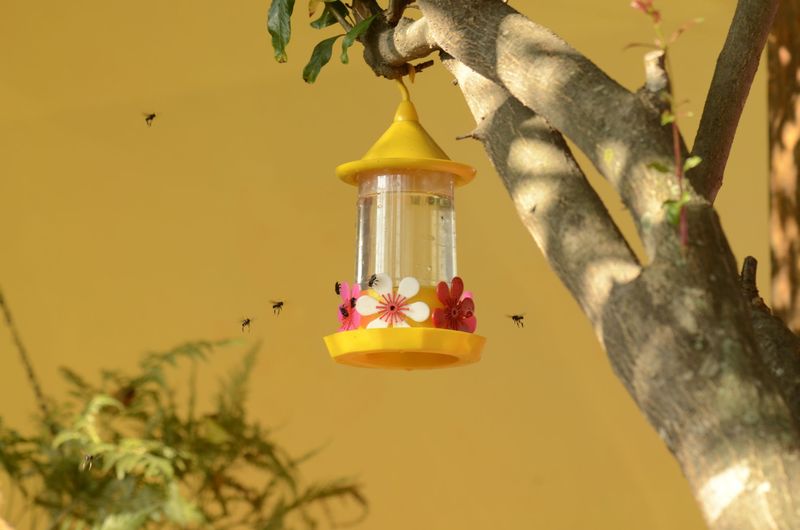
Sometimes insects keep showing up even after you swap feeders, fix leaks, and wipe things down. Several low-risk options remain.
You can move the feeder to a new spot, since a fresh location may break the insects’ routine. University of Maine Cooperative Extension offers this kind of practical advice for insects at hummingbird feeders.
You can also take the feeder down for a short time, then put it back out. A Colorado State Extension response covers honey bees at feeders, and washing more often is another step Cornell’s guidance supports.
Do not spray pesticides or insect repellents on or near the feeder. Maine Extension warns against pesticides for this problem, and nectar the birds drink should never be exposed to them.
These steps may ease the crowding, though they cannot promise the insects will vanish for good.
Limit feeder access, not wildlife in the yard
The goal is modest and realistic: make feeder nectar harder for insects to reach. It is not about clearing every bee out of your yard.
Insects belong in a healthy garden, and hummingbirds eat small insects too. The UC Davis Hummingbird Health and Conservation Program advises against pesticides in hummingbird gardens, and Maine Extension frames the fix around feeder management.
Results will differ from one yard to the next. Do not expect hummingbirds to return on a set schedule just because the feeder changed.
So try it this week: hang a saucer feeder, keep it clean, and watch whether the crowding eases. A calmer feeder is a win, even when a few bees still drop by.